For generations, the standard gear protocol for weathering the elements on a backcountry trail has followed a predictable formula. When the skies open up, you reach for a waterproof-breathable rain jacket. When the sun beats down relentlessly, you pull down the brim of a baseball cap or slap on a wide-brimmed sun hat. For traditionalists, umbrellas have long been relegated to urban commutes, golf courses, and rainy-day city walks—awkward, fragile accessories utterly unsuited for the rugged demands of technical hiking.
Yet, step onto any major long-distance trail today, and you will notice a distinct shift in the backcountry zeitgeist. More and more thru-hikers and weekend backpackers are hitting the dirt with sleek, highly specialized umbrellas strapped to their packs. Crafted by leading ultralight gear manufacturers using advanced reflective fabrics, carbon-fiber ribs, and wind-resistant canopies, these aren’t your grandfather’s rainy-day brollies. They are engineered pieces of survival equipment.
For a long time, seasoned rain-jacket loyalists viewed this trend with mild amusement. But as ultralight backpacking culture continues to push the boundaries of efficiency, versatility, and comfort, the humble hiking umbrella is having an undeniable moment. To find out whether this trend is a passing gimmick or a legitimate paradigm shift in backcountry gear, we dove into the data, consulted leading industry experts, and put an ultralight model to the test under punishing summer conditions.
Main Facts: The Anatomy of the Modern Hiking Umbrella
To understand why umbrellas are suddenly sharing pack-space with high-tech tents and featherlight quilts, one must first look at how modern engineering has transformed the category. Traditional umbrellas are heavy, cumbersome, and prone to structural failure under the slightest gust of wind. In contrast, modern ultralight hiking umbrellas—such as the Gossamer Gear Lightweight Hiking Umbrella and the Six Moons Designs Silver Shadow—are designed specifically for the rigorous demands of the trail.
Weighing in at a mere fraction of a pound (often between 5 and 8 ounces), these specialized umbrellas utilize advanced materials:
Reflective Canopies: Many models feature specialized silver coatings designed to reflect solar radiation, significantly dropping the ambient temperature underneath the canopy.
Flexible Carbon-Fiber Ribs: Unlike rigid steel frames that snap under pressure, carbon-fiber structures offer enough flex to absorb wind energy without immediately inverting.
Extended Shafts and Ergonomic Handles: Designed to integrate seamlessly with modern backpack shoulder straps, allowing for hands-free or low-fatigue manual deployment.
Far from being single-use accessories, these umbrellas function as mobile micro-climates. They offer simultaneous defense against two of the trail’s most exhausting adversaries: hyperthermia-inducing rain and heatstroke-inducing solar radiation. When integrated with accessories like a shoulder-strap clamp, they effectively transform a grueling hot-weather trek into a shaded, breeze-catching stroll.
Chronology: From Novelty to Trail Staple
The ascension of the hiking umbrella from an eccentric DIY hack to a mainstream commercial product did not happen overnight. Its roots trace back decades within the ultralight community, where fringe backpackers realized that modifying standard golf umbrellas could solve several chronic trail dilemmas simultaneously.
The Early Decades (Late 20th Century): Long before commercial brands took notice, pioneering thru-hikers experimented with lightweight umbrellas primarily for desert sun protection along routes like the Pacific Crest Trail (PCT). However, these early adopters had to rely on modified urban gear, which lacked durability and specialized mounting systems.
The Ultralight Revolution (2010s): As cottage-industry ultralight backpacking brands emerged, innovators began designing purpose-built gear tailored to long-distance hikers. Companies like Gossamer Gear and Six Moons Designs recognized a market gap and introduced commercial hiking umbrellas featuring high-tech reflective coatings and wind-shedding designs.
The Modern Boom (Present Day): Over the past few seasons, social media channels, gear forums, and thru-hiker vlogs have amplified the visibility of the hiking umbrella. What was once dismissed as a niche eccentricity is now regularly featured on curated gear lists for major thru-hikes, cementing its status as a legitimate backcountry essential.
Supporting Data: Testing the Thermal and Practical Limits
To separate marketing hype from field reality, industry experts and independent testers have put these umbrellas through rigorous evaluations. The claims made by manufacturers are bold: Gossamer Gear, for instance, asserts that its Lightweight Hiking Umbrella can reduce ambient solar heat underneath the canopy by up to 15°F.
The Backyard Ice Test
To test this thermal reduction claim, testers ran a controlled backyard experiment during a peak summer heatwave. Two identical cups of ice cubes were placed side-by-side in 99°F direct, unclouded sunlight. One cup was left completely exposed, while the other was placed directly beneath the canopy of an ultralight hiking umbrella.
The results were stark. Within just 30 minutes, the unshaded cup of ice had degraded into a pool of water with minimal solid remnants. Meanwhile, the ice protected by the umbrella retained significantly more of its mass, proving the canopy’s efficacy at blocking intense radiant solar energy.
Weight-to-Performance Ratio
At just 5.8 ounces, an ultralight umbrella adds negligible base weight to a backpacker’s load. When compared to the cumulative weight of carrying multiple specialized items—such as heavy sun-block lotions, wide-brimmed hats, and cumbersome rain gear—the umbrella often emerges as a more efficient space-and-weight solution. Furthermore, field testing revealed an unexpected aerodynamic benefit: the canopy actively catches and channels gentle cross-breezes down onto the hiker, creating a natural cooling fan effect during breathless, exposed climbs.
Official Responses: Insights from the "Umbrella Kings"
To gain a deeper appreciation for the versatility of this gear, we reached out to industry insiders who live and breathe ultralight backpacking.
Whitney La Ruffa, head of sales at Gossamer Gear and a self-proclaimed "Umbrella King," argues that the tool’s true brilliance lies in its sheer multifunctionality. According to La Ruffa, the umbrella is the ultimate Swiss Army knife of the trail, offering utilities that extend far beyond simple weather protection.
"To me, it’s kind of like the ultimate hiker hack," La Ruffa told industry reviewers. "It’s just so multifunctional."
La Ruffa shared several innovative, real-world applications he has tested across thousands of miles of trails:
Moonlight Shielding: When sleeping under a minimalist tarp setup in the desert or high alpine, a bright full moon can disrupt sleep. La Ruffa routinely clips his umbrella to his pack near his head, tucking underneath it to block out ambient light.
Tarp Tent Integration: The umbrella can serve as an improvised door extension for ultralight tarp tents, blocking driving wind or providing much-needed privacy at crowded campsites.
Mid-Night Relief: Waking up in the middle of a torrential downpour usually requires the tedious process of zipping up a wet rain jacket. Grabbing an umbrella makes stepping out of the shelter infinitely more convenient.
The Safe Cook-Space: Traditional tents and gas stoves are a notoriously dangerous combination. La Ruffa learned this lesson the hard way on the Continental Divide Trail (CDT) when he melted a massive hole in his expensive Dyneema tent while trying to cook out of the rain. Now, he simply stakes his umbrella out in the open air to shield his stove.
Desert Emergency Shade: In the event of an injury or forced delay in an exposed, arid environment, an umbrella provides immediate, life-saving protection against heat illness.
The Ultimate Outlier: Volcanic Ejection
While everyday uses are compelling, the most extraordinary anecdote comes from Brandon Moak, Executive Vice President of Operations at Six Moons Designs. Moak recounted a customer who took her Silver Shadow Ultralight Umbrella along to view an active volcanic landscape.
While she was observing the geological marvel, the volcano unexpectedly erupted, raining down sharp, incandescent fragments of rock and glass-like volcanic foam. Utilizing the umbrella, the hiker was able to shield herself just enough to capture photographs and maintain safe awareness from a distance.
"She had the umbrella up and was able to watch and take photographs from a distance while it protected her a little bit… obviously, it’s not a normal use case," Moak noted with a laugh. Though "falling volcanic discharge" is certainly not listed under standard product warranties, Six Moons Designs ultimately replaced the damaged umbrella for the customer anyway as a testament to her adventurous spirit.
Field Impressions: Navigating the Trade-Offs
Despite the glowing endorsements, transitioning to trail-umbrella usage requires a distinct psychological and physical adjustment. Testing a sample of the Gossamer Gear umbrella across exposed, 99°F Colorado hiking trails revealed both immediate benefits and distinct learning curves.
Spatial Awareness and Wind Dynamics
For a lifelong rain-jacket devotee, walking with an umbrella requires a total recalibration of spatial awareness. On narrow, overgrown single-track trails, low-hanging branches and dense brush will eagerly snag an open canopy. Hikers must learn to deliberately maneuver their arms to thread the needle through tight timber.
Furthermore, wind remains the natural enemy of any umbrella. While modern carbon-fiber frames offer impressive flexibility, a severe, unexpected mountain gust can still invert a canopy. Hikers traversing high ridges must remain vigilant, ready to collapse the umbrella instantly when severe wind shears threaten structural integrity.
The Game-Changer: The Handsfree Clamp
One major hurdle for many hikers is the loss of a hand. Holding an umbrella manually for hours on end makes using trekking poles, managing a smartphone navigation app, or photographing wildlife nearly impossible.
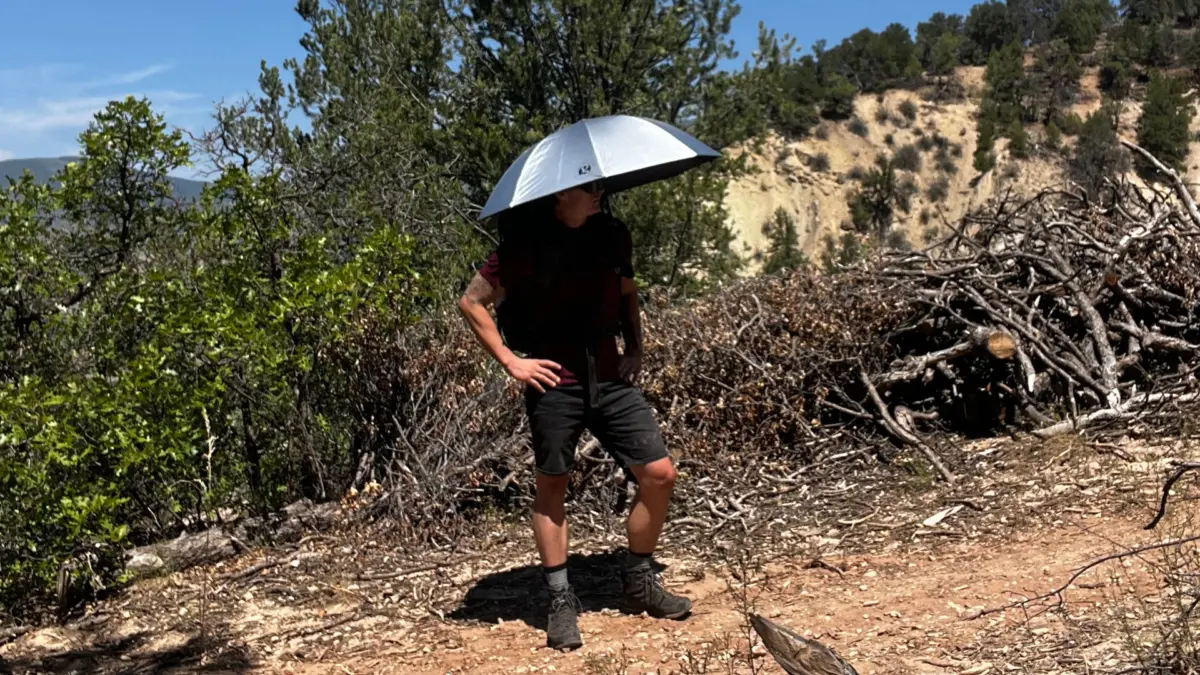
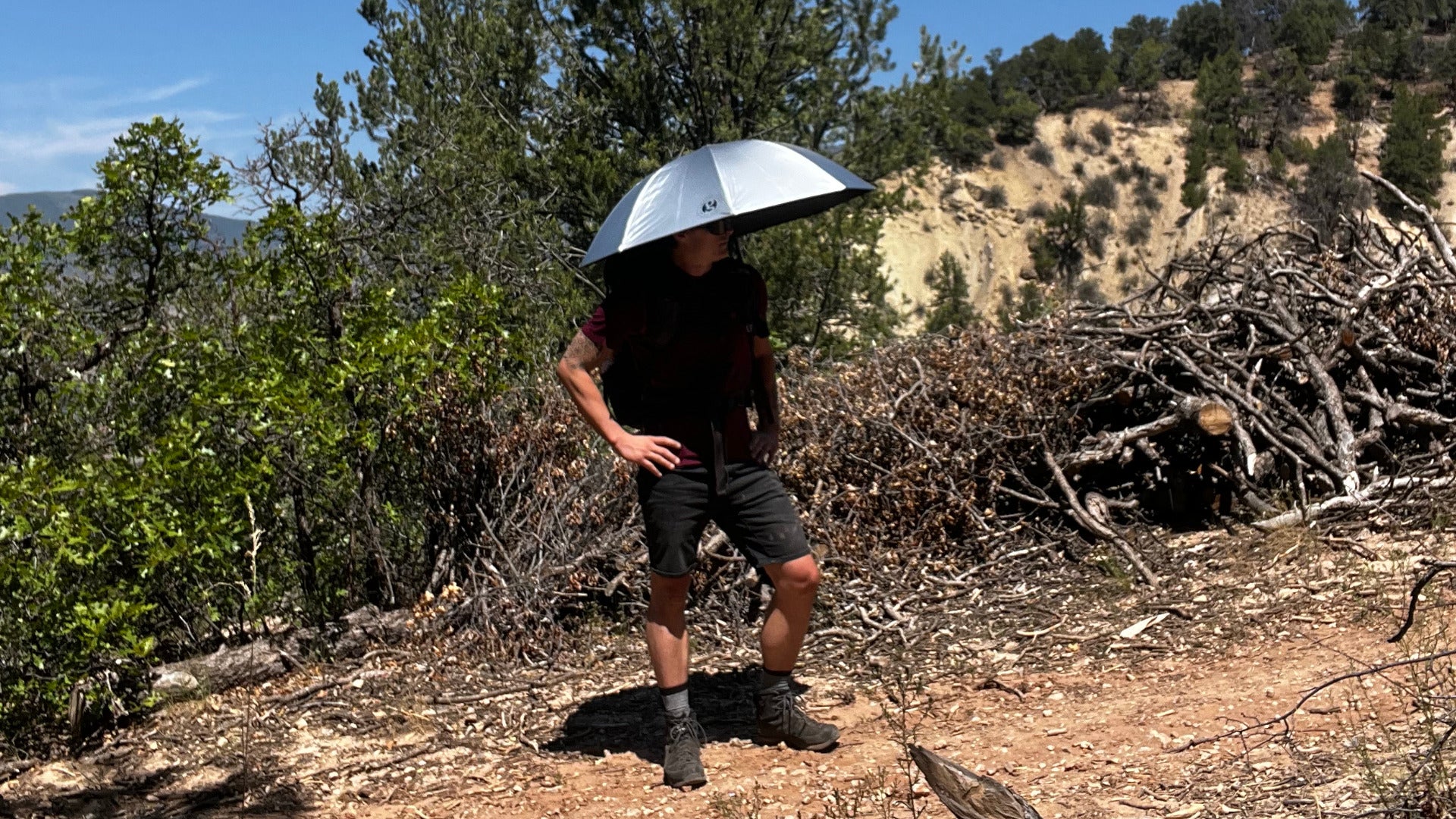
However, accessory innovations like the Gossamer Gear Handsfree Clamp entirely neutralize this drawback. By securely attaching the umbrella directly to a backpack’s shoulder strap, the canopy hovers effortlessly above the hiker’s head—resembling a personal mobile cloud or an oversized sombrero. This setup frees both hands to grasp trekking poles, maintain balance on steep scree fields, or operate navigation tools without missing a beat.
Implications: A New Era for Ultralight Backpacking
The growing popularity of the hiking umbrella signals a broader philosophical shift in how modern backpackers approach gear selection. The focus is moving away from single-use, heavy-duty garments toward multi-functional, modular systems that shave ounces without sacrificing comfort or safety.
While it may take some time for traditionalists to overcome the initial feeling of channeling Mary Poppins in the middle of the backcountry, the pragmatic arguments are simply too strong to ignore. When a 5.8-ounce piece of gear can simultaneously lower your perceived body temperature by 15°F, keep you completely dry during torrential rain, protect your expensive tent fabric from camp stove accidents, and act as an emergency shelter in exposed environments, its inclusion in a pack ceases to be a novelty.
As climate patterns shift and summer trails become increasingly exposed and punishingly hot, the hiking umbrella is poised to transition from a clever thru-hiker secret into a permanent cornerstone of standard backcountry inventory. For those willing to embrace the learning curve, the trail just got a whole lot more comfortable.