

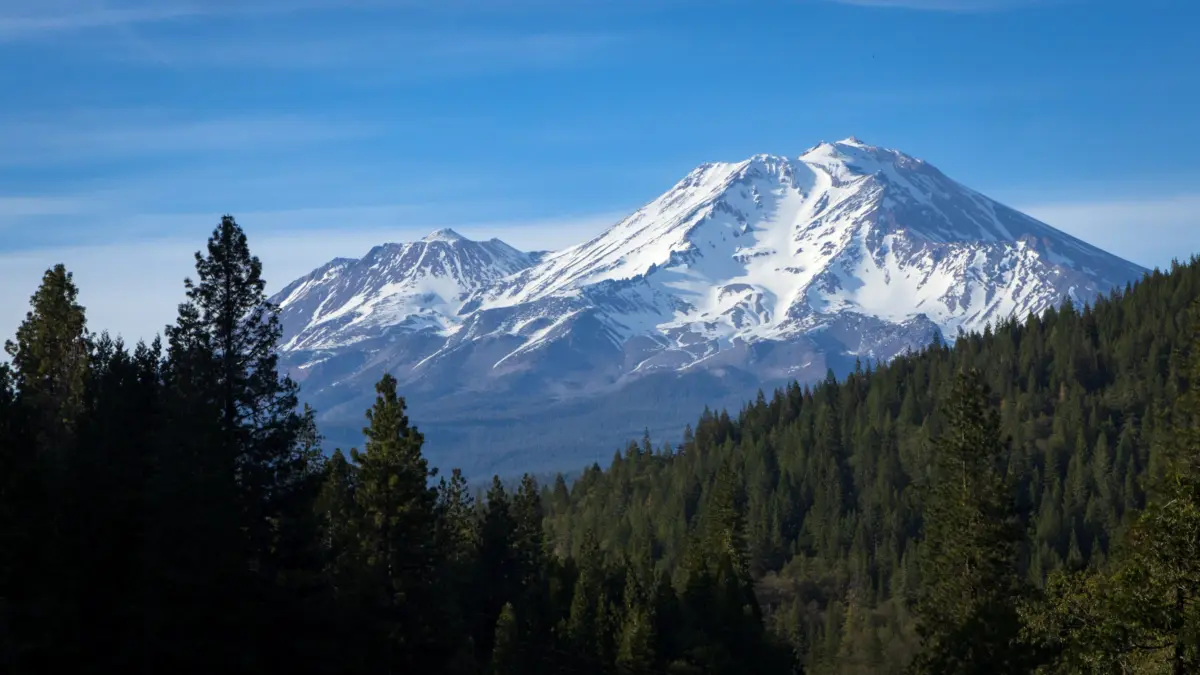
Published: September 2, 2026
Location: Mt. Shasta, California
Main Facts
What was meant to be a brisk, single-day alpine push up the towering slopes of California’s Mount Shasta devolved into a grueling, nearly 40-hour ordeal of exhaustion, disorientation, and exposure this past weekend. A team of three young college students had to be safely escorted down the 14,179-foot stratovolcano by search-and-rescue personnel following an unplanned, freezing night spent in a high-risk terrain trap high above the tree line.
According to officials with the United States Forest Service (USFS), the trio of early-twenties climbers arrived at the Clear Creek Trailhead on Saturday, August 29, 2026, equipped with modern gear such as a solid tent, snow-travel equipment, and required summit passes. However, a fatal combination of poor pacing, dead electronics, exhausted rations, and critical planning errors—driven in part by a reliance on an artificial intelligence chatbot for dietary and logistical prep—turned the recreational excursion into a life-threatening crisis.
Rescuers described the operation as "mentally challenging," noting that the hikers had hunkered down off-trail in a precarious, restricted area near a fragile mountain headspring without adequate warm sleep systems. By the time the ordeal concluded on Monday evening, August 31, a planned 8-hour round trip had transformed into a grueling 39.5-hour test of endurance, yielding fresh warnings from wilderness safety experts regarding the modern pitfalls of leaning on unregulated AI tools for high-altitude mountaineering.
Chronology of an Escalating Crisis
Saturday, August 29: The Ascent Begins
The three smart, educated college students arrived at the Clear Creek Trailhead with high spirits and ambitions of conquering Mount Shasta. Setting out late in the day, they made good initial time, ascending that evening to a well-known base camp area situated at 8,600 feet, where they arrived at approximately 8:00 p.m. to set up camp.
Sunday, August 30: Slow Going and Thinning Rations
The group launched their summit bid early the next morning with a standard alpine start at 3:00 a.m. Right away, however, trouble brewed in the form of an unusually sluggish pace. Ten hours into the grueling climb, they had managed to advance a mere 2,600 vertical feet, covering only about one mile of terrain.
With the summit still a daunting 3,000 vertical feet and over a mile away, the group’s slow progress began to manifest as a serious downstream hazard. Because their AI-assisted nutrition planning had drastically underestimated the caloric and hydration needs for such a prolonged effort, their food and water supplies were already dangerously depleted.
- 3:00 PM: The climbers reached a prominent geographical waypoint known as Mushroom Rock at 12,800 feet. Faced with the stark reality of their creeping timeline, the group paused to debate whether to push upward or turn back, soliciting advice from two separate passing parties. True to the confusing nature of high-mountain advice, one party recommended pressing on, while the other urged an immediate descent. The trio chose to push forward.
- 7:00 PM: Sixteen hours after departing base camp, the exhausted climbers finally achieved the summit of Mount Shasta.
- 8:00 PM: After a hasty turnaround, the group retraced their steps back down to Mushroom Rock. Here, disaster struck: the smartphone they had been relying upon for GPS navigation via AllTrails suffered a complete battery failure. Compounding the issue, the portable power bank they brought along proved defective and refused to transfer a charge, leaving them navigating in the dark without digital maps.
Sunday Night into Monday Morning: Misdirection and Injury
In a panic, the men dialed 911 for directions down the mountain. Despite emergency dispatch instructions, they became thoroughly disoriented in the dark. They wandered significantly off-route to the south, traversing a hazardous neighboring ridgeline and dropping down into Mud Creek Canyon—a treacherous zone characterized by notoriously loose, unstable rock and lacking any established or safe routes up or down the peak.
As the night wore on, conditions deteriorated rapidly. The trio called rescuers repeatedly to report escalating symptoms of hypothermia, a developing knee injury, and compounding exhaustion. Matters came to a head when one of the climbers, stumbling through the pitch-black terrain without a working headlamp, slipped and fell.
Monday, August 31: The Rescue
Search-and-rescue teams mobilized quickly, reaching the stranded group by morning. The hikers had survived an exposed, shivering bivy near the 11,000-foot mark. Because of the rugged, steep, and uneven terrain above the tree line, standard helicopter extraction proved unfeasible, meaning the exhausted climbers would have to walk out.
Fortunately, quick medical assessments revealed that while the men were profoundly drained, they had narrowly avoided advanced hypothermia, and the injured team member was still ambulatory. Following a much-needed injection of food, water, and a psychological pep talk from rangers, all three men gathered their resolve and hiked down under their own power.
Passing their original high-altitude campsite on the descent, rangers discovered the group’s tent pitched illegally and damagingly close to the headspring of Clear Creek, surrounded by a scattering of food wrappers and cookware. The weary party finally limped back into the Clear Creek Trailhead at 6:30 p.m. on Monday, bringing their 39.5-hour ordeal to a close.
Supporting Data and Observations
The Mount Shasta incident highlights several critical metrics of modern outdoor recreation, digital dependency, and wilderness logistics:
- Time Discrepancy: What was designed by the climbers to be a concise 8-hour round trip ultimately consumed 39.5 hours from trailhead to trailhead.
- Altitude and Distance: The group pushed themselves to a punishing summit elevation of 14,179 feet, spending extended hours stranded and exposed near the 11,000-foot mark.
- Preparation Paradox: The students possessed essential survival hardware—including a quality tent, proper headlamps, snow travel tools, and mandatory summit passes—yet suffered critical oversights in redundancy, failing to pack backup analog maps, a magnetic compass, or a functioning backup battery system for their single navigation device.
- Environmental Impact: Beyond the personal safety risks, the group’s poor site selection led them to camp directly on top of the sensitive headspring of Clear Creek, introducing foreign contaminants and debris to a fragile alpine watershed.
Official Responses and Expert Perspectives
Nick Meyers, program manager for the U.S. Forest Service’s Mt. Shasta Climbing Rangers and Avalanche Center, offered a measured and professional assessment of the incident. Rather than dismissing the hikers as reckless amateurs, Meyers emphasized the deceptive nature of the mountain environment and the modern intellectual blind spots of otherwise intelligent individuals.
"These were smart guys," Meyers noted. "But they just missed the mark. It led to spending all day, all night, and all day again walking up and down off the mountain."
Meyers pointed out that while the men possessed a general awareness of regional safety infrastructure—acknowledging that they knew about the comprehensive and robust local safety resource shastaavalanche.org—they chose not to consult it during their preparation phase. Instead, they relied on a trendy digital alternative: an artificial intelligence chatbot.
"Our objective is always to give people information," Meyers explained regarding the philosophy of the USFS climbing rangers. "We don’t try to influence what people do, but instead give them the knowledge and resources they need to make good decisions in the mountains."
Addressing the elephant in the room regarding technology trends, Meyers added a pragmatic warning for the broader outdoor community:
"We know people are going to use AI to prepare themselves, and it’s happening more and more—especially with educated young people. But there’s no excuse for ignoring the information when it’s freely available. We just try to encourage everyone to talk to a real person first. We’re here to help."
Implications for the Future of Outdoor Recreation
The Mt. Shasta rescue serves as a case study for a growing cultural phenomenon: the collision between advanced wilderness terrain and the uncritical consumption of generative artificial intelligence for technical planning.
1. The Dangers of Algorithmic Overconfidence
Generative AI chatbots are fundamentally designed to synthesize text and generate plausible-sounding answers based on patterns in data. However, they lack contextual awareness, temporal grounding in real-time weather, and localized terrain expertise. When asked to plan an alpine ascent, an AI model might outline a theoretical timeline (such as an 8-hour round trip) based on average athlete statistics, completely failing to account for the unique variables of high-altitude physics, personal acclimatization, shifting snow conditions, or human fatigue rates.
2. The Erosion of Mentorship and Local Knowledge
Meyers explicitly attributed the accident to "lapses of information and mentorship." Historically, mountaineering culture relied heavily on oral traditions, club-based mentorship, guidebook study, and direct communication with local rangers or mountain guides. As younger generations increasingly turn to automated search engines and LLM-based assistants for "instant expertise," they risk bypassing the foundational wisdom that keeps backcountry travelers safe.
3. Redundancy as a Non-Negotiable Standard
The incident also reinforces timeless backcountry safety tenets. Technology fails—batteries die in the cold, screens crack, and charging bricks malfunction. Relying on a single electronic device for navigation, communication, and planning without analog backups (such as topographic paper maps and physical compasses) remains a primary vector for wilderness emergencies.
Ultimately, while the three college students escaped Mount Shasta with their lives and limbs intact—largely due to their baseline physical fitness and the prompt response of Forest Service rescue personnel—their ordeal stands as a stark reminder: the mountains do not grade on a curve, and an AI chatbot cannot dig you out of a freezing alpine terrain trap.
