

By Global Science Correspondent
Published in the Journal of Geophysical Research — Solid Earth Review
Main Facts: A Geological Anomaly Towering Over the Mediterranean
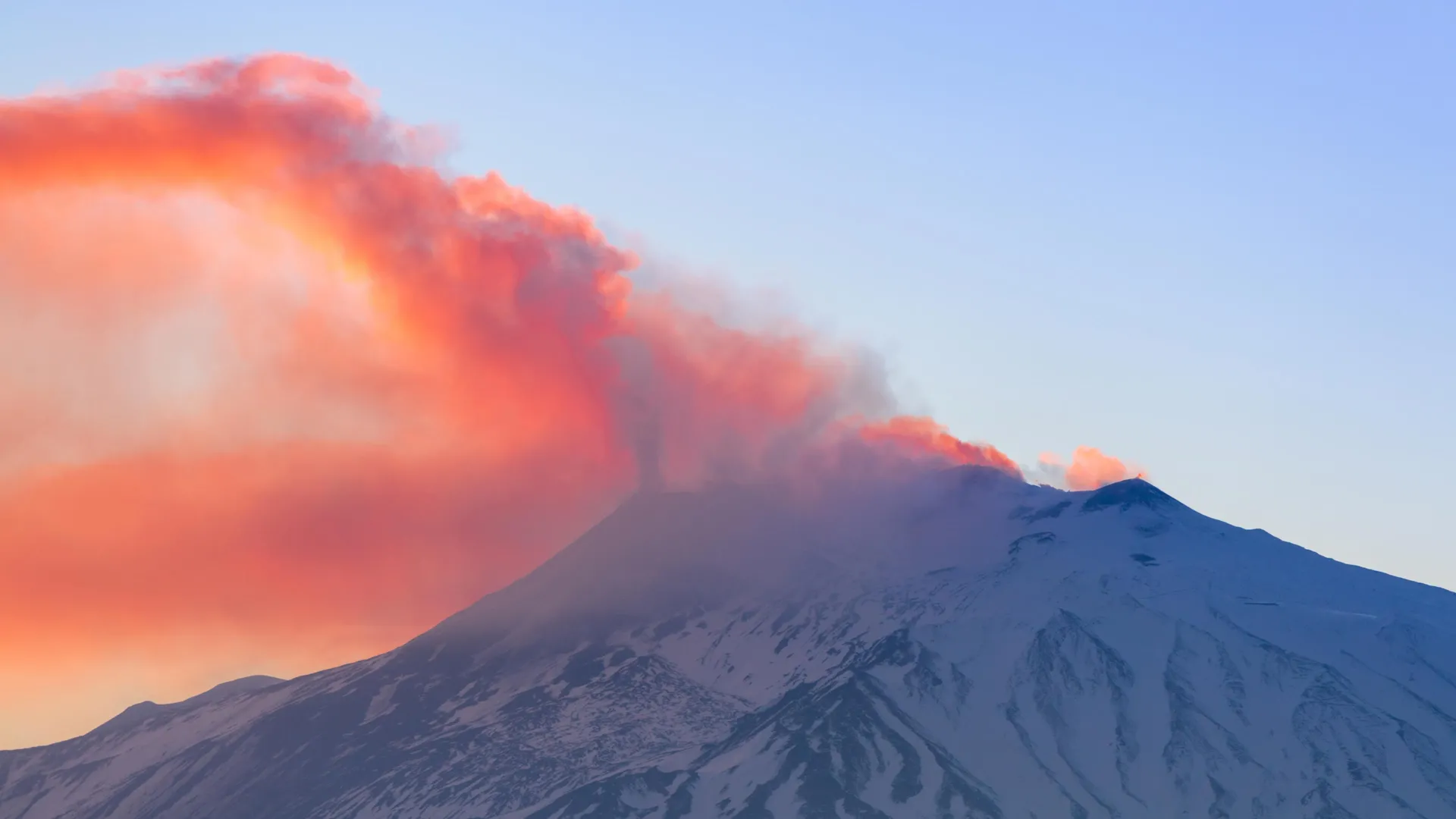
For centuries, Mount Etna has loomed large over the eastern coast of Sicily, dominating the Italian skyline and captivating the imaginations of poets, philosophers, and scientists alike. Rising more than 3,000 meters (9,800 feet) above the shimmering blue waters of the Ionian Sea, Etna is not merely a scenic backdrop; it is a restless, roaring titan. As Europe’s most active volcano, it erupts with striking frequency—often several times a year—spewing fountains of glowing lava, rumbling with subterranean fury, and occasionally blanketing nearby towns in a fine, dark layer of volcanic ash.
Yet, beneath its familiar fiery spectacle lies a profound scientific mystery. For decades, geologists have studied Etna’s behavior, chemistry, and structure, only to find that the towering stratovolcano refuses to conform to the established laws of global volcanology. It is a geological rebel.
Now, an international team of researchers from the University of Lausanne (UNIL), in close collaboration with volcanologist Anna Rosa Corsaro of the Istituto Nazionale di Geofisica e Vulcanologia (INGV) in Catania, Italy, has proposed a groundbreaking explanation. Their study suggests that Mount Etna may have formed through a rare and unconventional volcanic process—one that has never before been observed in a giant land volcano. If proven correct, this finding elevates Etna from an ordinary geologic outlier to a completely unique class of volcano, potentially establishing a brand-new fourth category of volcanic formation on Earth.
To understand why this discovery is so revolutionary, one must look at how geologists traditionally classify volcanoes. For generations, standard earth science textbooks have divided the world’s volcanoes into three neat categories based on how and where their magma is generated:
- Divergent Boundaries (Rifts): Volcanoes that form where tectonic plates pull apart, allowing magma from the mantle to ooze upward into the gap (such as the Mid-Atlantic Ridge or Iceland).
- Convergent Boundaries (Subduction Zones): Volcanoes that form where one tectonic plate slides beneath another, melting the descending slab and the surrounding mantle to produce explosive eruptions (such as the Pacific "Ring of Fire" or Mount Vesuvius).
- Hotspots (Plumes): Volcanoes that form far from plate boundaries, driven by extraordinarily hot plumes of mantle material rising directly from deep within the Earth (such as the Hawaiian Islands).
Mount Etna, however, defies this tidy categorization. Geographically, it sits near a complex subduction zone where the massive African tectonic plate is sliding beneath the Eurasian plate. By all accounts, its lava chemistry should reflect the characteristics of a typical subduction-zone volcano. Yet, when scientists analyze the chemical makeup of Etna’s lavas, they find that it closely resembles the magma of a hotspot volcano. The glaring catch? There is no mantle plume or hotspot beneath Sicily.
For decades, this contradiction has puzzled researchers. How could a volcano sitting on a subduction zone produce lavas that look like they came from the middle of a tectonic plate? The UNIL study, published in the Journal of Geophysical Research — Solid Earth, finally offers a compelling answer, pointing toward a hidden, deep-mantle mechanism that completely upends conventional models.
Chronology: Tracing 500,000 Years of Fiery Evolution
To crack the code of Mount Etna’s origins, the research team had to peer far back into the deep history of the Mediterranean basin. Etna is not a young upstart; geochemical and geological evidence indicates that the volcano is more than 500,000 years old. Its life cycle spans an immense expanse of time during which the surrounding tectonic landscape of Southern Europe underwent dramatic shifts.
The Timeline of Discovery and Activity
- 500,000 Years Ago: Volcanic activity begins in the region that would become modern Sicily. Early eruptions take place underwater in a shallow basin, laying down the foundational pillow lavas and submarine volcanic deposits that form the base of the modern edifice.
- 100,000 to 300,000 Years Ago: The locus of volcanic activity shifts inland and transitions to subaerial (above-water) eruptions. Successive layers of lava flows and pyroclastic material begin to pile up, gradually building the classic conical structure of a stratovolcano.
- 2006: A team of Japanese geologists working in the western Pacific Ocean discovers an entirely new type of volcanism known as "petit-spot" volcanoes. These tiny, ephemeral submarine volcanoes challenge existing dogmas by demonstrating that small pockets of melt can exist near the top of the mantle without a classic hotspot or subduction trigger. At the time, scientists assume this process is limited exclusively to minor ocean-floor structures.
- Present Day: Mount Etna towers over 3,000 meters high, continuously reshaping its summit craters (Voragine, Bocca Nuova, Northeast Crater, and Southeast Crater). It stands as a heavily monitored, intensely studied natural laboratory.
- The Recent Study: Researchers at the University of Lausanne, led by Professor Sébastien Pilet, analyze a comprehensive set of rock samples spanning Etna’s entire 500,000-year history. By reconstructing the chemical evolution of the lavas over time, they discover a startling degree of stability in the magma’s composition, despite centuries of tectonic turbulence. This realization bridges the gap between Etna and the petit-spot mechanism, unlocking the secret of its formation.
By analyzing rock samples that represent half a million years of volcanic output, the team was able to track how Etna’s chemical signature has evolved—or, more accurately, how little it has changed. The remarkable consistency of the magma’s composition over such a vast expanse of time strongly indicates that the source feeding the volcano has remained fundamentally stable, operating independently of the shifting surface tectonics.
Supporting Data: Unraveling the Sub-Crustal Plumbing System
To understand how Mount Etna operates, scientists must look far beneath the sun-drenched orange groves and vineyards of Sicily, plunging deep into the Earth’s interior.
The Hidden Magma Source in the Upper Mantle
According to the new study, the secret to Etna’s behavior lies approximately 80 kilometers (50 miles) beneath the surface, deep within the upper mantle. Rather than generating fresh magma on-demand right before an eruption—which is the standard model for most subduction-zone volcanoes—Etna is supplied by pre-existing pockets of molten rock that have lingered in the mantle for immense periods.
How do these ancient pockets of magma finally reach the surface? The answer lies in the relentless tectonic collision between Africa and Eurasia.
As the African plate grinds northward and plunges beneath Europe, the lithospheric plate begins to bend and flex under immense mechanical stress. This bending creates deep fractures and tensional faults within the bending plate. As the plate flexes, these fractures act like pathways, and the pre-existing pockets of magma in the upper mantle are squeezed upward through the crust.
Professor Sébastien Pilet describes this process using a familiar household analogy:
"The mechanism is remarkably similar to squeezing liquid out of a saturated sponge," Pilet notes. "The tectonic plate bends near the subduction zone, developing internal fractures that allow the deeply seated magma pockets to rise. This explains why Etna can produce hotspot-like chemistry in a subduction zone setting without needing an actual mantle plume."
Experimental Validation
To test this hypothesis, the Lausanne researchers did not merely rely on field observations. They subjected their rock samples to rigorous laboratory testing, comparing the chemical composition of Etna’s ancient and modern lavas with experimental petrology data.
By simulating the high pressures and temperatures found deep within the Earth’s mantle, the researchers demonstrated that partial melting of the mantle under specific tectonic bending conditions could yield precisely the type of magma observed at Etna. The data confirmed that the quantity of magma reaching the surface is predominantly controlled by the mechanics of the bending tectonic plate, while the chemical composition is inherited directly from pre-existing, isolated melt pockets residing deep in the upper mantle.
Official Responses and Expert Perspectives
The publication of the study in the Journal of Geophysical Research — Solid Earth has sent ripples through the international geological community. Because it challenges decades of entrenched geological assumptions, it has sparked vibrant discussions among volcanologists, geophysicists, and hazard-assessment specialists.
Insights from the Lead Author
Professor Sébastien Pilet of the Faculty of Geosciences and Environment at the University of Lausanne emphasized the sheer surprise of drawing a parallel between a massive European stratovolcano and tiny submarine formations halfway across the world:
"Our study suggests that Etna may have formed through a mechanism similar to the one that generates petit-spot submarine volcanoes," said Pilet. "This is completely unexpected, as such processes had previously only been observed in very small volcanic structures, typically rising no more than a few hundred meters on the ocean floor. Mount Etna, by contrast, is a colossal stratovolcano standing over 3,000 meters tall. Finding that the same fundamental geological physics can scale up to build a giant mountain is a paradigm shift."
Collaborating with INGV Catania
Crucially, the research was conducted in partnership with Anna Rosa Corsaro and her colleagues at the Istituto Nazionale di Geofisica e Vulcanologia (INGV) in Catania. The INGV team plays a frontline role in monitoring Mount Etna around the clock, tracking seismic tremors, gas emissions, and ground deformation to protect the millions of Sicilians living in the shadow of the volcano.
While the UNIL study focuses on the deep tectonic and geochemical origins of Etna, its practical applications for hazard assessment are immediate and profound. By gaining a clearer, more accurate picture of how Etna’s internal plumbing system works, INGV scientists can better interpret deep-seated seismic signals and changes in gas chemistry prior to eruptions.
Although the research does not provide a crystal ball to predict exact eruption dates, it significantly refines the baseline models used by hazard mitigation experts in Italy. Understanding that Etna is fed by pre-existing mantle pockets rather than rapid, short-term melting helps seismologists model how magma ascends through the crust, offering vital clues for civil protection agencies.
Implications: A New Fourth Category of Volcanism?
The most sweeping implication of this research extends far beyond the island of Sicily. If Mount Etna is indeed a giant terrestrial manifestation of "petit-spot" volcanism, it opens the door to a potential fourth category of volcano formation that geologists must now formally recognize and integrate into global scientific frameworks.
Redefining Global Volcanology
For decades, the trinity of divergent, convergent, and hotspot volcanism has reigned supreme in Earth sciences. Every newly discovered volcano was shoehorned into one of these three boxes—even when, as in Etna’s case, the fit was painfully awkward.
By validating the existence of a fourth mechanism—wherein tectonic plate bending squeezes pre-existing upper-mantle melt pockets to the surface—scientists now have a new tool to explain other geological anomalies around the globe.
Professor Pilet and his colleagues hope their findings will encourage researchers to look at other enigmatic volcanoes with fresh eyes. Are there other major volcanic systems hiding in plain sight, misclassified because science lacked the framework to understand how plate-bending could generate hotspot-like magmas?
- Re-evaluating Global Outliers: Geologists are already beginning to re-examine volcanic regions in places like the East African Rift, parts of Southeast Asia, and various intraplate settings where traditional models struggle to explain observed lava chemistries.
- Advanced Geophysical Modeling: The UNIL study highlights the critical need to combine high-resolution geochemical analysis with large-scale tectonic modeling. Understanding how lithospheric stress interacts with deep mantle melts will allow geophysicists to build more sophisticated 3D computer models of Earth’s interior.
- Enhanced Hazard Preparedness: For the communities surrounding Mount Etna—from Catania to the picturesque mountain villages nestled on its fertile slopes—theoretical breakthroughs translate into tangible safety benefits. The better scientists understand the deep engine driving Etna, the better equipped they are to anticipate changes in its eruptive behavior.
Conclusion
Mount Etna has spent the last half-million years defying expectations. Rising from the Mediterranean as a towering monument of fire and stone, it has long resisted the tidy categories of traditional geology.
Thanks to the collaborative research between the University of Lausanne and INGV Catania, the veil is finally lifting. By connecting the fiery giant of Sicily to the microscopic world of petit-spot volcanism, scientists have taken a monumental step toward solving one of earth science’s most enduring mysteries. As this new paradigm takes root, Mount Etna stands not as an inexplicable anomaly, but as the magnificent pioneer of a brand-new chapter in our understanding of our planet’s living, breathing interior.
