

August 24, 2026 — As a veteran wellness editor, I have spent a career navigating the ever-shifting landscape of human health. I’ve interviewed leading gastroenterologists, dissected countless microbiome studies, and written more pieces on the human digestive tract than I ever imagined possible. Through all of this reporting, one fundamental truth has emerged: our digestive system is a master dashboard for overall well-being. It holds the key to understanding everything from skin clarity and emotional resilience to metabolic function and systemic inflammation.
Yet, despite the staggering volume of research confirming the gut-brain connection and the foundational role of the microbiome, a massive blind spot has persisted. How are we supposed to reliably interpret the daily data our bodies produce?
For years, I found myself relying on vague impressions and hazy memories. I could preach the gospel of gut health to anyone who would listen, but when it came to my own biology, I was completely in the dark. Like 94% of Americans, I simply wasn’t paying close attention to what was happening in the bathroom.
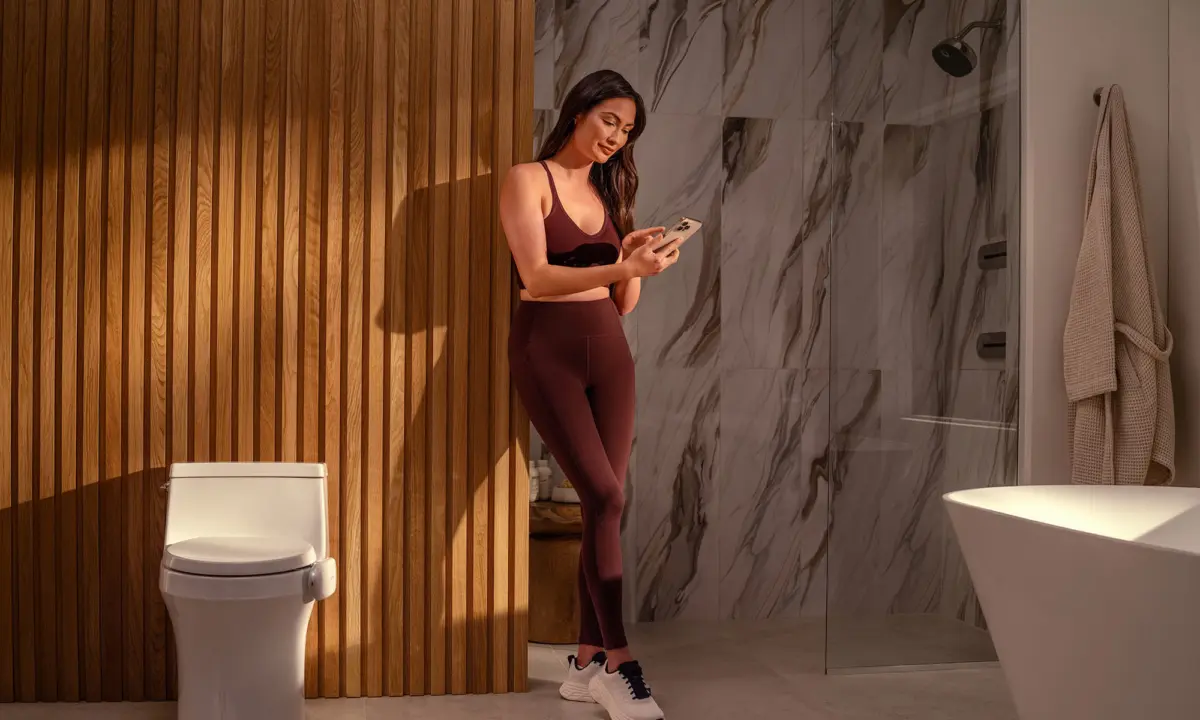
That is, until I encountered Kohler Health’s Dekoda—a first-of-its-kind bathroom device designed to passively monitor hydration levels, digestive patterns, and long-term bathroom trends. Intrigued by the promise of bridging the gap between clinical gut science and daily self-awareness, I decided to put the device to the test over a six-week period.
Main Facts: What is the Kohler Health Dekoda?
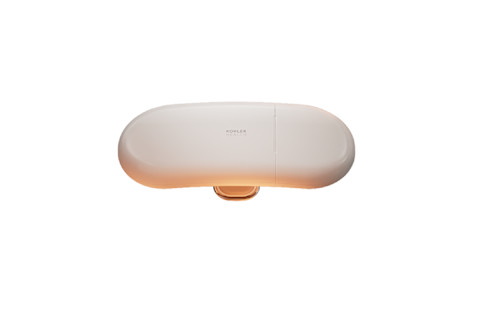
In a wellness market saturated with smart rings, wristbands, and continuous glucose monitors that demand active participation, the Dekoda takes a radically different approach. It is an unobtrusive tracking tool engineered to attach discreetly to an existing household toilet without requiring a full fixture replacement.
Operating entirely in the background, the device passively captures key physiological markers during routine bathroom visits. These metrics include:
- Hydration Status: Evaluating fluid balance based on output characteristics.
- Bowel Movement Patterns: Tracking frequency and consistency against established clinical baselines.
- Biomarker Detection: Monitoring for the presence of blood or other anomalies.
These insights are seamlessly transmitted to the companion Kohler Health App, transforming mundane daily routines into actionable, objective health data. Rather than relying on guesswork, users can establish personal baselines, observe long-term wellness trends, and—if necessary—share concrete data with their healthcare providers.

Chronology: A Six-Week Test Drive
As someone who notoriously drags their feet when adopting new technology (I am famously still holding onto an iPhone 11 from 2019 out of sheer reluctance to migrate data), approaching a smart bathroom device felt like a daunting chore. Here is how my six-week journey with the Dekoda actually unfolded.
Week 1: Unboxing and Setup
True to form, the Dekoda sat in its box for a few days while I mentally procrastinated. When I finally cracked it open, I was pleasantly surprised. The hardware is cleanly organized, accompanied by a concise, user-friendly booklet identifying all components.
A quick scan of the included QR code launched a step-by-step digital guide. Total installation time? Less than a few minutes. It didn’t require plumbing changes or professional assistance; it simply integrated into my existing bathroom setup.
Weeks 2–4: Seamless Integration and Daily Habits
The true test of any wellness technology is friction. If a device requires too much active effort, it inevitably ends up collecting dust in a drawer.
The Dekoda bypasses this hurdle through passive tracking. To record a visit, users simply use either the app or a secure, fingerprint-protected remote. Once this brief ritual became second nature, the data began accumulating effortlessly in the background. My focus shifted away from the mechanics of tracking and toward the emerging patterns on my smartphone screen.
Weeks 5–6: Recognizing Long-Term Trends
By the final phase of testing, the value of continuous monitoring became glaringly obvious. Health is not defined by a single day’s hydration or one unusual bathroom visit; it is told through a longitudinal story.
Instead of asking myself generalized questions like, "Did I drink enough water this week?" I could look at objective consistency scores. I was no longer guessing how my digestion responded to specific dietary triggers or stress spikes—the data provided a clear, clinical mirror.
Supporting Data: Why the Bathroom is the Final Frontier of Health Tracking
To understand why a device like the Dekoda is making waves, we have to look at the broader preventative healthcare landscape. For generations, metabolic and gastrointestinal tracking required invasive testing, clinical stool samples, or tedious manual food and symptom journaling—methods with notoriously high dropout rates.
Industry data highlights a striking paradox: while consumer awareness of gut health is at an all-time high, practical self-monitoring remains abysmal. Surveys indicate that the vast majority of individuals pay zero attention to their excretory outputs until acute symptoms arise.
By automating this data collection, Kohler Health is tapping into the preventative medicine movement. According to wellness technology analysts, passive health monitoring devices that require zero behavioral changes from the user boast retention rates up to 300% higher than wearable gadgets requiring active logging. By removing the administrative burden of health tracking, tools like the Dekoda democratize access to personal biometrics.
Official Responses and Privacy Protocols
Whenever technology enters the most private room in the house, privacy and data security become the primary concern. Kohler Health has addressed these anxieties head-on through stringent data encryption and transparent user controls.
In official product disclosures, the company emphasizes that all biological data captured by the device is heavily encrypted both in transit and at rest. Furthermore, the architecture of the companion app is designed with clinical-grade privacy standards, ensuring that users retain absolute ownership over their information.
This transparency is vital for consumer trust. Without robust privacy guarantees, a device designed to monitor bodily outputs would be dead on arrival in the consumer market. By prioritizing data sovereignty, Kohler Health has managed to position the Dekoda as a secure, medical-grade consumer tool rather than an intrusive novelty.
Implications: A Family-Friendly Approach to Preventative Medicine
One of the most unique aspects of the Dekoda system is its adaptability to shared living spaces. Traditional health trackers are inherently individualistic—you cannot easily pass an Apple Watch or a continuous glucose monitor between family members.
Bathrooms, however, are communal hubs. Living in a one-bathroom apartment meant the Dekoda had to be installed on our primary, shared toilet. Fortunately, the system accommodates multi-user households seamlessly.
The family membership option supports up to six distinct individuals under one roof. Each family member sets up an independent account, complete with isolated app access and personalized data streams. When using the shared fingerprint-secured remote to log a visit, the device instantly recognizes the user, ensuring that private health metrics remain strictly confidential—even among family members sharing the exact same hardware.
The Verdict: Is It Worth It?
As a wellness editor who preaches the gospel of preventative care, my core philosophy has always been rooted in bodily awareness. However, this six-week experiment proved something profound: it is exponentially easier to heed your body’s signals when you have objective data to look at.
The Dekoda succeeds because it asks virtually nothing of the user while delivering insights that are otherwise impossible to capture. It does not turn health tracking into another burdensome chore; it simply weaves itself into a routine you are already performing multiple times a day.
After years of testing wellness technology that promises the moon and delivers digital fatigue, I have learned that the best innovations are the ones that quietly disappear into the background while illuminating your understanding of self. Kohler Health’s Dekoda does precisely that—proving that the future of preventative healthcare might just be sitting right beneath us.
