

Main Facts
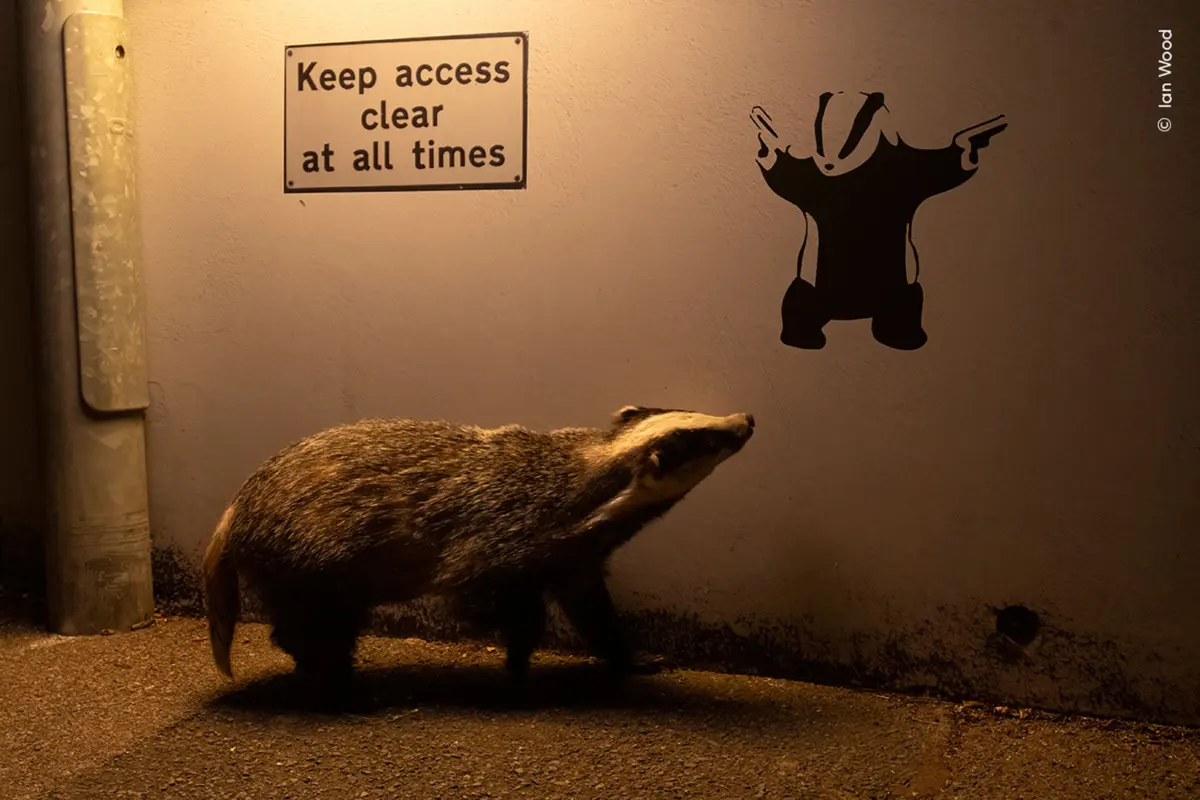
British photographer Ian Wood has claimed the prestigious title of the tenth annual Wildlife Photographer of the Year People’s Choice Award 2024 for his captivating and timely photograph titled "No Access." The winning image captures an ambling Eurasian badger pausing to glance upward beneath the glow of a streetlamp in St Leonards-on-Sea, England, as it crosses paths with striking local street art.
Selected from a record-breaking pool of public participation, Wood’s photograph triumphed over 24 other shortlisted contenders in a fierce global competition. More than 76,000 nature enthusiasts and wildlife photography fans from across the world cast their votes online and at the Natural History Museum in London, marking a milestone year of engagement for the competition.
While the striking visual juxtaposition of urban grit and rural wildlife won over the public’s hearts, the victory carries a deeper, more sobering message. Wood, a rewilding advocate based in rural Dorset, utilized his platform to shed light on the devastating impacts of the ongoing badger cull in the United Kingdom. He warned that if aggressive culling policies continue unchecked, future generations may only encounter these iconic nocturnal mammals in concrete-laden urban environments rather than their native rural habitats.
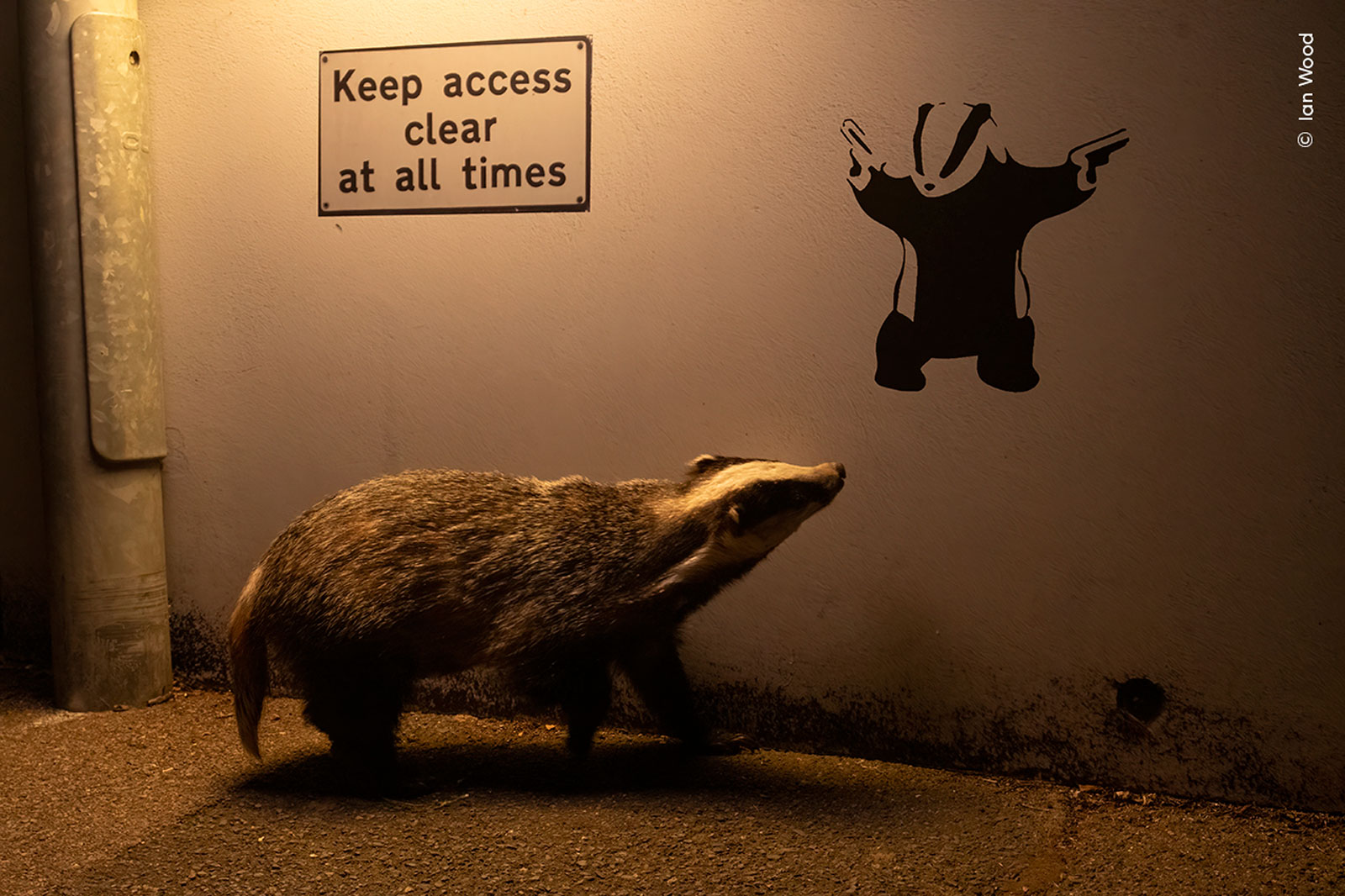
The winning image, alongside four other "Highly Commended" finalist photographs, is currently on prominent display in a flagship exhibition at London’s Natural History Museum, where it will remain open to visitors through June 29, 2025.
Chronology: From Pavement Foraging to Global Acclaim
The journey of "No Access" from a quiet street corner in East Sussex to the halls of the Natural History Museum is a testament to patience, fieldcraft, and serendipity.
The Urban Migration
The sequence of events began when residents of St Leonards-on-Sea began regularly leaving food scraps on suburban pavements, primarily intended to feed local urban foxes. However, these unintended nocturnal offerings soon caught the attention of a more elusive resident: the Eurasian badger. Hailing from a nearby established sett, badgers began venturing into the town’s lit thoroughfares to forage on the discarded provisions.

The Setup and the Shot
Noticing the regular nocturnal visits, Ian Wood recognized a unique photographic opportunity. After observing a badger casually ambling along the pavement beside a graffiti-laden wall late one night, he resolved to capture the moment. Setting up a small, discreet hide on the edge of the road, Wood waited for the precise alignment of subject, light, and setting. The scene was illuminated entirely by the amber wash of a nearby lamppost, casting long shadows and creating an atmospheric, theatrical frame that highlighted the animal’s cautious upward glance.
Nomination and Victory
Submitted to the prestigious, milestone sixtieth Wildlife Photographer of the Year competition—developed and produced by the Natural History Museum, London—Wood’s image was initially chosen by an international panel of experts from nearly 60,000 total submissions. It was subsequently named among the final 25 contenders for the People’s Choice Award, opening the door to public voting. On the announcement of his victory, Wood expressed profound humility at the overwhelming outpouring of "badger love" from the global public, using his newly found spotlight to champion wildlife conservation reform.
Supporting Data and Competition Context
The Wildlife Photographer of the Year competition remains one of the globe’s most definitive and competitive arenas for natural history imagery. The data surrounding the 2024–2025 cycle highlights both the massive scale of the contest and the specific breakdown of the People’s Choice finalists:
- Global Engagement: Over 76,000 votes were cast by the public for the tenth edition of the People’s Choice Award, representing a record-shattering response that emphasizes the public’s deep-seated connection to environmental imagery.
- Initial Pool: The 25 shortlisted nominees were filtered down from nearly 60,000 international submissions entered into the 60th annual main competition.
- Exhibition Longevity: The winning frame and the four Highly Commended finalist images are currently featured on interactive voting screens and physical displays at the Natural History Museum in London until June 29, 2025.
- The 2025 Cycle: The judging panel for the upcoming sixty-first competition is already actively evaluating entries, with winners scheduled to be announced at an official ceremony in October 2025.
The Four Highly Commended Finalists
Alongside Ian Wood’s winning badger portrait, four other breathtaking captures captured the global public’s imagination:
- "Earth and Sky" by Francisco Negroni (Chile): An arresting nighttime capture displaying a dramatic double lenticular cloud illuminated from below by rivers of molten lava erupting from Chile’s Villarrica volcano.
- "Edge of Night" by Jess Findlay: An atmospheric, high-action photograph showcasing a ghostly barn owl launching itself through the hayloft window of a derelict barn as it begins its nocturnal hunt.
- "Whiteout" by Michel d’Oultremont (Belgium): A masterclass in stealth and camouflage, featuring a stoat sitting upright to survey its snowy territory, blending effortlessly into a pristine, monochrome winter landscape.
- "Spiked" by David Northall: A gripping narrative wildlife shot depicting a bloodied yet fiercely determined honey badger returning to finish a confrontation with a Cape porcupine that had earlier attempted to defend itself using its formidable quills.
Official Responses and Expert Commentary
Leaders in the scientific and conservation communities have been quick to praise the cultural and ecological significance of Ian Wood’s winning photograph.
Dr. Douglas Gurr, Director of the Natural History Museum, emphasized the photograph’s power to bridge the gap between human society and the natural world. In a statement released following the announcement, Dr. Gurr noted:
"Ian’s flawlessly timed image offers a unique glimpse of nature’s interaction with the human world, underscoring the importance of understanding urban wildlife. His exceptional photograph serves as a powerful reminder that local nature and wildlife, often just outside our homes, can inspire and captivate us."
The sentiment was echoed by wildlife conservationists globally, who noted that as natural habitats shrink under the pressure of human expansion, the psychological distance between humans and animals is increasingly bridged within urban ecosystems.
Ian Wood himself reflected on the dual nature of his triumph, balancing public adoration for the animal with a stark warning regarding human policy:

"The outpouring of badger love since my photo was nominated for the People’s Choice Award has been beautifully overwhelming. Finding out that it has won is truly humbling. However, there is a darker side to this image."
Implications: Urban Adaptation Versus Rural Eradication
Beyond its artistic merit, "No Access" serves as an urgent ecological commentary on the state of British wildlife management, specifically targeting the controversial UK badger cull.
The Threat of the Badger Cull
Wood, who divides his time running a dedicated rewilding mission in rural Dorset aimed at restoring diverse habitats for native species, used his award platform to draw national attention to the ongoing cull. Authorized primarily to curb the spread of bovine tuberculosis (bTB) among cattle, the government-backed badger cull has faced fierce opposition from animal welfare organizations and conservationists who argue the practice is ecologically destructive and scientifically flawed.

According to Wood, the mass culling operations have severely decimated rural badger populations, driving surviving groups into fragmented, precarious existences. He warns that if the cull is allowed to continue unabated, rural populations could face localized extinctions, rendering badgers visible primarily as urban scavengers forced to forage on street pavements alongside foxes and rodents.
Redefining Human-Wildlife Coexistence
The image also prompts a philosophical and practical reassessment of how modern societies interact with native fauna. Urban wildlife is frequently categorized into pests or benign novelties, yet images like "No Access" force viewers to confront the structural encroachment of human civilization on natural corridors. The graffiti-scarred wall—ironically bearing the phrase implied by the title—juxtaposes human territorial claims against the quiet persistence of an animal merely seeking sustenance in a landscape stripped of its native resources.
A Catalyst for Advocacy
The Wildlife Photographer of the Year competition was originally founded, and continues to operate, with the explicit mission of using photography’s emotive power to create passionate advocates for the planet. By thrusting the plight of the Eurasian badger into an international spotlight through a viral, people-voted platform, Ian Wood’s photograph transcends standard nature photography. It functions as a political and environmental rallying cry, urging policymakers to reconsider archaic wildlife management strategies and pushing the public to demand systemic legislative reforms before Britain’s countryside is permanently silenced.
