

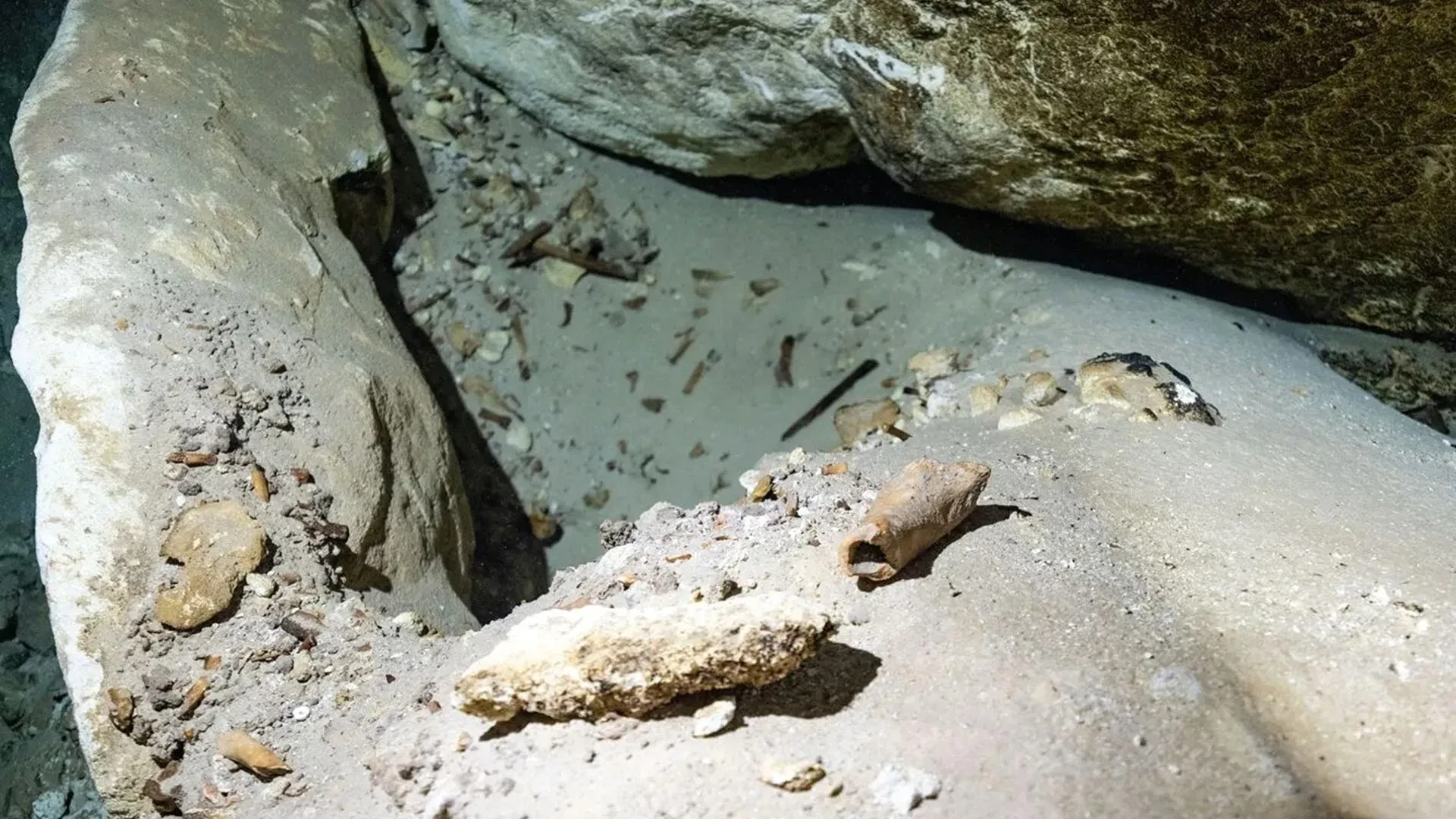
MOUNT GAMBIER, SOUTH AUSTRALIA — Beneath the deceptively tranquil, verdant landscape of South Australia lies a vast, labyrinthine network of water-filled limestone caverns. For decades, these submerged chambers have yielded breathtaking discoveries, acting as pristine repositories for the skeletal remains of ancient beasts, extinct megafauna, and modern fauna alike. Yet, despite their immense potential, these underwater graveyards have long kept a tight grip on their secrets.
Until now, scientists lacked a reliable, standardized methodology to decipher the complex life cycles of bones entombed in water. How did these remains arrive in the pitch-black abyss? What forces acted upon them over centuries and millennia? And how could researchers distinguish between the impacts of an aquatic environment and those of dry-land burial?
A groundbreaking study led by researchers at Griffith University has fundamentally changed the landscape of paleontology and archaeology. By establishing the world’s first diagnostic framework for reading the environmental "fingerprints" left on bones in underwater caves, the research team has unlocked a master key to the past. Published in the peer-reviewed journal PLOS One under the title "Neotaphonomic characteristics of vertebrate site formation in underwater caves," the study offers scientists a powerful new lens through which to view the prehistoric world.
Main Facts
The newly published research introduces a comprehensive analytical framework designed to decode how vertebrate remains accumulate, survive, and transform within submerged cave systems. Led by Meg Walker, a PhD candidate at the Australian Research Centre for Human Evolution (ARCHE), the study bridges a critical gap in taphonomy—the study of how organisms decay and become fossilized.
Key elements of the study include:
- The Study Sites: Researchers analyzed historical animal remains from two prominent underwater cave systems in South Australia: Green Waterhole and Gouldens Sinkhole, both located near Mount Gambier.
- Multidisciplinary Methodology: The research team utilized a vast array of analytical techniques, ranging from macro-level spatial distributions and surface bone modifications to micro-level elemental compositions and the preservation of ancient proteins trapped within cellular structures.
- Comparative Analysis: Submerged bone assemblages were systematically compared against those recovered from dry cave environments to isolate the specific markers of aquatic versus terrestrial preservation.
- Diverse Specimen Pool: The analyzed bones belonged to a wide variety of native and introduced species—including cows, kangaroos, emus, sheep, pigs, dingoes, rabbits, possums, quolls, and swamp rats—dating back roughly to European settlement in the region during the 1840s.
- The Ultimate Goal: By understanding how these more recent, historically documented bones were altered in aquatic environments, scientists can now accurately model how the fossils of long-extinct megafauna entered and changed within these same watery tombs.
Chronology of the Research
The realization of this diagnostic framework was no simple undertaking. It required a meticulous, multi-year investigative timeline that blended terrestrial laboratory science with high-risk technical diving.
Phase One: Expedition and Recovery
The project began with targeted fieldwork in the subterranean waters of South Australia’s Limestone Coast. Recognizing the hazards and specialized skills required to operate in flooded cave networks, the Griffith University team partnered with expert cave divers from the Cave Divers Association of Australia (CDAA).
Navigating the submerged, often narrow passages of Green Waterhole and Gouldens Sinkhole, the team carefully mapped and recovered historical vertebrate remains. These bones rested at varying depths and distances from cave entrances, exposing them to radically different environmental gradients—from sunlit entrance zones to lightless, subterranean chambers.
Phase Two: Laboratory Analysis (Macro to Micro)
Once safely extracted and cataloged, the bones were subjected to a battery of sophisticated scientific tests.
- Macroscopic Examination: Researchers mapped the spatial distribution of the bones within the caves, noting orientation, fragmentation, and surface weathering patterns.
- Microscopic Scrutiny: Using advanced microscopy, the team analyzed the micro-topography of the bone surfaces to identify biological etching, root marks, or algal colonization.
- Biochemical Testing: At the molecular level, scientists evaluated changes in elemental composition and searched for preserved proteins trapped within ancient cell structures. This multidisciplinary approach allowed the team to track how skeletons were modified over decades and centuries.
Phase Three: Radiocarbon Dating and Environmental Mapping
To establish a reliable timeline, the researchers utilized radiocarbon dating on selected bone specimens. This step was crucial for correlating the physical alterations on the bones with known historical events, such as the introduction of European livestock to the region in the mid-19th century. By anchoring the physical changes to a definitive timeline, the researchers could accurately calculate the rates of bone modification in underwater environments.
Supporting Data: Light, Algae, and the Midnight Zone
One of the study’s most revealing discoveries is how drastically bone preservation varies depending on micro-environmental factors within a single cave system. The Griffith University team categorized these environments into distinct zones, each leaving its own chemical and biological signature.
The Photic Zone (Near Entrances)
Near brightly lit cave entrances, sunlight penetrates the water, fostering aquatic life. The study revealed that:
- Algal Colonization: Various species of algae and aquatic plants thrive in these sunlit waters.
- Biological Signatures: These organisms frequently colonize the surfaces of exposed bones, leaving behind distinct micro-borings, organic residues, and recognizable staining patterns that signal shallow, well-lit deposition.
The Aphotic Zone (Total Darkness)
Conditions shifted dramatically in the deep, lightless "midnight regions" of the caves. Here, the absence of sunlight completely prohibits plant and algal growth.
- Pristine Preservation: In these deep, stable environments, bones often remained remarkably pristine.
- Structural Integrity: Shielded from the biological activity and temperature fluctuations found closer to the surface, the submerged bones retained their original structural integrity and finely detailed surface morphology for generations.
The Contrast with Dry Caves
To validate their findings, the research team compared the underwater specimens with bones recovered from dry cave systems. The contrast was stark.
- Absence of Aquatic Signatures: Dry cave bones completely lacked the algal and chemical markers characteristic of submerged remains.
- Terrestrial Degradation: Instead, dry cave bones bore the hallmarks of terrestrial decay. Land-based bacteria actively consumed bone collagen and mineral components, while invasive plant roots carved long, branching grooves across their surfaces as they sought nutrients.
Official Responses and Perspectives
The implications of the study have resonated strongly within the Australian and international scientific communities, highlighting the successful intersection of cave diving and rigorous academic research.
"By analyzing animal bones from two underwater cave systems in South Australia, we have revealed how different cave environments leave distinct preservation ‘fingerprints’ on skeletal remains," said Meg Walker, lead author and PhD candidate at Griffith University.
Walker, whose doctoral research is supervised by Professor Julien Louys (Director of the Australian Research Centre for Human Evolution), emphasized the breadth of the study:
"Backed by radiocarbon-dated bones, we tracked how skeletons accumulated and were modified over decades and centuries in underwater caves, then compared them to those buried in dry caves. Using a range of methods, from the macro to the micro, we looked at features associated with wet and dry caves—things like spatial distributions of the bones and their surfaces, down to elemental compositions and proteins trapped in ancient cells."
The collaboration with the Cave Divers Association of Australia was also praised as a vital component of modern paleontological fieldwork. Accessing these submerged chambers requires specialized trimix diving, rigorous safety protocols, and an intimate knowledge of subterranean geography—skills that ordinary field paleontologists rarely possess. By forging partnerships between academic institutions and technical diving organizations, researchers can safely push the boundaries of where and how science is conducted.
Implications for Global Paleontology and Archaeology
While the study focused on historical remains from South Australia—spanning native marsupials like quolls, possums, and kangaroos alongside introduced farm animals like cows and sheep—its ultimate utility stretches far beyond the Limestone Coast.
A New Tool for Megafauna Research
For decades, Australian paleontologists have marveled at the rich deposits of extinct megafauna—such as the giant wombat-like Diprotodon, massive short-faced kangaroos (Procoptodon), and the marsupial lion (Thylacoleo carnifex)—recovered from sinkholes and underwater caves across the continent. However, interpreting how these creatures ended up in these watery graves, and what the surrounding sediment tells us about past climates, has been fraught with guesswork.
By establishing a baseline of how bones behave in aquatic environments over known historical timeframes, Walker and her colleagues have provided a translation key for deep time.
"This study has delivered the first framework for interpreting how megafauna fossils formed, survived, and changed in underwater caves," Miss Walker stated. "It will provide archaeologists and paleontologists worldwide with a powerful new tool for reconstructing past environments and histories in these challenging conditions."
Reconstructing Ancient Ecosystems and Climates
Beyond merely identifying bones, the new framework allows scientists to reconstruct ancient ecosystems with unprecedented precision. Because the chemical and biological "fingerprints" on a bone reflect the exact water chemistry, light levels, and biological activity of its immediate micro-environment, researchers can read a bone almost like a climatic diary.
As climate change accelerates and researchers race to understand how ancient ecosystems responded to past environmental shifts, water-filled caves represent untouched archives of planetary history. Thanks to this pioneering research from Griffith University, the silent witnesses resting in the dark, flooded depths of the earth can finally tell their complete stories.
