

Published: October 2, 2026
By: Editorial Staff & Certified Yin Yoga Instructor Katie McGrath
Main Facts: The Neglected Plane of Human Motion
In the modern landscape of desk-bound labor, digital consumption, and automobile commutes, the human body exists in a state of perpetual forward flexion. From the moment we wake up and lean over our coffee cups to the hours spent hunching over laptops, texting on smartphones, and slouching on steering wheels, our physical routines favor a singular direction. Even when we break up the monotony with movement, physical activity tends to lean heavily on forward folds, crunches, and occasional spinal twists.
Yet, according to movement specialists and certified yin yoga instructors like Katie McGrath, human anatomy requires far more dynamic care. The spine is inherently designed to articulate in four primary directions: forward, backward, rotational twisting, and side-to-side lateral flexion.
Of these, lateral flexion—bending the torso from left to right—is the single most neglected movement in everyday life. It rarely occurs in standard daily routines, and surprisingly, it is frequently omitted from contemporary fitness classes and yoga sequences.
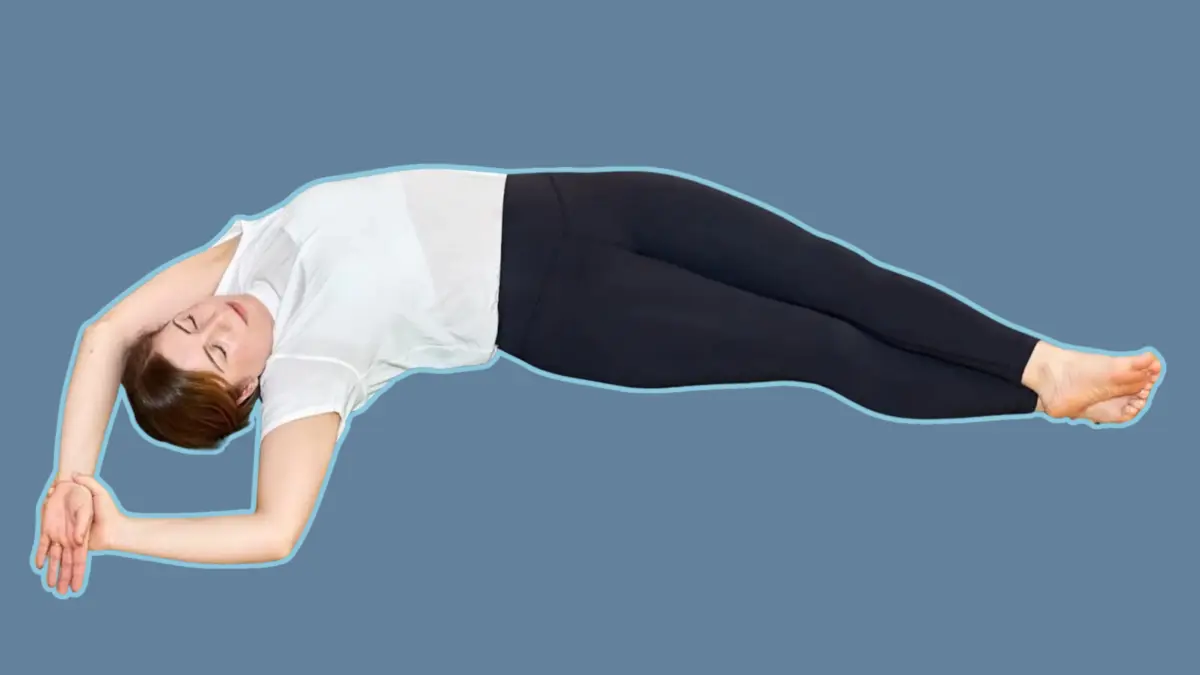
The antidote to this physical blind spot does not require high-intensity conditioning, heavy weights, or complex athletic balancing. Instead, it is found in a deeply passive, highly accessible yin yoga shape known as Banana Pose (Bananasana). By simply lying on the back, curving the torso into a shallow crescent moon shape, and holding the posture passively for three minutes on each side, practitioners can restore mobility to the side body, decompress tight lower backs, and invite a profound sense of physical and mental expansion.
Chronology: The Evolution of Modern Posture and the Rise of Yin Yoga
The Rise of Sedentary Culture
To understand why lateral stretching has become so vital, one must look at the evolution of modern posture. Over the past century, industrial and technological shifts have fundamentally altered human biomechanics.
- Mid-20th Century: The transition from agrarian and manual labor to desk-centric office environments began locking populations into seated, forward-leaning postures for 8 to 10 hours a day.
- The Digital Era (Early 2000s–Present): The proliferation of smartphones, tablets, and remote work models exponentially compounded this issue. Chronic "text neck" and rounded shoulders became global health phenomena, leading to widespread muscular imbalances, shortened hip flexors, and constricted rib cages.
The Modern Fitness Paradox
Even for those who exercise regularly, movement patterns remain heavily biased. Traditional weightlifting, running, cycling, and even standard vinyasa yoga classes rely heavily on sagittal plane movements—motions that travel forward and backward.
While fitness culture has long prioritized core strength and hamstring flexibility, the lateral line of the body—comprising the obliques, intercostals, quadratus lumborum, and latissimus dorsi—has been largely overlooked.
The Introduction of Yin Yoga and Bananasana
Yin yoga, developed in the late 1970s by martial artist and Taoist yoga teacher Paulie Zink and later popularized by teachers like Bernie Clark and Sarah Powers, sought to reintroduce deep, passive tissue care to Western practitioners. Unlike active, muscle-building "yang" styles, yin yoga focuses on long-held, relaxed floor postures that target the body’s connective tissues—fascia, ligaments, and tendons—rather than surface muscles.
Within this framework, Banana Pose emerged as an elegant, low-impact solution to lateral restriction. By leveraging gravity and time rather than muscular effort, Bananasana allows the deep fascial webs of the side body to slowly hydrate, lengthen, and release.
Supporting Data: Anatomy, Biomechanics, and the Science of Side-Bending
The efficacy of Banana Pose lies in its precise targeting of multiple anatomical layers along the lateral axis of the torso. When a practitioner curves their body into a shallow crescent on the floor, several key muscle groups and connective tissue structures are gently engaged in a prolonged stretch:
1. The Obliques (Internal and External)
Located along the sides of the abdomen, the obliques are responsible for twisting and side-bending the trunk. In modern sitters, these muscles are often chronically compressed and shortened, contributing to postural fatigue and restricted rotational mobility.
2. The Quadratus Lumborum (QL)
Often referred to as the "hip hiker" muscle, the QL runs from the lower ribs and lumbar spine down to the pelvis. It is a frequent culprit in chronic lower back pain. When the QL is tight on one side, it pulls the pelvis and rib cage closer together, creating imbalances throughout the entire kinetic chain.
3. The Latissimus Dorsi
As one of the largest upper-body muscles, the "lats" span from the arm down across the back to the spine and pelvis. Side-stretching opens up the armpits and lateral back, releasing tension that builds up from typing and overhead lifting.
4. Intercostal Tissue
The delicate muscles and fascial sheets situated between the ribs—the intercostals—expand and contract with every breath. When the side body is tight, these tissues restrict the rib cage’s natural mobility.
5. The Iliotibial (IT) Band and Outer Hips
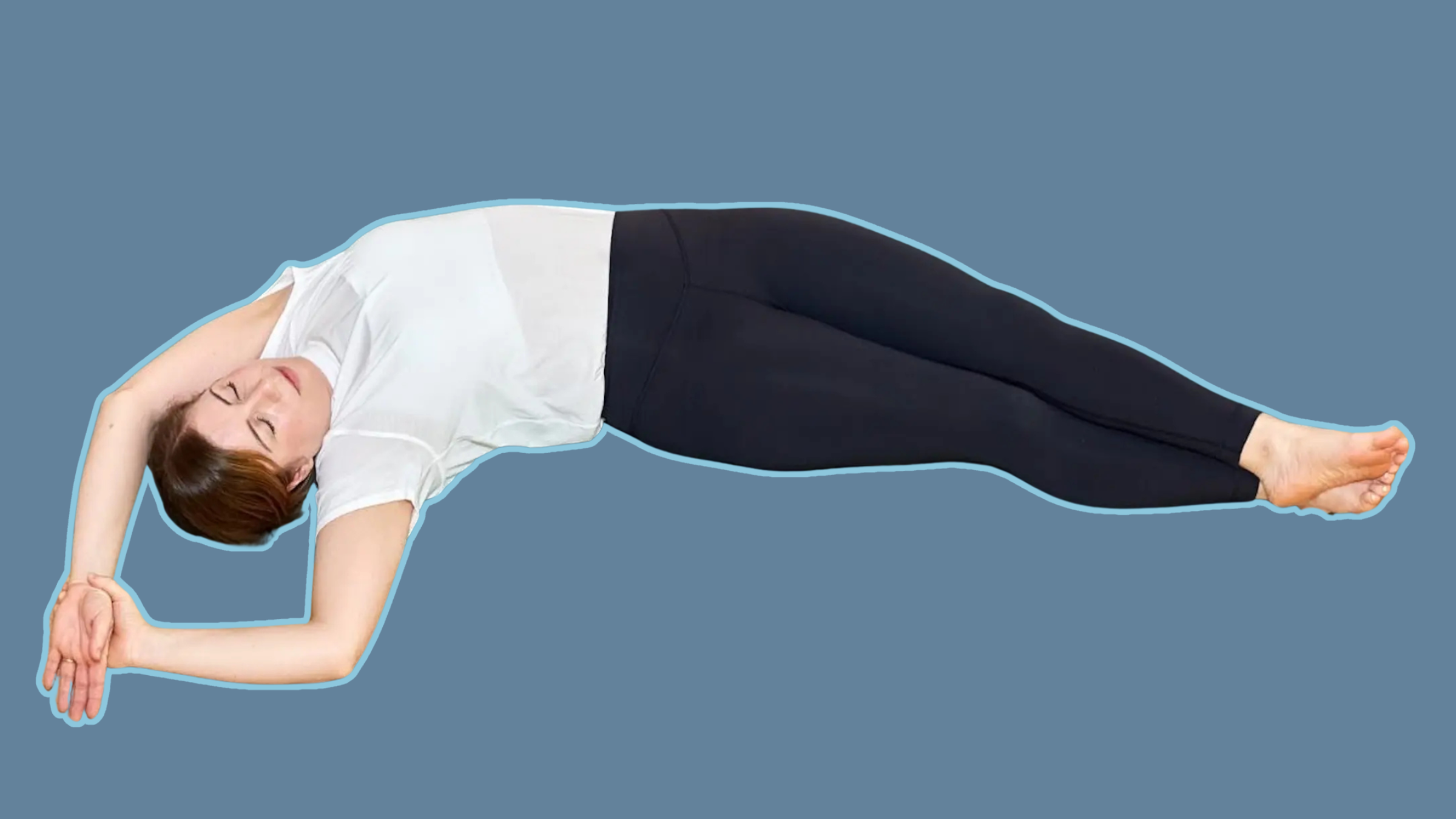
By crossing the outer ankle over the inner ankle during the posture, practitioners introduce a gentle traction along the outer hip and IT band, relieving tension that often radiates down from the pelvis.
+-----------------------------------------------------------------+
|               ANATOMICAL TARGETS OF BANANA POSE                 |
+----------------------+------------------------------------------+
| Target Structure     | Primary Function / Benefit               |
+----------------------+------------------------------------------+
| Obliques             | Relieves lateral compression from sitting|
| Quadratus Lumborum   | Decompresses lower back and QL spasms    |
| Latissimus Dorsi     | Opens upper back and shoulder girdle     |
| Intercostal Muscles  | Enhances rib cage elasticity & breathing |
| IT Band / Outer Hip  | Releases outer hip tension via crossing  |
+----------------------+------------------------------------------+
Official Perspectives and Expert Insights
Certified yin yoga instructor Katie McGrath, a prominent voice in modern movement education and the creator of the platform Yin Yoga with Katie, emphasizes that the power of Banana Pose rests in its utter simplicity.
"Think about how your body has moved today," McGrath notes. "You’ve probably hunched over a desk, a phone, a steering wheel, a sink. You’ve also likely twisted once or twice, reaching for something behind you. But, have you leaned properly to one side at a time? Most people haven’t. Not once, not in weeks."
According to McGrath, the body does not need aggressive stretching to find relief; it needs permission to access ranges of motion that have been abandoned. Because yin yoga requires practitioners to hold shapes for extended periods—typically two to five minutes—the nervous system is able to shift out of "fight or flight" and register that the tissue is safe to lengthen.
Furthermore, physical therapists and biomechanics experts echo the importance of lateral mobility in preventing chronic injuries. Restricted lateral flexion forces the lower back and hips to compensate during everyday movements, increasing the incidence of sciatica, lower back strain, and thoracic stiffness. By introducing passive lateral traction, practitioners create structural "slack" in the torso, allowing for smoother, pain-free movement in daily life.
Implications: Breathing, Nervous System Regulation, and Practical Application
The benefits of mastering Banana Pose extend far beyond muscular flexibility, deeply impacting respiratory mechanics, autonomic nervous system regulation, and mindfulness practices.
Implications for Respiratory Health
The primary muscle of respiration, the diaphragm, attaches directly around the lower internal ribs. Optimal breathing requires the rib cage to expand dynamically in three dimensions: upward, outward, and laterally.
When the tissues along one side of the torso are chronically restricted, the ribs cannot travel through their full arc of motion. Consequently, breathing becomes shallow, migrating upward into the chest and accessory neck muscles—a breathing pattern closely linked to chronic stress and anxiety.
By opening the lateral line, Banana Pose lifts the mechanical restriction on the rib cage. Practitioners frequently report that after releasing the pose, their breath feels instantly deeper, smoother, and more naturally integrated into the lower belly and ribs.
The Vitality of the Post-Pose Pause
A critical component of the practice—and one frequently overlooked by beginners—is the transition period. McGrath emphasizes the importance of lying completely flat for a full minute between sides:
"Come out slowly, and then do nothing for a full minute before you change sides. Lie flat and let the two halves of your body feel different from each other for a moment. That pause is part of the practice, not a gap between the real bits."
This mindful pause allows the nervous system to process the physiological shift, heightening interoception—the internal awareness of bodily sensations. Users often report a distinct, tingling sensation of warmth and energetic flow along the side that was just stretched, highlighting the immediate vascular and neurological impact of the pose.
How to Practice Banana Pose Safely
To integrate this powerful movement into your daily routine without strain, follow these foundational steps:
- Lie on Your Back: Begin flat on your yoga mat or a comfortable carpeted surface with your arms extended overhead on the floor.
- Create a Crescent Shape: Keeping your hips firmly planted on the ground, walk your feet over to the right side of your mat as far as comfortable. Next, walk your upper body and arms to the right, forming your body into the shallow shape of a banana.
- Deepen (Optional): To add a subtle stretch to the outer hip, cross your left ankle over your right ankle. If comfortable, clasp your left wrist with your right hand overhead.
- Hold Passively: Allow your muscles to completely soften. Do not force or pull; let gravity do the work. Hold the shape for 2 to 3 minutes.
- Rebound and Switch: Slowly return to a neutral, flat position on your back. Rest for a full minute, noticing the energetic differences between the left and right sides of your torso. Repeat on the opposite side.
Modifications and Precautions
While Banana Pose is exceptionally gentle, practitioners should keep a few safety guidelines in mind:
- Keep it Shallow: The shape should resemble a subtle crescent moon, not an intense, painful arch. Over-bending can compress the lower back unnecessarily.
- Shoulder Comfort: If overhead arm extension causes shoulder pinching or discomfort, keep your arms resting by your sides or across your chest.
- When to Skip: Individuals with acute disc herniations, severe scoliosis, or acute lower back trauma should consult a medical professional or physical therapist before attempting deep lateral stretches.
Conclusion
In an era dominated by forward-facing screens and rigid daily routines, the body cries out for dimensional freedom. Banana Pose offers an effortless, deeply restorative pathway back to physical balance. By dedicating just a few minutes a day to lateral elongation, practitioners can unlock restricted ribs, deepen their breath, and restore the vital, fluid movement that keeps the human body resilient for years to come.
