

Updated September 29, 2026
For millions of remote and office workers alike, the modern workday is defined by a silent, creeping physical toll. Hours spent hunched over glowing screens invariably lead to a predictable chorus of bodily complaints: tight hips, an achy lower back, and shoulders locked in a permanent, stress-induced shrug. Yet, while the physical discomfort of a sedentary lifestyle is widely documented, the psychological toll often goes unaddressed.
That sudden inability to read a single paragraph without switching tabs to browse social media or check your phone? That might not just be a lapse in willpower. According to movement experts, it is often your mind signaling an urgent need for physical stimulation and a cognitive reset.
Enter the world of yoga-inspired mobility training—a dynamic antidote to the stagnation of desk life. Designed to shake off both physical stiffness and mental fatigue, these movement practices offer a much-needed disruption to the monotonous daily routine.
Main Facts: The Intersection of Movement and Mental Clarity
Sedentary behavior is more than just an ergonomic issue; it is a neurological one. When the body remains fixed in a single posture for hours, circulation slows, nervous systems become hyper-vigilant yet under-stimulated, and focus wanes.
Olive Walton, a renowned yoga teacher and mixed movement coach who has been sharing their passion for body mechanics and mobility since 2018, emphasizes that moving the body acts as a desperately needed reset button for mental health.
"Your body certainly lets you know its displeasure when you sit for hours on end with no reprieve," Walton explains. "However, perhaps the less talked-about survivor of sedentary life is your mind."
Mobility-focused movement practices guide the body into novel, unfamiliar positions that challenge physical coordination. This deliberate disruption forces both the muscles and the brain to wake up, trading the numbing repetition of staring at a screen for the active, mindful engagement of joints and limbs.
Chronology: The Evolution of Workplace Wellness and Active Recovery
The conversation surrounding office ergonomics has evolved significantly over the past decade.
- Pre-2018: Workplace wellness was largely restricted to basic ergonomic chair adjustments, standing desks, and standard 15-minute coffee breaks that did little to actively counteract muscle tightening.
- 2018–2020: The rise of mixed-movement coaching and functional yoga introduced the concept of "movement snacks"—short, targeted bouts of physical activity integrated into daily routines rather than relegated to hour-long gym sessions.
- 2021–2025: As hybrid and remote work models became permanent fixtures of the global economy, the lines between living and working spaces blurred. The need for accessible, equipment-free movement routines surged as chronic screen fatigue became a public health concern.
- 2026 and Beyond: Movement practitioners like Olive Walton are bridging the gap between ancient yoga traditions and modern functional mobility, creating accessible sequences designed specifically to combat the cognitive and physical degradation associated with prolonged sitting.
Supporting Data: Why Mobility Trumps Static Stretching
Research into sedentary lifestyles consistently underscores the necessity of dynamic movement over passive resting. According to clinical studies highlighted by the National Center for Biotechnology Information (NCBI), breaking up prolonged periods of sitting with intentional physical activity significantly improves vascular health, reduces musculoskeletal pain, and enhances cognitive function.
Furthermore, neuroscientific data indicates that dynamic movement—exercises that require balance, spatial awareness, and joint rotation—stimulates the release of neurotrophic factors, which support cognitive flexibility and problem-solving abilities.
When applied to the workday, a brief movement break does not pull time away from productivity; rather, it restores the cognitive bandwidth required to tackle complex tasks efficiently. As Walton notes, a few minutes of mobility work can make reading that dense, intimidating work email feel remarkably effortless afterward.
Official Perspectives: The Expert Approach to Movement
Fitness and wellness authorities increasingly advocate for "movement variability"—the idea that the human body thrives when exposed to a wide variety of movement planes throughout the day.
Traditional workouts (like a standard run or weightlifting session) often occur in a single plane of motion, typically forward and backward. However, desk work compounds this limitation by locking the body into a seated, forward-flexed position.
Coaches like Walton champion a multi-disciplinary approach that borrows the mindfulness and breathwork of yoga and pairs it with the joint articulations of modern mobility science. This combination ensures that the nervous system receives a comprehensive signal to down-regulate stress hormones while simultaneously lubricating stiff joints.
Implications: Implementing the 16-Minute Mobility Routine
You don’t need a fully equipped gym, specialized gear, or a massive time commitment to reclaim your physical agency. All that is required is yourself, some comfortable clothing, and a modest patch of floor space.
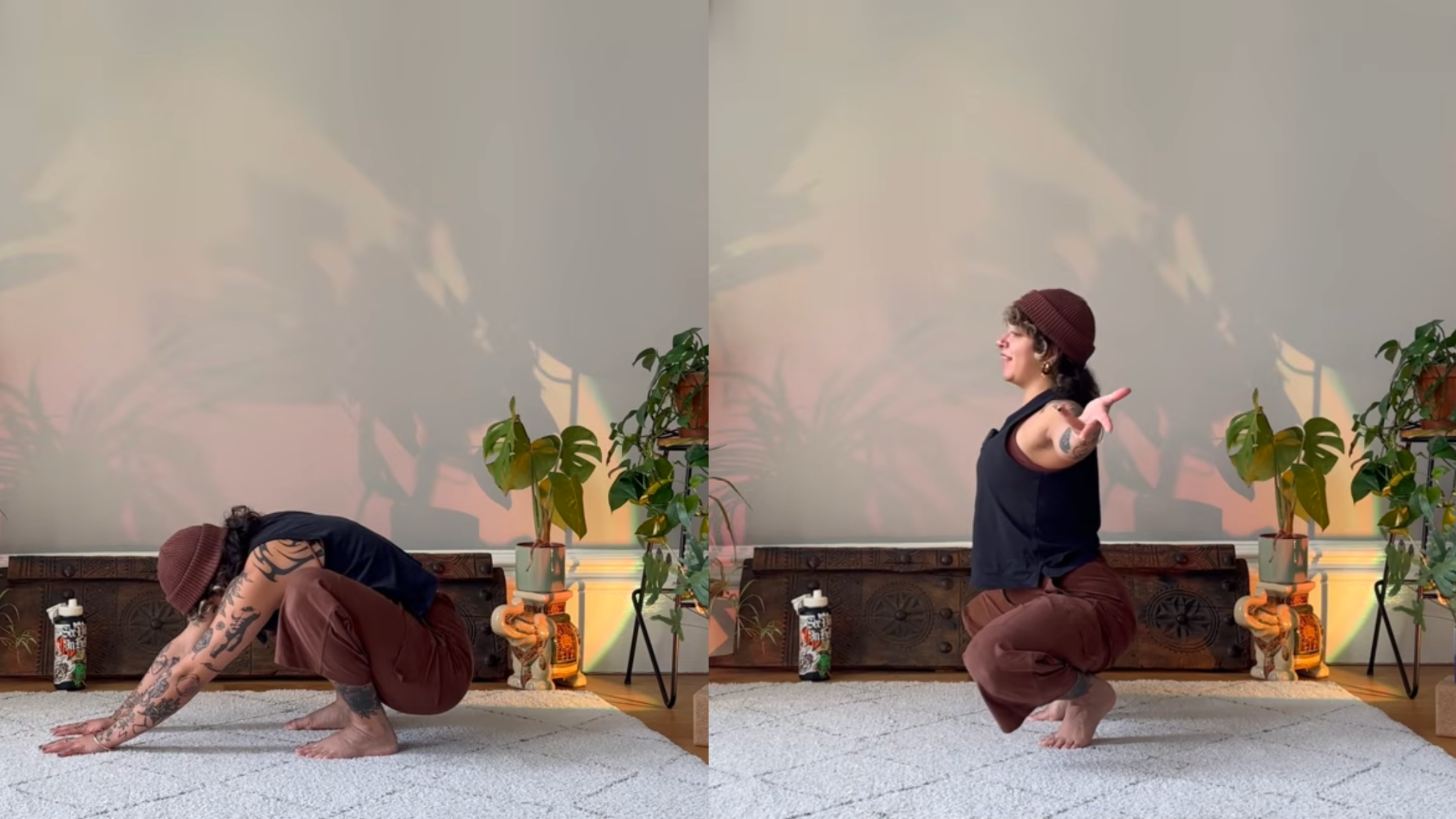
The following 16-minute, yoga-inspired mobility practice can be performed before, during, or after your workday. Choose the full sequence or pick a few targeted exercises whenever your mind starts to wander.
1. Standing Spinal Rotation
- Focus: Releasing lower back tension and unlocking the mid-section.
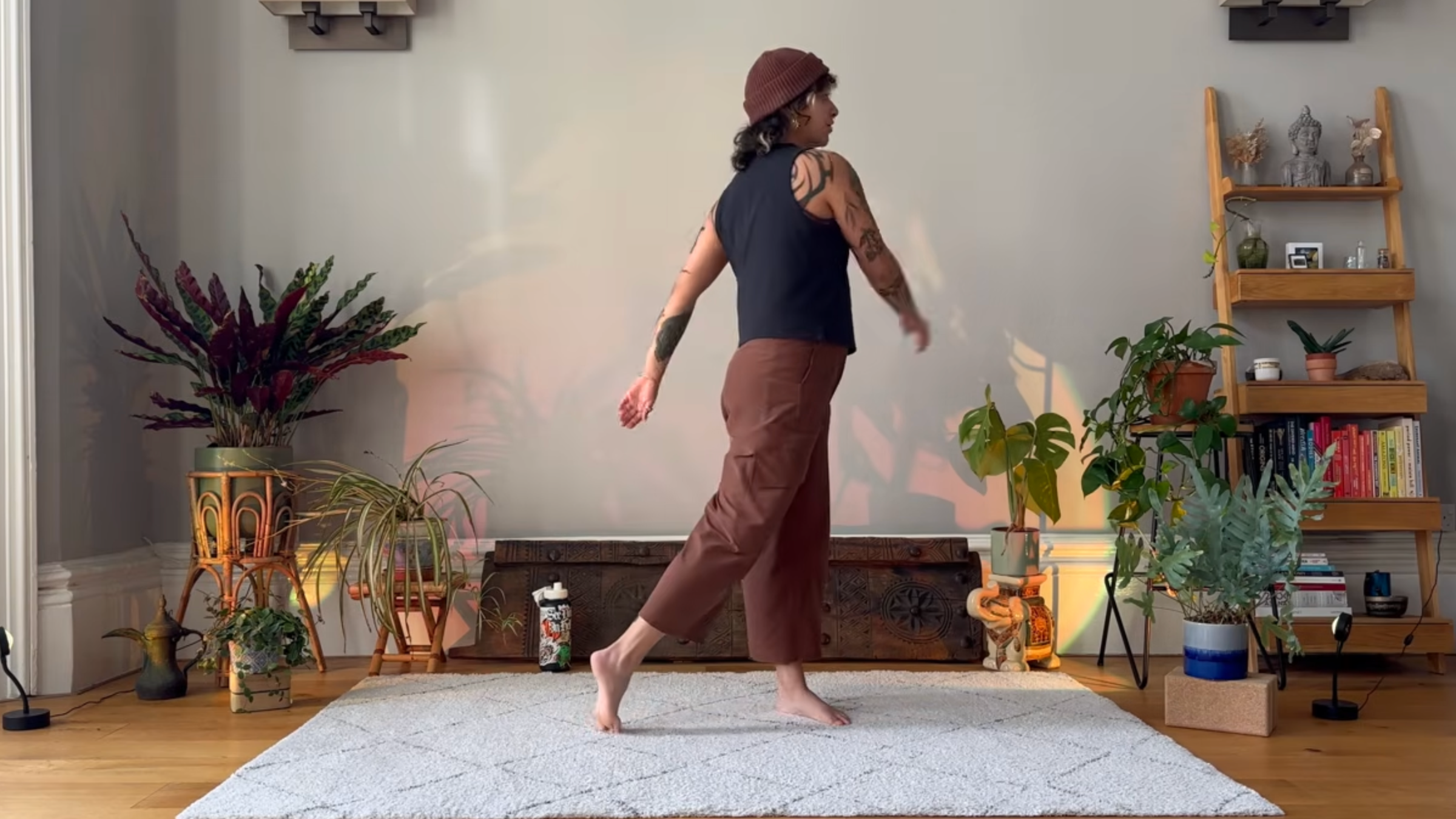
- How-to: Stand with your feet about hip-distance apart, arms relaxed by your sides. Initiate the movement from your mid-section, twisting your body to the right while letting your left knee turn inward and your left heel lift off the mat. Reverse the motion, twisting to the left as you lower your left heel and lift your right. Build a gentle momentum, allowing your arms to swing naturally with the body’s rotation. Continue for as long as feels restorative.
2. Shoulder Circles
- Focus: Relieving "desk-hump" and shoulder girdle tension.
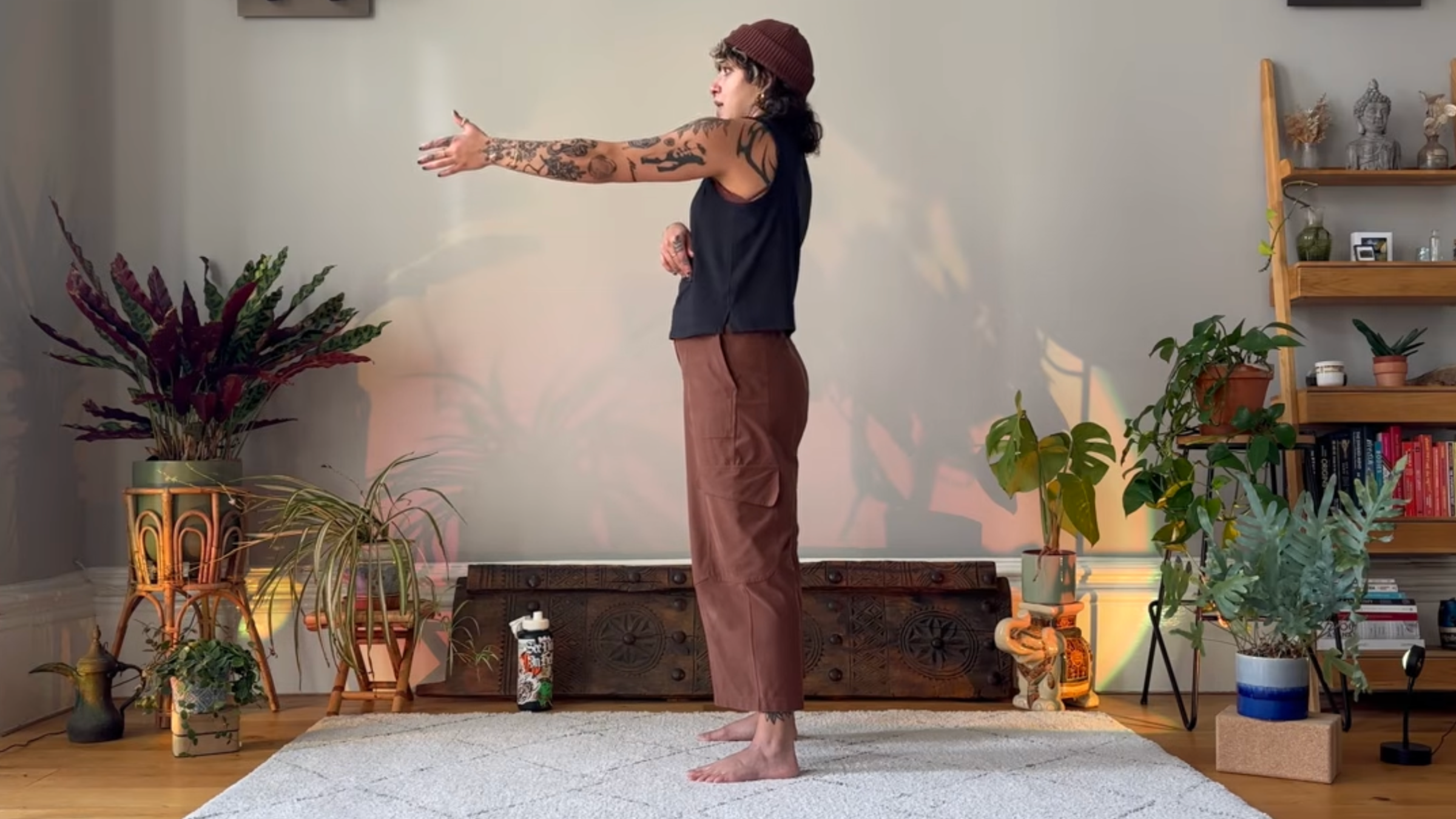
- How-to: Reach your left arm straight out in front of you, parallel to the floor. Draw your left shoulder toward your ear, then forward, down, and back in a smooth circular motion. Isolate the movement strictly to the shoulder joint—avoid moving your arm or chest. (It is entirely normal for the joint to feel somewhat clunky initially.) Complete a few rounds, shake out the arm, and repeat on the right side.
3. Hip Airplanes
- Focus: Activating stabilizing hip muscles and opening the pelvis.
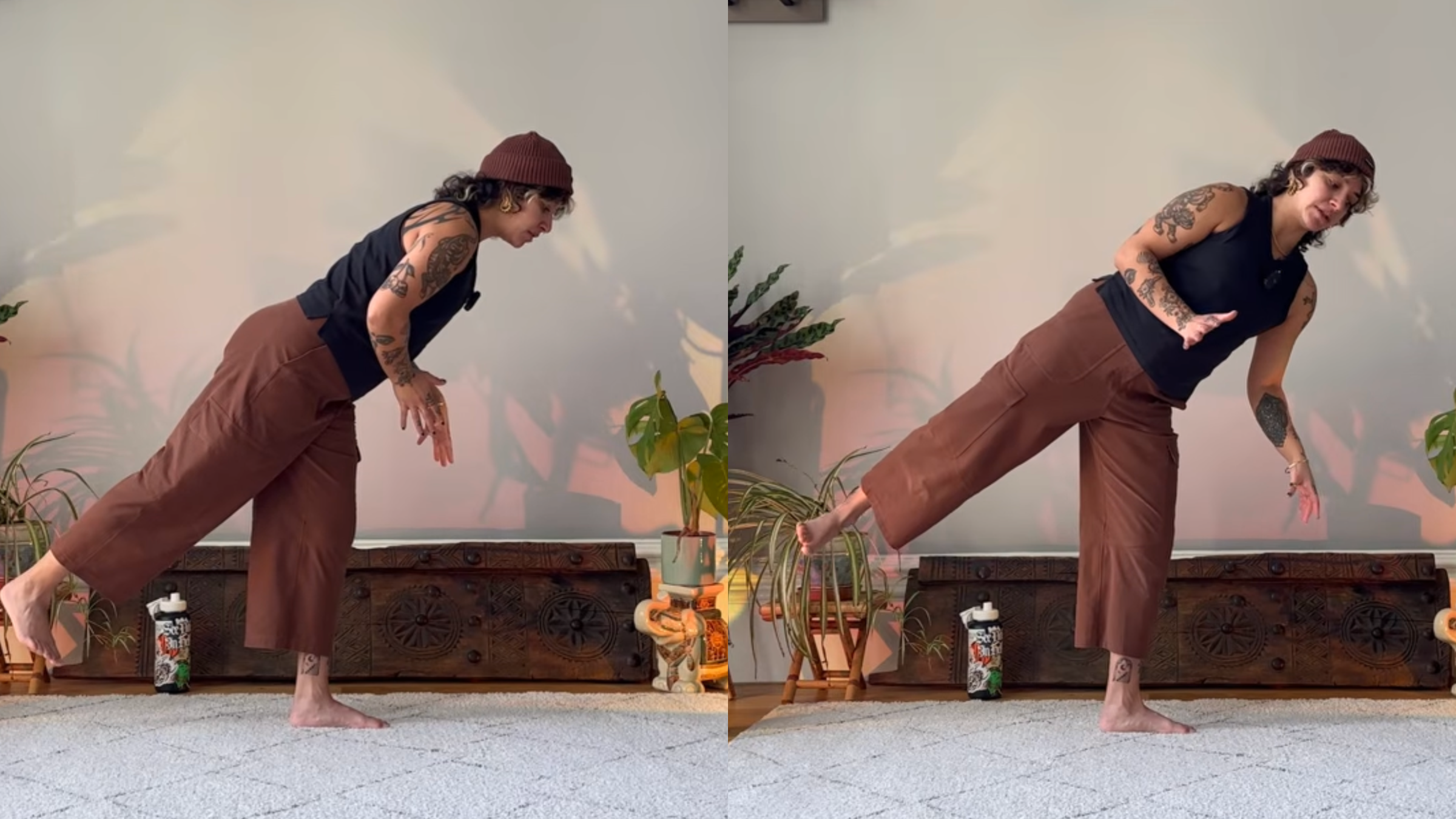
- How-to: Stand near a wall or chair, resting your right hand on it for balance. Shift your weight into your right foot, lift your left foot slightly, and extend your left leg behind you at a diagonal. Bend your right knee slightly and reach your chest forward. Imagine a beam of light shining from your belly button straight down to the mat. Slowly rotate your torso and hips to point that beam toward the left wall, opening your shoulders and chest. Pause, return to center, and then rotate your hips and chest to point the beam toward the right side. Return to center, lower your foot, shake out your leg, and switch sides.
4. Upper Body Circles
- Focus: Decompressing the thoracic spine and neck.
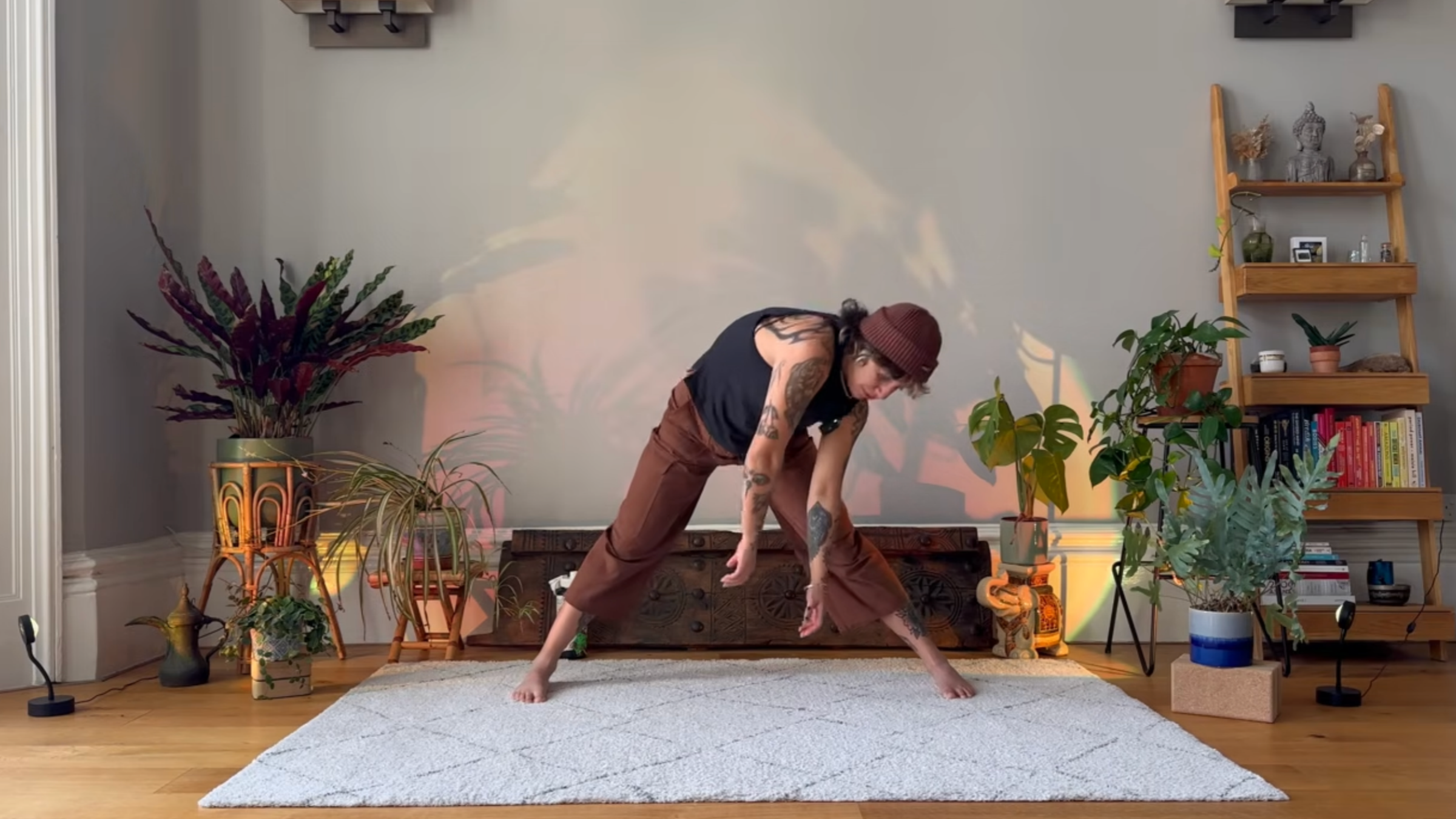
- How-to: Step your feet wider than hip-distance apart with your arms completely relaxed. Gently round your neck, shoulders, and upper back to the right, roll forward, shift to the left, and arc back up to complete a large circular motion. Continue in one direction for several rotations before reversing the flow.
5. Wrist and Forearm Stretches
- Focus: Preventing carpal tunnel strain and mitigating keyboard fatigue.
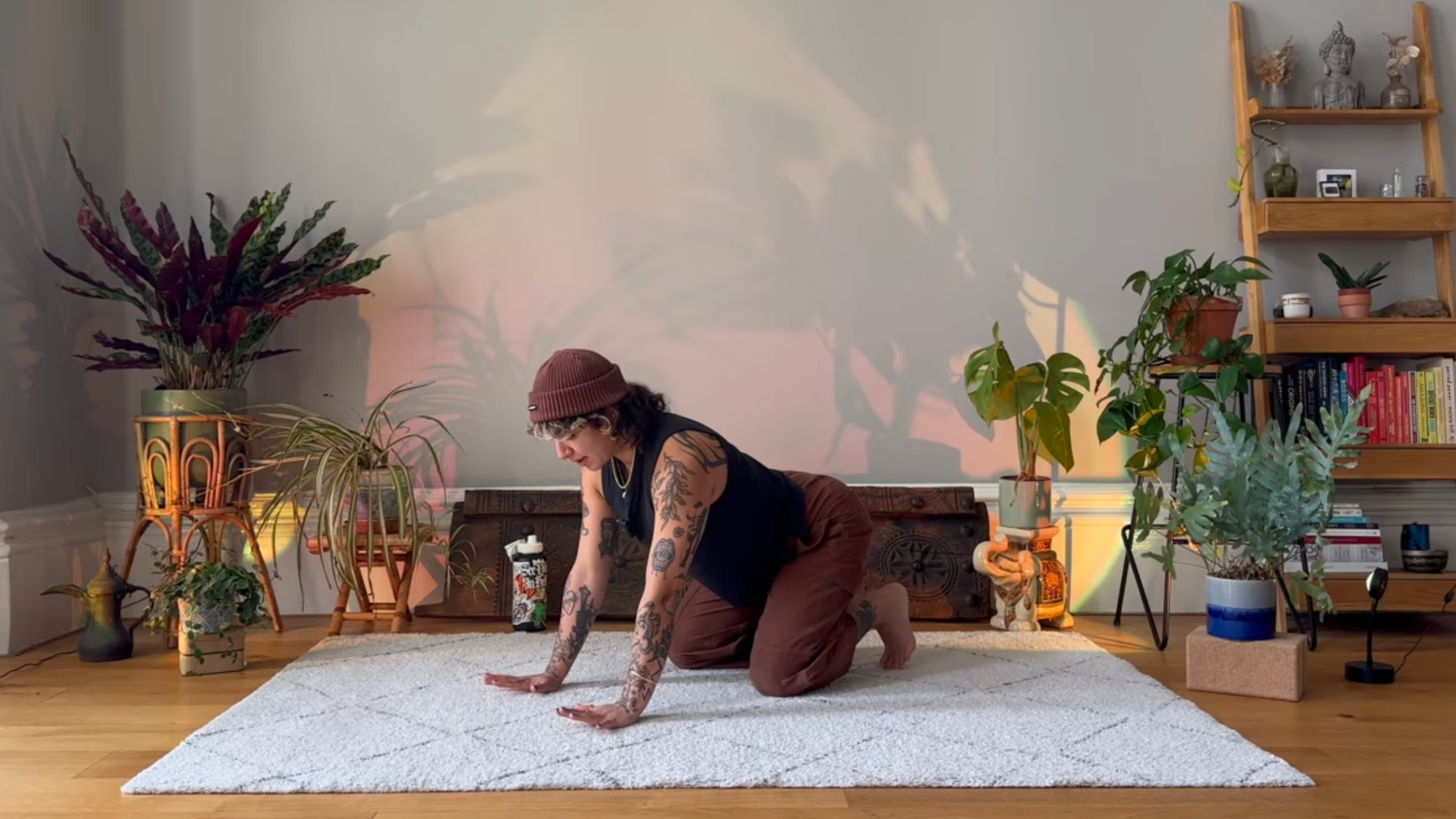
- How-to: Come onto your hands and knees with your fingers spread wide. Gently shift your hips back toward your heels, then forward over your wrists, rocking back and forth. Next, lift the palms of your hands off the mat while keeping your fingers pressed firmly down; hold for a few seconds. Reverse the action by lifting your fingers while pressing your weight into the heels of your hands. Finally, turn your fingers slightly out to the sides and rock your weight side to side from hand to hand.
6. Ankle Stretches (Mermaid Transitions)
- Focus: Enhancing ankle dorsiflexion and lateral hip mobility.
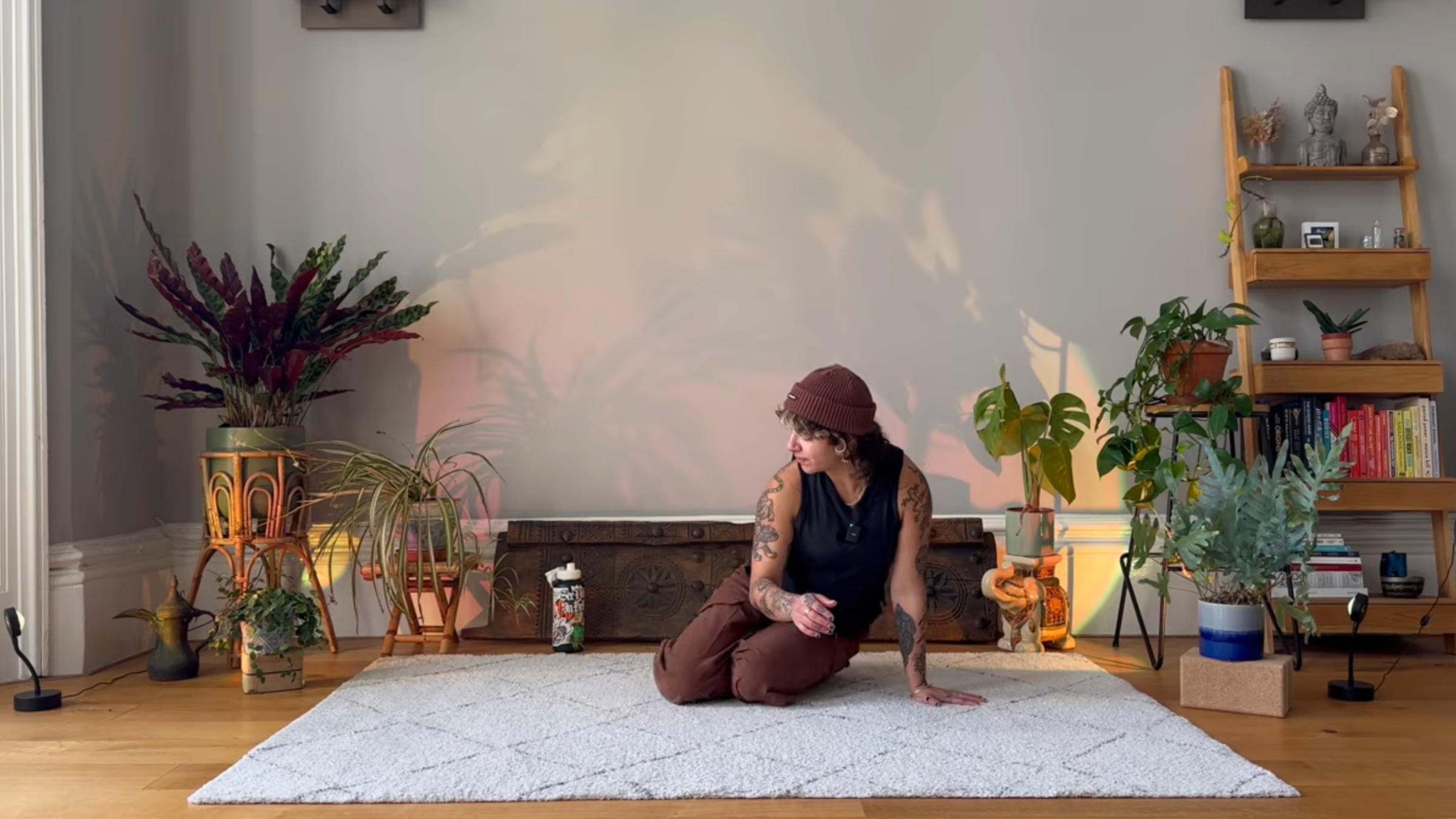
- How-to: Sit back onto your heels with the tops of your feet flat against the mat. Lower your right hand to the floor, slide your sitting bones off your heels, and rest your right hip on the mat, drawing your bent legs into a "mermaid" tail shape on your left side. Use your hands to press yourself back up to center, sitting back on your heels, then repeat the movement on the opposite side. Alternate for multiple rounds.
7. Squat Stretches
- Focus: Deep hip opening and lower back decompression.
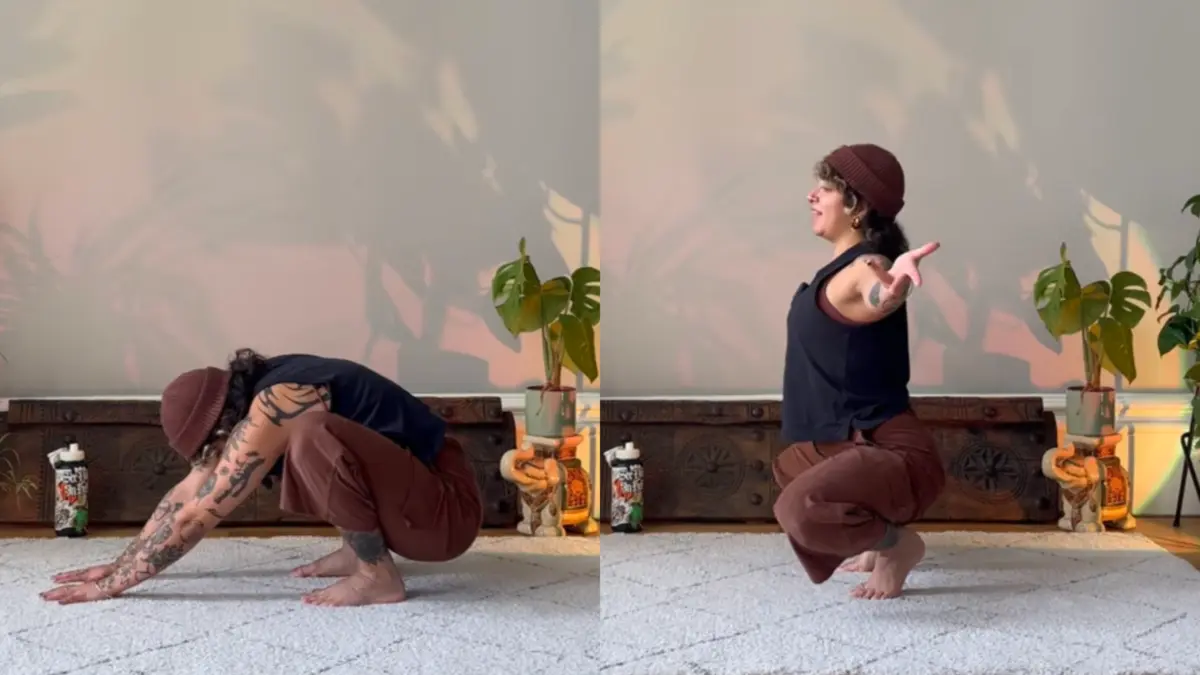
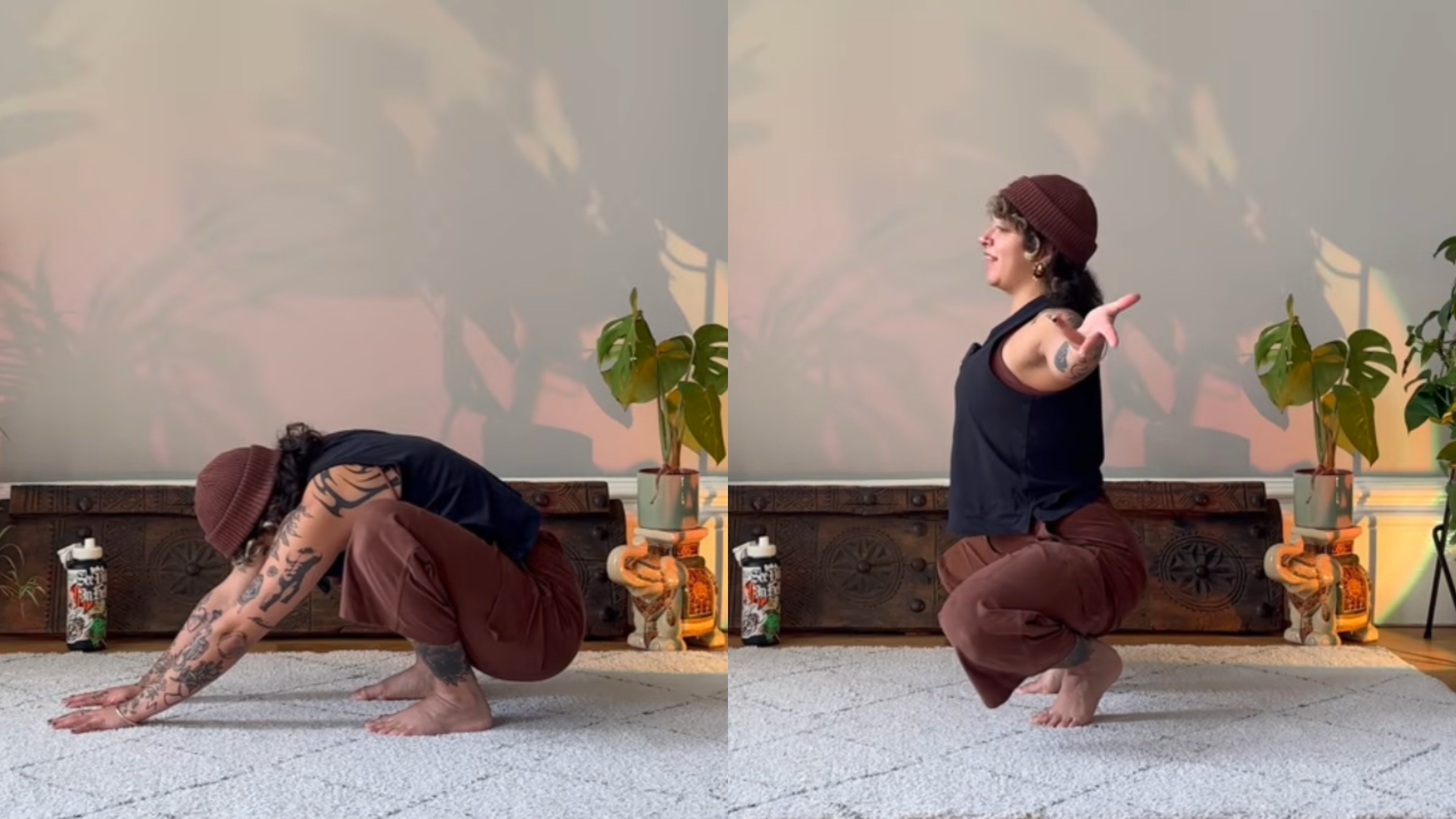
- How-to: From a hands-and-position, tuck your toes, press your weight into your heels, and lower your hips into a deep squat (Garland Pose), allowing your knees to fall open. (It is completely fine if your heels do not touch the floor.) Walk your hands forward, round your back, and let your chin drop toward your chest. Slowly roll up, open your arms into a "T" shape, lift your heels, and widen your knees slightly. Lower your heels, fold back forward, and walk your hands first to the left—rocking your hips if it feels good—and then to the right before returning to center.
8. Rag Doll
- Focus: Total systemic release and nervous system down-regulation.
- How-to: From your forward fold in the squat position, slowly begin to straighten your legs while grasping opposite elbows or clasping your hands behind your head. Keep a soft micro-bend in your knees, allowing your head and neck to hang completely heavy. Gently sway side to side if desired. Take a few deep breaths, slowly roll up to standing, and take one final cleansing breath in through your nose and out through your mouth.
Notice how your body feels: looser, lighter, and far better equipped to handle the remainder of your day.
