

In an era defined by deep political polarization and legislative gridlock, Capitol Hill has quietly produced a legislative package capable of fundamentally rewriting the mechanics of American energy development. Known as the Bipartisan American Affordability and Jobs Act (BAAJA), this sweeping 417-page proposal has ignited a fierce national debate, dividing environmentalists, energy developers, and lawmakers.
Championed by figures like Senator Sheldon Whitehouse (D-RI)—widely regarded for his articulate and rigorous advocacy on climate and environmental matters—the bill attempts the seemingly impossible: bridging the gap between fossil fuel proponents and renewable energy advocates through a comprehensive overhaul of the nation’s energy permitting system. However, as the legislative text undergoes intense scrutiny ahead of post-midterm congressional battles, critics warn that the compromise may inadvertently lock in decades of fossil fuel dominance while eroding critical environmental and community safeguards.
Main Facts: What is the Bipartisan American Affordability and Jobs Act?
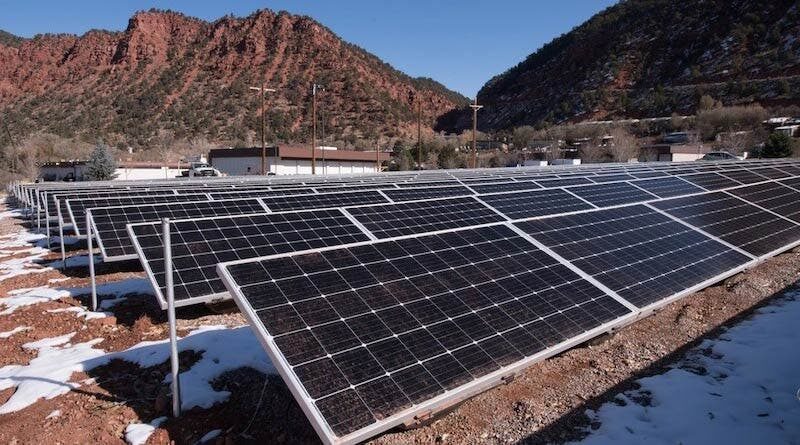
At its core, BAAJA is designed to accelerate the deployment of virtually all forms of domestic energy infrastructure. According to analyses from Bloomberg and energy policy groups, the legislation streamlines the permitting processes for everything from long-distance high-voltage transmission lines and utility-scale solar and battery storage systems to natural gas pipelines and geothermal testing facilities.
The driving motivation behind the bill is a logistical bottleneck that has plagued the U.S. energy transition for decades. Currently, massive quantities of renewable energy projects and data centers sit in sluggish interconnection queues, waiting years to connect to an outdated electrical grid. BAAJA attempts to clear these logjams by modernizing federal transmission rules and limiting the avenues for project delays.
However, the bill’s provisions extend far beyond procedural efficiency. BAAJA proposes significant adjustments to cornerstone environmental legislation, including the National Environmental Policy Act (NEPA) and the Clean Water Act, shifting the balance of power away from state and local authorities and toward federal and corporate stakeholders.
Chronology: The Path to the BAAJA Compromise
- Early 2026: Recognizing the critical bottleneck in grid connectivity—driven largely by the explosive power demands of artificial intelligence data centers and the rapid deployment of clean energy—lawmakers from both sides of the aisle begin quietly negotiating a bipartisan permitting reform framework.
- Mid-2026: The Environmental Protection Agency (EPA), under the influence of ongoing regulatory shifts, proposes modifications to Section 401 of the Clean Water Act, aimed at limiting state intervention in federal energy projects.
- September 2026: Independent analyses, including a landmark report by the Center for Climate and Energy Solutions (C2ES), quantify the financial and emissions impacts of potential federal transmission reforms, forecasting billions in consumer savings.
- October 2026 (This Week): Senator Sheldon Whitehouse and a bipartisan coalition formally introduce the 417-page Bipartisan American Affordability and Jobs Act. The bill is slated for debate and a potential vote following the upcoming midterm elections, leaving its ultimate fate tied to the composition of the next Congress.
Supporting Data: Economic Savings Versus Environmental Trade-Offs
Proponents of the legislation point to a growing body of economic and environmental modeling to justify the sweeping changes proposed in BAAJA. A report published by the Center for Climate and Energy Solutions (C2ES) outlines substantial potential benefits if federal transmission and permitting reforms are successfully implemented:
- Grid and Consumer Savings: In four major U.S. regions accounting for roughly half of the nation’s electricity demand, transmission reforms could slash regional grid costs by $7 billion, lower residential electricity bills by $1.1 billion, and reduce costs associated with power shortages by 76 percent.
- Long-Term Impact: Between 2026 and 2040, nationwide reforms could reduce cumulative grid costs by approximately $125 billion and shrink residential electricity bills by $19 billion.
- Emissions Reductions: Carbon dioxide emissions from the power sector in key regions are projected to fall by 9 percent (amounting to 71 million tons in those regions by 2035 alone) compared to a business-as-usual trajectory.
Nathaniel Keohane, head of C2ES, expressed strong confidence in the bill’s net economic and climate value, telling Bloomberg that the provisions governing electrical generation would unlock "gigaton-scale emissions reductions over time."
Conversely, critics and watchdog organizations emphasize the hidden ecological and social costs embedded within the bill’s extensive text, noting that accelerated timelines will inevitably override localized environmental assessments.
Official Responses and Stakeholder Reactions
The reception to BAAJA has exposed deep fractures within the broader climate and energy community, separating pragmatic policy analysts from frontline environmental justice advocates.
The Pro-Reform Perspective
Supporters argue that without sweeping permitting reform, achieving a clean energy future is practically impossible.
- Rob Gramlich, President of Grid Strategies: Gramlich noted that while the package is technologically neutral—meaning it does not inherently favor wind, solar, or fossil fuels—it acts as an essential enabler for a clean energy transition. He highlighted that tech companies, utilities, and states eager to power new data centers with renewables will find significantly more viable pathways under the bill.
- Jane Flegal, Former Biden Administration Climate Official: Taking to social media, Flegal praised the legislation as "awesome," arguing that establishing a reliable, streamlined path to the grid is essential for integrating higher volumes of renewable energy and nuclear power.
The Critical Opposition
On the other side of the debate, progressive activists, legal scholars, and climate organizers argue that the bill makes dangerous concessions to the fossil fuel industry.
- Bill McKibben, Environmentalist and Author: Writing on Substack, McKibben raised alarms over what he termed unprecedented executive powers granted by the bill. He warned that the legislation could allow current and future administrations to lock in permanent permits for fossil fuel projects, tying the hands of courts, future presidents, and subsequent legislative bodies. Furthermore, McKibben cautioned that reversing permits handed out under the framework could ultimately force taxpayers to compensate corporate developers.
- Colin Rees, Oil Change International: Rees blasted BAAJA as a "dirty deal" designed to bypass community opposition. "The science is clear—there are no new fossil fuel projects compatible with a climate-safe future," Rees stated. He argued that the legislation disproportionately silences Black, Brown, and Indigenous communities that bear the brunt of industrial pollution.
Implications: The Legal, Environmental, and Political Fallout
If enacted, BAAJA will fundamentally alter the regulatory landscape of the United States across several critical domains:

1. Weakening NEPA and Narrowing Federal Review
According to an analysis by Heatmap, current federal law requires rigorous environmental reviews under the National Environmental Policy Act (NEPA) for any "major federal actions." BAAJA would dramatically narrow this definition, exempting federal loans, specific grant programs, essential infrastructure repairs, geothermal testing, Federal Energy Regulatory Commission (FERC) transmission permits, and gas pipelines located within existing rights-of-way from standard NEPA scrutiny.
2. Curbing State and Tribal Authority Over Clean Water
The legislation codifies regulatory changes originally proposed by the EPA to limit state intervention under Section 401 of the Clean Water Act. Under BAAJA:
- States and Tribes would be given a strict one-year deadline to review projects for water quality impacts, after which their right to certify is automatically waived.
- If a waiver occurs, the federal government assumes full jurisdiction, eliminating secondary state-level water reviews.
- If a state or Tribe denies a project or attaches conditions, the burden of proof required to defend that decision increases exponentially. Crucially, states would only be permitted to reject projects strictly on water quality grounds, explicitly barring them from citing broader air pollution or climate change impacts.
3. The Local Versus National Conundrum
At its heart, the debate over BAAJA exposes a chronic policy paradox: the tension between local consent and national urgency.
On one hand, empowering local communities with absolute veto power over infrastructure often results in excessive delays—a phenomenon critics have dubbed "BANANA" (Build Absolutely Nothing Anywhere Near Anything)—stalling desperately needed clean energy transmission lines. On the other hand, stripping away local oversight in favor of federal streamlining risks alienating rural populations and frontline communities, setting the stage for severe political backlash.
A Planet in Crisis
As lawmakers prepare to debate the legislation following the midterm elections, the backdrop of ecological urgency grows starker by the day. Recent scientific reports indicate that 20 percent of Swiss glaciers have melted away over the past five years. In Nepal, glacial collapses exacerbated by atmospheric warming continue to trigger deadly disasters. In the Pacific, a massive Kelvin wave of warm water heralds what could be the most powerful El Niño event in a millennium, while extreme summer heatwaves across Europe and the UK have claimed tens of thousands of excess lives.
The Bipartisan American Affordability and Jobs Act presents Washington with a high-stakes legislative gamble. Whether its promise of grid modernization and economic savings outweighs the danger of unchecked fossil fuel expansion and diminished local rights remains one of the defining questions of modern American governance.
