

By CleanTechnica Staff
June 2026
Main Facts
Automotive safety has undergone a dramatic transformation since the advent of the personal automobile, transitioning from a luxury of convenience to a tightly regulated, life-saving science. In 2025 alone, the United States recorded an estimated 36,640 traffic fatalities—a stark reminder that despite a century of engineering progress, the human cost of driving remains unacceptably high.
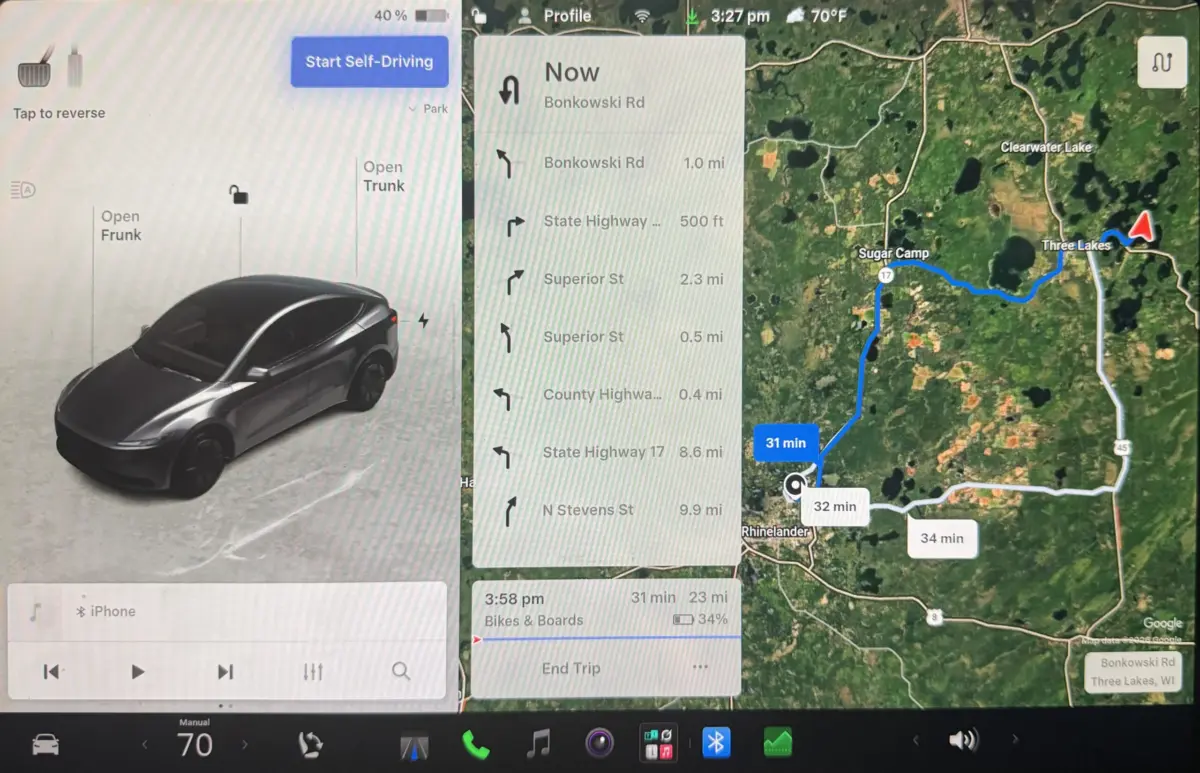
Today, the debate surrounding automotive safety pivots on the introduction of advanced driver-assistance systems (ADAS) and autonomous vehicle technology. Tesla’s Full Self-Driving (FSD) V14, operating on modern hardware suites in vehicles like the 2026 Tesla Model Y, represents the leading edge of this transition. While proponents argue that artificial intelligence does not text, drink, fall asleep, or succumb to road rage, critics point to lingering edge cases, occasional system disengagements, and questions regarding corporate monetization strategies.
As the industry navigates the grey area between human control and full autonomy, a fundamental moral question emerges: When a technology proves capable of drastically reducing human error and saving lives, at what point does it transition from a paid luxury add-on to a mandatory standard for the greater public good?
Chronology of Safety Milestones
To understand the current debate over autonomous driving, it is instructive to examine the historical trajectory of foundational safety innovations, such as seatbelts and airbags.
- The Mid-20th Century (The Seatbelt Era): Initially introduced as a novelty or racing car feature, the three-point seatbelt was patented by Nils Bohlin of Volvo in 1959. Rather than hoarding the patent, Volvo made the design freely available to all automobile manufacturers in the interest of global safety. What began as an optional accessory slowly evolved into social custom, culminating in mandatory legal requirements as the statistical evidence of lives saved became undeniable.
- September 1, 1998 (The Airbag Mandate): Following the Intermodal Surface Transportation Efficiency Act of 1991, airbags became federally mandated in all new passenger cars sold in the United States. While undeniably life-saving, airbags also underscored the "double-edged sword" of safety technology. For instance, high-speed deployments have occasionally resulted in severe collateral trauma—such as compound wrist fractures—reminding engineers that safety innovations often carry inherent risks that must be continuously mitigated.
- Mid-2023 to Present (The FSD Hardware Era): Tesla integrated upgraded cameras and computing hardware capable of running advanced neural networks into all production vehicles. This set the stage for iterative software rollouts, culminating in the deployment of FSD V14 by early 2026.
- April 8, 2026: Tesla leadership claimed that the company’s Full Self-Driving technology operates with a safety profile significantly superior to human drivers, projecting that widespread adoption could theoretically prevent up to 90% of the approximately one million annual traffic fatalities recorded globally.
- June 2026: Real-world testing of FSD V14 highlights both the profound reliability of the system on controlled roadways and the complex ethical dilemmas surrounding its commercial packaging and mandatory integration.
Supporting Data and Real-World Observations
The debate over autonomy is not merely theoretical; it is informed by daily driving statistics, human error metrics, and comparative industry data.
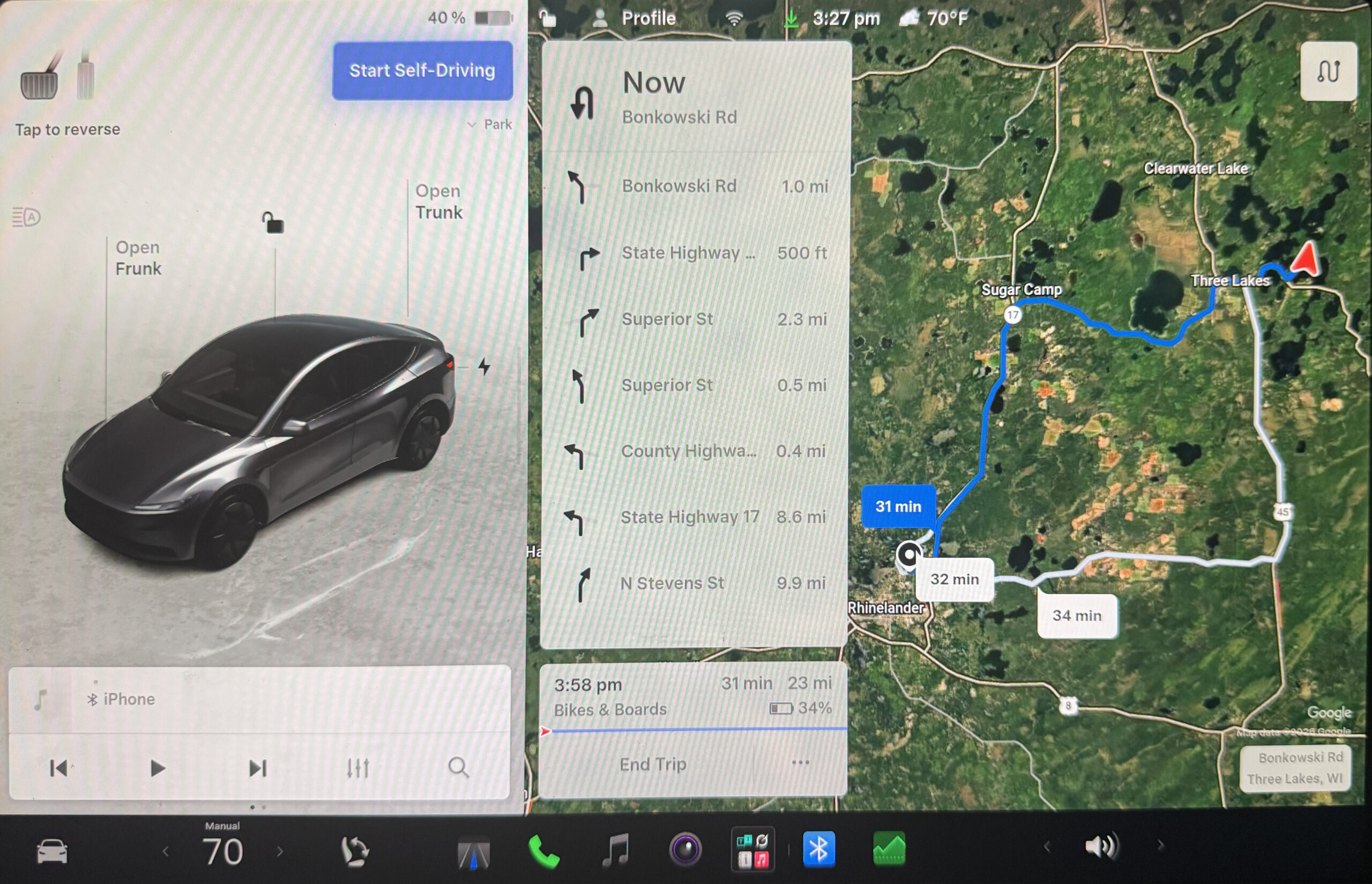
Human error remains the primary catalyst for the vast majority of motor vehicle collisions. Distracted driving, fatigue, and driving under the influence account for hundreds of thousands of injuries and fatalities annually. In contrast, autonomous and supervised driving systems operate with continuous 360-degree sensor fields and reaction times unhindered by biological fatigue.
Consider a real-world incident from June 2026 involving a motorist driving a 2018 Tesla Model 3 equipped with FSD in Madison, Wisconsin. While navigating an intersection under FSD, the human driver intervened, overrode the system, and intentionally rolled through a stop sign. Simultaneously, a perpendicular motorist—distracted and failing to pay close attention—struck the rear of the vehicle. The driver later noted that had the vehicle remained under autonomous control, the system would have independently honored the stop sign, entirely averting the collision.
Furthermore, data from autonomous fleet operators like Waymo indicate that supervised and fully driverless architectures are rapidly accumulating millions of miles with remarkably low at-fault accident rates, successfully avoiding thousands of potential injuries.
However, challenges remain. Tesla’s strategic decision to remove automatic lane centering as a standard baseline feature on new models—relegating it to a $99-per-month subscription tier under the FSD umbrella—has sparked intense debate. While the multi-billion-dollar R&D investment required to train neural networks on supercomputers justifies corporate revenue streams, critics question the ethical implications of paywalling baseline preventative safety features.
Official Responses and Industry Perspectives
The automotive industry is sharply divided on the exact methodology required to achieve safe autonomous transport.
- The Tesla Vision Approach: Tesla relies exclusively on a vision-based neural network architecture, utilizing high-resolution cameras and massive computational power to mimic human sight and cognitive processing. Company advocates argue this approach is infinitely scalable, highly economical to deploy, and mirrors the sensory input used by human drivers. Tesla maintains that FSD does not need to be mathematically flawless; it simply needs to be statistically safer than the average human driver to save tens of thousands of lives annually.
- The Sensor-Fusion Counter-Perspective: Traditional automakers and competing autonomous tech firms argue that an all-camera system is insufficient for universal deployment. They contend that auxiliary sensors—such as LiDAR, radar, and ultrasonic emitters—are non-negotiable for maintaining functional safety during severe weather events like blinding snowstorms, dense fog, or torrential downpours. While Tesla proponents counter that human drivers themselves routinely pull over during extreme meteorological events, the debate over redundant sensor suites remains a major philosophical fault line in the industry.
- Regulatory and Oversight Bodies: Regulatory agencies continue to mandate the "Supervised" moniker for systems like Tesla FSD V14. Because the software can still exhibit occasional miscalculations—such as suboptimal lane selection at complex stoplights or minor errors during the initiation and conclusion of parking maneuvers—authorities emphasize that ultimate legal and operational responsibility rests with the human behind the wheel.
Implications for the Future of Transportation
As automotive technology marches toward an increasingly automated horizon, the implications for society, manufacturing, and public policy are profound.

1. The Moral Imperative of Standardization
Just as Nils Bohlin’s three-point seatbelt and Tesla’s open-sourcing of the North American Charging Standard (NACS) transformed industry paradigms, autonomous driving technology faces a similar moral crossroad. If FSD-class software proves over time to be vastly safer than human operators, automakers may eventually face moral—and eventually regulatory—obligations to democratize the technology. Whether this means bundling hardware and software as standard equipment across all trim levels, or licensing software architectures to competing manufacturers, the pressure to eliminate preventable carnage on public roadways will only intensify.
2. The Horizon of Unsupervised Autonomy
Drivers currently testing FSD V14 note that highway navigation has reached an astonishing level of reliability, often performing flawlessly over long stretches. Industry analysts speculate that with subsequent iterations—such as the anticipated V15 release—highway driving may finally shed the "Supervised" caveat. However, urban environments, unpredictable pedestrian behavior, and chaotic infrastructure will likely require supervised oversight for years to come.
3. Economic and Societal Shifts
The transition from human-piloted transit to machine-guided mobility will alter insurance models, urban planning, and daily commuting culture. If autonomous systems successfully eradicate the vast majority of human-error crashes, the societal dividend will be measured not just in tens of thousands of lives saved annually, but in billions of dollars recovered in medical expenses, property damage, and lost productivity.
Ultimately, while FSD V14 is not yet a utopian cure-all, it represents a monumental stepping stone. The conversation has shifted irrevocably: the question is no longer if autonomous systems will redefine automotive safety, but how quickly society can ethically and practically integrate them into everyday life.
