

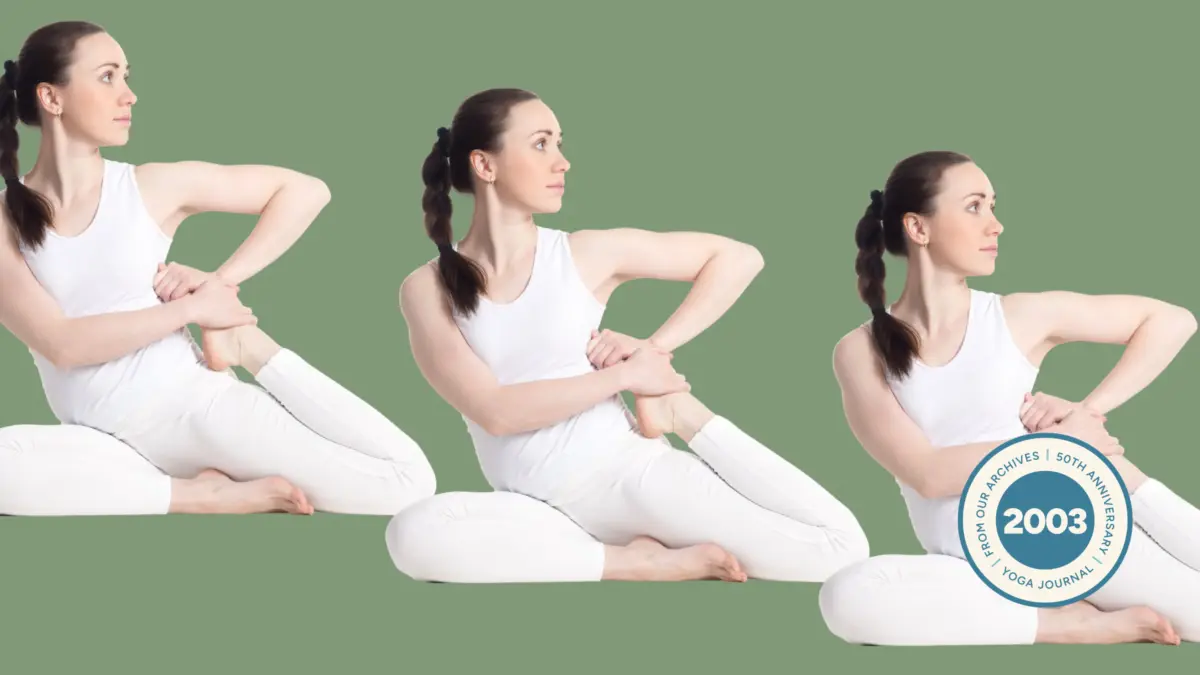
Published: September 4, 2026
Source: Yoga Journal Archives (Originally published November 2003)
Main Facts: The Physics of Opposing Energies
In the practice of modern postural yoga, physical alignment is rarely a matter of pushing blindly into a single direction. Instead, advanced asana execution relies heavily on a foundational philosophical and mechanical concept: duality. To achieve stability, structural integrity, and deep release—particularly in complex, high-tension areas like the pelvis—practitioners must engage in simultaneous, opposing movements.
This principle of dynamic opposition is the cornerstone of advanced hip-opening sequences, culminating in postures such as Pose Dedicated to the Sage Vamadeva II (Vamadevasana II). By exploring how the body interacts with physical laws, yoga philosophy posits that duality exists so practitioners can understand unity. Without duality, oneness holds no practical or experiential meaning.
In the human body, this translates to precise muscular vectors. When executing seated postures, the intentional rooting of the sitting bones creates an upward recoil of energy from the perineum. In standing postures, pressing the mounds of the toes and heels into the earth fuels the upward lift of the arches and the inner legs. Inversions follow the same mandate: lifting without a corresponding descent toward the earth leaves the practitioner light-headed or unstable.
When applied to deep hip openers, this interplay of opposing actions prevents injury, preserves energy reserves, and generates a singular state of focused mindfulness. Rather than draining the nervous system through brute force, the practitioner balances the body by pulling the pelvis forward with one side while drawing it back with the other, locating a still center where neither direction dominates.
Chronology: A Historical Evolution of Archival Practice
The exploration of hip mobility and structural duality has evolved significantly over the decades within the pages of Yoga Journal.
- Pre-1975 (Traditional Foundations): Ancient lineages passed down advanced postures like Vamadevasana II primarily through oral transmission and direct guru-student observation. These forms were viewed as esoteric, accessible only after years of preparatory conditioning.
- November 2003 (The Original Publication): Yoga Journal published a landmark instructional framework detailing the mechanical breakdown of complex hip openers. This issue shifted the pedagogical focus away from mere flexibility and toward biomechanical duality—specifically, the integration of internal and external hip rotation within a single posture.
- Present Day (The Archives Series): Modern sequencing continues to pull from these classical foundations, re-contextualizing archival methodologies for contemporary practitioners. Contemporary alignment-based yoga frequently revisits the 2003 curriculum to mitigate knee injuries caused by forcing postures like Lotus (Padmasana) without adequate preparation.
Supporting Data: Biomechanics of the Pelvis and Hip Rotators
Mastering advanced hip openers requires a clear understanding of the anatomical structures involved, particularly the opposing roles of internal and external rotators, as well as major stabilizing muscles.
- The Sartorius: As the longest muscle in the human body, the sartorius originates at the anterior superior iliac spine (the jutting front hip point), crosses diagonally down the thigh, and inserts on the upper inner edge of the shinbone. Internal rotation movements heavily stretch and engage this muscle.
- Rotational Symmetry: In Vamadevasana II, the body demands asymmetric adaptation: one hip undergoes extreme external rotation while the contralateral hip executes deep internal rotation.
- Abdominal Visceral Impact: The action of opposing rotations acts similarly to wringing water out of a towel. By rotating the legs in opposite directions, the lower abdominal organs experience targeted compression, which traditional yoga theory associates with the release of residual physical tension and toxicity.
- Joint Safeguards: Archival data emphasizes that forcing these rotations without establishing a perpendicular sacrum or utilizing preparatory modifications drastically increases shear stress on the sacroiliac joints and knee menisci.
Official Responses and Expert Perspectives: Navigating Advanced Asana Safely
Senior alignment instructors and anatomical educators have long cautioned against approaching advanced hip openers without systematic preparation. According to classical instructional guidelines, skipping foundational phases in pursuit of aesthetic depth compromises joint safety.
"In any of these poses, trying to lift without the opposing action of grounding gives us little effect; indeed, it may drain our energy reserves," archival instructors note. "To receive the effects of the pose, we must consciously move in opposite ways simultaneously."
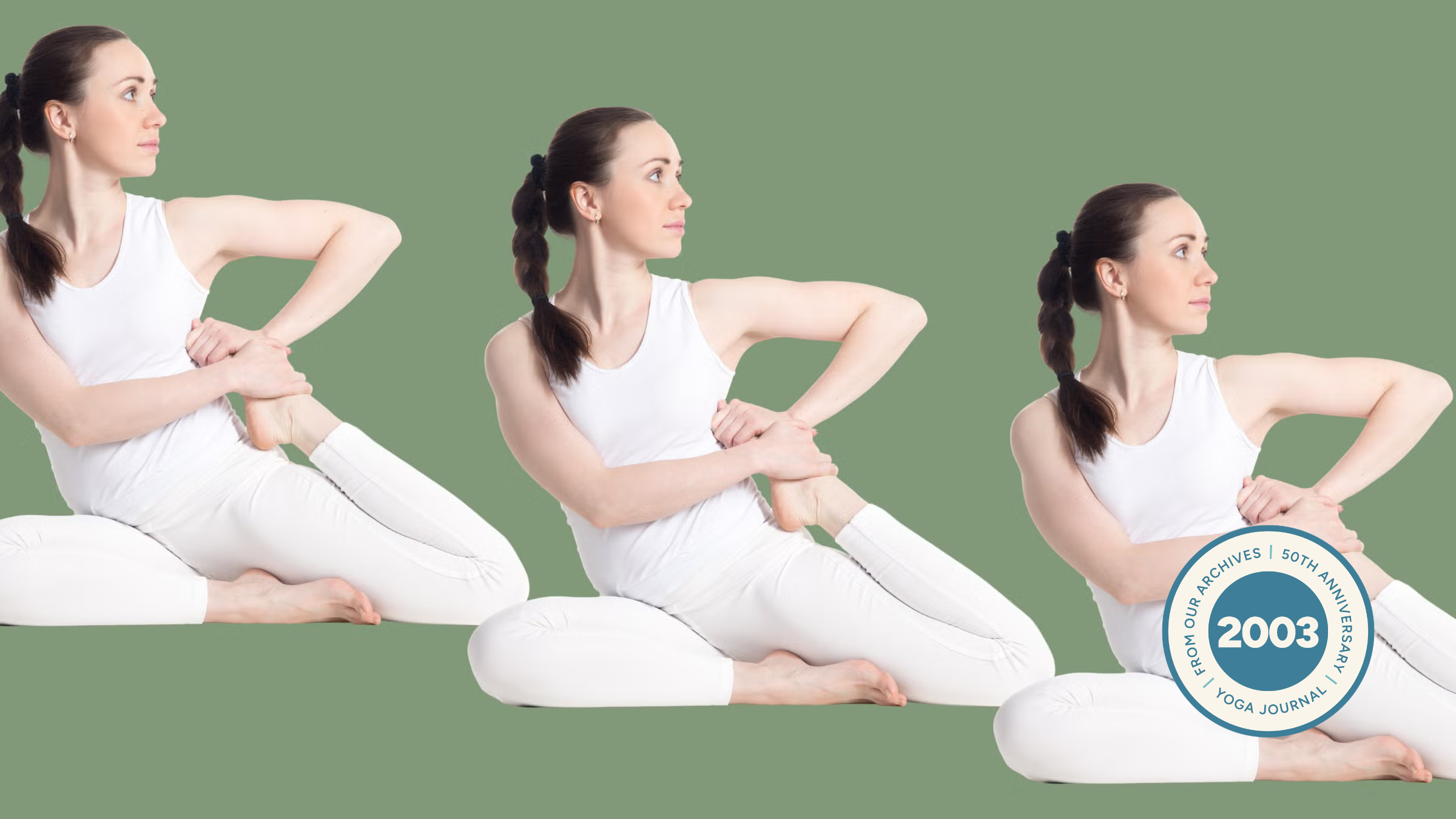
Regarding the potential risks to the knees—common casualties in poorly prepared hip openers—experts mandate the use of transitional phases, props, and modified angles. For instance, teachers routinely substitute Padasthila Janurasana (Ankle-to-Knee Pose) for Lotus Pose to protect the knee joint while safely cultivating external rotation. When working with internal rotation, practitioners are explicitly advised to monitor the inner knee line; any sharp sensation in the joint serves as an immediate signal to back off, introduce support, or adjust pelvic alignment.
Implications: Translating Physical Duality into Daily Mindfulness
The implications of practicing postures rooted in duality extend far beyond anatomical flexibility. The physical challenge of coordinating two opposing muscular actions forces the practitioner’s consciousness entirely into the present moment.
Achieving Focus Through Conflict
When a practitioner attempts to rise to the challenge of executing two opposing physical vectors simultaneously—such as pulling a thighbone forward while anchoring the sit bone backward—the mind is stripped of distraction. This forced focus creates a unified, singular state of awareness. Creativity and novel movement patterns emerge naturally from this disciplined stillness.
The Culmination: Anjali Mudra at the Feet
In the final expression of Vamadevasana II, the practitioner brings the soles of the feet together in an advanced adaptation of Anjali Mudra (salutation seal) at the hip level. This gesture serves as a physical metaphor for the harmonization of opposites.
As the Indian sage Sri Aurobindo famously wrote:
"The Two who are one are the secret of all power, / The Two who are one are the might and right in things."
By integrating these lessons from the Yoga Journal archives, modern students learn that physical yoga is not merely about stretching tight muscles. It is a profound, embodied study of balance, where the reconciliation of internal dualities yields enduring physical strength and mental clarity.
Preparatory Sequence: 4 Essential Hip Openers Before Vamadevasana II
Because Vamadevasana II places immense stress on the pelvic girdle, practitioners must systematically warm up the body using four foundational movements.
1. Ankle-to-Knee Pose (Padasthila Janurasana)
- Purpose: Safely builds external rotation in the hip joints without placing destructive torque on the knees. Serves as a safer structural precursor to Lotus Pose.
- Execution: Begin in Staff Pose (Dandasana). Bend both legs to 90 degrees. Externally rotate the left thigh, placing the shin parallel to the front of your torso. Stack the right shin directly on top of the left, resting the outer edge of the right foot near the left inner thigh. Lift through the spine, use your breath to open the heart center, and gently press the right thigh external. Hold for nine or more breaths before switching sides.
2. Windshield Wipers
- Purpose: Develops internal rotation in the hip joint, targeting the sartorius muscle and preparing the body for asymmetrical pelvic shifts.
- Execution: Lie supine with knees bent, feet flat, and inner edges touching. Step the right foot one shin-length to the right. Exhale and slowly lower the right knee toward the left heel while keeping the sole of the right foot perpendicular to the shin. Use your right hand to anchor the front of the right pelvic bone downward. Hold for three to nine breaths, then repeat on the opposite side.
3. One-Legged Reclining Hero Pose (Eka Pada Supta Virasana)
- Purpose: Opens the quadriceps, hip flexors, and groins.
- Execution: Lie on your back with knees bent. Shift your weight to the left, lift the right pelvis, and fold your right shin into Hero Pose position alongside your hip. Push the right thighbone toward the knee while drawing the lower belly toward your head. Recline back (using bolsters beneath the torso if the stretch is too intense). Hold for at least nine breaths before switching sides.
4. Wide-Angled Windshield Wipers
- Purpose: Bridges seated wide-angle mobility with the complex rotational demands of Vamadevasana II.
- Execution: Sit in Wide-Angled Seated Forward Bend (Upavistha Konasana). Roll onto your right buttock, bending the right leg to 90 degrees (external rotation). Walk the left leg back, then bend it to 90 degrees (internal rotation). Use your hands to guide the external and internal rotations of the respective thighs while twisting the spine to the left.
Final Execution: Pose Dedicated to the Sage Vamadeva II (Vamadevasana II)
- Grasp the Feet: From the preparatory wide-angled position, reach your left hand over your left instep. Internally rotate the left thigh further, lifting the foot toward the front of your left hipbone so the sole rests in your palm.
- Join the Soles: Deeply bend your right leg, reaching your right hand over the right instep. Inhale to lift the energy of the perineum up the spine; exhale to lift the right foot toward the left hip while pressing the left foot toward the right, bringing the soles together.
- Twist and Balance: As the feet meet, lift the spine, twist your torso to the left, and gaze over your left shoulder. Release your shoulder blades down your back and flare your elbows wide.
- Hold and Release: Maintain the internal rotation of the left thigh while counter-rotating the pelvis. Quiet the mind, hold for three conscious breaths, and carefully release back to Upavistha Konasana before repeating on the second side.
