

COTTONWOOD, Arizona — In a decisive move reflecting growing public anxiety over automated surveillance, the City of Cottonwood has officially canceled its contract with Flock Safety, terminating its controversial Automated License Plate Reader (ALPR) program.
The decision, announced during a tense City Council work session on Tuesday, September 22, 2026, marks the end of a highly scrutinized initiative that local law enforcement had once championed as a vital tool for public safety. The cancellation follows a series of investigative media reports detailing how the police department utilized the system, which in turn sparked widespread community outrage over privacy violations and a perceived lack of transparency.
With the contract officially terminated, the network of 11 high-tech, vehicle-tracking cameras scattered across the city will be permanently dismantled. The move mirrors a broader regional and national pushback against mass surveillance technologies, highlighting a growing friction between law enforcement agencies seeking advanced data-gathering tools and citizens demanding constitutional protections.
Main Facts: The Termination of Cottonwood’s ALPR Program
The formal announcement to sever ties with Atlanta-based Flock Safety was made by Cottonwood City Manager Mario Cifuentez. The decision brings an abrupt end to the city’s use of ALPR technology, which had already been temporarily suspended earlier in the month.
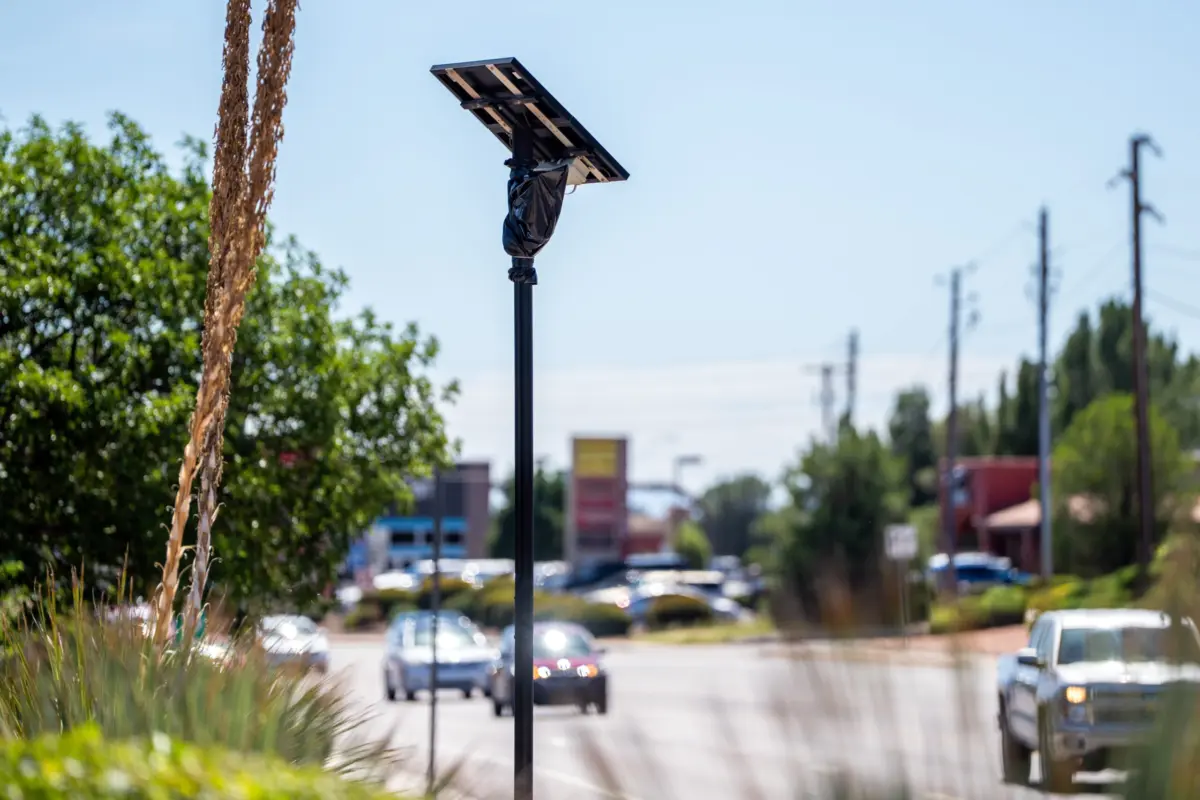
On September 4, 2026, City Manager Cifuentez and Cottonwood Police Chief Brian Freudenthal jointly announced an immediate suspension of the camera network. By September 18, city workers had physically covered the 11 street-mounted cameras with heavy black plastic bags—a highly visible symbol of the program’s rapid demise.
COTTONWOOD ALPR CAMERA STATUS
┌───────────────────────────┬───────────────────────────┐
│ Camera Count:             │ 11 Units                  │
├───────────────────────────┼───────────────────────────┤
│ Temporary Suspension:     │ September 4, 2026         │
├───────────────────────────┼───────────────────────────┤
│ Physical Deactivation:    │ September 18, 2026        │
├───────────────────────────┼───────────────────────────┤
│ Contract Cancellation:    │ September 22, 2026        │
└───────────────────────────┴───────────────────────────┘
While the city has committed to ending the ALPR program, officials have not yet established a concrete timeline for the physical removal of the hardware. Mayor Ann Shaw acknowledged that dismantling the physical infrastructure may take time, citing logistical challenges on the part of the manufacturer.
"It’s probably going to be a while before the Flock cameras physically come down," Mayor Shaw stated, adding that the city’s own Public Works Department would likely have to perform the removal. According to Shaw, Flock Safety is currently dealing with similar contract cancellations nationwide, leaving the company’s technical teams stretched thin. "Flock cameras are coming down all over the country," she noted.
Significantly, the cancellation of the ALPR contract does not impact the city’s separate, ongoing agreement with Flock Safety for the lease of police drones. Those aerial surveillance tools remain active under a different municipal contract, drawing a distinction in the city’s policy between stationary, continuous license plate tracking and mobile, incident-specific drone deployment.
Chronology: The Rise and Fall of Cottonwood’s Flock Network
The trajectory of Cottonwood’s ALPR program reveals a swift transition from federal-backed enthusiasm to local political liability. The timeline of the program spans just over a year, marked by shifting funding narratives and growing public resistance.
CHRONOLOGY OF EVENTS
  │
  ├── June 17, 2025: Cottonwood City Council accepts $213,992.80 Arizona DPS grant
  │                  for anti-human trafficking, linking it to Flock products.
  │
  ├── September 2025: Neighboring Sedona City Council orders the removal of its
  │                   Flock Safety cameras following local media scrutiny.
  │
  ├── January – July 2026: Cottonwood Police Department conducts 4,335 searches
  │                        using the newly installed ALPR network.
  │
  ├── August 2026: Investigative reports expose that 0% of the searches
  │                related to human trafficking, triggering public outcry.
  │
  ├── September 4, 2026: Cottonwood officials suspend the Flock network.
  │
  ├── September 18, 2026: City workers cover the 11 cameras in black plastic bags.
  │
  └── September 22, 2026: City Manager Mario Cifuentez announces formal
                          cancellation of the contract.
The origin of the program trace back to June 17, 2025, when the Cottonwood City Council formally accepted a $213,992.80 grant from the Arizona Department of Public Safety (DPS). The grant was earmarked specifically to bolster regional anti-human trafficking operations. In the purchase agreement documents approved at the time, the city explicitly cited this state funding as the financial backing for acquiring Flock Safety products.
By early 2026, the 11-camera network was fully operational, capturing data on thousands of vehicles passing through the city daily. However, regional skepticism was already mounting. In September 2025, the neighboring Sedona City Council ordered the removal of its own Flock cameras after investigative reporting in the Sedona Red Rock News—a sister publication of The Journal—sparked a similar localized backlash.
The turning point for Cottonwood came in August 2026, when The Journal published a series of investigative articles analyzing search logs from both the Cottonwood Police Department and the Coconino County Sheriff’s Office. The data revealed a stark disconnect between the stated humanitarian purpose of the technology and its actual day-to-day deployment. The resulting public outcry forced city leaders into a defensive posture, culminating in the September deactivations and the final September 22 cancellation.
Supporting Data: The Disconnect in Surveillance Metrics
The core of the controversy that brought down Cottonwood’s ALPR program lies in the statistical reality of how the technology was utilized by law enforcement.
During the primary operational window of the program—spanning from January to July 24, 2026—the Cottonwood Police Department executed a total of 4,335 database searches using the Flock Safety system.
An analysis of those searches revealed the following:
- 0% (Zero searches) cited human trafficking, sex trafficking, or forced labor.
- Approximately 27% of the queries were initiated for minor traffic infractions, registration violations, or hit-and-run investigations.
- The remaining searches were tied to standard police inquiries unrelated to the severe, felony-level crimes used to justify the program’s initial acquisition.
COTTONWOOD POLICE ALPR SEARCH CATEGORIES (Jan - July 2026)
┌───────────────────────────────────────┬───────────────────────────┐
│ Total Database Queries:               │ 4,335                     │
├───────────────────────────────────────┼───────────────────────────┤
│ Traffic Infractions & Hit-and-Runs:   │ ~1,170 (27%)              │
├───────────────────────────────────────┼───────────────────────────┤
│ Human Trafficking Inquiries:          │ 0 (0%)                    │
└───────────────────────────────────────┴───────────────────────────┘
This statistical absence of human trafficking investigations is further supported by broader regional prosecution records. According to a public records request fulfilled by the Yavapai County Attorney’s Office on September 1, 2026, not a single local municipal law enforcement agency in the Verde Valley—including the police departments of Cottonwood and Sedona—had submitted a case involving charges of sex trafficking, human trafficking for forced labor, or child sex trafficking since January 1, 2023.

When confronted with these figures during the September 22 work session, Police Chief Brian Freudenthal defended his department’s integrity by clarifying the funding mechanics. He asserted that the department had never actually utilized the $213,992.80 Arizona DPS human trafficking grant to pay for the ALPR network.
"We never utilized that human trafficking grant for license plate readers," Freudenthal told the council, explaining that the state grant was structured as a reimbursement-only mechanism. Instead, he stated, the Flock Safety ALPR system was paid for directly through a standard municipal police budget line item, though he did not elaborate on why the grant was originally cited in the product purchase agreement.
Official Responses: Political Deflection and Public Tension
The City Council work session on September 22 exposed deep divisions, not only between the public and city administrators, but also regarding how municipal leaders viewed the capitulation to public pressure.
City Manager Mario Cifuentez emphasized that while the contract was being canceled, the city was not permanently shutting the door on automated policing technology. "Our plan at this point is to cancel the Flock contract agreement for ALPRs," Cifuentez said. "There may come a time where we will look at it, depending on rulings and legislation."
Cifuentez promised that any future attempt to implement similar technology would be handled with far greater transparency. "Should there come a point in the future where the chief and I believe that it’s a tool we should consider, we’ll start with public meetings and true hearings back and forth where folks can ask questions specific to any product that we may look at in the future," he added.
Other council members expressed frustration with the sudden rollback, framing the cancellation as a reluctant sacrifice of a valuable law enforcement tool to appease vocal activists.
Mayor Ann Shaw addressed the citizens in attendance with a protective stance toward the police department. "Now the decision has been made that the Flock camera contract is being canceled," Shaw said. "So apparently, those of you who are here for this reason have been listened to. I do feel like [the police department] may be making a sacrifice on your behalf, so that is worthy of some appreciation, rather than a continuation of the feeling that you’re not being listened to."
Councilman Bob Marks echoed this sentiment, suggesting that the city was merely hitting a pause button until state-level regulatory bodies provided clearer legal boundaries. "My hope is, and I believe the direction we’re going is, you know, we are going to wait on legislation," Marks said. "We’re going to wait on the findings of the Attorney General. Once guidance is provided, we will comply with that guidance and install the technology to help solve crimes, protect people, and protect property."
Conversely, Councilman Chris Dowell, who previously served as a Cottonwood Police commander, interim chief, and patrol commander for the Sedona Police Department, praised the administrative staff for resolving the issue internally. "I appreciate you guys making this decision internally, without having a bunch of bureaucrats getting in the middle of it," Dowell said.
The meeting itself was highly charged. Because the session was designated as a council "work session," state open meeting laws prohibited formal public comment, as municipal bodies are barred from taking official votes during these study periods. Audience members repeatedly interjected, prompting council members to remind the gallery that public feedback was not legally agendized for that afternoon.
Implications: The Regional and National Backlash Against ALPRs
The cancellation in Cottonwood is not an isolated incident; rather, it is indicative of a growing regional and national skepticism toward private-sector surveillance networks operating within public spaces.
The Verde Valley has become a localized epicenter for this debate. Sedona’s decision to dismantle its Flock system in late 2025 set a precedent that made Cottonwood’s program politically unsustainable. In both municipalities, local independent journalism played a critical role in exposing the operational realities of the systems, shifting the narrative from "community safety" to "unwarranted government surveillance."
On a broader scale, the controversy highlights the legal vulnerabilities of third-party data collection. Companies like Flock Safety build massive, interconnected databases that allow law enforcement agencies to share license plate data across county and state lines. This practice has increasingly drawn the ire of civil liberties groups, who argue that such networks operate in a legal gray area, bypassing traditional warrant requirements and violating the Fourth Amendment rights of motorists.
As Councilman Marks noted, many municipalities are now looking to state capitals for definitive legislative boundaries. In Arizona, the Attorney General’s office has faced mounting pressure to issue formal opinions on the constitutionality of continuous, automated tracking of citizens who are not suspected of any crime.
Until clear legislative guidelines or judicial rulings are established, Cottonwood’s decision suggests that local governments may increasingly view high-tech surveillance contracts as political liabilities that carry too high a cost in public trust.
