

By The Editorial Desk
Updated August 26, 2026
Main Facts: The Anatomy and Philosophy of the "King of Asanas"
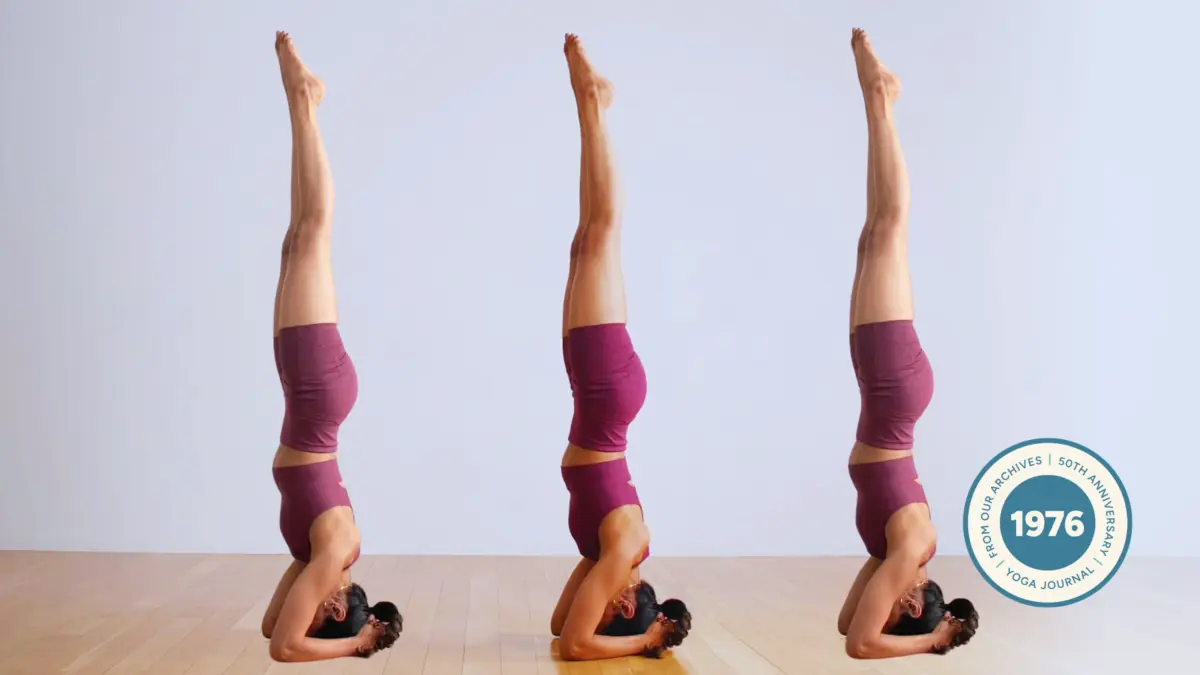
For decades, modern practitioners of yoga have looked to physical postures not merely as forms of exercise, but as dynamic maps for the mind and spirit. Among the vast catalog of classical yoga asanas, few hold as revered or formidable a status as Shirshasana—commonly known as the Headstand.
Often heralded as the "king of asanas," this inversion commands attention, respect, and a high degree of technical precision. Originally featured in the September–October 1976 issue of Yoga Journal, archival writings on Shirshasana highlight its dual nature: it is simultaneously an intense physiological reset and a profound psychological mirror.
From a physiological standpoint, the Headstand upends the human body’s standard relationship with gravity. When a practitioner balances steadily upon the forearms and the crown of the head, venous blood from the lower extremities is encouraged to drain back toward the body’s core. Simultaneously, the abdominal organs shift upward—a complete reversal of their habitual downward pull experienced while standing upright. Traditional yogic philosophy maintains that this mechanical shift supports internal organ function, mitigates the natural sagging associated with aging, and directs vital energy (prana) upward into the brain.
Yet, the physiological alterations are only half the narrative. The emotional and psychological ripples generated by turning the world upside down are equally striking. Mastering Shirshasana requires a delicate synthesis of physical strength, spatial awareness, and deep mental composure. It serves as a physical metaphor for psychological adaptability: teaching the practitioner how to maintain equilibrium, stay centered, and remain acutely aware when confronted with radically altered perspectives.
Chronology: Tracing the Evolution of Inversions in Western Yoga
To understand the enduring significance of Shirshasana, it is helpful to contextualize its journey through the historical lens of modern yoga’s globalization.
1975–1976: The Foundational Archives
When Yoga Journal first began publishing its curated insights in the mid-1970s, the practice of yoga in the West was transitioning from an esoteric niche discipline into a recognized lifestyle. In the September–October 1976 issue, instructors and writers focused heavily on foundational instruction paired with esoteric energetic theories. Articles from this era emphasized that postures like the Headstand were not isolated athletic feats, but integral stepping stones designed to ready the mind, body, and spirit for higher states of consciousness.
The Late 20th Century: Standardization and Safety Awareness
As yoga studios proliferated across North America and Europe through the 1980s and 1990s, the approach to teaching advanced inversions grew increasingly rigorous. Teachers began recognizing that while the benefits of Shirshasana were immense, the liabilities of improper alignment—particularly concerning the cervical spine—demanded stricter adherence to foundational preparation. The era gave rise to the widespread use of props, wall supports, and a greater emphasis on building shoulder girdle strength before attempting a full inversion.
The 2020s: Digital Accessibility and Archival Reflection
By the mid-2020s, the proliferation of digital platforms transformed how yoga history and technique are consumed. Through initiatives like Yoga Journal’s Archives series, contemporary practitioners can cross-reference modern biomechanical understandings with the philosophical musings of 1970s pioneers. This modern era bridges ancient lineage with contemporary sports science, prompting a renewed conversation on safety, anatomical individualization, and the psychological hurdles of facing the unknown.
Supporting Data: Energetics, Anatomy, and Counterindications
While the visual poetry of a stable Headstand captivates onlookers, the underlying mechanics—both physical and energetic—reveal a complex interplay of systems.
Energetic Reversal: Prana and Apana
In classical yogic anatomy, the body is governed by various vital winds or currents (vayus). Two primary forces operate along the vertical axis of the trunk:
- Prana: The upward-moving energy associated with the region above the diaphragm, governing intake, inspiration, and cerebral activity.
- Apana: The downward-moving energy associated with the region below the diaphragm, governing elimination, grounding, and physical stability.
During the practice of Shirshasana, traditional texts suggest that the natural flow of apana is reversed, drawing back toward the heart and the head. Practitioners and teachers historically maintained that this energetic inversion harmonizes bodily systems, fortifies overall health, and accelerates spiritual evolution.
Physiological Risk Factors and Contraindications
Despite its lofty title, the "king of asanas" is accompanied by strict warnings. Modern medical insights largely validate the cautions issued by early yoga instructors regarding safety:
- Cervical Spine Vulnerability: The delicate structures of the neck and upper back bear a significant portion of the body’s weight if the shoulders and core are not properly engaged. Poor alignment can lead to chronic strain, disc compression, or acute injury.
- Hypertension: Individuals suffering from high blood pressure are strongly advised to avoid Headstands, as inversions naturally increase intracranial pressure and alter cardiovascular dynamics.
- Menstruation: Traditional practice guidelines caution against inversions during menses, viewing the posture as an unnecessary interference with the body’s natural downward eliminatory flow (apana).
- Pregnancy: While some experienced practitioners continue modifying their routines under expert supervision, pregnant individuals are generally advised to avoid learning or executing unassisted headstands to prevent falls and undue abdominal pressure.
Official Responses and Expert Perspectives: The Teacher’s Role
The consensus among seasoned yoga educators across the decades remains remarkably consistent: Shirshasana should never be self-taught.
In the 1976 Yoga Journal commentary, the author explicitly stressed that the asana demands the watchful eye of an experienced instructor due to the high risk of trauma to the neck and back. Modern biomechanics experts echo this sentiment, emphasizing that the human cervical spine is engineered primarily for support and mobility of the head—not for bearing the compressed weight of an entire inverted body.
The Teacher as a Catalyst for Safety
Contemporary master instructors note that modern students often rush toward advanced inversions driven by social media trends or ego. Certified educators play a crucial role in mitigating these risks by:
- Evaluating a student’s core stability, rotator cuff strength, and upper-body awareness.
- Implementing preparatory poses, such as Dolphin Pose (Ardha Pincha Mayurasana), to build the requisite shoulder strength before the crown of the head ever touches the mat.
- Providing hands-on adjustments to prevent the collapsing of the cervical vertebrae and to ensure the weight is properly distributed across the forearms.
Psychological Implications: Facing the Unconscious
Perhaps the most enduring and fascinating aspect of Shirshasana highlighted in the historical archives is its psychological footprint. Stepping upside down is fundamentally unnatural for the human animal. Consequently, it routinely triggers a visceral, subconscious fear response in beginners.
The Metaphor of the Birth Canal
Writers from the 1970s offered a striking psychoanalytic hypothesis regarding this widespread apprehension: the sensation of being inverted and navigating a restricted, high-stakes physical space may unconsciously evoke humanity’s earliest and most dramatic journey—the passage head-first down the birth canal.
When a student confronts the fear of falling while upside down, the posture acts as a diagnostic tool for the mind. It forces suppressed anxieties to the surface. In the framework of yoga, becoming aware of this fear strips it of its unconscious control. By allowing the fear to be fully experienced in a safe, controlled environment, the practitioner learns to release it.
Cultivating Poise in Chaos
Just as a newborn infant must painstakingly develop the physical poise required to stand upright on two feet, the yogi must cultivate a parallel mental poise to stand balanced on the crown of the head. This state of equilibrium goes far beyond muscular engagement; it requires a tranquil, centered mind capable of witnessing physical vulnerability without panic.
Ultimately, every asana presents itself as a microcosm of life’s unpredictable landscape. As a student learns to find balance, breath, and peace amidst the literal upside-down chaos of Shirshasana, that hard-won internal stability begins to bleed into everyday existence. The practitioner learns to see daily stressors from a different angle, transforming a physical posture into a lifelong lesson in adaptability, self-understanding, and grace.
