

Main Facts: Public Engagement and Avian Research in the Verde Valley
To hold a hummingbird is to feel the limits of avian biology vibrating in the palm of one’s hand. With a heart rate that can exceed 1,200 beats per minute and wings that beat up to 80 times per second, these tiny creatures represent some of the most specialized and delicate organisms in the animal kingdom.
To bring the public closer to this ecological wonder, the International Hummingbird Society (IHS) is hosting a series of public hummingbird banding events at the Page Springs Fish Hatchery in Cornville, Arizona. Located along the lush riparian corridor of Oak Creek, the hatchery serves as an ideal rest stop for migratory hummingbirds traversing the American Southwest.
The IHS has scheduled these public sessions on alternating Saturdays throughout the late summer months. Following a successful session on Saturday, August 8, the organization has announced two final public sessions for the season:
- Saturday, August 22: Operating from 6:26 a.m. to 11:26 a.m.
- Saturday, September 5: Operating from 6:35 a.m. to 11:35 a.m.
These events are free, open to the public, and designed with a drop-in format, though organizers note that hummingbird activity peaks during the cooler, early morning hours.
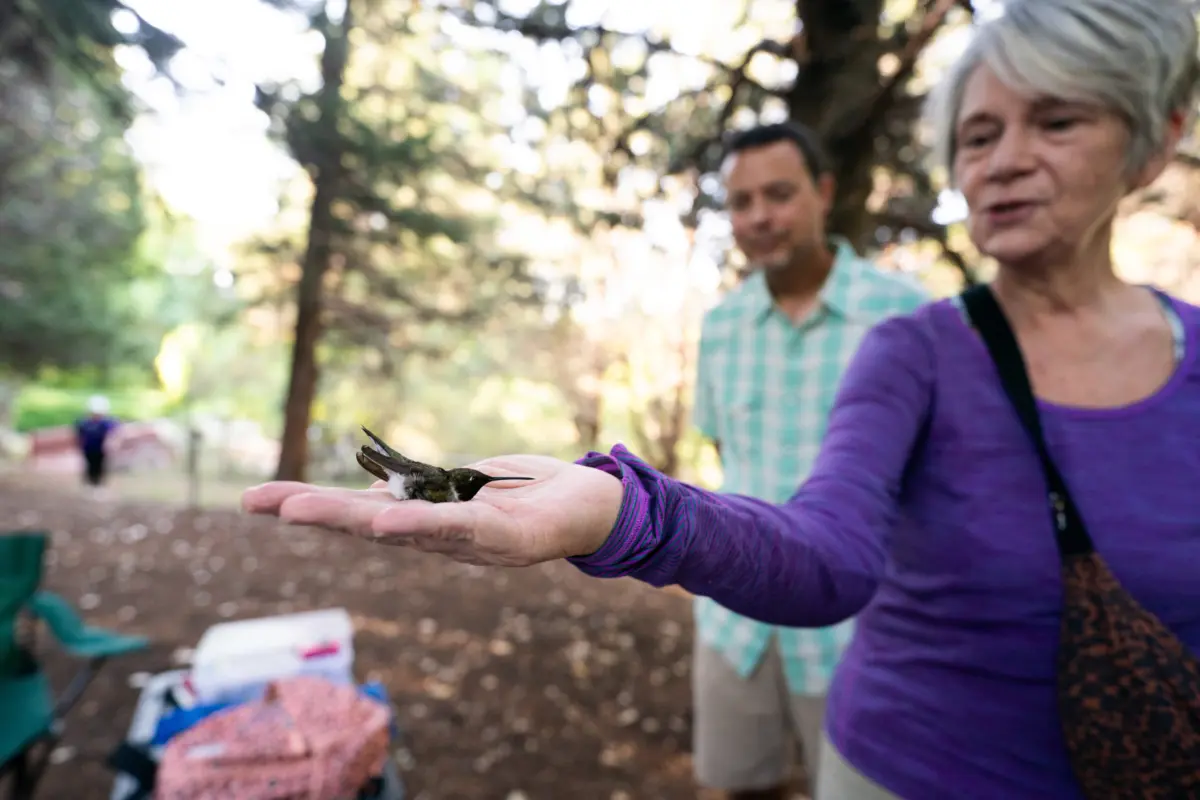
The primary objective of these sessions is twofold: to gather critical demographic and migratory data on regional hummingbird populations, and to foster public stewardship through direct, hands-on scientific engagement. Under the supervision of federally permitted master banders, members of the public are invited to participate in the release phase of the banding process, allowing them to feel the rapid vibrations of a hummingbird resting on their open palm before it takes flight.
Chronology of a Banding Session: From Feeder to Flight
The process of banding a hummingbird requires immense precision, patience, and adherence to strict ethical standards. A typical Saturday morning session at the Page Springs Fish Hatchery follows a highly structured, chronological sequence designed to minimize stress on the birds.
[Dawn Setup] ──> [Mesh Net Capture] ──> [Safe Transport] ──> [Scientific Assessment] ──> [Precision Banding] ──> [Public Release]Phase 1: Dawn Setup and Netting
Long before the public arrives, researchers and volunteers set up the banding station. Specialized Russell traps—large, cylindrical mesh enclosures—are suspended over established nectar feeders.
As wild hummingbirds arrive to feed, a trained volunteer monitors the trap from a distance. When a bird enters the feeding zone, the volunteer manually releases a draw-string mechanism, safely enclosing the bird within the soft mesh net.
Phase 2: Extraction and Transport
Once captured, the hummingbird is gently extracted by a trained handler. Because of their fragile skeletal structures, handlers must use specialized grips to avoid putting pressure on the bird’s chest, which could restrict its breathing.
The hummingbird is placed into a small, breathable mesh or cloth transport bag. This dark, soft environment immediately calms the bird, reducing its heart rate and preventing it from flapping its wings and injuring itself during transport to the central banding table.
Phase 3: Scientific Assessment
At the banding table, the bird undergoes a comprehensive physical examination. The bander carefully measures:
- Bill Length: Recorded in millimeters using precision calipers.
- Wing Chord: The length of the wing from the carpal joint to the tip of the longest primary feather.
- Body Mass: Measured to the nearest hundredth of a gram using an electronic scale.
- Fat Reserves: Assessed by gently blowing on the bird’s breast feathers to inspect the visible fat deposits stored under the translucent skin.
- Age and Sex Indicators: Evaluated through feather wear, bill striations, and plumage coloration.
Phase 4: Precision Banding
Once the measurements are logged, the bander selects a custom-sized aluminum band. These bands are so small they must be cut from sheets of aluminum and smoothed manually by the bander to ensure there are no sharp edges.
Using specialized pliers, the band is closed around the bird’s tarsus (lower leg). The fit must be perfect—loose enough to slide and rotate freely, but tight enough that it cannot slip over the foot or trap debris.
Phase 5: Public Release
The final stage of the chronology bridges the gap between scientific research and community outreach. Volunteers like Hilary Morejon call out to the gathered crowd, asking, "Who’s next?"
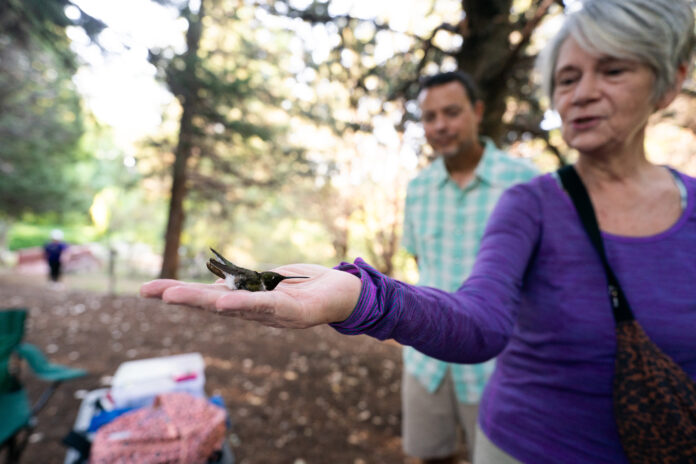
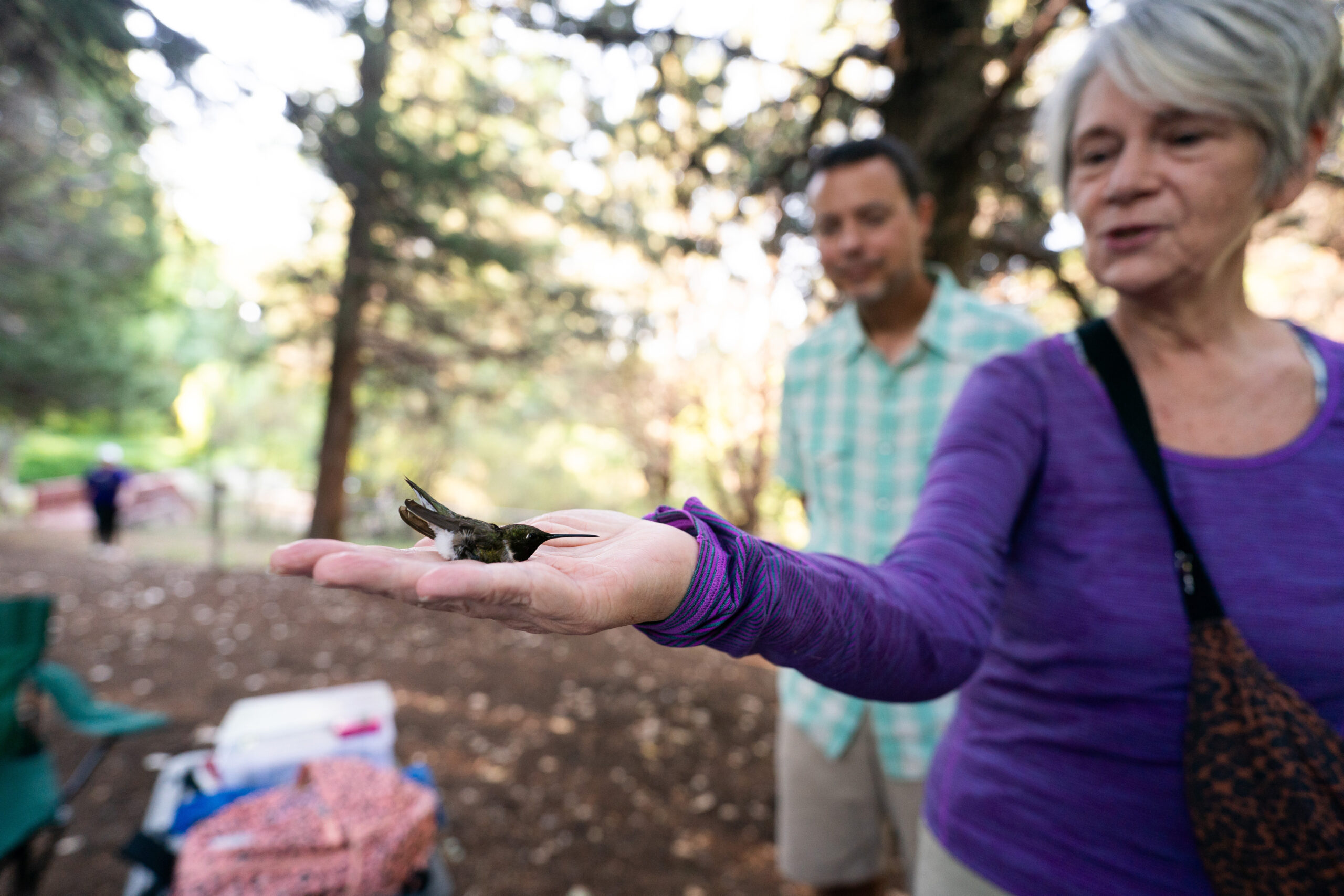
A visitor is instructed to hold their hand completely flat. The bander gently places the quiet, banded hummingbird upright on the visitor’s palm.
Often, the bird will remain still for several seconds or even minutes, reorienting itself and gathering energy. Once ready, the hummingbird launches vertically into the air, returning to the surrounding canopy.
Supporting Data: Species Diversity and Population Metrics
The data collected during these bi-weekly sessions contributes to a larger regional database used by ornithologists to track avian health and migratory shifts in the Southwest.
Species Distribution in the Sedona Region
During the summer, five distinct hummingbird species utilize the Verde Valley and Sedona habitats. Each species displays unique migratory timelines and physical characteristics:
| Species | Scientific Name | Regional Status | Key Identifying Features |
|---|---|---|---|
| Anna’s | Calypte anna | Year-round resident / Official City Bird of Sedona | Iridescent rose-pink gorget (throat) and crown in males; green back. |
| Black-chinned | Archilochus alexandri | Summer breeder | Velvet black gorget with an iridescent violet lower border in males. |
| Rufous | Selasphorus rufus | Migrant (highly aggressive) | Bright coppery-orange back and flanks; brilliant orange-red gorget. |
| Broad-tailed | Selasphorus platycercus | Summer breeder / Migrant | Rounded tail; males produce a distinctive, metallic wing trill in flight. |
| Calliope | Selasphorus calliope | Migrant (smallest US bird) | Magenta rays (gorget feathers) on a white throat in males; very short tail. |
Diagnostic Metrics for Age and Sex Determination
Volunteers rely on highly specific morphological markers to determine the demographic profile of the captured birds. According to volunteer Lenore Hemingway, these indicators include:
- Bill Corrugations: Young hummingbirds possess fine, microscopic grooves (corrugations) along the sides of their bills. As the bird matures, these grooves are worn smooth. A bill with 90% or more corrugations indicates a hatch-year bird, while a smooth bill indicates an adult.
- Feather Buffing: Juvenile birds often display buffy, brownish edges on their head and back feathers, which disappear after their first pre-basic molt.
- Gorget Development: The color, shape, and extent of the iridescent throat feathers (gorgets) help distinguish adult males from females and juveniles.
- Tail Feather Geometry: The shape of the outer rectrices (tail feathers) is highly dimorphic. Narrow, pointed outer tail feathers often indicate a male, while wider, rounded feathers with white tips are characteristic of females and juveniles.
Hummingbird Age Diagnostic (Bill Corrugations):
[Juvenile: >90% Corrugations] ───(Aging Process)───> [Adult: Smooth Bill]
Recapture Rates and Migratory Fidelity
During a standard five-hour banding session at Page Springs, researchers process approximately 40 hummingbirds. A key indicator of local habitat health and safe banding techniques is the recapture rate.
"Here we got a lot of recaptures from the same day, same season from previous seasons," noted volunteer Whitney Morejon. "At least three to four recaptures out of those 40. We had 13 or 14, one session, of recaptures, and a majority from previous seasons."
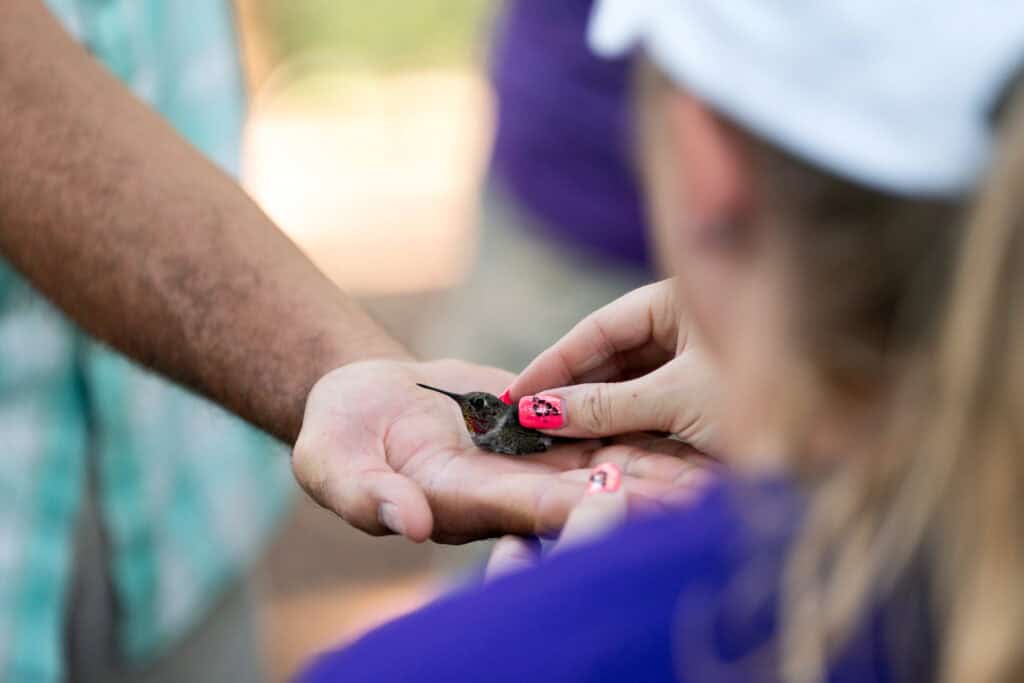
This high rate of return demonstrates "site fidelity"—the tendency of migratory birds to return to the exact same feeding and nesting grounds year after year. It also confirms that the physical stress of being captured and banded does not disrupt their migratory instincts or cause long-term harm.
Official Responses and Expert Perspectives
The execution of these banding events relies on a collaborative network of conservation organizations, certified experts, and community volunteers.
Professional Training and Certification
Hummingbird banding is highly regulated under federal law. In the United States, banders must hold permits issued by the U.S. Geological Survey (USGS) Bird Banding Laboratory. Achieving this certification requires years of specialized training.
Many of the regional banders, including Hilary Morejon and Amanda Hammer, received their training in Portal, Arizona—a remote community in Cochise County widely considered one of the premier hummingbird hotspots in North America.
"Banders often take a class to be certified, but Susan Wethington, the master bander based in Portal, takes an apprenticeship approach," explained Whitney Morejon. "Students will stay in town for about two weeks to complete their training under direct supervision."
This intensive, hands-on apprenticeship ensures that banders develop the tactile sensitivity required to handle half-ounce birds without causing wing strain or skeletal damage.
The National Banding Conference in Sedona
The expertise concentrated in the Verde Valley was on display during the National Hummingbird Banding Conference, hosted at the Church of the Red Rocks in Sedona. The conference brought together 50 to 60 elite hummingbird banders from across the country.
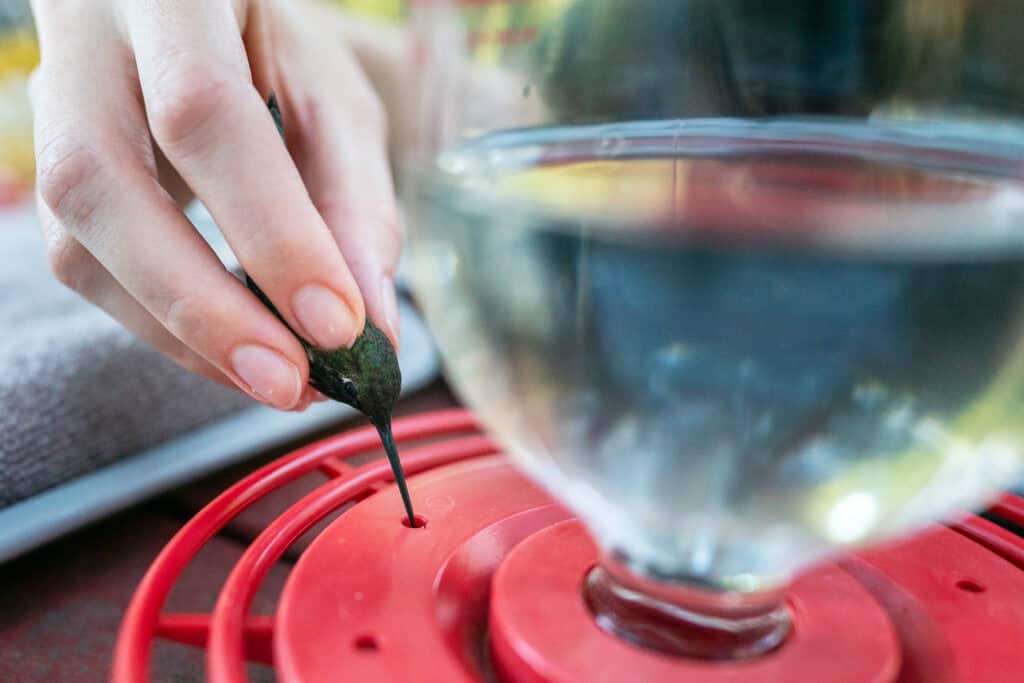
"The Sedona banders will show off techniques they’ve learned to make the banding process easier," said volunteer Lenore Hemingway.
The conference combined academic presentations with field demonstrations at private residences throughout the Sedona area, solidifying the region’s reputation as a center for avian research.
Implications: Climate Change, Conservation, and Community Stewardship
The work conducted by the International Hummingbird Society at Page Springs Fish Hatchery carries profound implications for conservation science, particularly in the face of shifting global climates.
Mapping Migratory Corridors
Data collected from these tiny aluminum bands has helped confirm the migratory flyways of southwestern hummingbirds. Historically, the wintering grounds of many species were poorly understood.
In recent years, recaptures of banded birds have confirmed that species breeding in or migrating through Arizona travel thousands of miles south to spend the winter in the tropical and subtropical forests of western and southern Mexico.
Summer Breeding (Arizona/Northwest) <───[Migratory Flyway]───> Wintering Grounds (Mexico)Understanding these trans-boundary corridors is critical for conservation. It highlights the fact that protecting hummingbirds requires international cooperation and the preservation of continuous habitat "stepping stones"—riparian zones, mountain ranges, and backyard gardens—stretching from Canada to Central America.
Climate Change and Phenological Mismatch
As global temperatures rise, conservationists are monitoring the risks of "phenological mismatch." This ecological disruption occurs when the migration timing of hummingbirds, driven by day length, becomes out of sync with the blooming times of their primary nectar plants, which are increasingly influenced by unseasonable warmth.
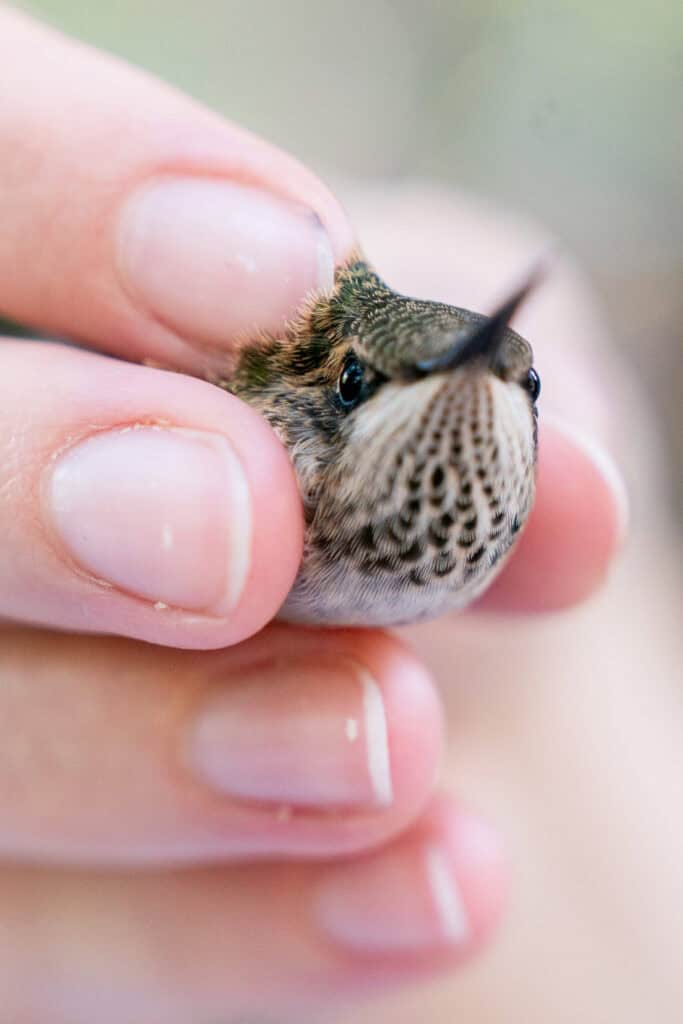
Continuous, multi-year banding data from sites like Page Springs allows researchers to detect subtle shifts in migration arrival and departure dates. If hummingbirds are arriving earlier or staying longer, this data provides the empirical foundation needed to adjust land management practices, such as planting specific native flora that bloom during these altered windows.
Community-Led Conservation
By integrating public participation into rigorous scientific field work, the International Hummingbird Society is building a culture of conservation in the Verde Valley. The city of Sedona’s decision to name the Anna’s hummingbird as its official city bird reflects this deep cultural connection.
When a child or adult feels the rapid, tiny heartbeat of a hummingbird resting on their hand, the abstract concept of wildlife conservation becomes deeply personal. The public banding sessions at Page Springs Fish Hatchery provide more than just data for scientific journals; they foster the next generation of environmental stewards, ensuring that the hum of these remarkable birds continues to echo through the canyons of northern Arizona for generations to come.
