

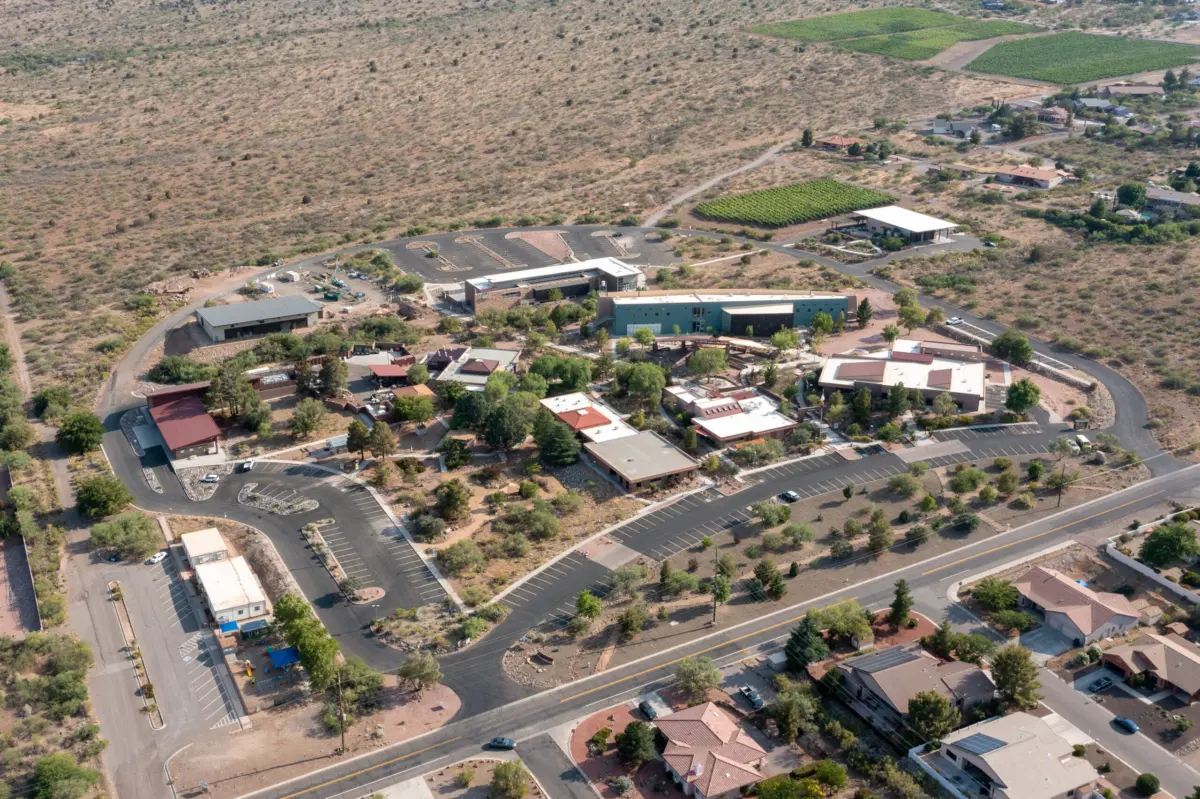
Yavapai College, a cornerstone of higher education in northern Arizona, is navigating a complex period of institutional scrutiny. The college is currently addressing a formal warning from its regional accrediting body alongside the impending release of a targeted forensic financial audit. Together, these developments have cast a spotlight on board governance, administrative oversight, and the institution’s long-term stability.
With a critical deadline approaching in February, Yavapai College must submit comprehensive documentation to the Higher Learning Commission (HLC) to demonstrate that its governance structures and institutional integrity meet regional standards. Failure to satisfy these regulatory expectations carries severe consequences, potentially imperiling student financial aid and the transferability of academic credits.
1. Main Facts: The Dual Challenges Facing Yavapai College
Yavapai College is currently managing two distinct but intersecting challenges: a regulatory review by its regional accreditor and an internal financial investigation.
The Accreditation Warning and "Embedded Monitoring"
The Higher Learning Commission (HLC), the regional agency responsible for accrediting degree-granting institutions in Arizona, has placed Yavapai College under "embedded monitoring." This regulatory status was triggered by a formal complaint filed on April 15 by District 2 Board Member Deb McCasland and the college’s Chief Human Resources Officer, Dr. Janet Nix.
The complaint alleges that certain members of the District Governing Board engaged in inappropriate behavior, overstepped their policy-making roles, and neglected their fiduciary duties. Consequently, the HLC has targeted two specific areas for closer examination:
- Criterion 2a (Integrity): Evaluating whether the institution operates with integrity in its administrative, academic, and financial practices.
- Criterion 2c (Board Governance): Assessing whether the governing board is sufficiently autonomous, adheres to its policy-making mandate, and acts in the best interest of the institution rather than advancing personal or political agendas.
The college has until February to submit an "Assurance Review" document. This report must provide clear evidence that the college has resolved these governance issues and remains in compliance with all HLC criteria.
+-------------------------------------------------------------------------+
|                       YAVAPAI COLLEGE ACCREDITATION                     |
|                                                                         |
|  [HLC Complaint Filed] ---> [Embedded Monitoring] ---> [Assurance Rev]  |
|     (April 15, 2025)           (Criteria 2a & 2c)       (Feb. Deadline) |
+-------------------------------------------------------------------------+
The Targeted Forensic Audit
Simultaneously, the college is awaiting the final report of a forensic financial audit conducted by the Chicago-based accounting and advisory firm Baker Tilly. The audit, authorized with a $50,000 budget, was initiated after Jack Smith, the Vice President of Community Relations and Legislative Affairs, identified unusual fund transfers across various institutional accounts shortly after taking office.
While college leadership has stated that preliminary findings show no evidence of criminal activity, the audit has revealed gaps in internal controls and policy compliance within a specific vice-presidential division over a three-to-five-year period.
2. Chronology: From Board Restructuring to Regulatory Scrutiny
The current institutional challenges at Yavapai College developed through a sequence of administrative transitions, board elections, and formal filings over several months.
Phase 1: Board Turnover and Financial Transitions (January – February)
- January: Three new representatives—Bill Kiel (District 1), Toby Payne (District 3), and Patrick Kuykendall (District 4)—are sworn onto the District Governing Board, shifting the board’s dynamics.
- February: Jack Smith assumes the role of Vice President of Community Relations and Legislative Affairs, succeeding Rodney Jenkins, who had served in the position since 2017. Upon reviewing departmental accounts, Smith identifies unusual financial transactions across multiple funding sources.
Phase 2: The Complaint and the Audit Authorization (April – May)
- April 15: Board Member Deb McCasland and Chief HR Officer Dr. Janet Nix jointly file a formal complaint with the HLC. The complaint accuses fellow board members, specifically targeting Representative Bill Kiel, of inappropriate conduct and interference in day-to-day college operations.
- May: With the authorization of then-President Dr. Lisa Rhine, Acting President Dr. Doug Berry commissions the forensic audit. The college retains Baker Tilly to examine three to five years of financial records within the community relations and legislative affairs division.
- May – June: Following the HLC complaint, Yavapai College is officially placed on embedded monitoring. The college submits its formal 30-day response to the HLC and the Intersocietal Accreditation Commission (IAC), addressing the allegations without taking a defensive stance.
Phase 3: Public Disclosure and Impending Reports (August – February)
- August 11: During a public meeting, Director of Academic Initiatives Megan Crossfield and Acting President Dr. Doug Berry brief the board and the public on the HLC’s monitoring status and the progress of the forensic audit.
- August 21: Baker Tilly is scheduled to release its final forensic audit report to the college administration.
- February (Upcoming): Yavapai College faces its deadline to submit the comprehensive Assurance Review document to the HLC, aligning with the mid-cycle review of its 10-year accreditation calendar.
3. Supporting Data: Understanding Accreditation Cycles and Audit Parameters
To understand the scale of these challenges, it is helpful to examine the regulatory frameworks of regional accreditation and the financial scope of the forensic audit.
The 10-Year Accreditation Cycle
Yavapai College operates on a standard 10-year accreditation cycle with the HLC. The institution secured its most recent reaffirmation of accreditation in 2023. The upcoming February deadline serves as a mid-cycle check-in during year four of this program.
YAVAPAI COLLEGE HLC ACCREDITATION TIMELINE (10-YEAR CYCLE)
+---------+---------------------------------------------------------+
| Year    | Milestone / Requirement                                 |
+---------+---------------------------------------------------------+
| Year 1  | Continued Accreditation Approved (2023)                 |
| Year 4  | Mid-Cycle Assurance Review & Embedded Monitoring (Feb)  |
| Year 5  | Quality Initiative Project Selection and Launch         |
| Year 8  | Comprehensive Assurance Review                          |
| Year 10 | On-Site Peer Review & Affirmation Visit                 |
+---------+---------------------------------------------------------+
Under revised HLC guidelines implemented in 2025, the criteria for accreditation were consolidated from five to four core areas:
- Mission: Clear articulation and public service alignment of the institution’s purpose.
- Integrity (Ethical and Responsible Conduct): Honesty and transparency in academic, financial, and administrative operations (specifically Criterion 2a and 2c under review).
- Teaching and Learning (Student Success): Quality of academic programs, faculty credentials, and student support services.
- Sustainability (Institutional Effectiveness): Financial health, resource allocation, and long-term operational viability.
Embedded Monitoring Statistics
While being placed on "embedded monitoring" indicates an area of concern, academic administrators emphasize that it is a standard regulatory tool. According to Megan Crossfield, approximately 20% to 30% of higher education institutions undergoing comprehensive or mid-cycle assurance reviews are placed on some form of embedded monitoring.
This status does not represent an immediate threat of closure; rather, it indicates that peer reviewers require additional documentation to verify compliance with specific sub-criteria.
Forensic Audit Parameters
The forensic audit conducted by Baker Tilly was structured around clear financial and temporal boundaries:
- Total Approved Budget: $50,000
- Temporal Scope: 3 to 5 years of historical financial records.
- Departmental Focus: The division of Community Relations and Legislative Affairs, previously overseen by Rodney Jenkins.
- Objective: To identify potential misappropriation of funds, unauthorized account transfers, or systemic deviations from board-approved financial policies.
4. Official Responses: Statements from College Leadership and Board Members
The dual challenges have drawn varied responses from Yavapai College’s administrators and board members, reflecting differing perspectives on governance and institutional oversight.

Administrative Neutrality and Reassurance
Acting President Dr. Doug Berry has maintained a neutral stance regarding the HLC complaint, emphasizing that the college’s official response was designed to provide objective facts rather than defend individual actions.
"It wasn’t about defending the college or protecting the accreditation," Dr. Berry explained. "It was more answering the HLC and the IAC: ‘Are these things happening at the institution?’"
Regarding the forensic audit, Dr. Berry clarified that the investigation was not a sign of systemic corruption but rather an effort to tighten administrative controls:
"We started this seeking to find criminal activity. Let me say, there has been no criminal activity found at this time, nor do we anticipate any criminal activity will be brought forth in the final report. The audit helped inform us of some policies that we maybe have in place that we weren’t following all the way, and some different practices where we’re giving a little too much authority to certain levels."
Board Governance Concerns
Board Member Deb McCasland, who co-filed the HLC complaint, defended her decision as a necessary step to protect the college’s long-term interests. She expressed concern that recent board members had overstepped policy-making boundaries and entered the realm of day-to-day administrative interference.
"The board needs to work on keeping in our role as board members," McCasland said. "The fiduciary responsibility that we have is keeping the college running. It’s not about talking about people in the press; it’s not talking negatively about the president in the press. That’s how we carry the college forward. I’ve seen all kinds of problems, and that’s why I submitted the complaint."
Demystifying the Regulatory Process
Megan Crossfield, Director of Academic Initiatives, sought to reassure the public that the accreditation process remains stable. She noted that if the HLC harbored immediate concerns about the college’s viability, it would have initiated more severe measures.
"If there was immediate concern that could threaten the accreditation, an HLC team would come in person to do an extensive review as soon as it could," Crossfield stated. She characterized the current situation as a manageable check-in: "The monitoring isn’t intended to say the accreditation situation is dire, but to recognize there’s a possibility something needs to be worked on."
5. Implications: What Lies Ahead for Yavapai College
The outcomes of both the HLC review and the Baker Tilly audit carry significant practical implications for Yavapai College’s students, faculty, and broader community.
The Stakes of Regional Accreditation
The most critical issue facing Yavapai College is maintaining its regional accreditation. If the college fails to resolve the HLC’s concerns regarding board governance and integrity, the consequences of a downgraded accreditation status would be severe:
- Loss of Title IV Funding: Students would lose access to federal financial aid, including Pell Grants and federal student loans. For a community college serving a diverse demographic, the loss of federal aid would drastically impact enrollment.
- Credit Transferability: Other regionally accredited institutions would no longer accept credits earned at Yavapai College, disrupting students’ transfer pathways to four-year universities.
- Reputational Damage: A loss of accreditation would impair the college’s ability to recruit qualified faculty, secure public grants, and form partnerships with local industries.
Governance Reform and Board Training
The HLC’s focus on Criterion 2c (Board Governance) will likely require the District Governing Board to undergo structured professional development and governance training. The board must demonstrate a clear separation between its high-level policy-making duties and the day-to-day operational management handled by the college president and executive staff.
The recent resignation of District 4 Representative Patrick Kuykendall adds another layer of transition, requiring the board to fill the vacancy while working to build a more collaborative and cohesive operating environment.
+-----------------------------------------------------------------------------+
|                      EXPECTED INSTITUTIONAL REFORMS                         |
|                                                                             |
|  1. GOVERNANCE TRAINING: Clear separation of board policy & admin duties.   |
|  2. POLICY ADHERENCE: Standardized review of internal financial authority.  |
|  3. FINANCIAL CONTROLS: Decentralization of unchecked departmental power.   |
+-----------------------------------------------------------------------------+
Financial Oversight and Policy Corrections
While the Baker Tilly forensic audit is not expected to reveal criminal behavior, its release will likely prompt internal policy reforms. The preliminary findings suggest that the college’s existing financial policies were not consistently applied, particularly regarding the authority granted to departmental leaders.
Administrators have indicated that the final report will serve as a guide to adjust internal controls, reduce the concentration of financial authority in individual administrative roles, and establish clearer oversight for multi-fund accounts.
Next Steps in the Academic Calendar
Once Yavapai College navigates the February Assurance Review deadline, it will transition to the next phase of its 10-year accreditation cycle:
- Year 5 Quality Initiative: The college will design and execute a major institutional project focused either on process improvement or direct student success initiatives.
- Year 8 and Year 10 Evaluations: Successful navigation of the current monitoring phase will allow the college to prepare for its Year 8 comprehensive review and the final Year 10 peer site visit.
Ultimately, the coming months will test the resilience of Yavapai College’s leadership. By addressing governance issues directly and strengthening its financial policies, the institution has an opportunity to resolve these challenges and emerge with a clearer, more stable path forward.
