


Drawing from archival insights originally published in Yoga Journal’s January–February 1989 issue, this retrospective explores the enduring physical and psychological dimensions of Tree Pose, bridging ancient yogic philosophy with precision biomechanics.
Main Facts: The Intersection of Discipline and Balance
In the landscape of modern wellness, yoga is frequently marketed as a gentle antidote to stress—a sequence of soothing stretches designed to unwind a tense body. However, foundational yogic texts and master practitioners argue that the practice is, at its core, an exercise in rigorous self-mastery. Whether executing a demanding Hatha sequence or sitting in sustained meditation, the practitioner begins by confronting the limits of physical endurance to penetrate psychological resistance and fear.
In yogic philosophy, this transformative friction is known as tapas. Derived from the Sanskrit root meaning "to heat" or "to burn," tapas is traditionally compared to the intense heat of a furnace used to refine gold of its impurities. According to B.K.S. Iyengar, one of the twentieth century’s most influential yoga masters, the term is best expressed as a "burning desire." It is a concentrated drive to cleanse every cell of the body and every capacity of the senses, ultimately cultivating permanent physical health and mental clarity.
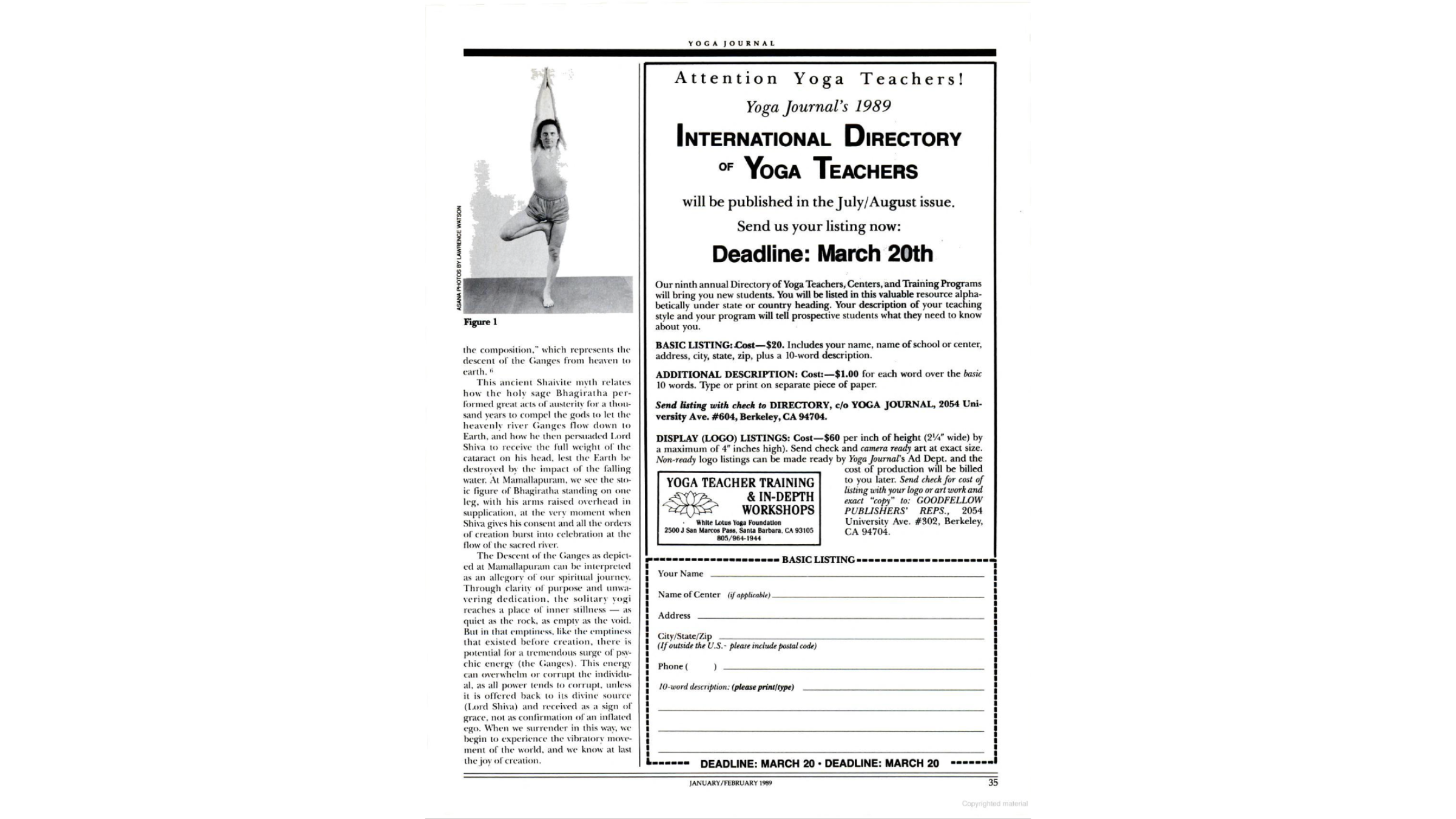
It is within this philosophical framework that Iyengar famously described Hatha Yoga as "the science of will." Nowhere is this marriage of mental resolve and physical alignment more apparent than in Vrksasana (Tree Pose). Far from a passive stretch, Tree Pose serves as an unyielding diagnostic tool for the mind. When a practitioner loses focus, waers in attention, or yields to self-doubt, the physical body mirrors that internal collapse instantly. The posture demands an active, highly conscious negotiation with gravity, transforming a simple balancing act into an intricate study of human will and biomechanical precision.

Chronology: Tracing the Evolution of Yogic Discipline
The conceptual and physical architecture of Tree Pose did not emerge in a vacuum; it is part of an unbroken historical lineage of self-study and physical refinement.
- Ancient Roots (The Patanjali Era): In the Yoga Sutras (II.1), the sage Patanjali outlines the five niyamas (observances) that constitute the second limb of classical yoga. He designates three as foundational for the beginner: tapas (austerity or self-discipline), svadhyaya (self-study), and ishvara pranidhana (surrender to the divine). These principles established the historical precedent that physical practices must serve as vehicles for psychological and spiritual evolution.
- Mid-20th Century Biomechanics: The understanding of static balance expanded significantly with the publication of Mabel Todd’s seminal work, The Thinking Body. Todd observed that static standing requires vastly more neurological and muscular coordination than dynamic locomotion like walking, because the body must consciously override natural instability through micro-adjustments.
- The Late 20th Century Modern Revival (1989): The precise anatomical breakdown of Vrksasana was popularized for Western audiences through instructional essays in publications like Yoga Journal, specifically highlighted in the January–February 1989 archive series. This era marked a shift toward incorporating props—such as blocks, walls, and sandbags—to teach proper alignment, shifting the focus from simply "making the shape" to understanding the internal vectors of energy.
- Contemporary Practice (2026 and Beyond): Today, teachers and physical therapists alike utilize the foundational lessons of Vrksasana to retrain postural habits. The inner-thigh mechanics and foot-arch awareness taught in Tree Pose are regularly applied to broader functional movement patterns, bridging ancient posture work with modern movement science.
Supporting Data and Anatomical Mechanics: The Anatomy of a Tree
Understanding the mechanics of Vrksasana requires looking beyond the visible external shape and examining the hidden muscular forces that prevent a practitioner from toppling over.
The Inner Thighs as the Primary Foundation
The physical support for Tree Pose originates primarily from the inner thighs (the adductor muscle group). When these muscles are weak, inactive, or unengaged, the pelvis drops down onto the thighbone of the standing leg. This structural failure forces the body’s weight toward the outer edge of the foot, rendering the balance precarious and overly dependent on frantic ankle adjustments.
To correct this, practitioners are taught to engage the inner thighs to activate the deep abdominal muscles—specifically the iliopsoas—which provide essential vertical support for the spine.
The Foot and Arch Dynamics
A common pitfall for beginners is gripping the floor with the toes when balance becomes unsteady. As Mabel Todd’s research and Iyengar-based instruction demonstrate, this narrow gripping action actually narrows the front of the foot, making it structurally unstable.
Optimal balance is achieved by:
- Spreading the Metatarsals: Pressing down through the spaces between the metatarsal bones rather than the bones themselves.
- Lengthening the Toes: Allowing the toes to fan out and lengthen, creating a broad, stable surface area that connects the foot firmly to the floor.
- Utilizing Tactile Feedback: Utilizing tools such as 10-pound sandbags placed over the metatarsal area during preparatory phases to train the foot to find stability without tension.
Arm and Shoulder Integration
Just as the feet must ground without gripping, the upper body must expand without strain. When practitioners press their hands together in namaste (prayer position) with excessive force, the bones of the hands jam together, causing the shoulders to hunch upward with tension. By broadening the centers of the palms against each other and lengthening the fingers upward, the practitioner naturally drops the shoulders and expands the upper chest, maintaining an open, unconstrained upper body.
Official Guidelines: How to Practice Vrksasana (Tree Pose)
Mastering Tree Pose requires a methodical approach, often utilizing props to retrain faulty movement patterns before attempting the posture unassisted in the center of the room.
Phase 1: Activating the Core with a Block
- Stand in Tadasana (Mountain Pose) with a wooden block placed lengthwise between the thighs.
- Do not squeeze the thighs into the block aggressively; instead, lengthen the inner thigh muscles along the surface of the block from the groins to the inner knees.
- Notice how this action firms the lower abdomen and lifts the front of the lumbar spine, providing core support for the upper body.
Phase 2: Wall-Supported Practice (Alignment)
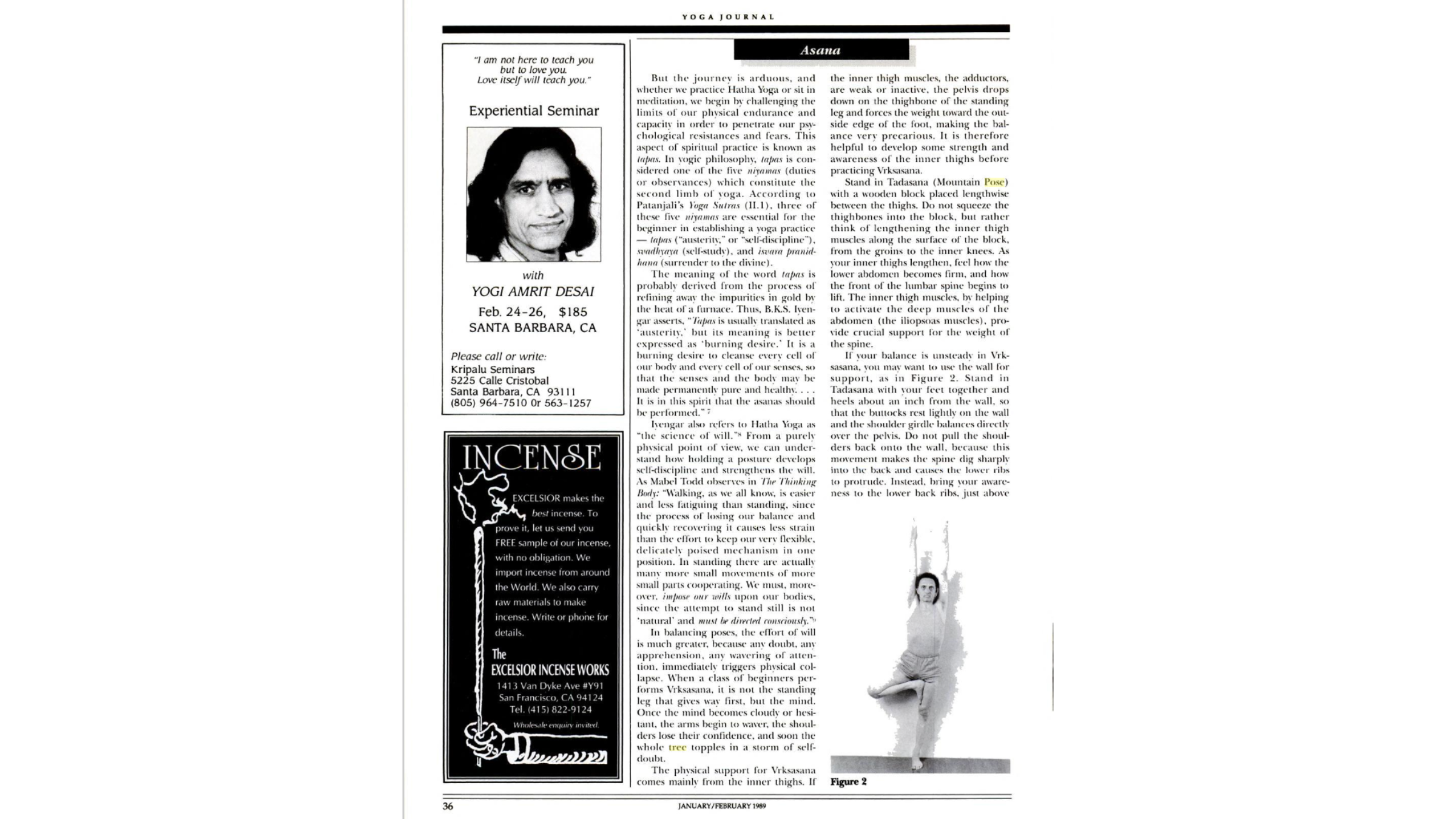
- Stand in Tadasana with your feet together, heels roughly one inch from a wall, allowing your buttocks to rest lightly against it and your shoulder girdle to balance directly over your pelvis.
- Avoid pulling your shoulders backward onto the wall, which compresses the lower spine. Instead, focus on the lower back ribs just above the waist, broadening and lifting them toward the ceiling as you lengthen your inner thighs downward.
- Shift your weight onto your left foot, turn your right thigh outward, and draw your right knee high. Take hold of your right ankle and place the right heel high on the inner left thigh, with toes pointing directly down.
- Extend your arms overhead with palms facing, maintaining the relationship of the back ribcage to the wall. Hold for several breaths, then switch sides.
Phase 3: The Center-Room Integration
- Transition to the center of the room without props to experience the full expression of the pose.
- Establish a firm foundation in Tadasana, root down through the standing leg by lengthening the inner thigh downward, and press the outer edge of the raised foot firmly against the standing thigh.
- Let your arms reach skyward from the bottom tips of your shoulder blades. As C. G. Jung famously described the cosmic tree, the posture allows you to remain simultaneously "rooted in this world and growing up to heaven."
Implications: Discipline as a Refuge, Not a Punishment
The lessons learned on the yoga mat through postures like Vrksasana extend far beyond physical flexibility and balance. They offer a profound philosophical reframing of discipline in contemporary life.
In modern culture, austerity and strict routines are frequently viewed through a punitive lens—as rigid constraints imposed upon an unwilling self to achieve a specific aesthetic or productivity metric. However, traditional yoga philosophy suggests that true tapas is not a form of self-punishment, but a profound act of self-nourishment.
When practitioners choose to sit quietly in meditation or hold a challenging balancing posture, they are not stifling their outer senses; rather, they are clearing away the psychological clutter and daily complications that distract them from their true nature. The discipline of yoga serves as a sanctuary. By voluntarily embracing the "heat" of physical challenge and mental focus, individuals learn to quiet the storm of self-doubt—not only on the sticky mat, but in the broader landscape of their lives.
