

Main Facts: The Blueprint of a Contemporary Realist
At just 28 years old, Arizona-based painter Clarissa Kear is rapidly carving out a formidable reputation as one of the most compelling young voices in contemporary American representational art. Working primarily in oil on panel, Kear bridges the gap between historical reverence and modern introspection. Her striking nocturnes and liminal compositions capture the quiet, often overlooked poetry of the American landscape and interior spaces.
Kear’s artistic identity is deeply rooted in her immediate surroundings in the Sonoran Desert, yet her vision is informed by a rigorous classical training that spans some of the most respected academic institutions in the United States. Recognized as one of the standout talents in Southwest Art magazine’s prestigious "21 Under 31 | Young Artists to Watch, 2026" feature, Kear commands a price range spanning from $300 for smaller studies and works on paper to $8,000 for her major, highly detailed panel paintings.
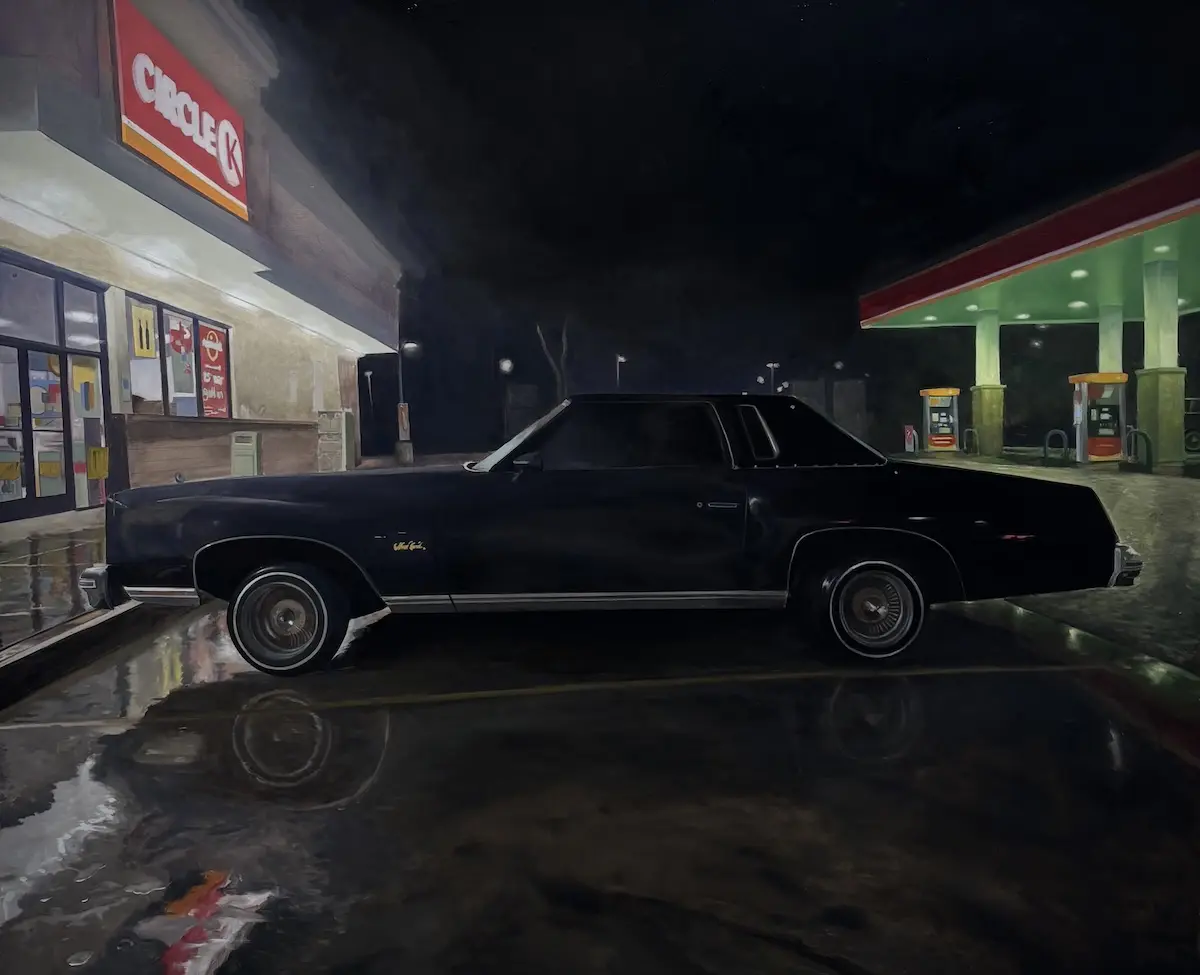
Her signature piece, Night Call—an arresting 30-by-36-inch oil on panel—serves as a visual manifesto for her current creative direction. The painting encapsulates her fascination with nocturnal lighting, atmospheric depth, and the psychological weight of isolated moments. Balancing rigorous draughtsmanship with a poetic sensibility, Kear approaches her canvas not merely as a surface to replicate reality, but as a theater of light, shadow, and quiet narrative tension.
Chronology: The Making of an Artist
To understand Clarissa Kear’s rapid ascent in the contemporary art world, one must trace a trajectory defined by relentless dedication, formal academic training, and a willingness to immerse herself in diverse geographic and cultural artistic hubs.
Formative Years and the PAFA Crucible (2018–2022)
Kear’s formal foundation in the visual arts was forged at the Pennsylvania Academy of the Fine Arts (PAFA), America’s oldest art school and museum. Enrolling in 2018, Kear immersed herself in a rigorous, historic curriculum that emphasizes foundational drawing, anatomy, direct observation, and traditional oil painting techniques.
It was during these formative years at PAFA that Kear developed her disciplined studio habits. Navigating the high-pressure, critique-heavy environment of the academy, she absorbed invaluable lessons from her instructors. Among the most influential was painter Scott Noel, whose pragmatic and resilient artistic philosophy left a permanent mark on Kear’s approach to the medium. Noel’s frequent mantra—“No matter what happens, paint through it”—became a guiding principle for Kear, instilling in her the perseverance required to resolve difficult passages in a painting rather than abandoning them.
Transition to the Southwest and the University of Arizona (2022–Present)
Following her graduation from PAFA with a Bachelor of Fine Arts (BFA) in 2022, Kear made a decisive geographic and artistic shift, relocating to Arizona. The vast, light-drenched landscapes and dramatic nocturnal shifts of the Sonoran Desert offered a stark, inspiring contrast to the urban academic environment of Philadelphia.
Seeking to deepen her conceptual framework and refine her technical vocabulary, Kear enrolled in the Master of Fine Arts (MFA) program at The University of Arizona. Slated for completion in 2028, her graduate studies have provided her with the critical space to experiment on a larger scale, interrogate her stylistic influences, and prepare for a major career milestone: her thesis exhibition.
Supporting Data: Influences, Studio Culture, and Artistic Ecosystems
Kear’s work does not exist in a vacuum; it is part of a deliberate dialogue with both art history and contemporary culture. Her influences, musical preferences, and artistic affinities paint a vivid picture of a deeply reflective creator.
Artistic Lineage and Aesthetic Inspirations
In her studio practice, Kear draws heavily from a dual lineage of historical masters and contemporary realists. She looks closely at the atmospheric color harmonies and dramatic nocturnes of Frederic Remington, channeling how the legendary painter of the American West manipulated light to evoke mystery and mood. Simultaneously, she is drawn to the uncanny, liminal spaces found in the paintings of Daniel Sprick, where ordinary domestic or transitional spaces are elevated to sites of profound stillness and geometric precision.
Kear’s contemporary touchstones are equally revealing. She counts Apartment in Rome by Zoey Frank as a masterclass in modern painting. For Kear, Frank’s work embodies the ultimate synthesis of elements: a delicate, optical balance between surface pattern and three-dimensional form, complex spatial perspective, and the subtle, luminous play of light moving across flat passages of color.

The Studio Soundtrack: From Indie Folk to Techno
Studio life requires endurance, focus, and emotional regulation, and Kear curates her auditory environment carefully. When she is in a contemplative, rhythm-driven flow state, her studio is filled with the new wave of indie folk bands—particularly artists like Wednesday, Friendship, and Greg Freeman, whose lyrical melancholy and textured instrumentation mirror the moody introspection of her canvases.
Conversely, when a painting demands relentless, high-stakes technical focus, Kear shifts gears entirely. She relies on the hypnotic, foundational discography of electronic pioneers Kraftwerk or immersive, steady techno beats. This steady rhythmic pulse acts as a metronome for her brushstrokes, keeping her momentum consistent through long hours of detail work.
Beyond the Canvas: Plein Air and the Sonoran Desert
While Kear spends countless hours indoors meticulously developing her studio paintings, her connection to nature is tactile and direct. When she steps away from the easel, she is frequently found outdoors. Plein air painting allows her to study the shifting light of the Arizona desert in real time, sharpening her color sensitivity and loosening her brushwork. Beyond painting, Kear is an avid hiker who explores the rugged terrain of the Sonoran Desert, and an instrumentalist who plays the guitar to unwind.
Official Responses and Curatorial Perspectives
As part of the younger generation being inducted into the broader national consciousness through platforms like Southwest Art, Kear’s inclusion in the "21 Under 31" cohort highlights a shifting demographic within the representational art market. Curators, critics, and collectors are increasingly drawn to artists who possess traditional technical mastery yet possess the contemporary self-awareness to subvert or update historical genres.
Art critics reviewing Kear’s trajectory note that her ability to merge the structural rigor learned at PAFA with the atmospheric vastness of the American Southwest fills a vital niche. While traditional Western art has historically leaned heavily on literal narrative and sun-drenched iconography, Kear’s nocturnal scenes—exemplified by works like Night Call—introduce an element of psychological suspense and urban-rural ambiguity.
Academic advisors at the University of Arizona have similarly praised her dedication to the grueling demands of an MFA program while simultaneously building a commercial exhibition record. Rather than retreating entirely into academic theory or commercial production, Kear maintains a healthy equilibrium between market visibility—evidenced by her active online portfolio at clarissakearart.com and accessible pricing structure—and deep, exploratory graduate research.
Implications: The Future of Western and Contemporary Realism
Clarissa Kear’s trajectory offers several broader implications for the art market, particularly regarding how young artists navigate the intersection of academic tradition and regional identity.
Redefining Western American Art
For decades, the category of "Western Art" risked stagnation, often associated exclusively with cowboy tropes, bronze sculptures, and literal representations of nineteenth-century history. Artists of Kear’s generation are systematically dismantling these boundaries. By infusing the landscape and night-time vistas of Arizona with the psychological liminality championed by contemporary realists, Kear redefines what "Western art" can mean. Her paintings suggest that the American West is not merely a historical costume drama, but a living, breathing theater of psychological and atmospheric experience.
The Value of Rigorous Training in a Digital Age
In an era dominated by digital art, artificial intelligence generation, and rapid-fire social media content, Kear’s commitment to oil paint, panel preparation, physical plein air studies, and classical drawing is a radical act of slow art. Her adherence to her teacher Scott Noel’s advice—“paint through it”—speaks to an analogue resilience. For emerging artists, Kear serves as a model of how deep institutional training combined with relentless problem-solving can yield a distinctive, highly sought-after artistic voice.
Looking Ahead to 2028 and Beyond
As Kear looks toward the horizon, her immediate roadmap is clear. Her primary objective is the successful completion of her MFA at the University of Arizona, culminating in her 2028 thesis exhibition. This body of work is anticipated to be a major turning point, synthesizing her years of academic exploration into an ambitious, deeply personal statement on the contemporary American landscape. Simultaneously, she continues to cultivate gallery relationships and expand her footprint in the national art market.
With a solid educational foundation, a rapidly growing collector base, and an uncompromising artistic vision, Clarissa Kear is well-positioned to remain a defining force in American representational painting for decades to come. Whether through the eerie, comforting glow of a Night Call or the sun-bleached expanse of a Sonoran plein air study, Kear invites viewers to pause, look closer, and step into the luminous spaces she so masterfully creates.
