

Updated: September 23, 2026
By: Staff Wellness Correspondent
In an era defined by sedentary desk jobs, digital hyper-connectivity, and the relentless pressure of modern productivity, physical stagnation has become a silent epidemic. Millions of workers spend upwards of eight hours a day anchored to ergonomic chairs, leading to a cascade of physiological issues: tight hip flexors, compressed vertebrae, locked shoulders, and shallow breathing patterns that perpetually trigger the body’s fight-or-flight response.
While the wellness industry has long championed the benefits of a rigorous 60-minute studio Vinyasa class, the reality for most busy professionals is that carving out an hour—plus transit time—is a logistical hurdle. Consequently, many abandon the idea of movement altogether during the workday, opting instead to power through physical discomfort until it manifests as chronic pain or mental burnout.
Enter Laia Bové, a seasoned yoga instructor with over a decade of teaching experience and a pedagogical philosophy shaped by her own lived journey with chronic illness. Bové has engineered an accessible, highly targeted antidote: an 11-minute, low-to-the-ground restorative movement sequence designed specifically to dissolve tension in stiff muscles, regulate the nervous system, and seamlessly bridge the gap between sedentary labor and mindful rejuvenation.
Main Facts: Deconstructing the 11-Minute Movement Protocol
The core premise of Bové’s routine is radical accessibility. Eschewing complex balancing postures, strength-heavy vinyasas, and intimidating flexibility demands, this 11-minute sequence operates entirely close to the floor. It requires nothing more than a mat, a sturdy surface, and optional blankets for support.
Key Characteristics of the Sequence:
- Duration: Exactly 11 minutes, making it viable for a mid-day coffee break replacement or an end-of-workday transition.
- Focus Areas: Neck, wrists, spine, shoulders, hips, and lower back—the primary zones compromised by prolonged sitting.
- Target Audience: Practitioners of all levels, from absolute beginners to advanced yogis seeking nervous system regulation rather than cardiovascular exertion.
- Guiding Philosophy: Meeting the body exactly where it is on any given day, prioritizing internal somatic experience over external aesthetic shapes.
"When you’ve been sitting for a long time and feel stagnant in your body, it can be more of a mental challenge than a physical one to step away from your desk and commit to practicing yoga," Bové explains. "That’s what makes this practice so effective. It removes time constraints and impossible-forming expectations, allowing you to cultivate a supportive energy you can carry off the mat and into your day."
Chronology: A Step-by-Step Guide Through the 11-Minute Sequence
To maximize efficiency, the routine is organized in a deliberate somatic arc. It begins with gentle joint mobilizations in a seated position, transitions to floor-based spinal and shoulder openers, and concludes with deeply grounding supine and seated postures designed to signal safety to the nervous system.
Phase 1: Upper Body and Joint Decompression (Minutes 1–3)
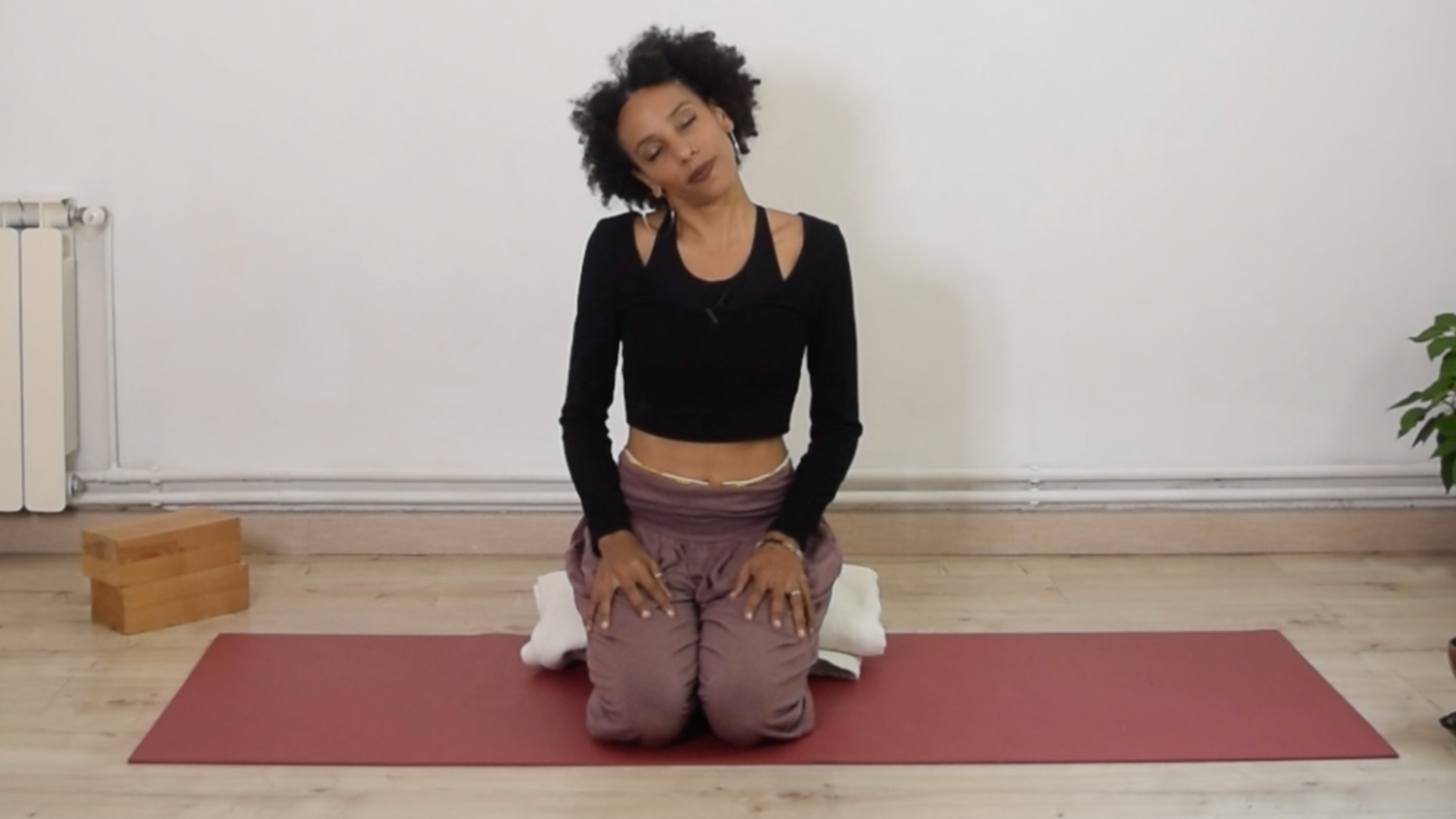
1. Neck Stretches
- The Movement: Exhale and tilt the head toward the right, drawing the ear toward the shoulder. Inhale to return to center, then repeat on the left. Next, lift the chin toward the ceiling on an inhalation, lower it toward the chest on an exhalation, and return to neutral. Finally, look over the right shoulder on an exhalation, return to center, and repeat on the left.
- The Benefit: Releases the accumulation of tension in the cervical spine caused by forward-head posture while staring at computer screens.
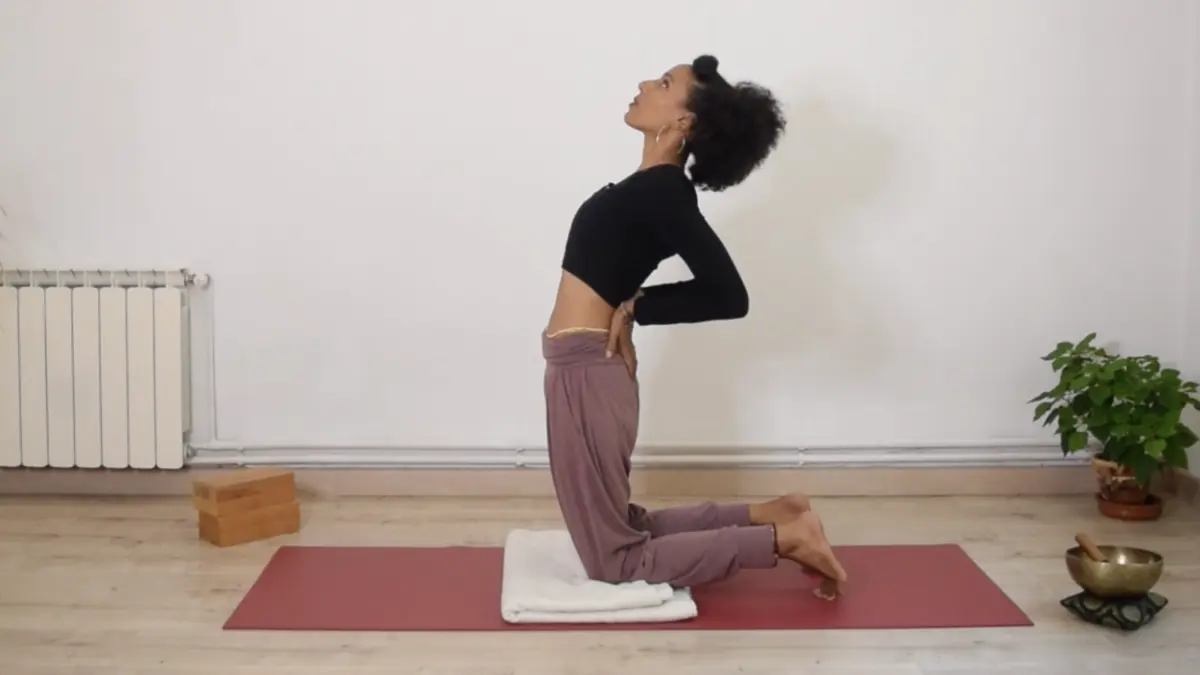
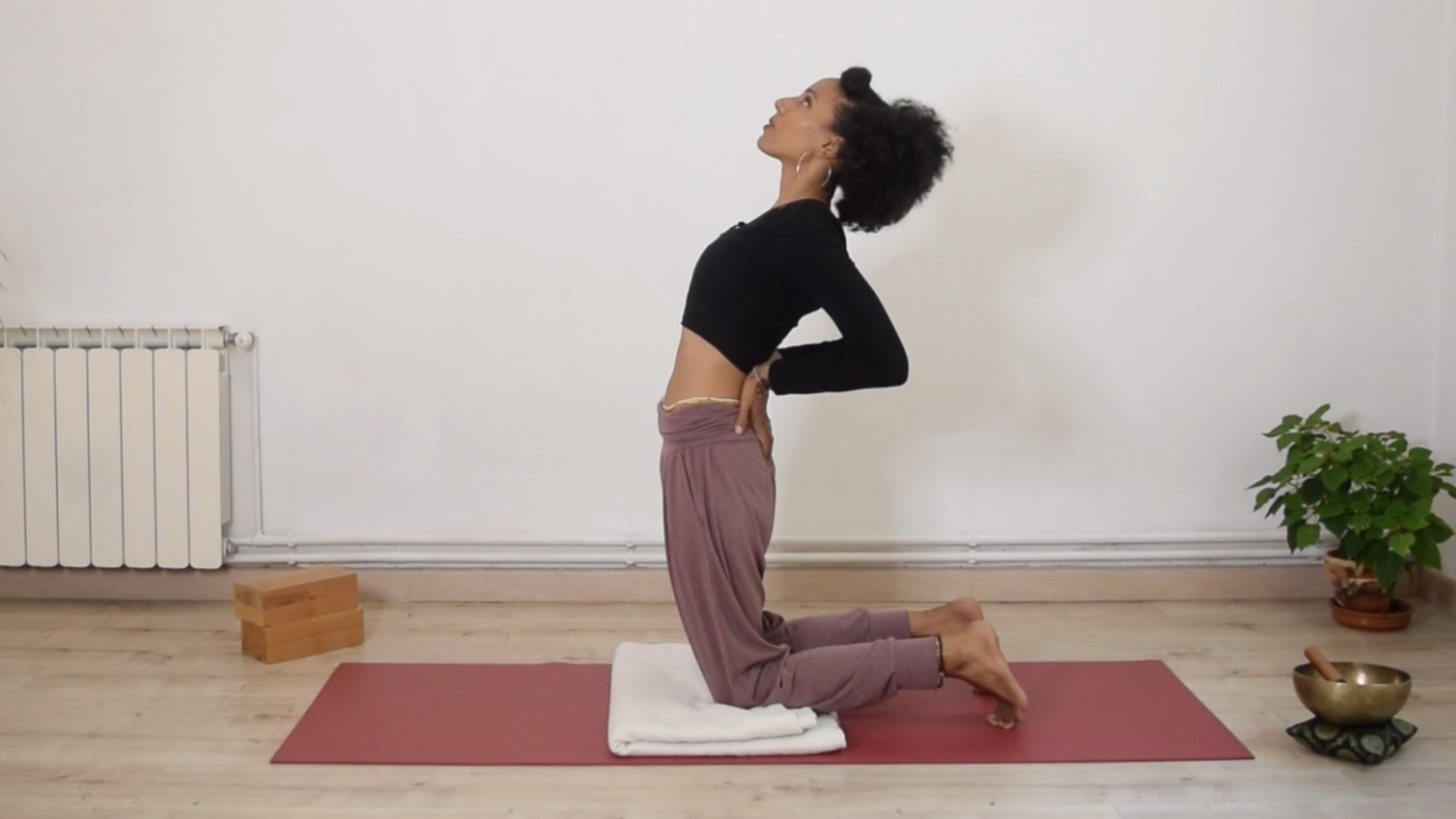
2. Camel Pose (Supported Variation)
- The Movement: Kneel on the mat, bend your elbows, and place your hands on your hips. Gently press your hips forward while maintaining breath awareness. Release.
- The Benefit: Counteracts hours of forward-slumping posture by gently opening the chest and front body.
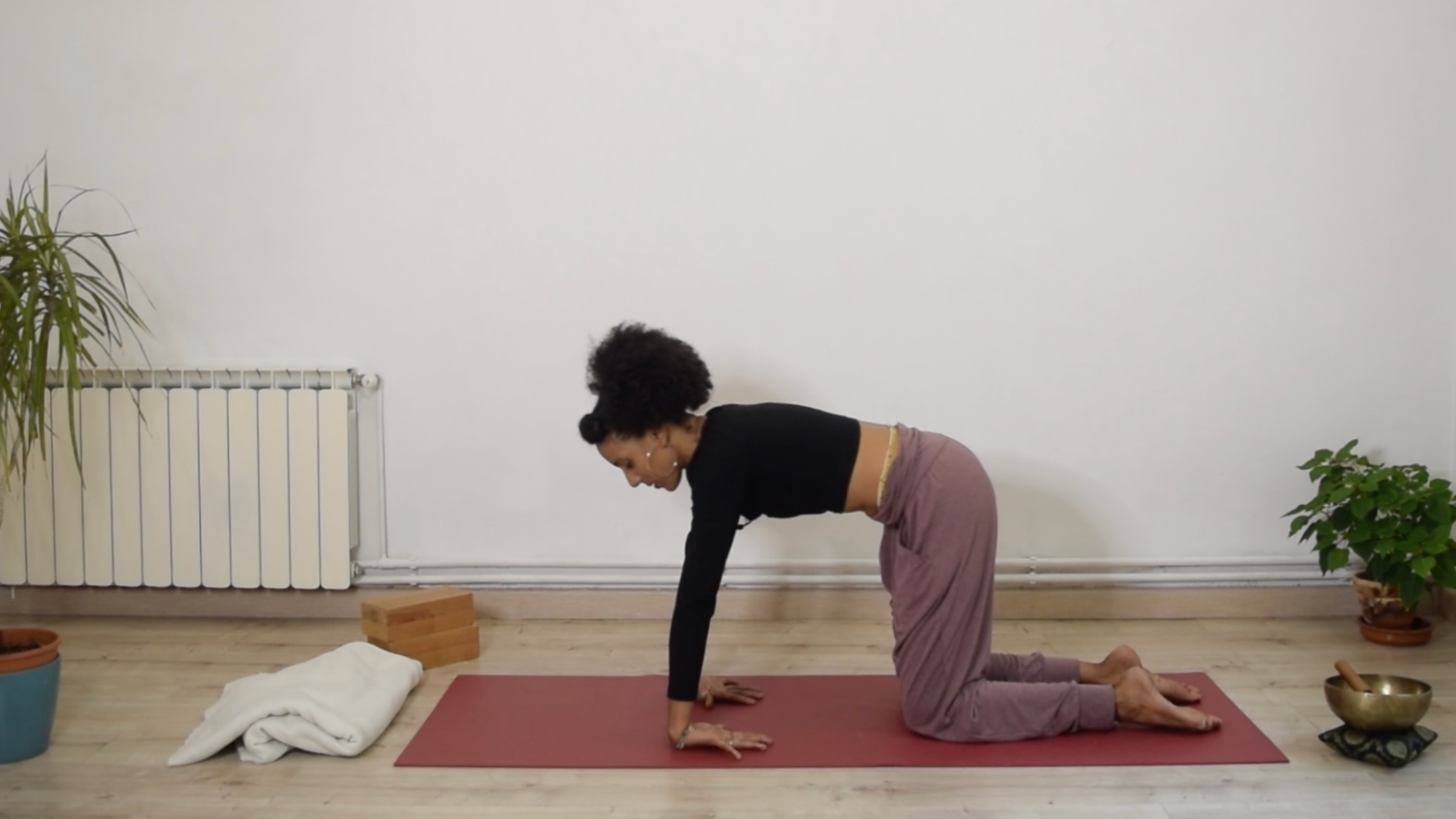
3. Wrist Stretches
- The Movement: From an all-fours position (hands and knees), shift your hips halfway back toward your heels. Gently press the backs of both hands against the mat with your fingers pointing toward your knees. Adjust the intensity by shifting your hips further back or working one hand at a time. Finish by sitting on your heels and shaking out the hands.
- The Benefit: Essential for office workers prone to carpal tunnel symptoms, repetitive strain injuries, and wrist fatigue from typing and mouse navigation.
Phase 2: Spinal Mobility and Prone Openers (Minutes 4–8)
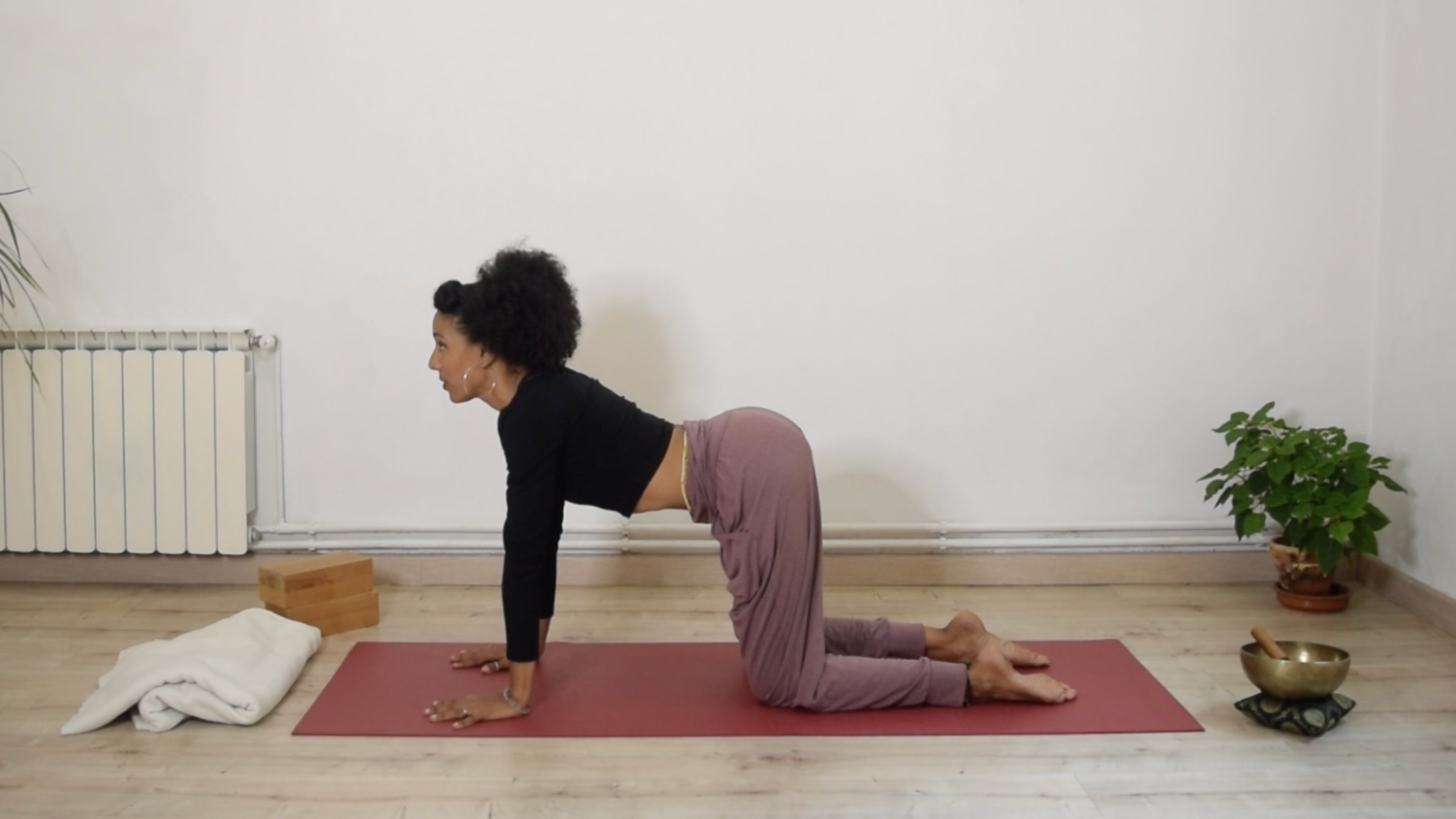
4. Cat-Cow
- The Movement: On hands and knees, inhale to drop the belly, lift the chest, and arch the back (Cow Pose). Exhale to press the palms down, round the spine, and draw the chin to the chest (Cat Pose).
- The Benefit: Lubricates the vertebrae, encourages cerebrospinal fluid circulation, and releases tension across the entire back body.
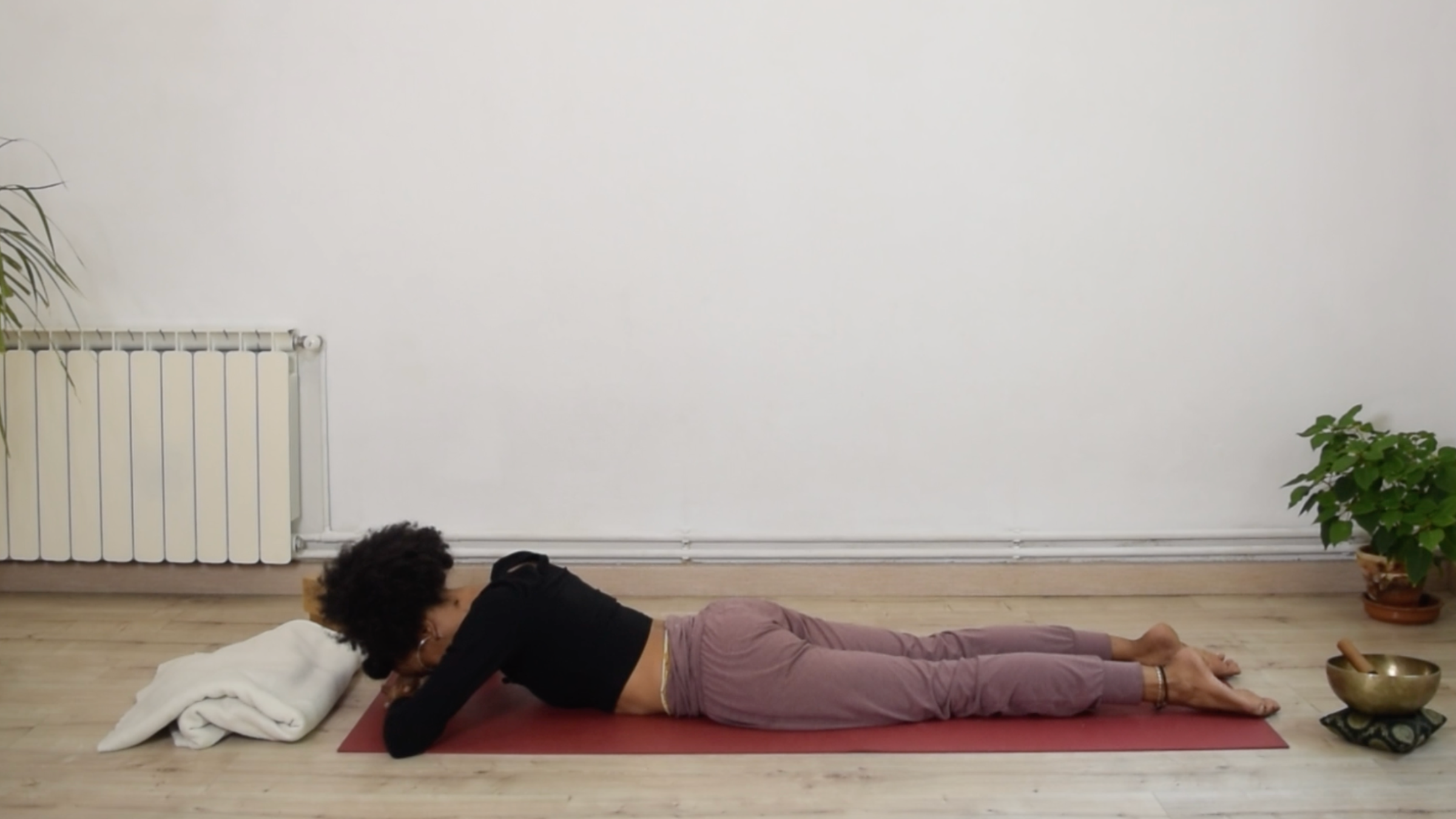
5. Crocodile Pose
- The Movement: Lie flat on your belly, stack your hands, and rest your forehead on your top hand. Allow the entire body to sink heavily into the mat and take deep, diaphragmatic breaths.
- The Benefit: Shifts the nervous system from sympathetic (stress/action) to parasympathetic (rest/digest) dominance through facial grounding and belly breathing.
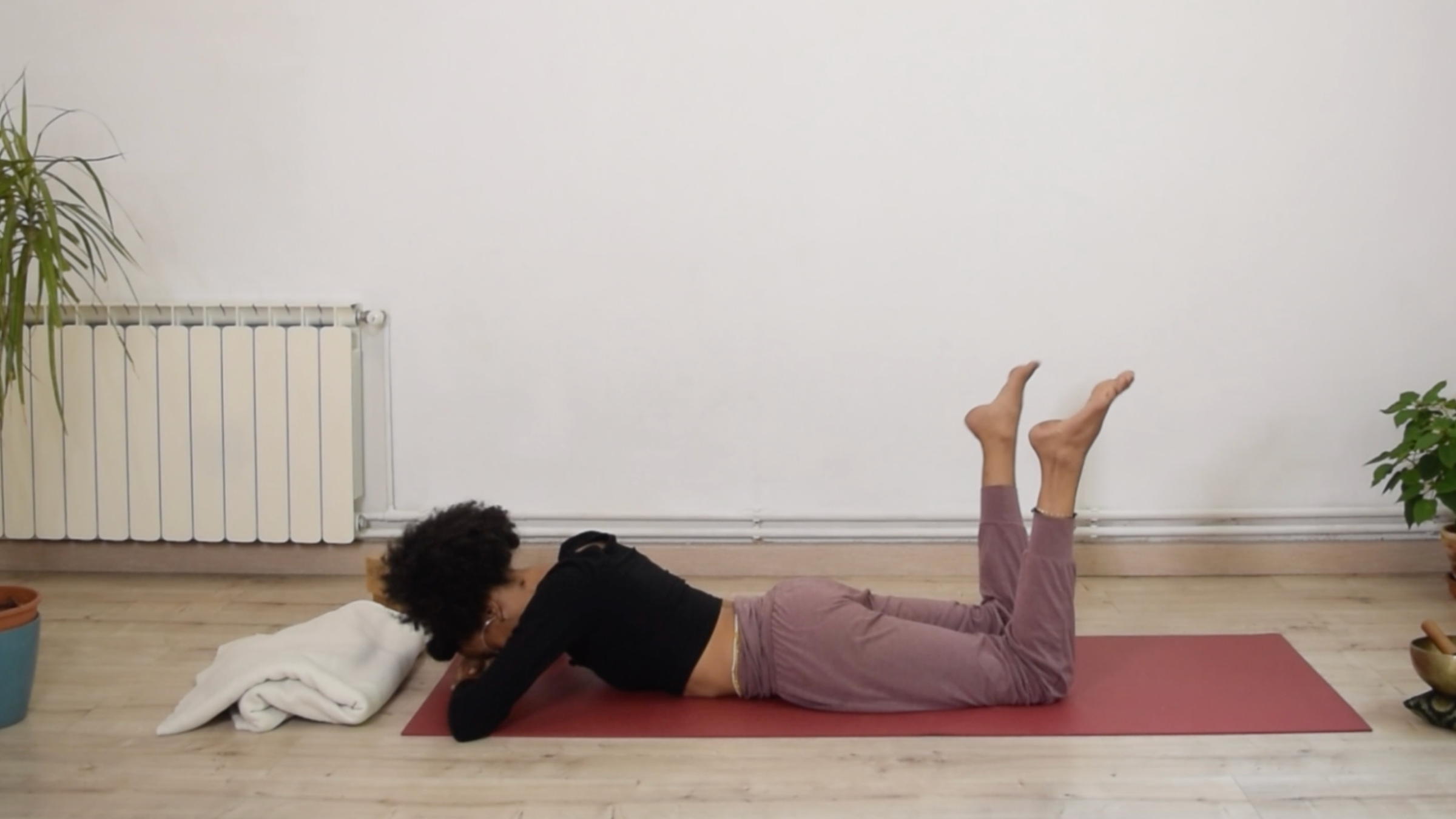
6. Prone Windshield Wipers
- The Movement: Remaining on your stomach, bend your knees and let your feet sway slowly from side to side—dropping toward the right, sweeping through center, and dropping toward the left.
- The Benefit: Releases deep internal and external rotation tension in the hip sockets and lower back.
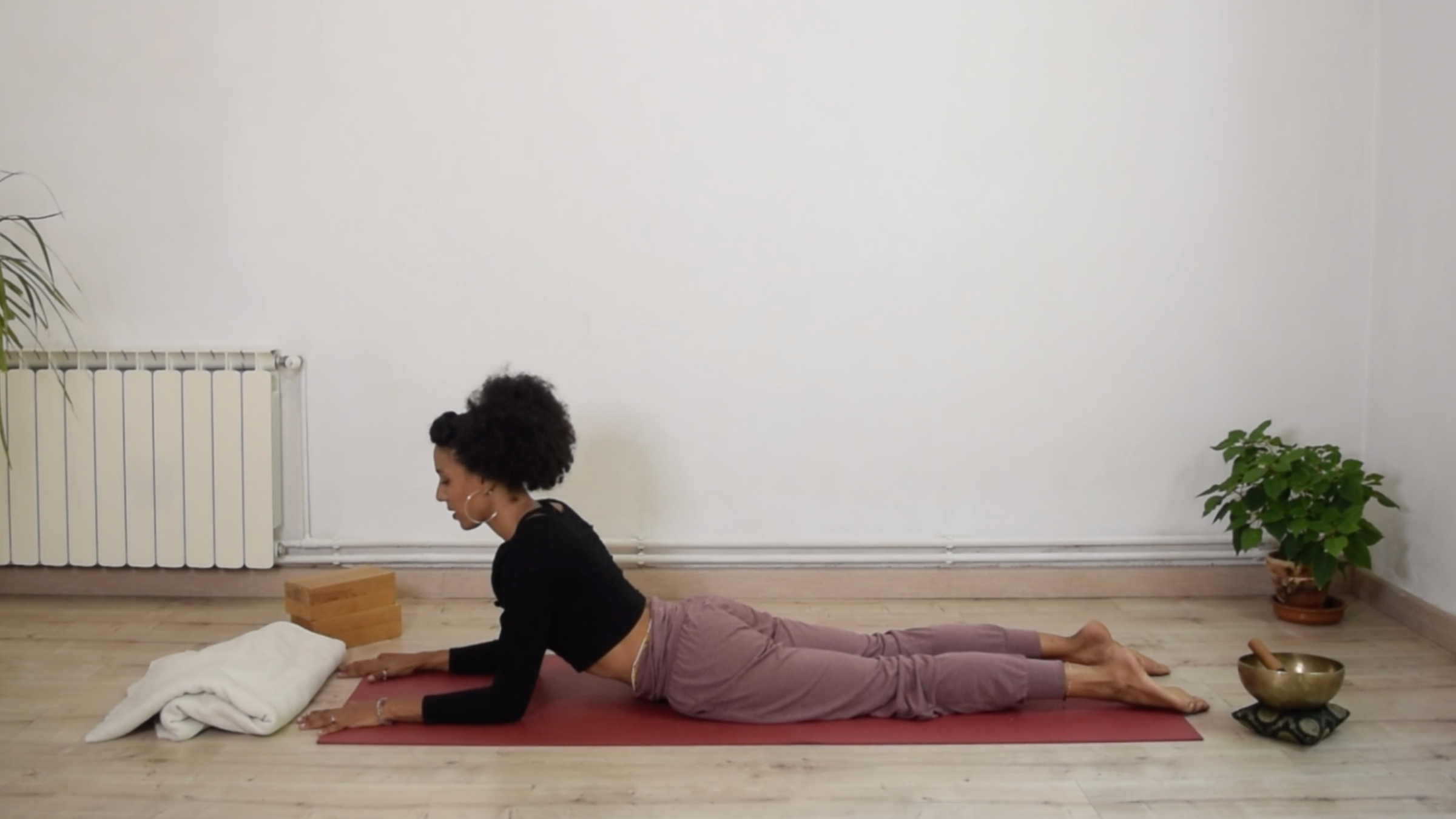
7. Sphinx Pose
- The Movement: Extend your legs straight behind you and prop yourself up on your forearms, elbows stacked beneath your shoulders. If your lower back feels pinched, slide your elbows slightly forward to lower your chest.
- The Benefit: Builds mild, sustainable endurance in the posterior chain while opening the thoracic cavity.
8. Broken Wing Pose
- The Movement: Lie on your belly and extend your left arm straight out to the side at shoulder height, palm down. Bend your right elbow, plant your right hand under your right shoulder, and slowly roll onto your left hip. Bend your right knee and plant your right foot behind your left knee, reaching your right hand toward the ceiling. Hold, return to center, and switch sides.
- The Benefit: Delivers a profound, targeted stretch to the anterior deltoids and pectoral muscles, which tighten rapidly when we hunch over desks.
Phase 3: Restoration and Grounding (Minutes 9–11)
9. Wind-Relieving Pose
- The Movement: Roll onto your back and draw both knees tightly into your chest, clasping your hands around your shins.
- The Benefit: Gently compresses the abdominal organs, stretches the gluteal muscles, and flattens the lumbar spine against the floor.
10. Reclining Bound Angle Pose (Supta Baddha Konasana)
- The Movement: Stay on your back, bring the soles of your feet together, and let your knees open wide. Optional: Place rolled blankets under your outer thighs for full muscular surrender. Hold for several breaths.
- The Benefit: Opens the groin and adductor muscles while encouraging pelvic floor relaxation.
11. Easy Pose (Sukhasana)
- The Movement: Transition gracefully up to a comfortable cross-legged seat. Take a final series of deep, grounding breaths to anchor the mind before stepping back into daily life.
- The Benefit: Integrates the physical shifts of the practice and establishes a centered mental baseline.
Supporting Data: The Cost of Sitting and the Science of Micro-Movements
To understand why Bové’s protocol is gaining traction among physical therapists and occupational health experts, one must look at the data surrounding sedentary behavior.
- The 8-Hour Rule: According to recent occupational health studies, the average desk worker spends between 7.5 and 9.5 hours daily in a seated position. Prolonged sitting decreases lipoprotein lipase activity—an enzyme responsible for breaking down fats in the blood—by up to 90%.
- Micro-Break Efficiency: Research published in physiological journals indicates that breaking up sedentary bouts with short, low-intensity movement bursts every 60 to 90 minutes significantly reduces musculoskeletal discomfort, lowers systemic markers of inflammation, and improves cognitive focus.
- Nervous System Regulation: Movement practices that incorporate prolonged exhalations and low-to-the-ground postures have been shown to stimulate the vagus nerve, reducing cortisol output and heart rate variability within minutes.
Official Responses and Expert Perspectives
The intersection of chronic illness management and workplace wellness has drawn praise from healthcare professionals who advocate for gentler approaches to movement.
Dr. Elena Vance, a somatic physical therapist specializing in chronic pain rehabilitation, noted the value of Bové’s methodology:
"For too long, the fitness industry has preached a ‘no pain, no gain’ philosophy that alienates individuals with chronic fatigue, hypermobility, or joint stiffness. Protocols like Laia Bové’s 11-minute reset validate the nervous system. By keeping the body low to the ground and utilizing gravity-assisted poses like Crocodile and Sphinx, practitioners can restore mobility without triggering protective muscle guarding."
Corporate wellness consultants have similarly praised the flexibility of the routine. Mark Sterling, director of employee experience at a major tech firm, remarked:
"Employees are intimidated by the idea of rolling out a mat and doing a full workout in office clothes. An 11-minute, zero-sweat routine that addresses wrists, necks, and hips is something we can actively integrate into wellness initiatives without disrupting productivity."
Implications: Changing How We View Workplace Self-Care
The popularity of micro-yoga routines points toward a broader cultural shift in how society approaches health and productivity. The traditional model—working uninterrupted for hours followed by an intense, high-impact gym session at the end of the day—is increasingly recognized as biologically mismatched to human anatomy.
By democratizing yoga and stripping away the performance pressures often associated with studio culture, instructors like Laia Bové are redefining self-care not as a luxury item or a weekend event, but as an accessible, daily maintenance habit. Whether practiced on a living room rug, a hotel floor, or beside an office desk, an 11-minute investment in somatic awareness offers a powerful reminder: healing and tension relief do not require grand gestures, just consistent, compassionate attention to the body’s most basic needs.
