

In an era defined by sedentary desk jobs, perpetual screen time, and chronic psychological stress, modern wellness culture frequently echoes a profound philosophical observation made decades ago by transpersonal psychologist Ken Wilber: "Few of us have lost our minds, but many of us have long ago lost our bodies."
It is a common human condition to drift into a disembodied state—a functional disconnection where abstract thoughts and relentless cognitive loops operate entirely divorced from physical reality. This pervasive mind-body split manifests in overt and subtle ways: the racing train of anxious thoughts, the chronic hunching over keyboards, and the sudden onset of physical ailments born from ignoring the body’s early warning signals.
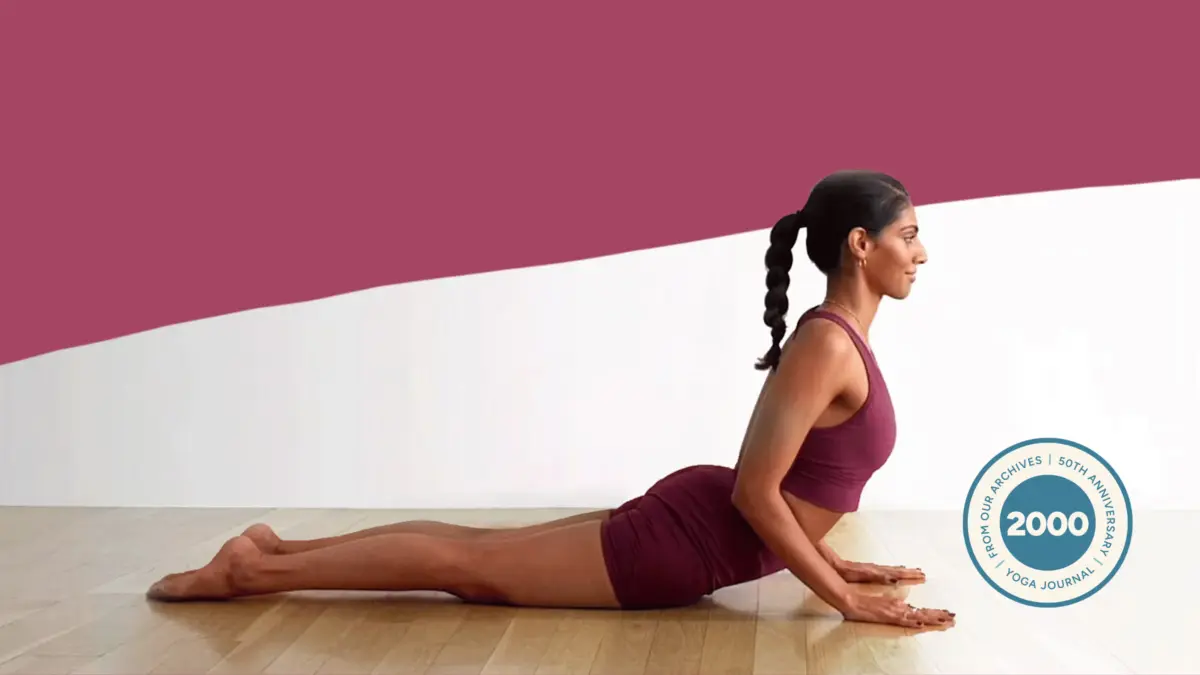
To bridge this chasm between mind and matter, movement practitioners often turn to the ancient, transformative practices of yoga. Among the foundational asanas designed to restore this lost connection, Cobra Pose (Bhujangasana) stands out as a masterclass in spinal awareness, emotional release, and whole-body integration. Originally highlighted in the archives of Yoga Journal from its March-April 2000 issue, Cobra Pose remains as critically relevant today for holistic health and posture correction as it was at the turn of the millennium.
Main Facts: What is Cobra Pose and Why Does It Matter?
Cobra Pose is a prone backbend that serves as a cornerstone for spinal health, core stability, and somatic awareness. Visually, the posture mimics a serpent rising from the earth, chest expanded and alert. Anatomically, however, it is a complex, total-body engagement that requires the harmonious coordination of the feet, legs, glutes, pelvis, spine, shoulders, and neck.
Key Physiological Benefits:
- Spinal Strengthening and Flexibility: The pose builds muscular endurance along the entire erector spinae group, counteracting the forward-flexion damage caused by prolonged sitting.
- Lower Body Toning: It actively engages and tones the gluteal muscles, hamstrings, and quadriceps.
- Enhanced Circulation: By opening the chest cavity, it stimulates blood flow and supports optimal kidney function.
- The "Heart Opener" Phenomenon: In psychological and somatic terms, backbends like Cobra are categorized as heart openers. They subtly stretch and release muscular armoring and emotional tension held within the rib cage, fostering a deep sense of vulnerability, emotional relief, and intrinsic joy.
Rather than treating the body as a collection of isolated parts, Cobra teaches the practitioner to move as an integrated, cohesive whole.
Chronology and Evolution: From Ancient Tradition to Modern Archives
To understand the enduring value of Bhujangasana, it helps to trace its journey from ancient yogic texts to contemporary wellness methodologies.
Ancient Roots
Rooted in the foundational traditions of Hatha yoga, Bhujangasana derives its Sanskrit name from Bhujanga (meaning serpent or snake) and Asana (meaning posture). Historically, ancient sages observed the natural movements of animals in nature, recognizing that mirroring these shapes could unlock specific vital energies (prana) and maintain physical longevity.
The 20th-Century Revival
As yoga migrated to the West in the mid-to-late 20th century, teachers recognized that Western practitioners suffered from a unique set of postural dysfunctions. The introduction of structural alignment frameworks in the 1970s, 1980s, and 1990s transformed how asanas were taught. Instead of encouraging students to blindly force themselves into deep shapes, pioneering educators emphasized anatomical landmarks—such as the occipital ridge, sacrum, and scapulae. The publication of seminal guides in the March-April 2000 issue of Yoga Journal codified these alignment cues, shifting the emphasis from acrobatic achievement to internal somatic awareness.
2026 Perspective: The Digital Age Antidote
Today, as remote work, mobile device addiction ("tech neck"), and chronic sedentary habits reach unprecedented global highs, the relevance of Cobra Pose has only accelerated. Modern physical therapists and somatic therapists regularly prescribe modified prone backbends to rehabilitate weak posterior chains and combat upper-cross syndrome.
Supporting Data: Understanding Somatic Disembodiment and Postural Stress
To fully appreciate the corrective power of Bhujangasana, health data and biomechanical principles must be examined.
The Epidemic of Sedentary Disembodiment
- The Cost of Sitting: Public health data consistently shows that adults spend upwards of 9 to 11 hours per day sitting. This chronic flexion deactivates the posterior chain—specifically the gluteal muscles and spinal extensors—while overworking the hip flexors and chest muscles.
- Postural Compensation: When individuals sit for extended periods, the natural lumbar curve of the lower back flattens or reverses, and the shoulders round forward. This creates an internal environment ripe for chronic lower back pain, tension headaches, and restricted respiratory capacity.
Biomechanical Metrics of Cobra Pose
When executed with proper anatomical precision, Cobra Pose addresses these specific deficits:
- Axial Extension: Rather than compressing the lumbar vertebrae (a common injury mechanism in deep backbends), correct Cobra practice prioritizes axial elongation—creating space between each vertebra.
- Scapular Depression: By actively drawing the shoulder blades down the back, the practitioner counters the upper-trapezius dominance associated with desk work.
- Pelvic Grounding: Pressing the pubic bone and the tops of the feet into the floor engages the lower limbs, shifting the workload away from vulnerable lower back muscles and distributing it evenly across the hips and thighs.
Anatomical Preparation: Knowing Your Body Before You Move
Before entering Cobra Pose, expert instructors emphasize cultivating internal tactile awareness. Disembodiment is reversed by actively mapping key anatomical landmarks. You can experience this physiological mapping through a simple, seated self-assessment:
1. The Cervical Spine and Occipital Ridge
Sit comfortably in a chair. Wrap your hand around the nape of your neck and rest the side of your hand along your occipital ridge—the bony juncture where your skull meets your spine. You will feel two distinct bony points separated by a hollow space.
- The Common Error: Allowing the head to drop backward, crunching the back of the neck.
- The Correction: Extend the back of your neck so it aligns harmoniously with the rest of your spine, allowing your chin to drop slightly downward.
2. The Sacrum and Tailbone
Bring your other hand to your lower back and touch your tailbone at the base of your spine.
- The Experiment: Intentionally turn your tailbone up as if trying to sway your back like a duck. Notice how this jams your sacrum (the triangular foundation bone).
- The Correction: Reverse the movement, turning your tailbone downward toward the earth. Feel how this simple directional shift creates instantaneous space in the lower back. Pause to trace the unbroken line of your entire spine, from the tailbone up through the vertebrae and the nape of the neck, all the way to the crown of your head.
3. The Shoulder Complex (Scapulae)
Bring your awareness to your shoulders and draw them up toward your ears. This elevated, tense posture is the classic physical signature of modern stress—the posture we involuntarily adopt when hunched over a laptop or navigating heavy traffic.
- The Correction: Bring your awareness to your shoulder blades (scapulae), visualizing them as wings sliding up and down your back. Consciously rotate your shoulders, drawing your shoulder blades down your back. Maintain this downward grounding to create expansive space between your neck and shoulders. Touch your sternum (the bony plate between and below your collarbones) with one hand, feeling it spread open as your shoulder blades draw deeper into your body.
4. Lower Limb Activation
Straighten your right leg, lift it slightly off the floor, and place your right hand on top of your right thigh. Point your toes, firm your kneecap, and feel your entire leg come alive. In any backbend, the ability to actively engage the legs is non-negotiable for spinal support. Press your thigh bone back and activate the leg further, registering these sensations in your nervous system.
Step-by-Step Guide: How to Practice Cobra Pose Safely
With your internal map established, you are ready to approach Bhujangasana with intelligence and care.
Step 1: The Setup
Begin lying completely flat on your belly. Place your hands flat on the floor directly under your shoulders, hugging your elbows closely inward toward the sides of your rib cage. Rest your forehead gently on the mat.
Step 2: Grounding and Lower Body Activation
- Draw your shoulder blades down your back, lifting your shoulders slightly off the floor to clear any tension around your neck.
- Activate your legs fully: point your toes away from you, press the tops of your feet firmly into the floor, and firm the tops of your thighs.
- Allow only your kneecaps to lift slightly off the floor.
- Press your pubic bone (the bony prominence several inches below your navel) firmly into the floor. This critical action stabilizes the lower back and broadens the sacrum. Pause here for a moment, letting your awareness spread evenly throughout your entire body.
Step 3: Initiating the Lift via Extension
- On a slow inhalation, begin to lift your chest off the floor, maintaining an unbroken connection from your pubic bone down through your active legs.
- The Crucial Distinction: A common pitfall in Cobra Pose is chasing height by aggressively pushing the torso up using arm strength alone. Height is not the goal; spinal extension and thoracic opening are.
- To ensure you are working from strength rather than compression, test yourself: take your hands completely off the floor for a brief moment. The height you maintain should be achieved entirely through the muscular extension of your back, not by arm pressure.
- Replace your hands gently under your shoulders, re-squeeze your elbows inward, breathe deeply into your open chest, and exhale as you lower yourself back down to the starting position.
Step 4: Integration and Repetition
Execute several slow, mindful rounds:
- Inhale: Slowly glide your chest up into the basic Cobra.
- Exhale: Lower down with control.
As you move, consciously check in with your alignment landmarks—sternum to pubis, crown of the head to your toes. Cultivate the sensation of a single, continuous current of energy running up the front of your spine and down the back of your legs.
For a deeper strength-building practice, you may choose to hold the basic backbend for five to ten smooth breaths, opening your heart while maintaining relaxed, steady focus within an active shape.
Step 5: Advanced Progression
Only after years of consistent, mindful practice—and ideally under the direct guidance of a qualified yoga instructor—should a practitioner explore straightening the arms entirely to enter a full, deep Cobra. Beware the temptation of advanced shapes before your body possesses the requisite strength and flexibility, as forcing a full backbend prematurely will inevitably compress and jam the lower back.
Step 6: Savasana on the Belly
When you have completed your practice, rest completely flat on your belly, turning your head comfortably to one side. Allow your body to absorb the physiological residuals of the posture. In this resting state, the body feels akin to a dry field freshly irrigated—cool, revitalized, and deeply nourished.
Implications: The Broader Impact of Somatic Practices on Modern Health
The practice of seemingly simple movements like Cobra Pose carries profound implications for individual and collective well-being. As healthcare systems grapple with skyrocketing rates of stress-related disorders, chronic musculoskeletal pain, and mental health crises, the integration of somatic movement into daily life offers a powerful preventative paradigm.
1. Reclaiming Somatic Literacy
By training the mind to notice micro-sensations—such as the lift of a sternum, the grounding of a sacrum, or the engagement of a kneecap—individuals rebuild their somatic literacy. This heightened interoception (the ability to sense internal bodily states) allows people to catch stress responses before they manifest as chronic physical pathologies or emotional burnout.
2. Ergonomic and Postural Rehabilitation
In the corporate and academic spheres, integrating brief somatic movement breaks centered around spinal extension can drastically reduce the incidence of debilitating lower back pain and upper-cross syndrome. Treating the spine not as a passive support beam, but as an intelligent, dynamic axis, transforms how modern workers interact with their office environments.
3. Emotional Resilience Through Physical Openness
The psychological implications of "heart openers" should not be understated. In somatic psychology, chronic emotional stress causes physical bracing—pulling the shoulders forward and caving the chest inward to protect vulnerable vital organs. By intentionally reversing this posture through safe backbends like Cobra Pose, practitioners signal safety to the nervous system. The physical expansion of the rib cage facilitates deeper, fuller breathing, which in turn stimulates the vagus nerve, down-regulates the sympathetic nervous system ("fight or flight"), and cultivates genuine emotional resilience.
Ultimately, Cobra Pose (Bhujangasana) is far more than a physical exercise; it is an active meditation on embodiment. By bridging the gap between our conscious minds and our physical vessels, we step out of our heads and back into our lives—grounded, integrated, and fully alive.
