Published: September 1, 2026 Category: Health & Wellness / Mindfulness
Main Facts: Navigating Seasonal Stress Through Intentional Movement
As the lazy, unstructured days of summer fade into memory, the sudden onset of autumn brings a distinct wave of anxiety for millions of adults and students alike. Whether you are trading summer vacations for a grueling back-to-school schedule, navigating a high-stakes semester, or simply facing an overwhelming crunch at your workplace, the transition period between seasons is notorious for spiking cortisol levels.
Practicing yoga for stress relief becomes an essential anchor during these high-friction times of the year. However, the ultimate paradox of stress is that the very moments you need a wellness practice the most are the moments you feel too overscheduled to squeeze it in.
Enter the 10-minute targeted yoga flow. Designed by wellness practitioners to cut through daily chaos, this rapid, high-impact sequence requires minimal equipment—just your body, your breath, and ideally a yoga block for support. By combining somatic movement, dynamic breathing exercises (pranayama), and grounding asanas, this routine is scientifically structured to help you physically move stagnant stress out of your body so you can tackle your day with newfound ease.
Chronology: Step-by-Step Breakdown of the 10-Minute Stress-Relief Flow
You don’t need an elaborate studio setup or an hour of free time to reset your nervous system. Keeping a yoga block or a sturdy household prop nearby can help prevent tricky transitions from adding to your frustration. Follow this sequential, breath-to-movement flow designed by instructor Taylor Lorenz to transition from frantic to focused.
Phase 1: Grounding and Breath Awakening
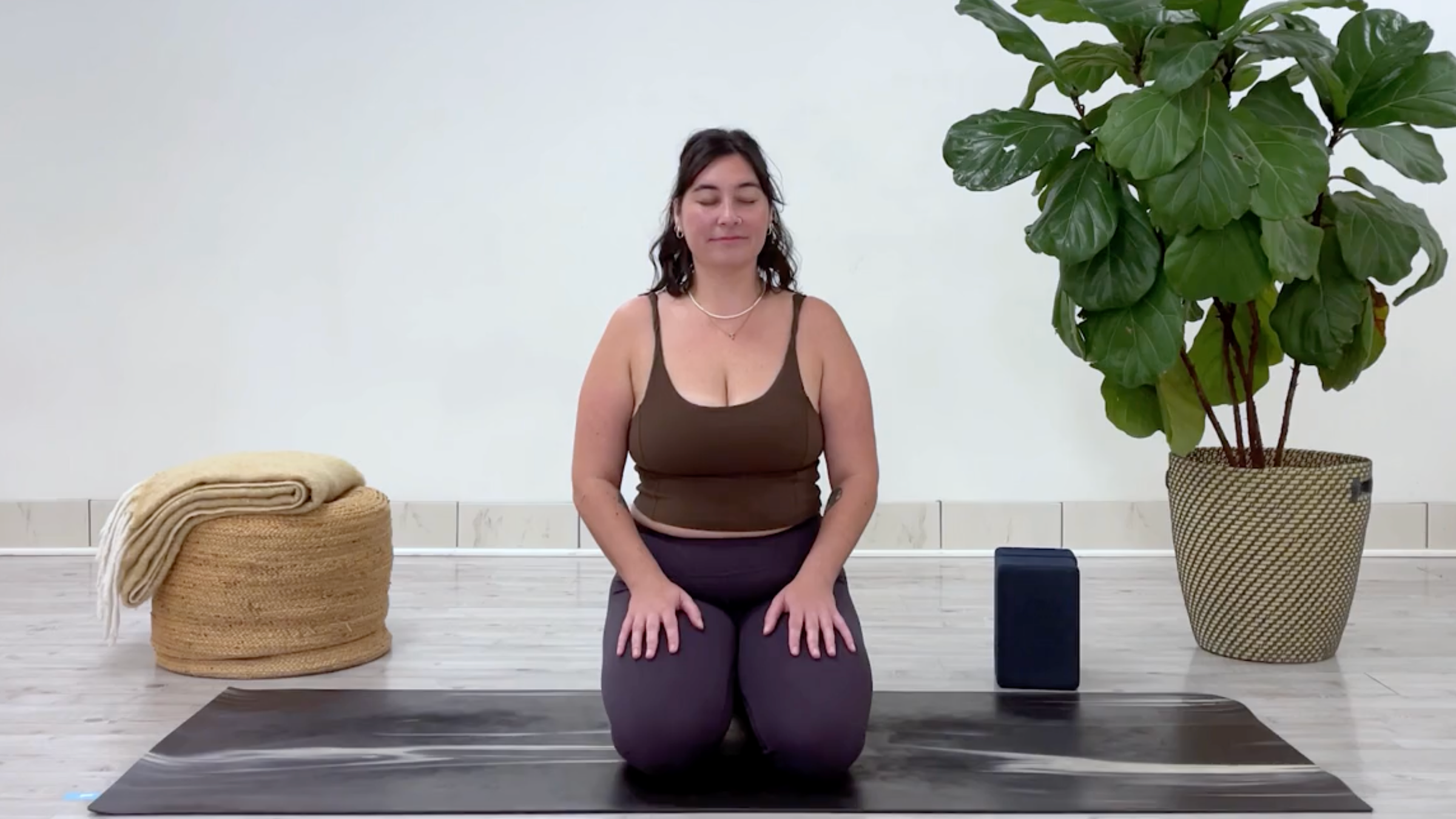
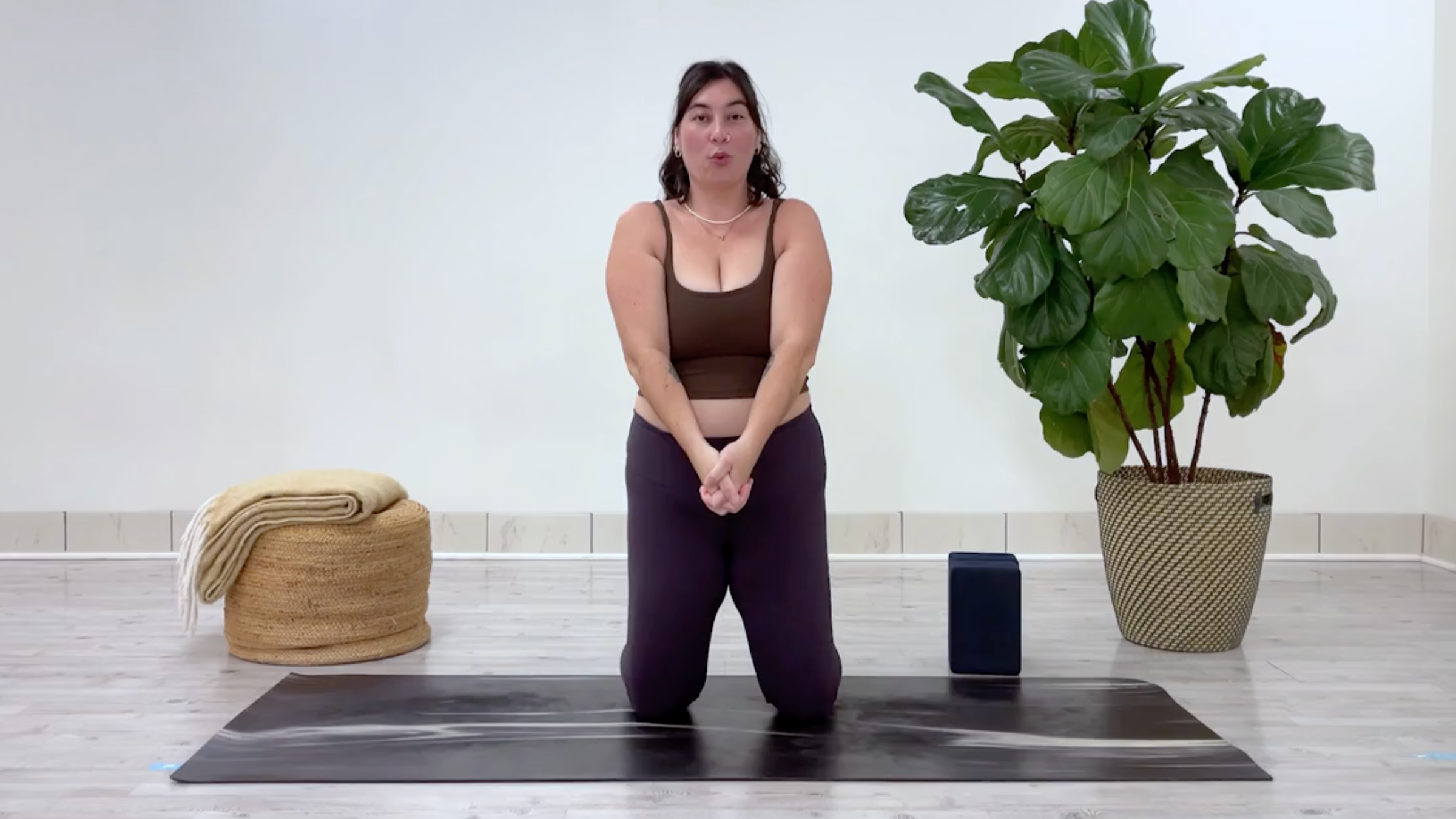
1. Thunderbolt Pose (Vajrasana) — 1 Minute
The Setup: Begin by kneeling on your mat in Thunderbolt Pose. Tuck your toes beneath you and allow your sit bones to rest securely on your heels. If toe-squatting causes discomfort, modify by sitting cross-legged on a block or a folded blanket.
The Action: Rest your hands palms-up or palms-down on your thighs, lengthening your spine to sit as tall as humanly possible.
The Focus: Close your eyes and breathe deeply into your belly for 1 full minute, establishing an internal rhythm before movement begins.
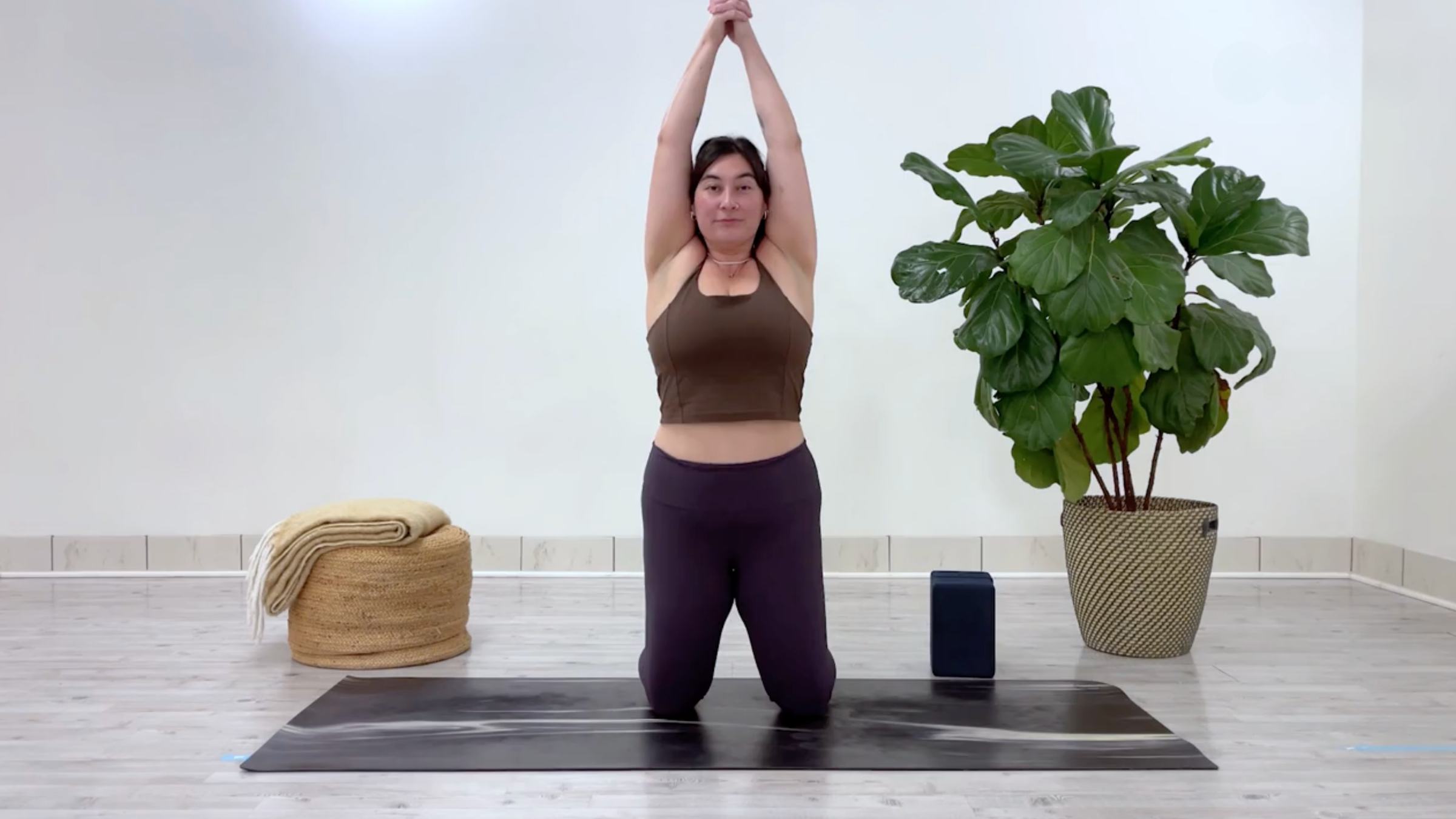
2. Woodchopper Breath — 1 Minute
The Setup: Rise up to stand on your knees. Reach both arms straight overhead. Clench your hands into fists, either pressing them firmly together or interlacing your fingers tightly above your crown. This serves as your primary inhalation posture.
The Action: With a forceful exhale through your mouth, drive your fists downward in front of your belly, mimicking the physical motion of chopping wood.
The Pace: Repeat these movements continuously, matching them to your breath. Allow your pace to be slightly quicker than your natural resting breath to help incinerate nervous energy for 1 full minute.
3. Thunderbolt Pose (Return) — 5 Breaths
The Action: On your final inhalation, hold your arms triumphantly overhead. As you exhale, lower your arms and gracefully return to Thunderbolt Pose.
The Focus: Take 5 deep, grounding breaths here, allowing your heart rate to settle after the kinetic burst of the Woodchopper Breath.
Phase 2: Mobility and Spinal Release
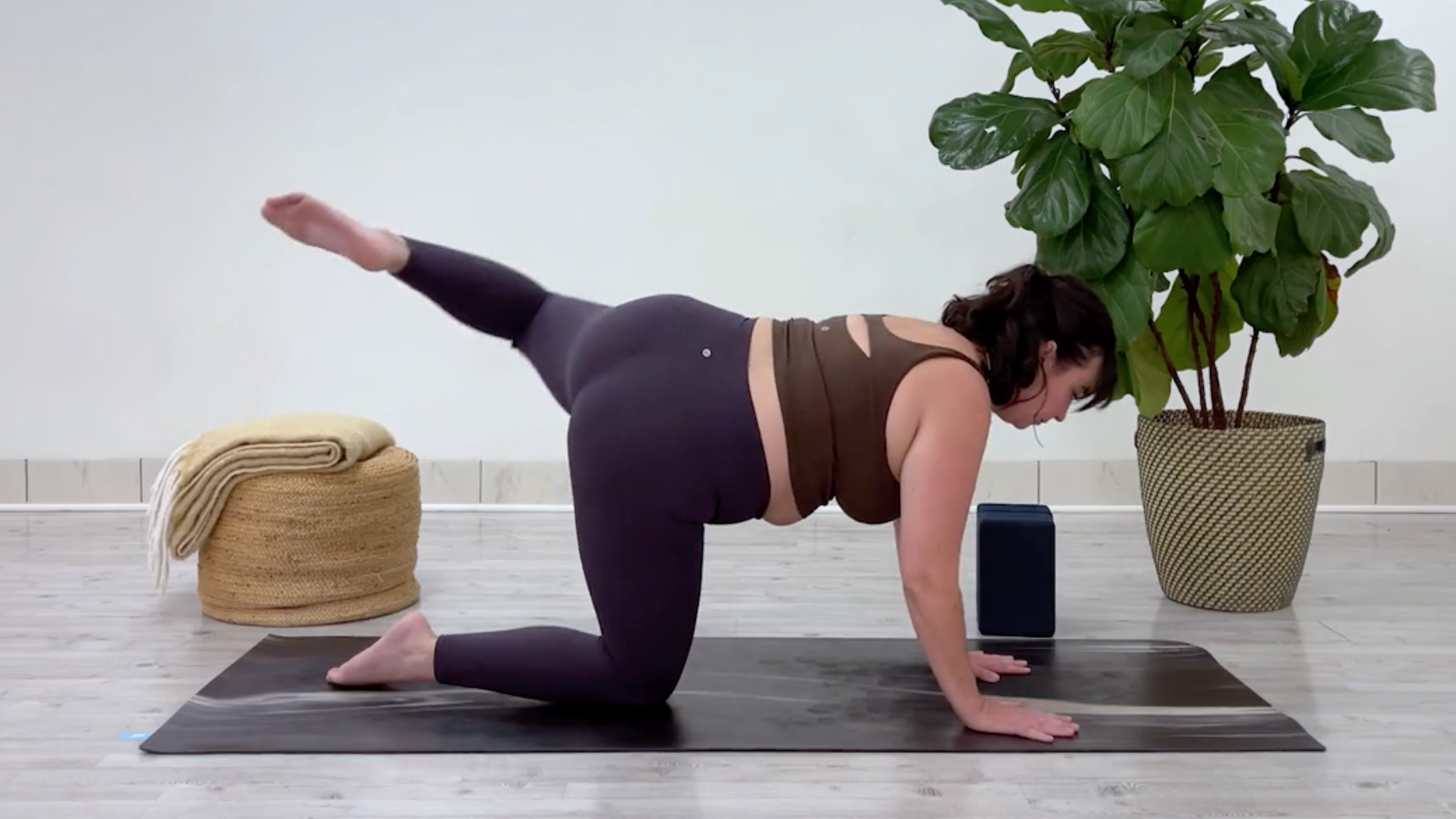
4. Hip Circles — 3 Repetitions per Side
The Action: Shift forward into a Tabletop position, stacking your shoulders directly over your wrists and your hips over your knees. Lift your left knee off the mat and carve 3 large, deliberate circles in the air to lubricate the hip joint.
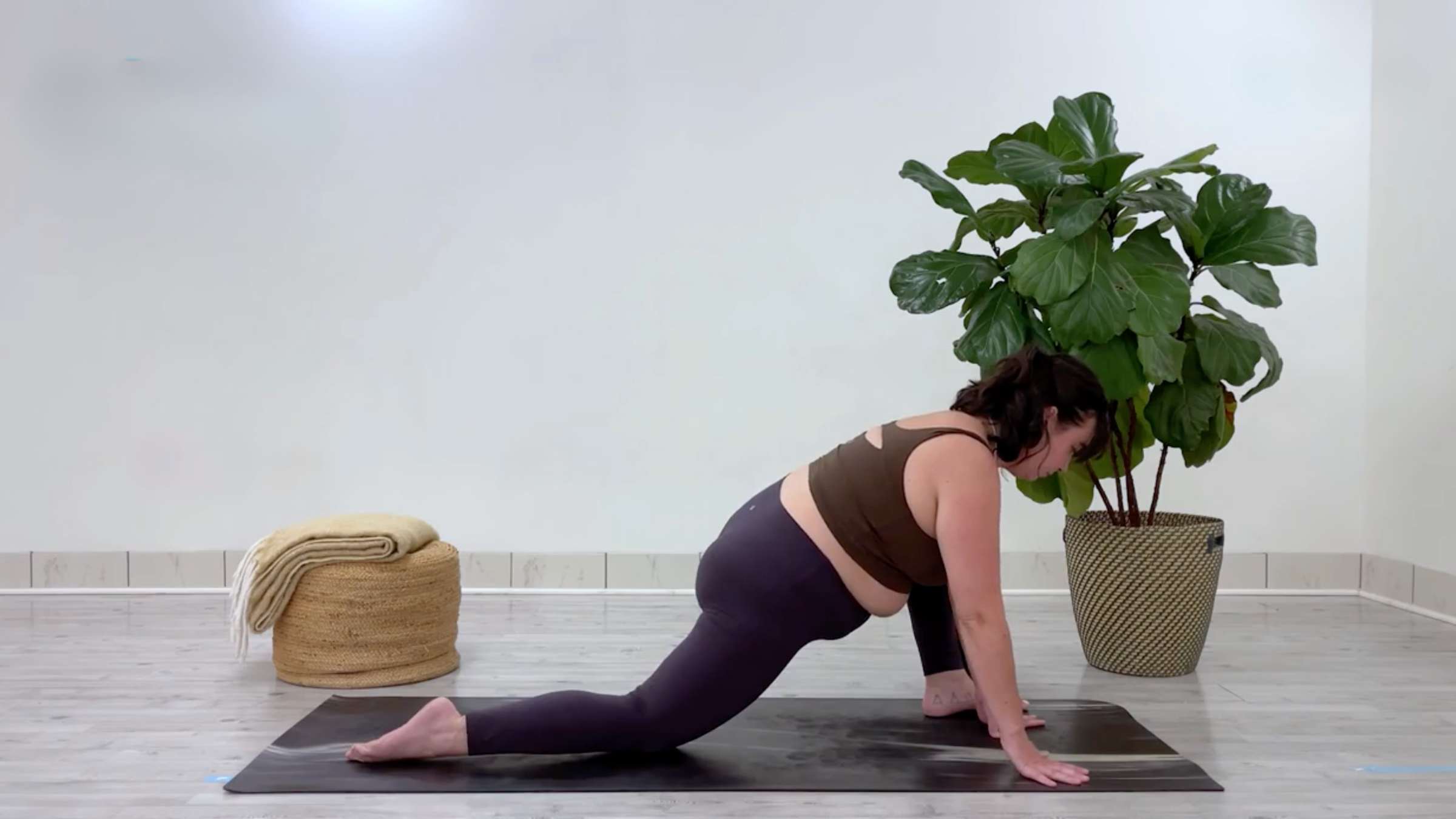
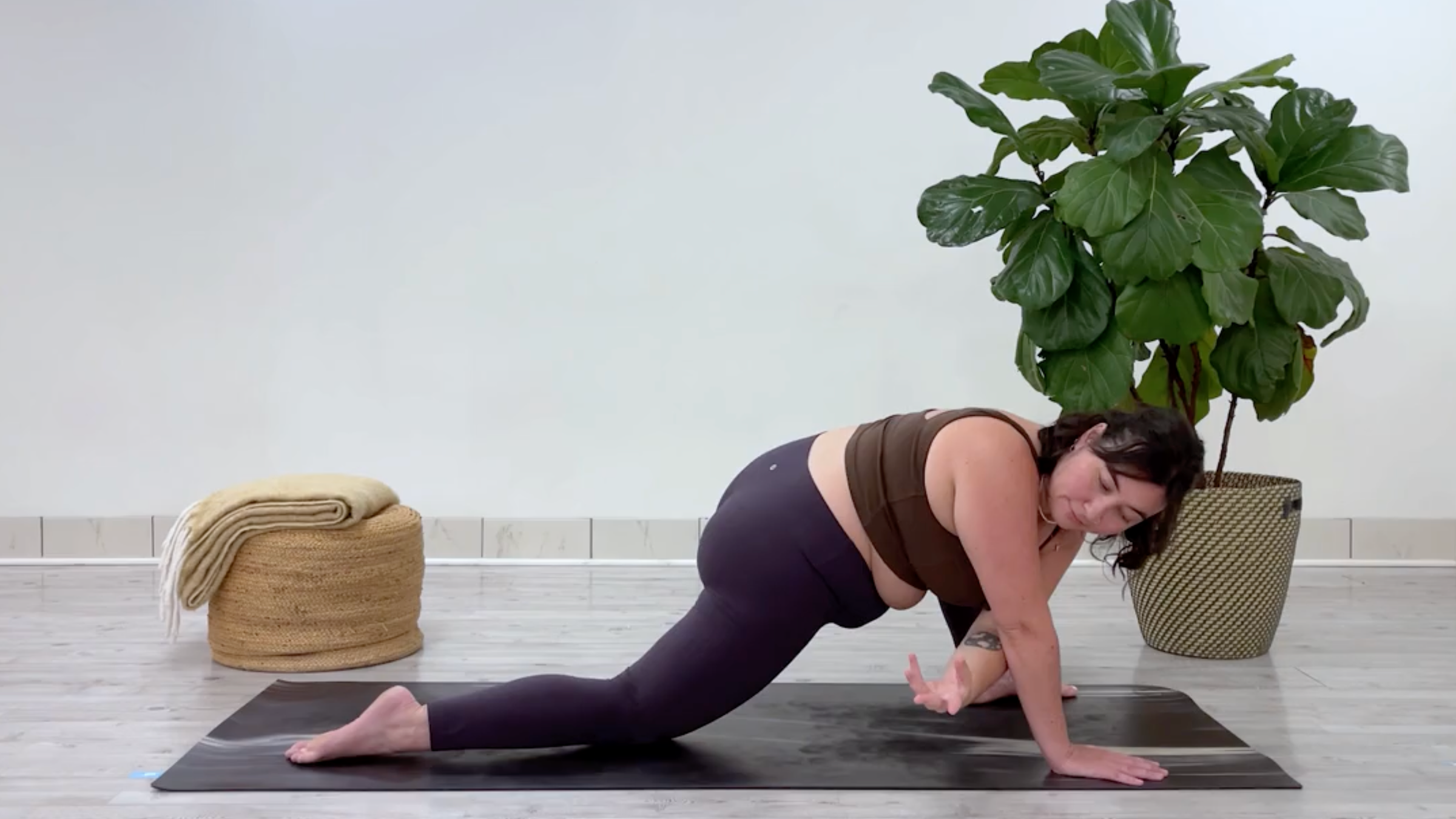
5. Lizard Pose — Entry Posture
The Action: From your Tabletop or after circling the hip, step your left foot forward to the outside edge of your left hand, dropping into a deep, opening Lizard Pose.
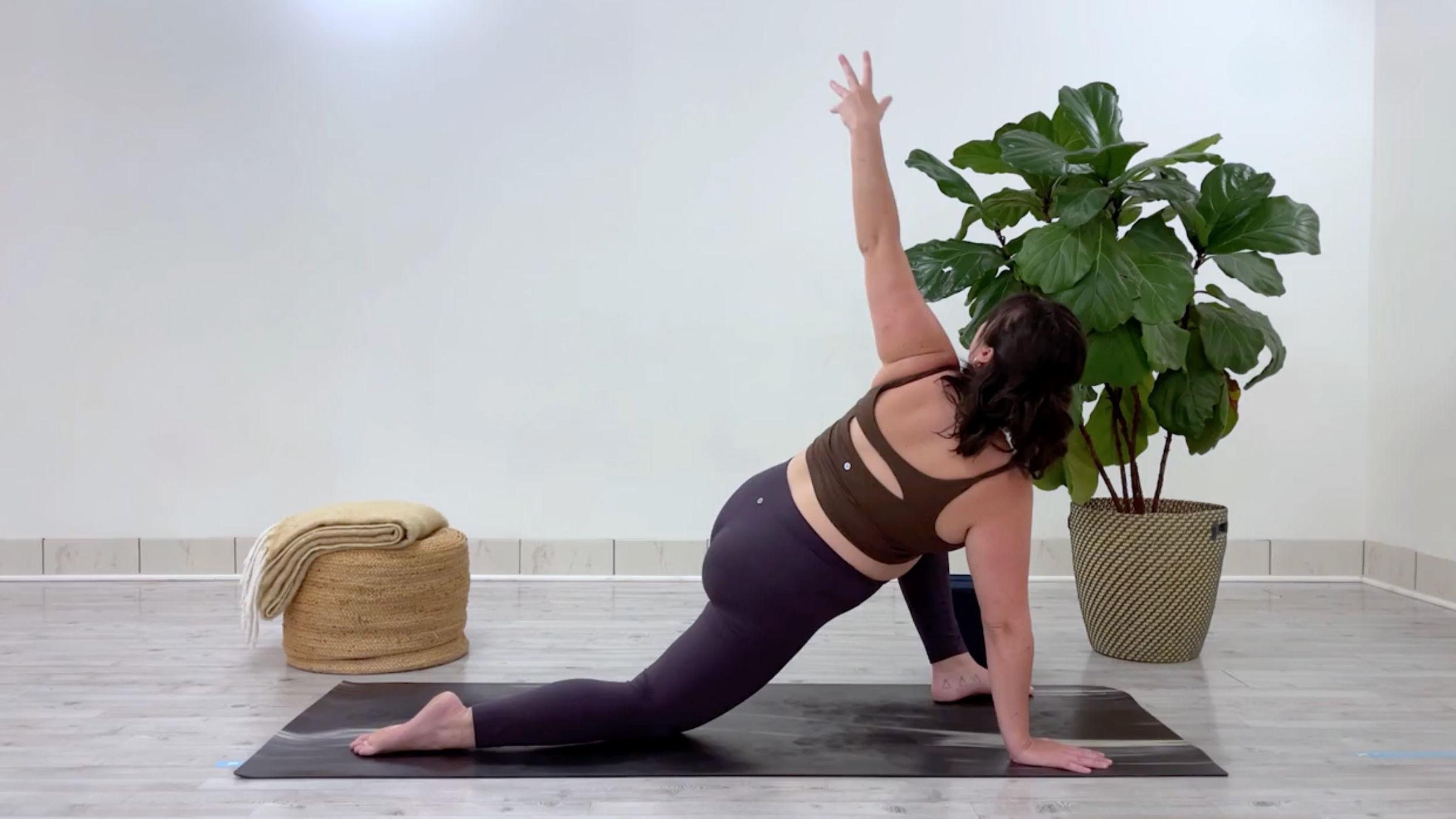
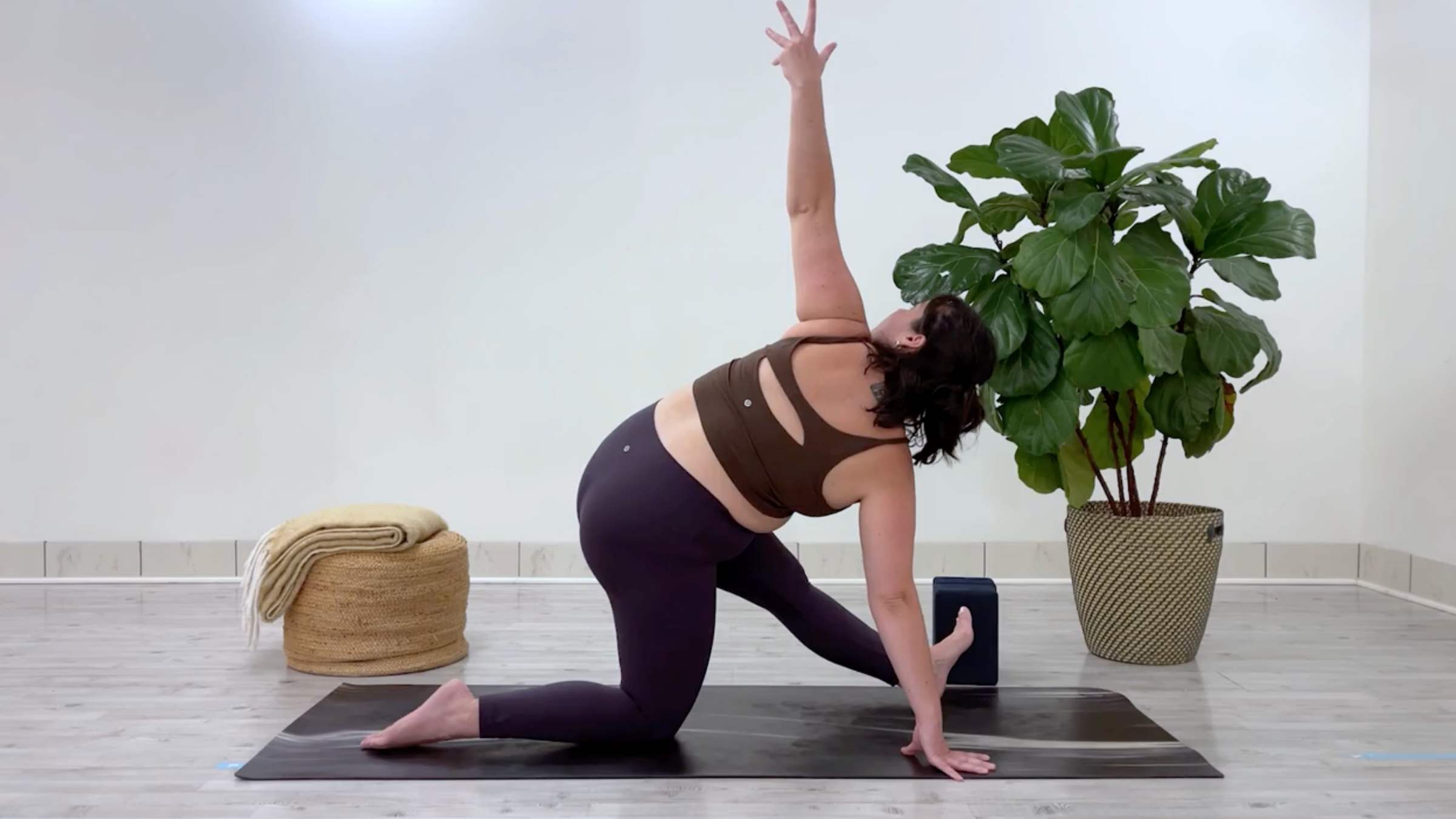
6. Thread the Needle Variation — 3 Repetitions
The Action: Inhale as you reach your left arm triumphantly toward the sky, opening your chest to the side. Exhale as you “Thread the Needle,” sliding your left arm underneath your chest and behind your right arm.
The Pace: Inhale to open your chest back toward the left side of the mat, reaching your arm high. Exhale back into the twist. Repeat this fluid pattern 3 times, moving strictly at the speed of your breath.
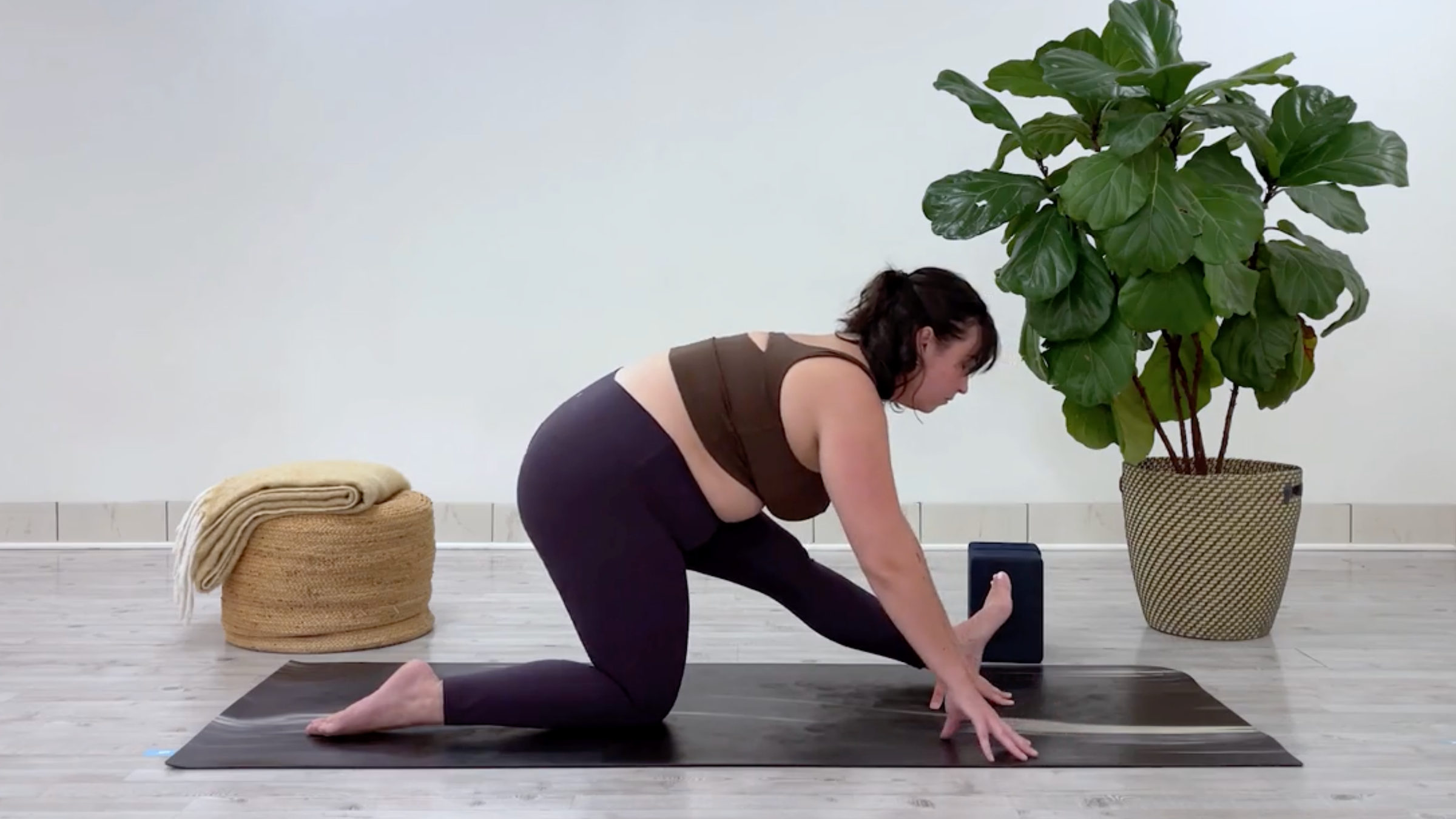
7. Half Splits — 3 Breaths
The Action: Plant your hands firmly to the inside of your left foot. Shift your hips back as you straighten your left leg, flexing your left foot upward in Half Splits (Ardha Hanumanasana). Lean your torso forward slightly to the inside of the leg.
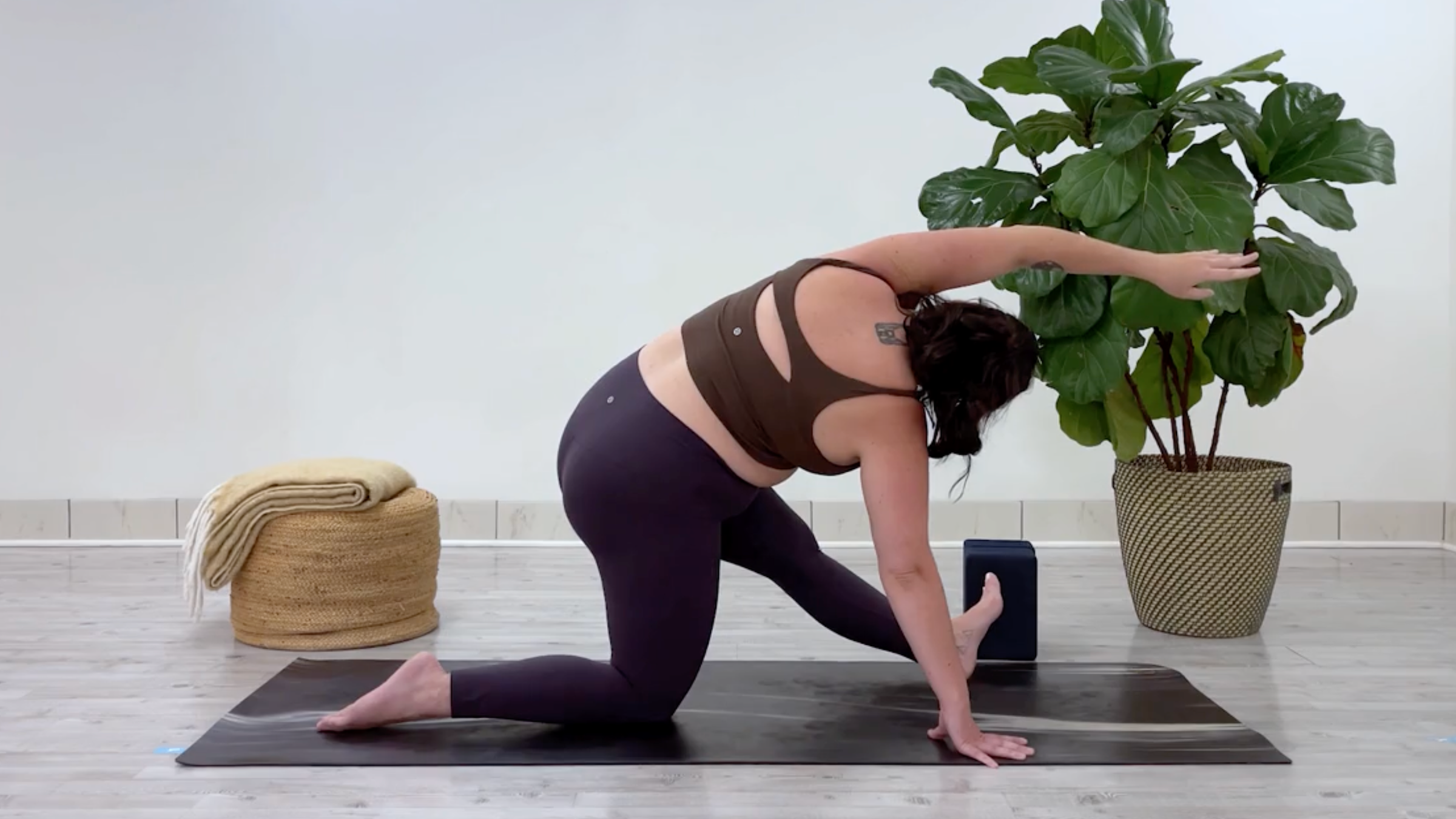
Variations: Choose to stay static, reach your left arm upward toward the sky in a twist, or sweep your left arm overhead to stretch your left side body toward the front edge of the mat. Hold for 3 full breaths.
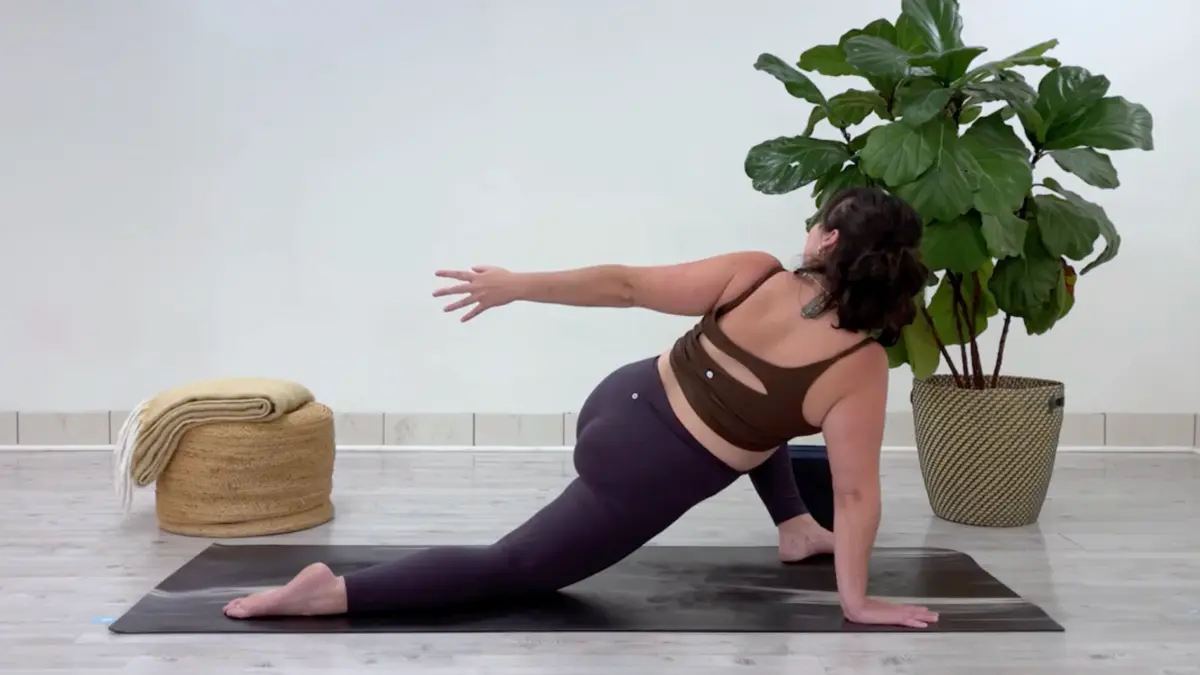
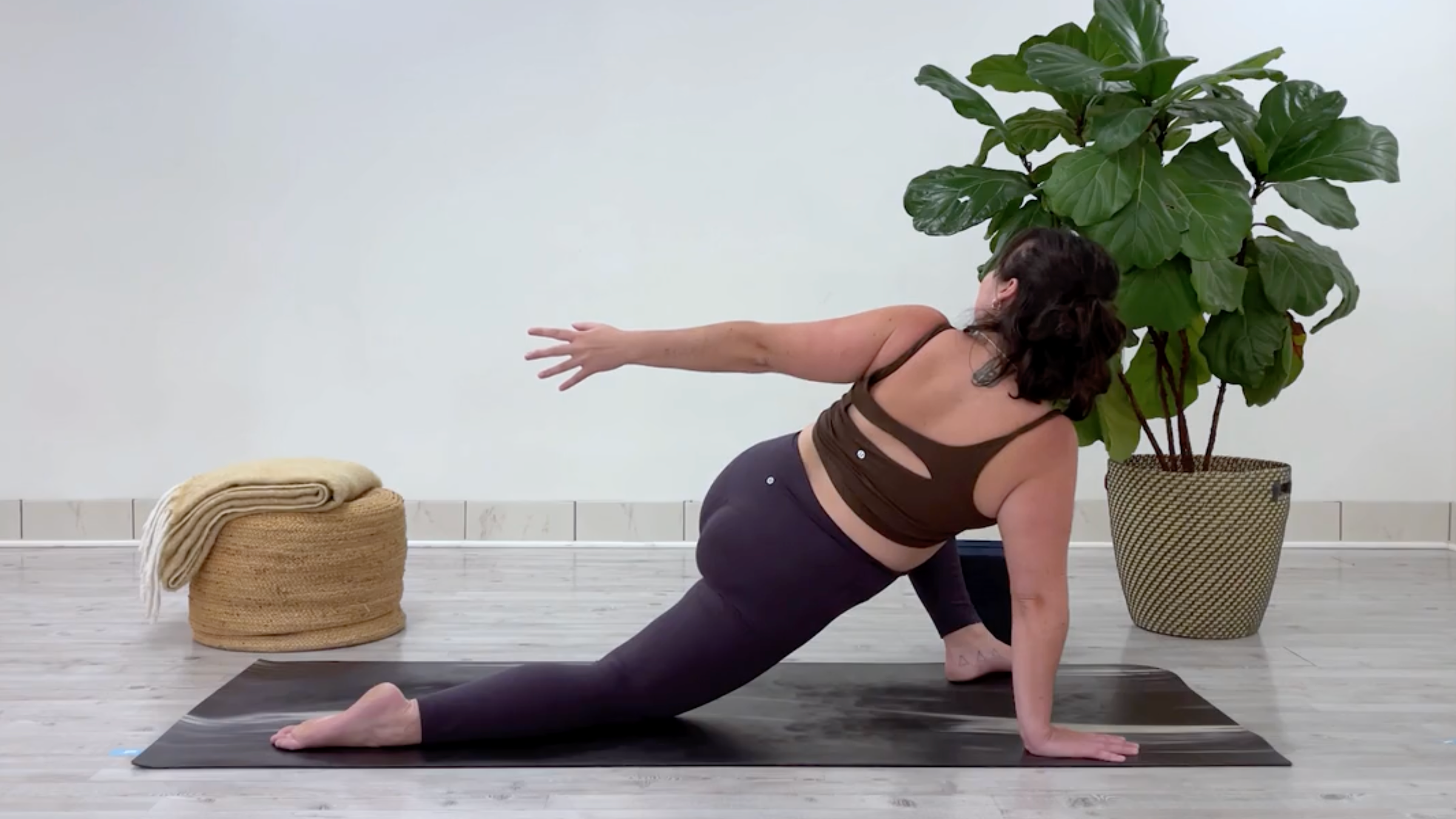
8. Revolved Low Lunge Variation — 1 Breath
The Action: Sweep your left arm back toward the sky and softly rebend your left knee into a Low Lunge, reaching your left fingertips toward the back of the mat.
The Focus: Take 1 expansive breath here, sealing the stretch in the hip flexors.
Phase 3: Extension, Standing Integration, and Flow Reversal
9. Wide-Legged Standing Forward Bend & Revolved Variation
The Action: Plant both hands firmly on the mat. Tuck your right toes, lift your right knee, and pivot your body to face the long right side of the mat, dropping into a Wide-Legged Standing Forward Bend (Prasarita Padottanasana).
The Twist: Place your left hand directly underneath your face and send your right arm soaring toward the ceiling. Hold for 1 full, revitalizing breath.
10. Downward-Facing Dog — 3 Breaths
The Action: Walk your hands and pivot your feet to face the back of the mat, pressing back into Downward-Facing Dog (Adho Mukha Svanasana).
The Focus: Pedal your heels if needed, then settle into stillness for 3 deep breaths, letting gravity decompress your spine.
11. Torso Twists in Thunderbolt — 5 Breaths
The Action: Gently lower your knees to the mat and return to Thunderbolt Pose. Rest your fingertips lightly on your shoulders, keeping your elbows flared out wide.
The Pace: Inhale and twist your torso sharply to the left; exhale and twist to the right. Move dynamically through these twists for 5 full breaths to stimulate digestion and release tension along the thoracic spine.
Repetition Note: Return to center, transition back to Tabletop facing the front of your mat, and meticulously repeat poses 4 through 10 on the opposite (right) side of your body.
The Action: Conclude your sequence by gently landing your knees back on the mat and returning to your starting posture: Thunderbolt Pose.
The Technique: Take 3 rounds of Humming Breath. Keep your lips gently sealed, inhale deeply through your nose, and emit a soothing, low-pitched humming sound on your exhalation. The acoustic vibration stimulates the vagus nerve, immediately signaling the parasympathetic nervous system to calm down.
The Closing: Bring your hands together at heart center in an anjali mudra (prayer position). Bow your head and take a moment to mentally thank yourself for carving out time to show up on your mat amidst a chaotic schedule.
Supporting Data: Why Micro-Yoga Works for Overwhelmed Schedules
In modern wellness culture, the barrier to entry for self-care is often perceived as too high. Individuals frequently assume that if they cannot commit to a 60- or 90-minute yoga class at a specialized studio, the effort is not worth making. However, physiological and psychological data counter this assumption:
The 10-Minute Threshold: Clinical studies on somatic stress relief indicate that interventions as short as 10 minutes can significantly reduce salivary cortisol levels (the body’s primary stress hormone) and lower systolic blood pressure.
Somatic Dislodgement: Stress is not merely psychological; it manifests physically as muscular armoring, shallow breathing, and tightened fascia—particularly around the hips, shoulders, and jaw. Dynamic movements like the Woodchopper Breath and Hip Circles act as somatic release valves, allowing pent-up physical tension to discharge.
Vagal Stimulation: Techniques incorporating vocalization and breath control—such as the Humming Breath (Bhramari)—directly stimulate the vagus nerve, which regulates heart rate, digestion, and emotional regulation. This shifts the body away from "fight or flight" and into "rest and digest" mode almost instantaneously.
Official Responses: Expert Perspectives on Back-to-School Transitions
Health professionals, educational psychologists, and somatic therapists have long advocated for micro-dosing mindfulness throughout high-stress periods like the autumn back-to-school transition.
"When we enter a high-demand season—whether that’s returning to academic structures, managing fiscal year-end crunches at work, or juggling parenting duties—our autonomic nervous system stays locked in a low-grade state of emergency," notes holistic health researcher Dr. Elena Vance. "We stop breathing deeply. Our shoulders creep toward our ears. A sequence that pairs breathwork with asymmetrical hip openers and spinal twists doesn’t just stretch muscles; it literally breaks the feedback loop of anxiety in the brain."
Furthermore, yoga instructors emphasize that the emotional benefit of a short practice far outweighs its physical perfection.
"You don’t need to touch your toes or hold a handstand to reap the neurological benefits of yoga," explains lead sequence designer Taylor Lorenz. "Even ten minutes of intentional breath-to-movement acts as a boundary between the chaos of the outside world and your internal peace. It reminds you that no matter how fast life moves around you, you always have the real estate of your own body and breath to return to center."
Implications: Building Sustainable Wellness Habits Amidst Modern Chaos
The broader implications of integrating micro-yoga flows into daily routines extend well beyond physical flexibility. As societal burn-out rates continue to climb—particularly during high-transition months like September—the democratization of wellness through accessible, short-form practices is becoming a vital public health strategy.
Combating Time Poverty: By reframing mindfulness as a 10-minute intervention rather than an hour-long commitment, individuals are far more likely to maintain consistency during stressful periods.
Preventing Chronic Burnout: Routines that target high-stress storage zones (such as the hips in Lizard Pose and the chest in Thread the Needle) prevent acute daily stress from compounding into chronic physical ailments like tension headaches, lower back pain, and chronic fatigue.
Empowering Self-Regulation: Equipping students, professionals, and parents with portable somatic tools fosters long-term emotional resilience. When an individual learns how to shift their nervous system using just their breath and bodyweight in under ten minutes, they gain a lifelong tool for self-mastery.
Ultimately, the back-to-school season does not have to be a period of unrelenting exhaustion. By rolling out your mat—even for ten fleeting minutes—you reclaim authority over your day, turning seasonal chaos into an opportunity for grounded stability.