

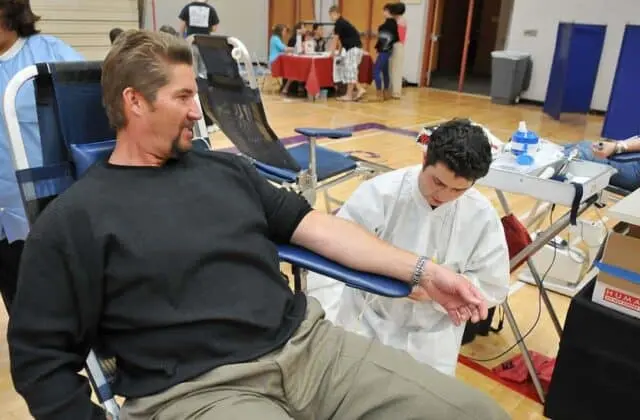
SEDONA, Ariz. — The American Red Cross has issued an urgent nationwide appeal following a severe summer blood shortage that has depleted the country’s inventory to critically low levels. A sharp decline in donor turnout, exacerbated by extreme weather conditions and seasonal disruptions, has left hospitals across the United States facing a precarious supply chain.
In response to this national emergency, local organizations are stepping up to bridge the gap. The Sedona United Methodist Church has announced it will host its first-ever American Red Cross blood drive on Thursday, Aug. 20. The event represents a critical local effort to replenish regional reserves and highlights the vital role that community and faith-based organizations play during public health crises.
Main Facts: The Intersection of a National Crisis and Local Action
The American Red Cross, which supplies approximately 40% of the nation’s blood products, officially declared an emergency blood and platelet shortage following an alarming drop in donations. The shortage, which began compounding in late spring, has persisted through July and into August, threatening the stability of healthcare delivery nationwide.
NATIONAL BLOOD SUPPLY DEFICIT (SUMMER)
├── June Supply Decline: ▼ 25%
├── Weekly Hospital Demand Surplus: ▲ 3,500 units over expectations
└── Type O-Positive Reserve: ▼ Less than a 1-day supply
To combat this deficit, the upcoming blood drive in Sedona is scheduled as follows:
- Date: Thursday, Aug. 20
- Time: 10:00 a.m. to 3:00 p.m.
- Location: "The New Room," Sedona United Methodist Church, 110 Indian Cliffs Road (at the intersection of Route 179 and Indian Cliffs Road, located in the Chapel area south of Sedona proper).
- Incentive: All presenting donors at this drive, and nationwide through Monday, Aug. 31, will receive a $20 Amazon e-gift card via email.
The shortage is particularly acute for Type O positive and B negative blood products, alongside a severe deficit in platelets, which are essential for cancer patients undergoing chemotherapy.
Chronology: Tracing the Summer Supply Collapse
The current blood shortage did not happen overnight; rather, it is the result of a compounding series of seasonal and environmental disruptions that began in late May.
CHRONOLOGY OF THE 2025 BLOOD SHORTAGE
─────────────────────────────────────────────────────────────────
Late May:        Donation rates begin a steep downward trajectory.
June:            Overall blood supply plummets by nearly 25%.
July 13:         Red Cross officially declares an Emergency Blood Shortage.
Mid-to-Late July: Extreme heatwaves and poor air quality suppress donor turnout.
August:          Emergency shortage status persists; hospitals triage supplies.
August 20:       Sedona United Methodist Church hosts inaugural drive.
August 31:       Deadline for the $20 Amazon gift card donor incentive.
─────────────────────────────────────────────────────────────────
The Late-Spring Downturn (Late May)
Historically, late spring marks the beginning of a challenging period for blood collection. As schools recess for summer and families embark on vacations, the highly reliable network of high school and college blood drives—which account for up to 20% of all collections—disappears. This year, the drop-off was unusually steep, setting a weak foundation for the high-demand summer months.
The June Supply Precipice
By the end of June, the Red Cross reported a staggering 25% decline in its blood supply compared to the prior month. This rapid depletion quickly eroded the safety cushion that blood banking organizations try to maintain to handle large-scale emergencies.
The July 13 Emergency Declaration
Recognizing that the gap between blood donations and hospital orders was widening to unsustainable levels, the American Red Cross issued a formal emergency blood and platelet shortage declaration on July 13. Despite a temporary spike in public interest following the announcement, donation rates failed to match hospital distributions.
Environmental Complications in July and August
Throughout July and continuing into August, unprecedented environmental challenges further depressed donor turnout. Record-breaking heatwaves across the country kept potential donors indoors, while widespread wildfire smoke and poor air quality led to the cancellation of outdoor community events where mobile blood drives are typically publicized. Additionally, localized outbreaks of foodborne illnesses sidelined hundreds of regular donors, who must be fully healthy and symptom-free to donate.
Supporting Data: Analyzing the Math of the Shortage
The mechanics of blood banking rely on a continuous, delicate balance between donor collection and hospital distribution. Because blood components are living tissue, they have a strict shelf life and cannot be stockpiled indefinitely.
BLOOD PRODUCT SHELF LIFE & UTILIZATION
┌───────────────────────────┬───────────────────────────┐
│ Red Blood Cells           │ Platelets                 │
├───────────────────────────┼───────────────────────────┤
│ • Shelf Life: 42 Days     │ • Shelf Life: 5 Days      │
│ • Key Use: Trauma/Surgery │ • Key Use: Cancer/Chemo   │
└───────────────────────────┴───────────────────────────┘
The Distribution Discrepancy
Currently, the Red Cross is distributing approximately 3,500 more units of blood per week to hospitals than it is collecting from donors. This deficit has rapidly depleted the national inventory. Every two seconds, someone in the United States requires a blood transfusion, translating to roughly 29,000 units of blood needed daily across the country for trauma cases, cancer treatments, surgeries, and chronic illnesses.
The Critical Status of Type O Blood
The shortage has reached critical thresholds for Type O positive blood, which has fallen to less than a one-day supply nationally.
- Type O Positive: The most common blood type in the U.S., carried by approximately 38% of the population. Because it is highly compatible with other positive blood types, it is in constant demand.
- Type O Negative: Known as the universal blood type, O-negative is utilized by emergency room physicians during trauma situations when there is no time to test a patient’s blood type. When O-negative is unavailable, O-positive is often substituted for compatible patients to save lives.
The Platelet Emergency
In tandem with the red blood cell shortage, the Red Cross has declared an emergency platelet shortage. Platelets are tiny cell fragments that facilitate clotting. Unlike whole blood, which can be stored for up to 42 days, platelets have an extremely short shelf life of just five days.
Nearly half of all platelet donations are administered to cancer patients whose bone marrow has been compromised by chemotherapy or radiation. Without a steady stream of platelet donors, hospitals are forced to make difficult clinical decisions regarding who receives these vital transfusions.
Official Responses: Community and Institutional Leadership
The response to the crisis has highlighted the critical partnership between national logistics networks and grassroots community leaders.
The Red Cross Mobilization Strategy
The American Red Cross operates approximately 500 blood drives daily across the country. However, the organization relies almost entirely on local volunteer groups, businesses, and religious institutions to provide the venues and coordinate local outreach.
Red Cross officials emphasize that because blood is a perishable resource, the only solution to a shortage is direct human action. Public health representatives have urged civic groups to follow the model of the Sedona United Methodist Church by opening their doors to host drives.
Sedona United Methodist Church’s Commitment
For the Sedona United Methodist Church, hosting the August 20 drive is a key milestone in its broader mission of community engagement and revitalization.
Rev. Elizabeth LeMaster, pastor of Sedona United Methodist Church, expressed the congregation’s enthusiasm for the new partnership:
"As our congregation continues to grow and deepen our commitment to serving the wider community, we are excited to begin what we hope will become a longstanding partnership with the Red Cross. At Sedona United Methodist Church, we believe faith is expressed through loving and serving our neighbors. Our congregation is in an exciting season of revitalization centered on community engagement. Hosting a blood drive is a tangible way to care for our community and help save lives."
Rev. LeMaster further emphasized the church’s role as an inclusive hub for local action:
"As an inclusive congregation committed to compassion, justice, and service, we are grateful to offer our campus as a place where people can come together to make a meaningful difference for those in need. We are committed to opening our campus to organizations and programs that strengthen the well-being of our community, and we are thrilled to welcome the American Red Cross as one of those partners. We hope this blood drive is the beginning of a lasting tradition of service at Sedona United Methodist Church."
Implications: Hospital Pressures and the Path Forward
The prolonged shortage carries severe consequences for the healthcare system, affecting clinical operations and shaping how communities prepare for future emergencies.
IMPLICATIONS OF THE BLOOD SHORTAGE
├── Clinical: Triaging of blood products & potential delay of elective surgeries.
├── Patient Care: Disruption of scheduled chemotherapy regimens due to platelet scarcity.
└── Operational: Shift toward digital tools like RapidPass to optimize donor processing.
Hospital Triage and Delayed Procedures
With inventory levels depleted, many hospitals have been forced to initiate blood product triage protocols. Under these measures, clinical committees evaluate the necessity of blood allocations on a case-by-case basis.
If the shortage worsens, hospitals may be forced to postpone elective surgeries—such as orthopedic joint replacements or non-urgent cardiovascular procedures—to ensure sufficient blood reserves remain available for emergency trauma cases, organ transplants, and obstetric emergencies.
Impact on Oncology Care
The shortage of platelets has immediate implications for oncology departments. Cancer patients undergoing aggressive chemotherapy regimens depend on regular platelet transfusions to prevent spontaneous internal bleeding. When platelet supplies are compromised, physicians may have to delay chemotherapy treatments or lower the dosages, potentially affecting the long-term efficacy of a patient’s cancer therapy.
Optimizing the Donor Experience
To mitigate the logistical bottlenecks of blood donation, the Red Cross is urging donors to utilize modern digital tools to streamline their appointments.
- Appointments: Donors are strongly encouraged to schedule their donation times in advance by visiting RedCrossBlood.org, using the free Blood Donor App, or calling 1-800-RED-CROSS (1-800-733-2767).
- RapidPass: To significantly reduce wait times at the donation site, the Red Cross recommends completing the RapidPass pre-donation reading and health history questionnaire online. This must be completed on the day of the donation prior to arriving at the drive. It can be accessed via the Blood Donor App or online at RedCrossBlood.org/RapidPass.
- First-Time Donors: Organizers emphasize that first-time donors are welcome and highly encouraged to participate, as expanding the donor pool is vital to long-term supply stability.
For further inquiries regarding blood donation requirements or upcoming drives in the Verde Valley region, prospective donors can contact Red Cross representative Janet Dubiel via email at [email protected].
