

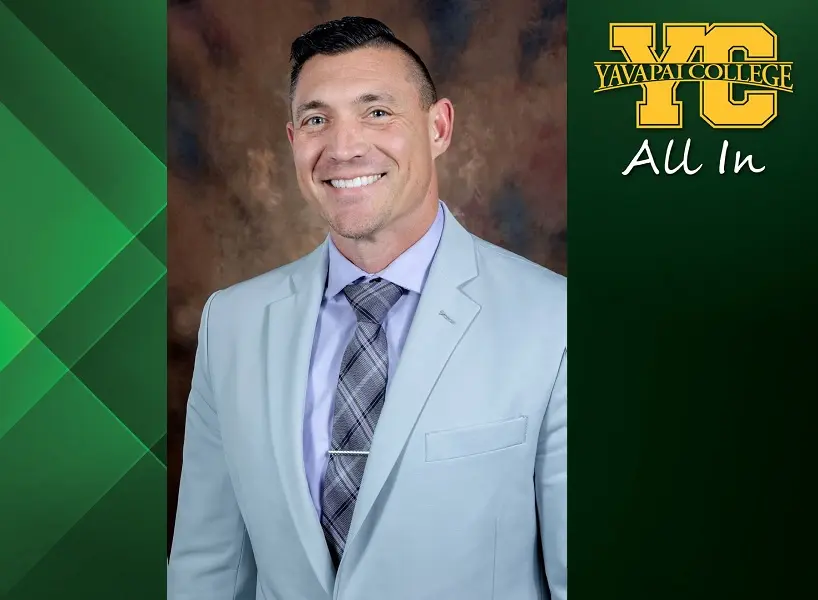
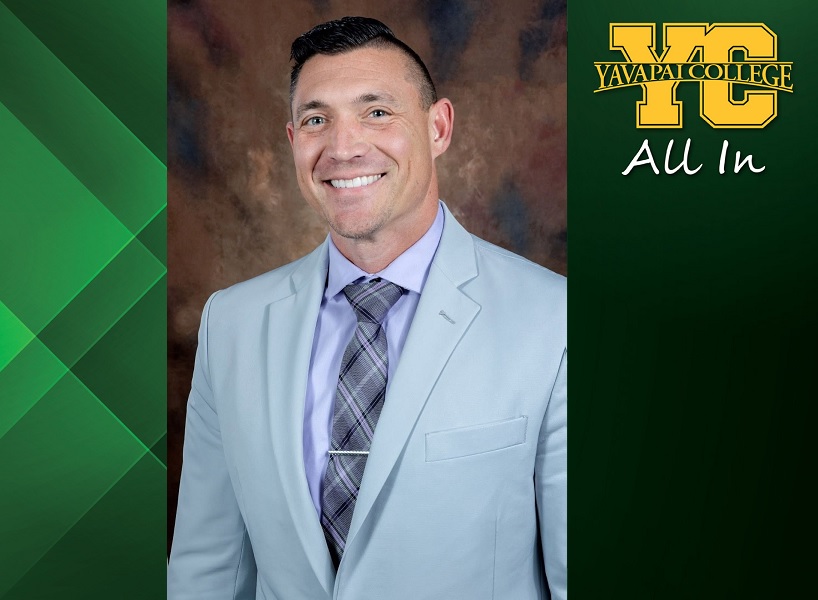
YAVAPAI COUNTY, AZ — In a swift and decisive move that marks the end of a highly contentious era, the Yavapai College District Governing Board has appointed Doug Berry, Ph.D., as the institution’s acting president. The appointment, finalized during a board meeting on July 29, comes on the heels of the abrupt departure of former President Lisa Rhine.
Rhine, who had been placed on immediate paid administrative leave by the board on June 30, was recently announced as the new president of Central Arizona College in Coolidge, located in Pinal County. Although Rhine did not submit a formal letter of resignation to Yavapai College, the Governing Board voted to interpret the public announcement of her new employment as a de facto resignation, effectively terminating her contract and ending a polarizing seven-year tenure.
Dr. Berry, who joined Yavapai College as provost in 2023, steps into the executive role with a robust background in academic affairs, student services, accreditation, guided pathways, institutional transformation, and collaborative leadership. His immediate task will be to steer the community college through a period of structural transition while attempting to heal long-standing geographic and political divisions that have fractured the college district for over a decade.
Chronology of Leadership: The Wills and Rhine Eras (2011–2026)
To understand the current state of Yavapai College, observers must look back to the administration of Rhine’s predecessor, Penelope "Penny" Wills, whose policies established a pattern of centralization that critics argue marginalized the county’s eastern communities.
+---------------------------------------------------------------------------------+
|                                 TIMELINE OF EVENTS                              |
+---------------------------------------------------------------------------------+
|  Aug 2011 : Penelope "Penny" Wills assumes presidency of Yavapai College.       |
|  2011-2018: Enrollment declines; programs shifted away from Verde Valley.       |
|  2016     : Culinary school established at the Sedona Center.                   |
|  2018     : Wills retires; Lisa Rhine is hired as President (effective 2019).   |
|  2023     : Dr. Doug Berry hired as Provost.                                    |
|  2024     : Bill Kiel defeats long-time board member Ray Sigafoos.              |
|  2025     : Rhine unilaterally closes Sedona Culinary School, moving it to      |
|             the Prescott campus.                                                |
|  June 2026: Board places Rhine on paid administrative leave (June 30).          |
|  July 2026: Central Arizona College announces Rhine as President; Yavapai       |
|             Board accepts this as a de facto resignation and appoints           |
|             Doug Berry as Acting President (July 29).                           |
+---------------------------------------------------------------------------------+
The Wills Administration (2011–2018)
Wills assumed the presidency on August 1, 2011, following a leadership role at Northeast Iowa Community College. Her tenure was quickly defined by a decline in physical enrollment, which the administration sought to counter by aggressively expanding online course offerings.
While online learning provided flexibility for some taxpayers, it came at the expense of hands-on, localized vocational and academic programs. Under Wills, key programs were systematically stripped from the Verde Valley campus in Clarkdale and the Sedona Center. This consolidation forced students residing in the eastern portion of Yavapai County to commute over or around the hazardous Mingus Mountain to attend classes at the primary campuses in Prescott and Prescott Valley.
A significant blow to the local cultural and educational landscape occurred when Wills’ office defunded the Zaki Gordon Institute of Independent Filmmaking (ZGI). Based at the Sedona campus, ZGI was a highly regarded program that had served as an entrepreneurial launchpad for local residents pursuing careers in television, film, and commercial media. Despite vocal opposition from Sedona residents and local officials, the program was shuttered, setting a precedent of disinvestment in the Verde Valley.
The Rhine Administration (2019–2026)
Following Wills’ retirement in 2018, the District Governing Board hired Lisa Rhine, who brought executive experience from community colleges in Ohio, Kentucky, and Virginia. Early in her tenure, Rhine attempted to address some regional grievances by establishing a Skilled Trades Center at the Clarkdale campus, which offered students a tuition-free first semester.
However, any goodwill generated by this initiative was quickly eroded by decisions regarding the Sedona Center. In 2016, Wills had established a professional culinary program in Sedona, promising to partner with the local hospitality and restaurant industry. Yet, local business owners reported that the college failed to invest the necessary resources to sustain these partnerships.
In 2025, the Rhine administration abruptly announced the closure of the Sedona culinary program, transferring the academic curriculum to the Prescott campus. This decision was made unilaterally by administrative staff, bypassing any public discussion or formal vote by the District Governing Board.
Supporting Data and Financial Disparities
The friction between Yavapai College’s administration and the residents of the Verde Valley is rooted in significant financial and geographical disparities. The Verde Valley—which includes Sedona, Cottonwood, Cornville, and Camp Verde—contributes approximately one-third (33%) of the property tax revenue that funds the Yavapai County Community College District.
Despite this substantial financial contribution, local taxpayers and representatives argue that capital investments have disproportionately favored the western campuses in Prescott.
+-----------------------------------------------------------------------------+
|                         SEDONA CULINARY PROGRAM DATA                        |
+-----------------------------------------------------------------------------+
|  Taxpayer Capital Investment:   $5,000,000 (State-of-the-art facilities)    |
|  Total Student Enrollment   :   1,279 students                              |
|  Annual Enrollment Average  :   255 students per year                       |
|  Current Status             :   Closed (Facilities idle or cannibalized)    |
+-----------------------------------------------------------------------------+
The closure of the Sedona culinary program highlights this perceived imbalance:
- Capital Loss: Approximately $5 million in local taxpayer funds was spent to construct the commercial-grade kitchens at the Sedona Center. Following the program’s relocation to Prescott, these state-of-the-art facilities were left largely vacant, with select equipment slated for transfer to the Prescott campus.
- Enrollment Metrics: While administrative officials defended the closure by claiming weak enrollment, internal metrics revealed that 1,279 students had utilized the program over its lifespan, maintaining a consistent average of 255 students per academic year—a robust figure for a specialized, regional technical program.
- Geographic Barriers: Commuting from the Verde Valley to Prescott requires traversing State Route 89A over Mingus Mountain, a high-altitude mountain pass prone to severe weather, rockslides, and winter closures. For students enrolled in laboratory-dependent courses—such as chemistry, physics, culinary arts, and allied health fields—the lack of localized physical classrooms serves as a significant barrier to degree completion.
Board Dynamics and Official Responses
The administrative downfall of Lisa Rhine was accelerated by a dramatic shift in the political composition of the Yavapai College District Governing Board. For years, the board was dominated by long-serving members who supported the centralization of programs in Prescott. Among them was Ray Sigafoos, a 20-year board veteran who consistently backed the policies of both Wills and Rhine.
The political landscape shifted during the 2024 elections when challenger Bill Kiel defeated Sigafoos for the District 1 seat, representing Prescott. Sigafoos’ departure left his political allies, including board member Deb McCasland, without a voting majority. McCasland subsequently lost her position as board chair.
                 +---------------------------------------+
                 |   District Governing Board (Shift)    |
                 +---------------------------------------+
                                     |
                  +------------------+------------------+
                  |                                     |
        [ Old Guard Coalition ]                [ Reform Coalition ]
        - Ray Sigafoos (Defeated 2024)         - Bill Kiel (Dist. 1, Prescott)
        - Deb McCasland (Lost Chair)           - Toby Payne (Dist. 3, Verde Valley)
In the wake of this power shift, administrative decisions faced unprecedented scrutiny. Both Bill Kiel and District 3 representative Toby Payne (representing Sedona, Cottonwood, Cornville, and Camp Verde) publicly stated that they were completely blindsided by the 2025 decision to close the Sedona culinary program.
When regional media outlets sought clarification on the closure, the college administration initially refused to comment. Eventually, an associate vice president issued a statement attributing the decision to low enrollment, though this explanation was quickly challenged by the program’s actual enrollment data.
As relations between the board majority and the president deteriorated, Rhine and McCasland reportedly attempted various procedural and legal strategies to maintain administrative control. These efforts failed to secure the necessary board votes, culminating in the board’s June 30 decision to place Rhine on paid administrative leave. Rather than engage in a protracted contract dispute, the board utilized Central Arizona College’s hiring announcement as a clean break, voting to treat it as a resignation and canceling her contract effective immediately.
Implications for Yavapai County and the Road Ahead
The appointment of Dr. Doug Berry as acting president represents an immediate shift in administrative policy, particularly regarding public transparency and community relations. Under the Rhine administration, regional newspapers in the Verde Valley experienced a multi-year media blackout, with college communications staff routinely ignoring inquiries from local reporters.
Following Dr. Berry’s appointment, the college has resumed distributing press releases and public announcements to eastern Yavapai County media outlets. Dr. Berry has also scheduled in-person meetings with regional journalists and community leaders to discuss the college’s future direction.
For the taxpayers of the Verde Valley, the leadership transition offers a potential path toward equitable educational funding. Local leaders emphasize that they do not expect disproportionate funding or specialized perks; rather, they seek a fair return on the one-third of county tax revenues they generate.
The immediate challenge for Acting President Berry and the restructured Governing Board will be to design a sustainable academic model that balances online learning with physical, high-quality vocational and academic programs on both sides of Mingus Mountain. Whether the new administration can successfully restore trust and rebuild the damaged educational infrastructure in Clarkdale and Sedona remains the critical question facing Yavapai College.
