

Main Facts: A Veteran’s Return to the Sky
In the quiet, high-desert community of Cottonwood, Arizona, the distant drone of aircraft engines is a daily occurrence, sometimes drawing complaints from local residents sensitive to airport noise. But for 84-year-old retired U.S. Air Force Lieutenant Colonel Jay Thompson, who relocated to the Verde Valley in May, those engine notes were not an annoyance—they were a siren song.
"Why would anyone complain about that?" Thompson remarked to his daughter, Danielle Matthews, shortly after his arrival. To a man who spent more than three decades serving his country in the cockpit, the sound of an airplane engine was simply the sound of freedom.
Having spent 34 years on the ground since his retirement from military service, Thompson harbored a deep, quiet longing to return to the skies. Recognizing her father’s unspoken yearning, Matthews set out to turn his dream into reality. She reached out to the tight-knit community of the Verde Valley, seeking local pilots or aviation enthusiasts who might be willing to help a decorated veteran feel the controls of an aircraft once more. Her inquiries caught the attention of Cottonwood resident Ken Wood and Cornville resident James Iacovacci.
Iacovacci contacted Bluebird Air Tours, a premier aerial sightseeing company based at the Sedona Airport. Upon hearing Thompson’s story, the company’s owner, Brad Tulin, alongside his sons Tanner and Trevor, immediately volunteered their services, aircraft, and time. They conceived a special mission, appropriately dubbed "Operation Freedom Flight."
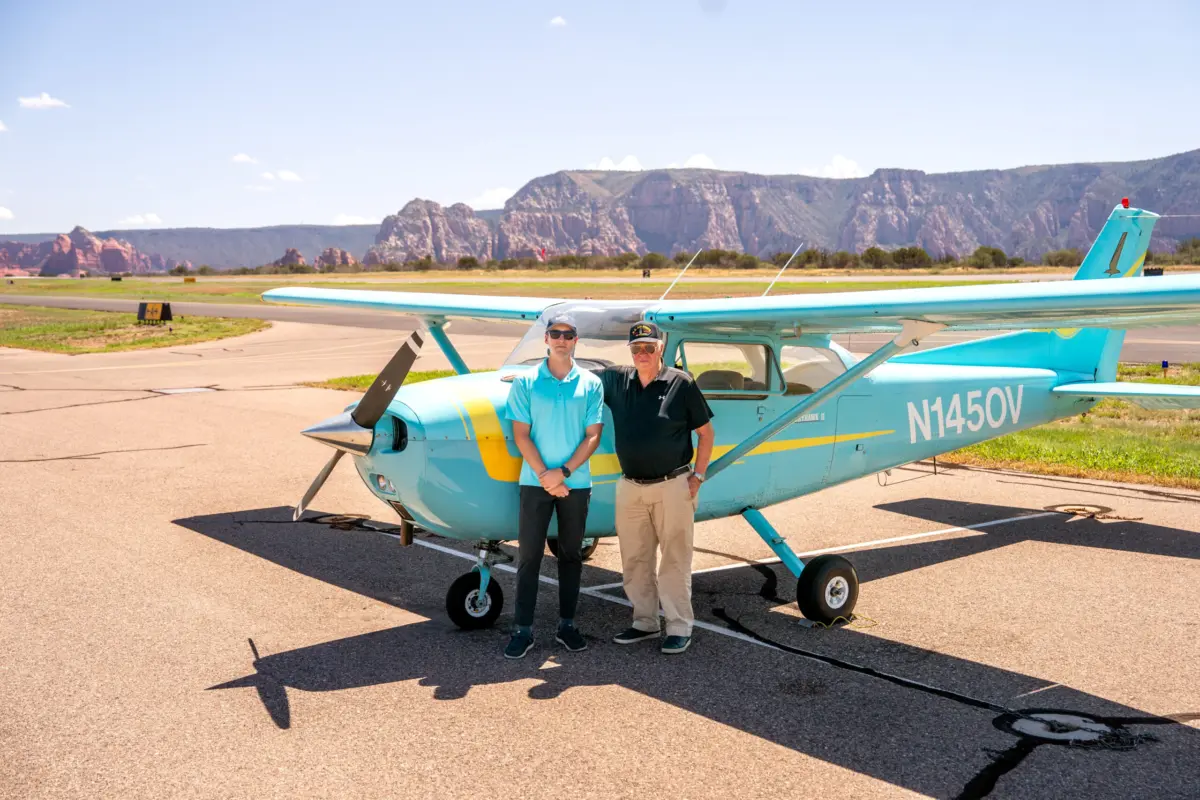
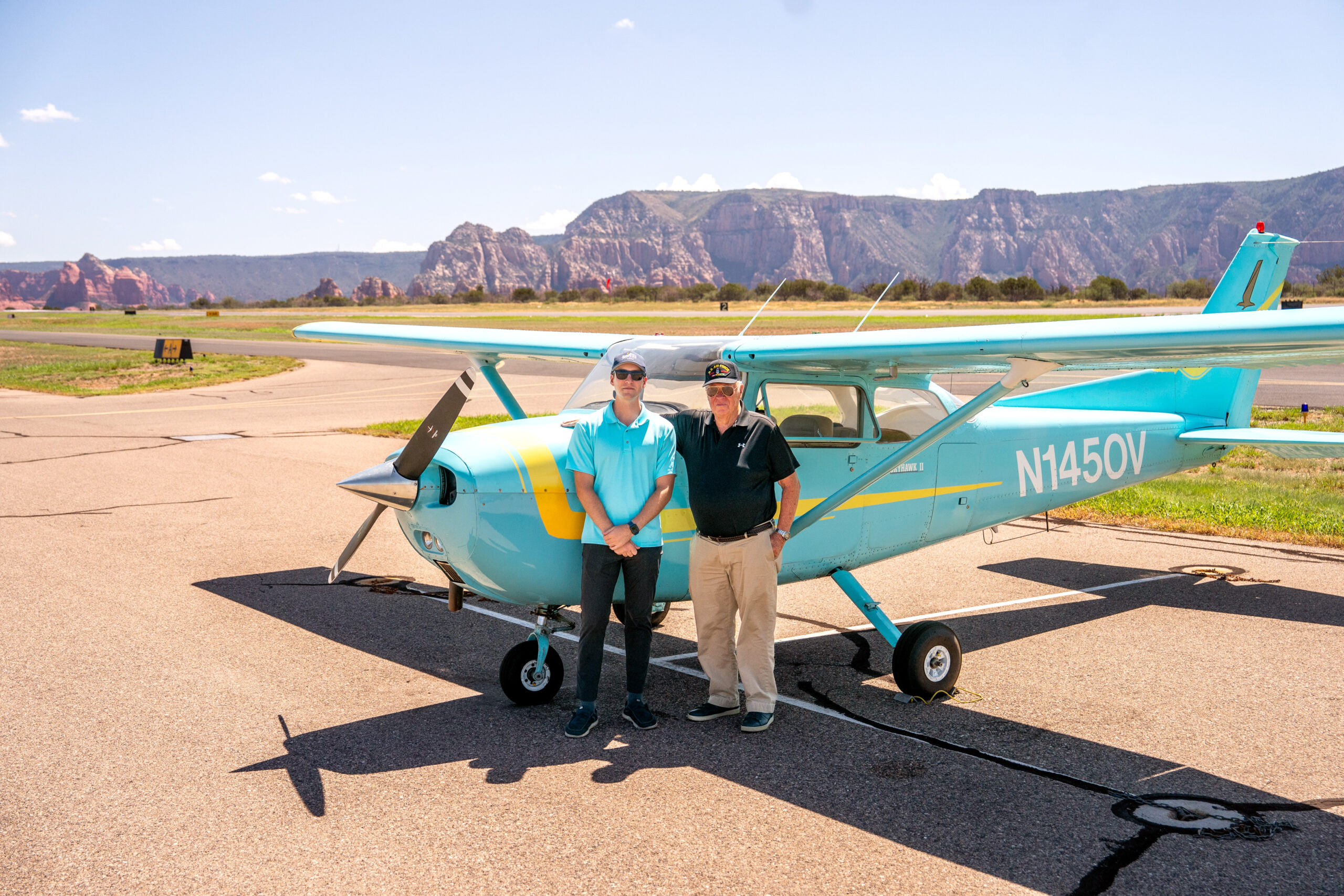
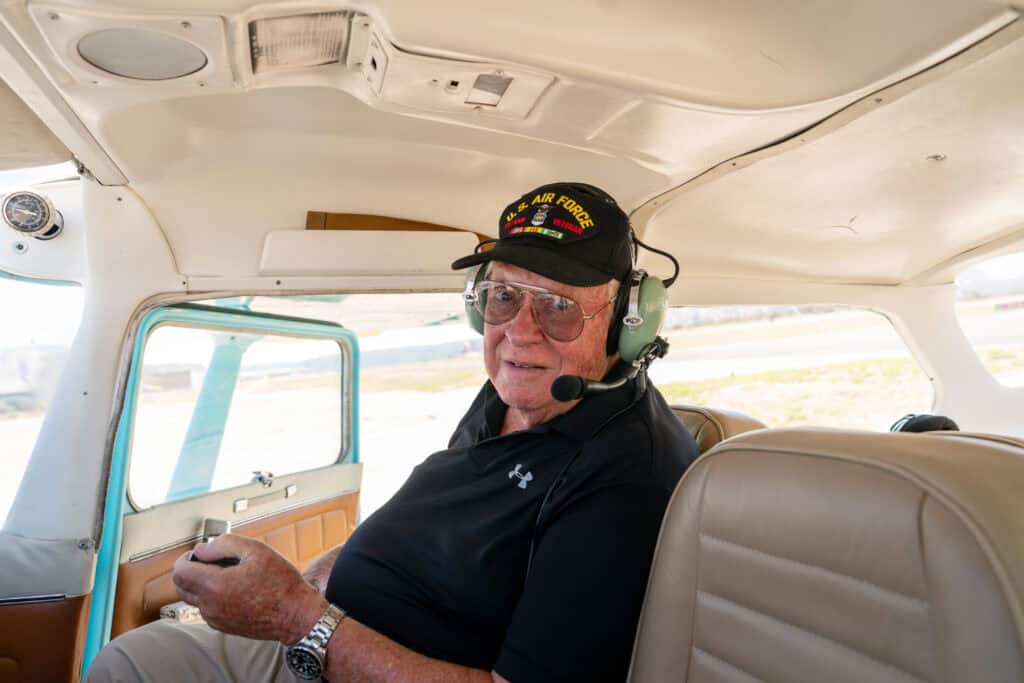
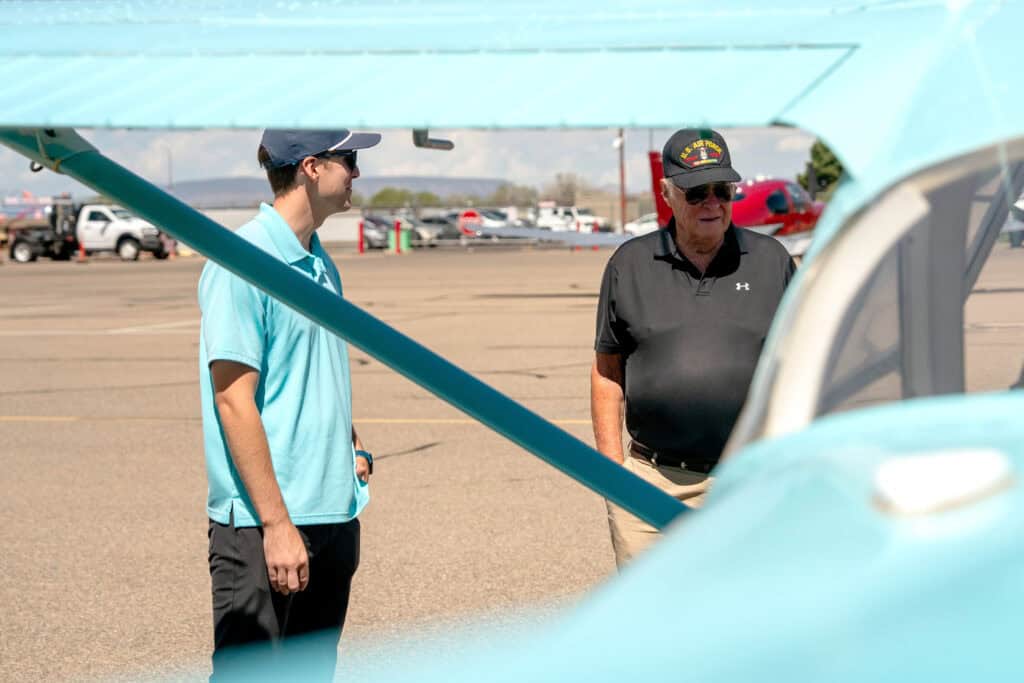
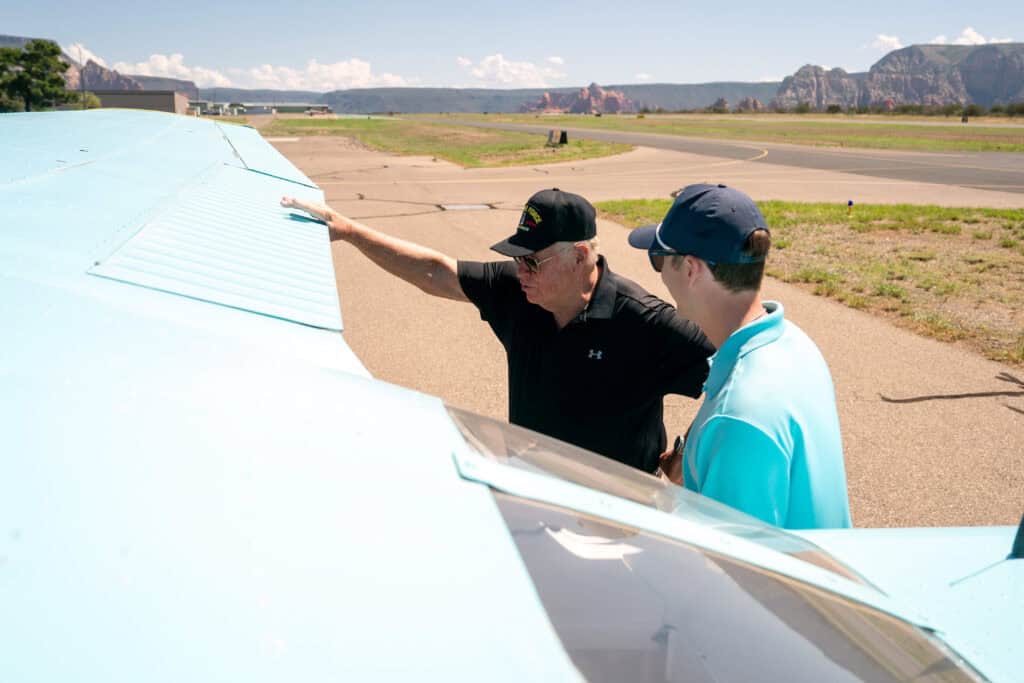
On the morning of Wednesday, July 29, Thompson boarded a Cessna 172 at the Sedona Airport. With Tanner Tulin at the controls and Thompson in the co-pilot’s seat, the aircraft took off into the crisp morning air for an hour-long flight over the iconic red rocks of Sedona, the valley of Cottonwood, and the rugged slopes of Mingus Mountain. The flight marked a triumphant, emotional return to the air for a pilot who had spent his career refueling the nation’s front-line combat aircraft during some of the twentieth century’s most critical conflicts.
Chronology: A Lifetime Defined by Aviation
[Late 1950s] --------> [1960-1964] -------> [1964-1973] ----------> [1973-1992] ----------> [Dec 22, 1992] ---> [July 29]
First Solo Flight      Ohio State ROTC      USAF Active Duty        Air National Guard      Final Military     Operation
(Aeronca Champion)     & Flight Training    (Vietnam & Cold War)    (Desert Shield/Storm)   Flight (PA)        Freedom Flight
Early Wings and Initial Training
Jay Thompson’s passion for aviation began in his youth. As a high school junior in the late 1950s, he took his first formal steps toward becoming a pilot by enrolling in private flying lessons. Training in a vintage Aeronca Champion—a light, single-engine, tandem-seat airplane favored for flight training—Thompson demonstrated an immediate, natural aptitude for flight. He achieved his first solo flight after just eight hours of dual instruction, completing a total of 15 hours in the Aeronca Champion before set-backs and life changes temporarily paused his civilian training.
The University Years and Commissioning (1960–1964)
In 1960, Thompson enrolled at The Ohio State University (OSU). Drawn back to his primary passion, he joined the U.S. Air Force Reserve Officer Training Corps (ROTC) program. During his tenure at OSU, Thompson underwent rigorous physical and mental screening, including the Air Force Officer Qualification Test (AFOQT) and specialized pilot aptitude assessments.
While pursuing his degree, Thompson flew a Piper Cherokee under the auspices of the university’s certified flight school. He completed his private pilot’s license through the ROTC flight instruction program in just 37 hours—an impressive feat, given that standard civilian certifications typically require a minimum of 40 hours.
During his college years, Thompson met Christel Herold, who would become his wife and lifelong companion. As Thompson progressed into advanced Air Force pilot training post-graduation, Christel accompanied him to various military installations. Whenever Thompson knew Herold was watching his training flights from the ground, he would perform a signature "victory roll"—a precise aviation maneuver where the aircraft climbs in a tight upward slope, crests at the peak, dives, executes a controlled barrel roll, and pulls up at the final moment as a personal tribute to her.
Active Duty, the Vietnam War, and Global Deployments (1964–1973)
Upon earning his commission and pilot wings, Thompson was assigned to active duty with the Strategic Air Command (SAC). He was designated as a pilot for the Boeing KC-135 Stratotanker, a heavy aerial refueling aircraft that served as the backbone of American global reach during the Cold War.
During the Vietnam War, Thompson was stationed at Westover Air Force Base in Massachusetts but deployed frequently to forward operational bases in Southeast Asia, including tactical airfields in Thailand and Okinawa, Japan. Throughout the conflict, Thompson flew grueling missions over combat zones, keeping American fighters and bombers aloft.
During his deployments overseas, Christel would occasionally travel to meet him during his off-duty periods. In Okinawa and Thailand, the couple found moments of normalcy amidst the tension of war, renting horses from American permanent party personnel to ride through the dense, humid tropical jungles surrounding the military bases.
The Air National Guard and the Persian Gulf (1973–1992)
Thompson transitioned from active duty to the Air National Guard in 1973, relocating his family to Pennsylvania. He joined the 171st Air Refueling Wing, specifically serving within the 147th Air Refueling Squadron based in Pittsburgh. Over the next two decades, he balanced civilian life with his military obligations, continuing to pilot the KC-135 under both the Strategic Air Command and Military Airlift Command.
In October 1990, following Iraq’s invasion of Kuwait, Thompson was activated for duty in support of Operations Desert Shield and Desert Storm. Deployed to Jeddah, Saudi Arabia, near the Red Sea, Thompson flew high-stakes combat aerial refueling missions through active air corridors over Kuwait and Saudi Arabia, supporting coalition aircraft as they liberated Kuwait.
Retirement and Relocation (1992–Present)
On December 22, 1992, Lieutenant Colonel Thompson climbed into the cockpit of a military aircraft for what was intended to be the last time. On a cold, crisp Pennsylvania morning, Thompson stopped at a local McDonald’s in Murrysville to share breakfast and his excitement with local residents before heading to the base.
Upon landing back at the airbase after his final flight, Thompson was greeted with the traditional military aviation retirement ceremony: his aircraft was sprayed down by base fire trucks, and he was met on the tarmac by family, colleagues, and bottles of champagne.
For nearly 32 years, Thompson remained on the ground, living in Pennsylvania. However, by 2024, his children and grandchildren had relocated to Arizona’s Verde Valley and Flagstaff regions. Desiring to be close to his family, Thompson made the cross-country move to Cottonwood in May, setting the stage for his July 29 reunion with the skies.
Supporting Data: Flight Metrics and Technical Specifications
To fully appreciate Lt. Col. Thompson’s career and his recent flight, it is helpful to examine the technical specifications of the aircraft he piloted, the standards of his training, and the parameters of "Operation Freedom Flight."
The Boeing KC-135 Stratotanker
During his career, Thompson logged a total of 4,211 flight hours as a pilot. The vast majority of these hours were spent operating the Boeing KC-135 Stratotanker.
| Metric / Feature | Specification / Detail |
|---|---|
| Primary Mission | Aerial refueling of strategic bombers, tactical fighters, and reconnaissance aircraft. |
| Refueling Mechanism | Flying Boom (controlled by a boom operator in the tail) or Probe-and-Drogue adapter. |
| Key Aircraft Refueled | B-52 Stratofortress, B-66 Destroyer, F-100 Super Sabre, F-5 Freedom Fighter, F-105 Thunderchief, F-4 Phantom II, and the U-2 Dragon Lady. |
| Operational Impact | Extended the range and endurance of combat aircraft, allowing them to complete long-range missions without landing to refuel. |
[KC-135 Stratotanker]

          <-- Flying Boom (Remote Controlled)

      [Receiver Aircraft: B-52 / F-4 / U-2]
Flight Training Requirements: Past vs. Present
Thompson’s path to his private pilot’s license via Ohio State University’s ROTC program highlighted an accelerated educational pathway. Under Federal Aviation Administration (FAA) Part 141 regulations, certified flight schools are permitted to graduate students with fewer hours due to a highly structured curriculum.
- Standard FAA Part 61 Private Pilot Requirement: 40 hours minimum.
- Certified School (Part 141) Requirement: 35 hours minimum.
- Thompson’s Total Hours at License Achievement: 37 hours.
- Thompson’s Solo Milestone: 8 hours (highly accelerated; average student solos between 10 and 15 hours).
Preservation of Military Heritage
Thompson’s career was documented in detail in 2024 by his granddaughter, Leah Thompson, then a high school junior at Flagstaff High School. Her essay, titled "Sound of Freedom," was compiled as part of the Imprint of Honor project (formerly known as the Veterans Heritage Project).
This nationwide initiative pairs high school students with military veterans to conduct oral history interviews. The completed narratives are published in an annual book series titled Since You Asked and are formally archived in the Library of Congress in Washington, D.C., preserving the firsthand accounts of veterans for future generations of historians.
Official Responses and Firsthand Accounts
The success of "Operation Freedom Flight" drew emotional reflections from the Thompson family, the volunteer organizers, and the flight crew of Bluebird Air Tours.
Reflections from Lt. Col. Jay Thompson
Writing after his flight, Thompson expressed profound gratitude for the opportunity to experience the physical sensations of flight once more:
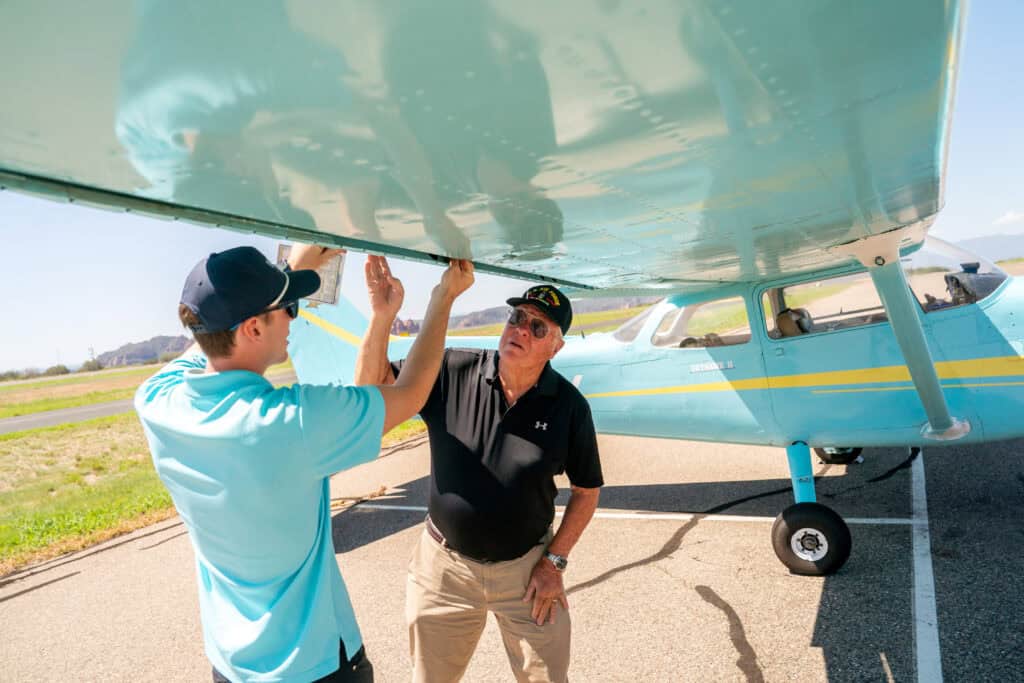
"As Tanner expertly landed his Cessna 172, I wished the day could have gone on forever. It was a beautiful Arizona day; clear blue skies and I was flying once again after many years. At 84, I relished being in a small plane next to an amazing young and personable pilot. The hour flight was filled with excitement, exhilaration, and wonder. Cruising over the beautiful Sedona red rocks and next to the Mingus Mountain was awe-inspiring. I was filled with gratitude for all who made this adventure happen for me. It has been an unforgettable moment in my life; second-to-none."
Observations from Pilot Tanner Tulin
Tanner Tulin, who piloted the Cessna 172 and shared the cockpit controls with Thompson, remarked on the veteran’s sharp piloting instincts:
"We started off in Sedona and then made our way down to Cottonwood and the Mingus Mountain area… We showed him his house from above. Even after all these years, you could tell his pilot instincts were right there. He was able to solo after only eight hours back in his training days, which is an incredibly short amount of time. During our flight, he shadowed me on the joystick, feeling the movements of the plane, and he got a real feel for flying again. It was an honor to share the cockpit with him."
Statements from Family and Community Organizers
Danielle Matthews, Thompson’s daughter, highlighted the community spirit that made the flight possible:
"My father had missed the air every single day since his retirement. When he moved here and remarked on the sound of the local airport, I knew we had to find a way to get him back up. The way the Verde Valley community responded—from Ken Wood and James Iacovacci to the Tulin family at Bluebird Air Tours—was nothing short of incredible. They didn’t hesitate for a second."
Implications: The Legacy of Veteran Support and Oral History
The story of Lt. Col. Jay Thompson’s return to the skies carries broader implications for veterans’ care, community engagement, and the preservation of military history.
The Importance of Late-Life Wish Fulfillment
Gerontological and psychological research consistently demonstrates that "wish-fulfillment" activities for aging veterans provide significant cognitive and emotional benefits. For individuals who spent their formative years in high-responsibility military roles, reconnecting with those experiences can combat feelings of isolation, reinforce a sense of purpose, and provide a profound sense of closure. "Operation Freedom Flight" serves as a model for how local businesses and communities can leverage their resources to honor elderly residents.
Intergenerational Connection and Oral History Preservation
The collaboration between Lt. Col. Thompson and his granddaughter Leah through the Veterans Heritage Project underscores the value of intergenerational storytelling. Programs like the Imprint of Honor bridge the generational divide, teaching youth the value of civic service and historical literacy while ensuring that the personal sacrifices of Cold War and Gulf War veterans are not forgotten. By archiving these stories in the Library of Congress, the project ensures that local history remains part of the national narrative.
The Role of Local Aviation Communities
The event also highlights the positive role of municipal airports and local aviation businesses. While regional airports like Sedona and Cottonwood occasionally face scrutiny regarding noise levels, they serve as vital community hubs and gateways for emergency services, tourism, and community-oriented philanthropy. Through initiatives like Bluebird Air Tours’ volunteer flight, the local aviation sector demonstrates its capacity to give back to those who paved the way in military and civil aviation.
