

Main Facts
Following an intense wave of public opposition, the Cottonwood City Council voted unanimously to place a formal discussion regarding the city’s contract with surveillance technology provider Flock Safety on a future meeting agenda. The decision represents a significant concession to local residents and civil liberties advocates who argue that the rapid, low-profile expansion of Automated License Plate Readers (ALPRs) and artificial intelligence-driven camera networks constitutes an invasive form of mass surveillance.
The motion, introduced by Vice Mayor Felicia Coates, was passed during a packed council meeting. Coates emphasized that the future agenda item would provide a structured opportunity for the community to learn about the inner workings of the Flock system, how data is retained, what safeguards are in place, and how the city plans to address mounting privacy concerns.
The council’s decision followed a coordinated public comment session in which seven residents spoke directly against the cameras, while three others submitted support cards aligning with the opposition. In a show of solidarity, approximately 15 audience members stood up in the chambers as speakers denounced the surveillance program.
Notably absent from the vote were Councilmen Chris Dowell and Bob Marks. Dowell, a former Cottonwood Police Chief and former Sedona Deputy Chief, has a direct history with the technology, having previously been tasked with managing the Sedona Police Department’s Flock camera system before that city’s program was dismantled due to public outcry.
The decision in Cottonwood mirrors a growing regional skepticism toward automated law enforcement tools. It highlights a widening rift between municipal police departments eager to adopt high-tech policing tools and citizens demanding transparent governance and constitutional protections.
Chronology of the Surveillance Footprint
The integration of Flock Safety technology into Cottonwood’s law enforcement infrastructure was not an overnight development, but rather a gradual acquisition spanning several years.
[2021] CPD signs $11,000 contract for first 4 ALPRs (no public vote required)
  │
  ▼
[2021–2025] Network quietly expands to 11 ALPRs via internal department budgets
  │
  ▼
[June 17, 2025] Council approves $199,000 contract expansion on consent agenda
  │
  ▼
[June 2025] Sedona installs 11 Flock cameras; immediate public backlash begins
  │
  ▼
[Sept 2025] Sedona cancels Flock contract; Sedona Mayor Scott Jablow resigns
  │
  ▼
[Aug 1, 2026] Indivisible Cottonwood Clarkdale Cornville holds third anti-ALPR meeting
  │
  ▼
[Aug 4, 2026] Cottonwood City Council votes unanimously to table Flock debate for future agenda
The Quiet Launch (2021–2025)
The Cottonwood Police Department (CPD) first partnered with Flock Safety in 2021, signing an $11,000 contract to install four ALPRs. Because the cost of this initial contract fell below the monetary threshold requiring City Council approval, the purchase was executed internally within the department’s operational budget, bypassing public notice and legislative debate.
Over the next four years, the surveillance network quietly expanded. By early 2025, the CPD had deployed 11 ALPRs throughout Cottonwood. These acquisitions remained largely unnoticed by the public, funded primarily through state-level grants.
The June 2025 Expansion and the Sedona Catalyst
On June 17, 2025, the Cottonwood City Council approved a much larger, $199,000 agreement with Flock Safety. This contract was placed on the council’s "consent agenda"—a procedural category reserved for routine, non-controversial items approved in a single vote without individual debate. The expansion passed with little fanfare, though Councilman Dowell abstained from the vote.
Simultaneously, neighboring Sedona was undergoing its own surveillance controversy. Pushed by then-Sedona Mayor Scott Jablow, Sedona installed 11 Flock cameras in June 2025. However, the installation occurred without public notice, sparking immediate outrage from Sedona residents.
By September 2025, the Sedona City Council capitulated to intense public pressure, voting to cancel its Flock contract and remove all 11 cameras before they ever went live. The political fallout from the debacle eventually led to Mayor Jablow’s resignation.
Grassroots Mobilization (Summer 2026)
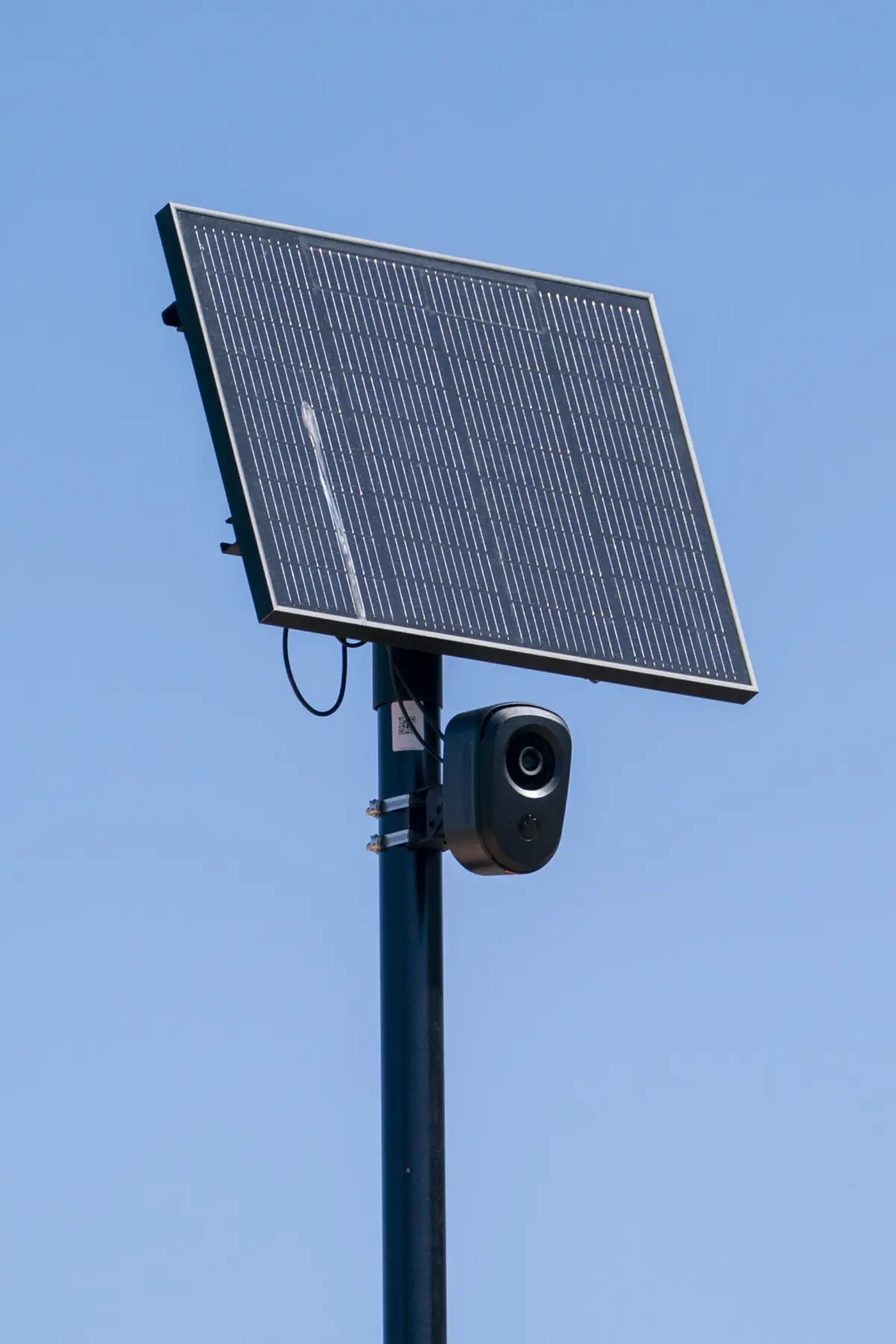
Following the events in Sedona, Cottonwood residents began noticing the solar-powered Flock cameras installed along local roadways. Activists with the group Indivisible Cottonwood Clarkdale Cornville began organizing resistance, holding their third dedicated meeting on August 1, 2026.
Led by organizers Lori Pedersen and Sandy Boyce, the group coordinated a strategy to pressure the Cottonwood City Council to follow Sedona’s lead. This mobilization culminated in the August 4, 2026 council meeting, forcing local officials to halt the quiet expansion of the system and face public questioning.
Supporting Data and Technical Specifications
To understand the scope of the debate, it is necessary to examine the specific technologies acquired by the Cottonwood Police Department and the financial mechanisms used to fund them.
Funding and the Human Trafficking Justification
The $199,000 agreement approved in June 2025 was offset by a $213,992.80 grant from the Arizona Department of Public Safety (DPS). The grant was explicitly earmarked to "enhance law enforcement services and programs that reduce human trafficking within the state."
To justify the acquisition, the CPD provided historical data indicating a steady rise in human trafficking cases handled by or referred to the department over the previous five years:
| Year | Human Trafficking Cases (CPD) |
|---|---|
| 2020 | 4 |
| 2021 | 5 |
| 2022 | 7 |
| 2023 | 19 |
| 2024 | 8 |
| 2025 (First Half) | 9 |
According to law enforcement, human traffickers rely heavily on digital communication, encrypted messaging apps, and vehicle transportation to move victims. CPD argued that automated vehicle tracking is a vital tool to disrupt these networks.
Hardware and Software Capabilities
The Cottonwood surveillance network consists of three distinct components:
- Automated License Plate Readers (ALPRs): Cottonwood currently operates 11 active ALPRs. These cameras capture high-resolution images of license plates and vehicle characteristics, which are cross-referenced against state and national law enforcement databases (such as stolen vehicle registries). A public map of these installations is maintained by citizen-led watchdogs on the website deflock.org.
- Drones: The June 2025 contract authorized the purchase of two tactical drones to assist in aerial surveillance and search-and-rescue operations.
- Community Partnership Cameras: The contract included eight live-feed cameras. Unlike ALPRs, these cameras are designed to be mounted on private commercial properties (such as gas stations and convenience stores) that are open to the public. They feature highly visible green or blue flashing lights intended to deter criminal activity.
               [Flock Safety Surveillance Network]
                               │
       ┌───────────────────────┼────────────────────────┐
       ▼                       ▼                        ▼
  [11 ALPRs]              [2 Drones]          [8 Community Cameras]
  - Roadway placement     - Aerial search     - Private business sites
  - Plate recognition     - Tactical response - Live-feed monitoring
  - AI vehicle search     - Rapid deployment  - Green/blue deterrent lights
While these Community Partnership Cameras do not utilize facial recognition, the software package purchased by the CPD includes AI-assisted search capabilities. This software allows investigators to search recorded footage using descriptive queries, such as identifying vehicles by color, make, model, or unique physical features (e.g., roof racks, bumper stickers, or custom wheels).
Official Responses and Law Enforcement Justifications
The Cottonwood Police Department has strongly defended the acquisition of the Flock Safety network, framing it as a necessary modernization of the city’s policing capabilities.
In a statement released after the controversial June 2025 vote, CPD Commander Gareth Braxton-Johnson emphasized that the acquisition process adhered to all legal public notice requirements. "The recent proposal was publicly noticed and placed on the agenda for the June 17 City Council meeting," Braxton-Johnson wrote. "This process allows for public comment or council discussion. During the meeting, no concerns regarding constitutional rights or other issues were raised. It is also important to note that similar camera systems have been in place in Cottonwood for approximately five years."
Braxton-Johnson also sought to address concerns regarding data privacy and retention. He clarified that all data generated by the city’s Flock cameras is strictly governed by the Arizona State Library Archives and Public Records Retention Schedule, making the logs available to the public through standard public records requests.
Furthermore, Braxton-Johnson confirmed that as of August 5, 2026, the eight approved Community Partnership Cameras had not yet been installed. He reiterated that the department’s software does not utilize facial recognition technology, focusing instead on vehicle identification to aid active investigations.
Regarding the live-feed commercial cameras, Flock Safety’s corporate literature supports this operational framework, stating: "The camera feeds go straight to your local police department and are meant to be viewed for situational awareness for responding officers. Investigators can access recorded footage for official law enforcement purposes. All access is logged and will be in accordance with your police department’s policy, laws, and regulations."
Implications and Broader Privacy Concerns
The unfolding debate in Cottonwood is a micro-level reflection of a broader, national controversy surrounding Flock Safety and the rapid privatization of public surveillance.
The Problem of "Consent Agenda" Governance
One of the primary grievances raised by Cottonwood residents is the mechanism by which the $199,000 contract was approved. By placing a significant surveillance expansion on the consent agenda, city officials effectively minimized public awareness and debate. Civil liberties advocates argue that using administrative shortcuts to implement high-impact surveillance technologies erodes trust in municipal government.
"This technology collects massive amounts of information on law-abiding citizens," testified Cottonwood resident Pam Wilson during the August 4 public comment session. "The community deserves an opportunity to understand how it works, what data is collected, who has access to it, how long the data is retained, and what safeguards are in place to prevent misuse."
Data Security and the "Insider Threat"
The centralization of license plate and vehicle data in third-party databases has raised serious cybersecurity and civil liberties concerns. Because Flock Safety aggregates data across thousands of jurisdictions nationwide, critics warn that the platform represents a high-value target for hackers.
"With these Flock Safety cameras… we don’t know what’s happening with our data," argued resident Zachary Jablow. "Other people can access our data. These cameras can get hacked."
These fears are compounded by recent national controversies involving Flock Safety’s internal access controls. Public records requests recently revealed that a Flock Vice President, Bob Carter, accessed live video feeds of a girls’ gymnastics practice multiple times while using the footage to pitch the product to potential clients. This incident has been widely cited by privacy advocates as proof of insufficient internal oversight and the potential for abuse by corporate employees.
The Shift Toward Regional Resistance
The organized pushback in Cottonwood, following the successful cancellation of the Flock contract in Sedona and similar reversals in cities like Flagstaff, suggests a growing regional resistance to automated surveillance in Northern Arizona.
As the Cottonwood City Council prepares for its upcoming public study session on the Flock Safety network, the community faces a fundamental decision: whether to accept the police department’s argument that pervasive surveillance is a necessary tool to combat modern crime, or to align with neighboring Sedona in asserting that public privacy and constitutional oversight outweigh the administrative conveniences of automated policing.
