

Main Facts
In a bold convergence of biology, artificial intelligence, and materials engineering, a multi-institutional research team has secured a $3.3 million grant from the National Science Foundation’s (NSF) Growing Convergence Research program. Spearheaded by Worcester Polytechnic Institute (WPI), the five-year, two-phase initiative aims to solve one of modern industry’s most intractable paradoxes: the simultaneous abundance of hazardous industrial waste and the critical scarcity of refined materials necessary for the global energy transition.
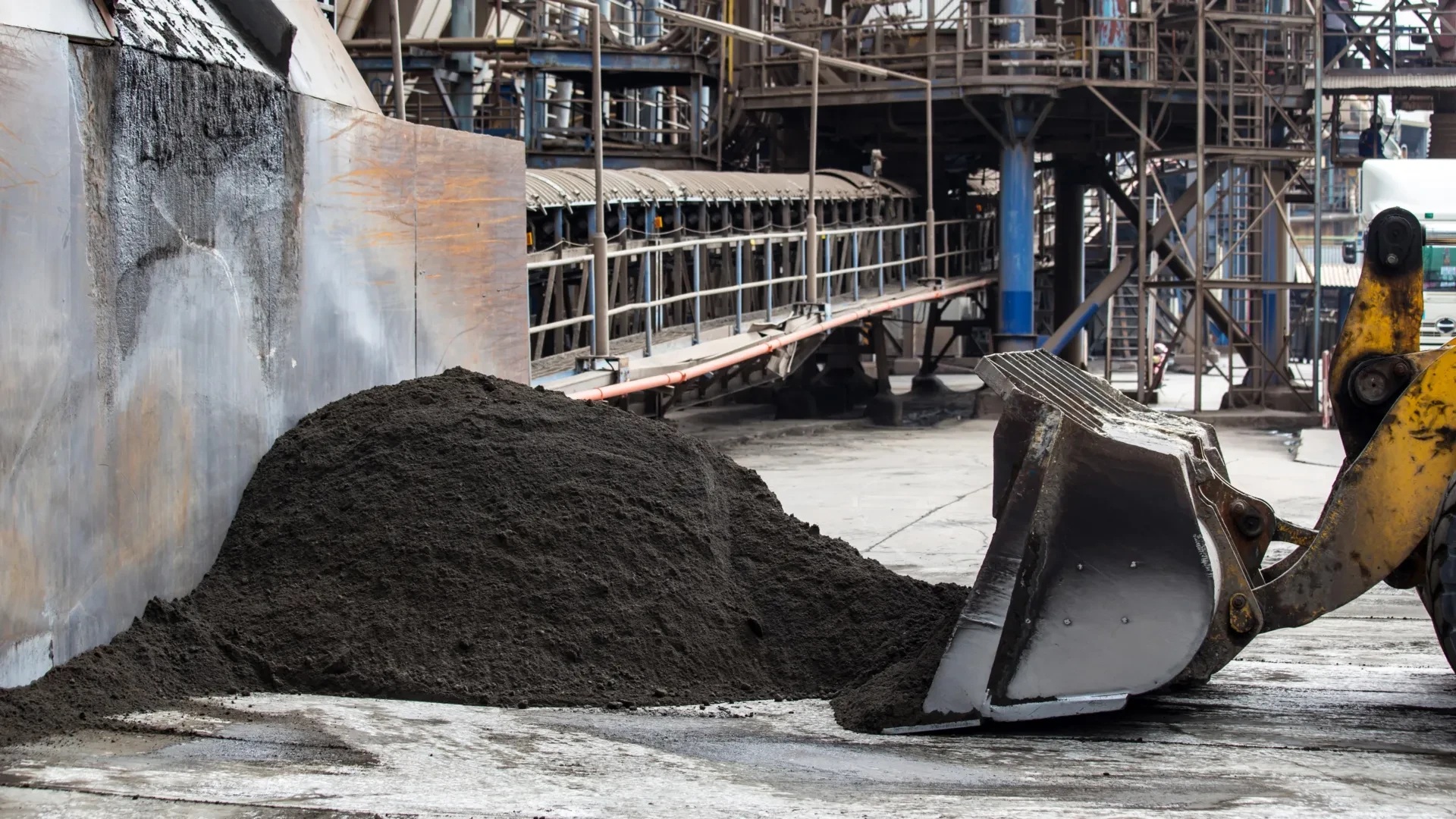
The project focuses on massive, under-utilized waste streams such as coal ash, red mud, mine tailings, metallurgical slag, and construction debris. While traditionally treated as environmental liabilities, these materials are geological storehouses of valuable commodities. Specifically, they contain vast quantities of silica—the essential building block for glass, ceramics, concrete, and semiconductors—alongside highly sought-after rare earth elements (REEs) and critical minerals.
Rather than relying on conventional metallurgical techniques, which demand extreme temperatures, pressurized vessels, and harsh, environmentally damaging acids, the research team is looking to the natural world. By mimicking the biological mechanisms used by diatoms, sea sponges, and hyperaccumulating plants, the scientists hope to extract and reprocess these resources at ambient temperatures and pressures using bio-derived molecules.
The initiative brings together a powerhouse of academic talent across the United States. Mingjiang Tao, associate professor in the WPI Department of Civil, Environmental, and Architectural Engineering, serves as the lead principal investigator. He is joined by WPI co-principal investigators Carrick Eggleston and Yan Wang. The collaborative network also extends to researchers at George Mason University, the University of California San Diego, the University of Massachusetts Amherst, and the University at Buffalo.
By integrating artificial intelligence and advanced computational chemistry with molecular biology and geochemistry, the project intends to design custom biomolecules capable of dissolving silicate matrices. This unlocks trapped rare earth elements while simultaneously converting the remaining silica into marketable, high-performance materials. If successful, this "whole-material" zero-waste approach could fundamentally rewrite the economics of manufacturing, bolster domestic supply chains, and mitigate the long-term ecological risks posed by industrial landfills and impoundments.
Chronology of the Initiative
The journey toward this landmark NSF-funded convergence project represents years of rising concern over critical mineral security, industrial waste accumulation, and the urgent need for decarbonization in the manufacturing sector.
Pre-Grant Foundation and Cross-Disciplinary Convergence
Long before securing the $3.3 million award, the core researchers at WPI and their partner institutions spent years independently investigating the intersections of sustainable manufacturing, geochemistry, and biomimetics. Dr. Yan Wang built an international reputation as a pioneer in battery recycling and sustainable materials design, while Dr. Carrick Eggleston focused deeply on the thermodynamic and kinetic pathways of mineral weathering and silicate dissolution. Meanwhile, Dr. Mingjiang Tao explored the geotechnical and environmental impacts of industrial byproducts.
Recognizing that siloed academic disciplines could no longer adequately address systemic environmental crises, these researchers began laying the groundwork for a unified approach. They noted that while biologists had long understood how microscopic marine organisms manipulate silicon to build intricate glass-like shells, and computer scientists had advanced AI tools to predict molecular behavior, these distinct fields had rarely been synthesized to tackle industrial-scale waste management.
Phase One: The Five-Year Roadmap
The newly minted five-year initiative is structurally divided into two distinct phases, designed to transition the concept from fundamental discovery to scalable industrial application.
- Years 1–2 (Discovery and Molecular Design): The initial phase centers on computational modeling, artificial intelligence, and baseline biosilicification studies. Researchers will deploy AI algorithms to design, simulate, and screen novel biomolecules and peptides capable of breaking down complex silicate bonds under mild conditions. Concurrently, experimental geochemists will map out the precise reaction pathways of silicate dissolution and repolymerization.
- Years 3–5 (Optimization, Integration, and Scaling): The second phase shifts toward bio-enabled metallurgy and industrial validation. The team will refine processes for selectively extracting rare earth elements from the dismantled waste matrices while engineering the remaining silica into usable precursors for concrete, ceramics, and advanced electronics. Pilot-scale testing will evaluate the economic viability of the technology, paving the way for commercial partnerships.
Supporting Data and Economic Implications
The urgency of the WPI-led initiative is underscored by staggering economic and environmental figures that illustrate both the scale of industrial waste and the hidden value trapped within it.
The Hidden Wealth in Coal Ash and Red Mud
Every year, heavy industries—ranging from coal-fired power generation and aluminum production to metal smelting and construction—generate hundreds of millions of tons of byproducts. Materials like coal ash, red mud (a toxic byproduct of bauxite processing), and mine tailings are routinely pumped into slurry ponds, stacked in massive unlined impoundments, or buried in landfills.
Despite their classification as waste, these matrices are rich in silicon and strategic metals. According to recent geological estimates, U.S. coal ash landfills alone hold an estimated 11 million tons of rare earth elements. At current market valuations, this trapped treasure trove is worth approximately $8.4 billion—nearly eight times the size of the nation’s current raw domestic rare earth reserves.
The Environmental Toll of Traditional Silicon Processing
Silicon-derived materials underpin modern civilization, forming the backbone of the semiconductor industry, modern telecommunications, high-strength concrete, and solar photovoltaic panels. However, the production of pure silicon and quartz-based materials is notoriously energy-intensive. Traditional manufacturing requires smelting quartz sand with carbon sources in electric arc furnaces at temperatures exceeding 1,900°C (3,450°F), releasing vast quantities of carbon dioxide and consuming massive amounts of electrical power.
Conversely, industrial waste streams already contain processed or semi-processed silicon matrices. By developing low-energy, room-temperature biological dissolution methods, the research team aims to bypass the high-temperature smelting phase entirely. This shift could slash the carbon footprint of silicon procurement while neutralizing hazardous waste sites that threaten local ecosystems and groundwater supplies.
Strengthening Domestic Supply Chains
Geopolitical vulnerabilities surrounding critical minerals have intensified the race for domestic sourcing. Rare earth elements—such as neodymium, dysprosium, and yttrium—are essential for permanent magnets used in electric vehicle motors, wind turbines, defense guidance systems, and consumer electronics. Currently, global supply chains for these elements are heavily concentrated overseas, exposing Western economies to trade disruptions, price volatility, and national security risks.
Extracting these vital inputs from domestic industrial waste streams offers a dual benefit. It secures a steady, domestic supply of critical minerals independent of traditional mining operations, which carry their own severe environmental and social costs. Simultaneously, it cleans up historical waste sites that have long posed environmental justice concerns for nearby communities.
Official Responses and Scientific Perspectives
The ambitious scope of the project has drawn commentary from the lead investigators and participating institutions, highlighting the transformative potential of nature-inspired engineering.
Dr. Mingjiang Tao, the lead principal investigator and associate professor of civil, environmental, and architectural engineering at WPI, emphasized the paradigm shift the project represents for industrial waste management.
"Recovering critical minerals is only part of the opportunity," Tao stated. "We want to develop a process that uses as much of each waste stream as possible, separating strategically important elements while converting the remaining material into useful products. That whole-material approach could fundamentally change how industries manage waste and obtain essential resources."
Dr. Carrick Eggleston, bringing his extensive expertise in geochemistry to the team, detailed the chemical complexity the project seeks to master. By examining how natural systems accelerate mineral breakdown, Eggleston’s work will focus on optimizing reaction pathways and rates associated with silicate dissolution, repolymerization, carbonation, glass formation, and silicone synthesis. Understanding these fundamental thermodynamic mechanisms is crucial for scaling biological catalysts to industrial volumes.
Dr. Yan Wang, the William B. Smith Professor of Mechanical and Materials Engineering at WPI, brings decades of expertise in sustainable manufacturing and battery recycling to the table. Wang highlighted the broader manufacturing implications of the research. By shifting away from virgin mining and high-energy chemical refining toward bio-enabled metallurgy, the project provides a blueprint for a circular economy where waste becomes the primary feedstock for high-tech industries.
Beyond the core laboratory work, the project serves as an educational incubator. Undergraduate and graduate students at WPI and partner universities will be integrated directly into the multiyear initiative through immersive STEM experiences. This hands-on involvement aims to train the next generation of engineers, scientists, and environmental leaders in the principles of cross-disciplinary sustainability.
Broader Implications and Future Outlook
The implications of the NSF Growing Convergence Research award extend far beyond the immediate academic objectives of WPI and its partner universities. If successful, the bio-inspired extraction and conversion framework could establish an entirely new industrial paradigm.
Building a Silicon-Based Bioengineered Ecosystem
The long-term vision of the project is not merely to publish academic papers or build isolated laboratory prototypes, but to lay the foundation for a broader bioengineered materials ecosystem. This ecosystem will connect academic researchers, industry stakeholders, policymakers, environmental advocates, and commercial manufacturers.
By engaging industry partners early in the development cycle, the team hopes to ensure that the resulting technologies can be seamlessly integrated into existing manufacturing and waste management infrastructure. Refineries, coal plant remediation projects, and mining operations could eventually house on-site bio-extraction modules, converting liabilities into marketable commodities right at the source.
Paving the Way for True Industrial Ecology
True industrial ecology envisions a closed-loop system where the waste of one process serves as the raw material for another, mirroring the regenerative efficiency of natural ecosystems. For decades, this concept has remained more theoretical than practical, hindered by the sheer thermodynamic stability of industrial byproducts and the economic dominance of linear "take-make-dispose" models.
By enlisting the tools that nature itself uses to shape minerals—proteins, enzymes, and specialized biomolecules—the WPI-led team is bridging the gap between biology and heavy industry. As artificial intelligence accelerates the discovery of optimal biomolecules, humanity may soon possess the chemical keys needed to unlock billions of dollars in hidden resources, neutralize decades of toxic accumulation, and forge a cleaner, more resilient path toward a sustainable future.
