

PERTH, AUSTRALIA — In a groundbreaking discovery that challenges long-held assumptions about the infancy of our planet, an international team of geoscientists has uncovered definitive chemical evidence that water was actively shaping Earth’s interior more than three billion years ago.
Examining some of the oldest, most pristine volcanic rocks on the planet—unearthed from the remote Pilbara Craton in Western Australia—the researchers found that ancient surface water had migrated deep beneath the crust. This subterranean hydration actively fueled volcanic systems remarkably similar to those defining the modern Pacific "Ring of Fire."
The study, published in the prestigious journal Nature Communications, fundamentally shifts our understanding of planetary evolution. It suggests that Earth was recycling water between its surface oceans and its volatile mantle much earlier than previously thought, operating as a dynamic, interconnected system even during a turbulent era when the primordial world looked and behaved radically differently from the planet we inhabit today.
Main Facts: Unlocking the Secrets of the Pilbara Craton
At the heart of this geological revelation is a collaborative effort led by Dr. Eric Vandenburg, a prominent geochemist from Adelaide University’s School of Physics, Chemistry and Earth Sciences. Working alongside researchers from Monash University, Curtin University, the Australian National University, the Geological Survey of Western Australia, Cardiff University, and Germany’s GEOMAR Helmholtz Centre for Ocean Research, Vandenburg’s team peered billions of years backward through the lens of advanced geochemical analysis.
The primary findings can be distilled into several core takeaways:
- Deep Subterranean Water Migration: Water from the surface of the early Earth made its way far beneath the crust over 3.1 billion years ago, long before modern geological frameworks were established.
- Ancient Magma Genesis: This deeply infiltrated water did not merely sit idly in the mantle; it actively participated in the generation of magma, driving volcanic eruptions that mirror modern subduction-zone volcanism.
- The "Dripduction" Mechanism: Because the early Earth was too hot for rigid plate tectonics to operate as they do today, researchers propose a novel alternative mechanism called "dripduction," wherein dense, water-soaked crustal blocks sagged and collapsed into the mantle.
- Rewriting Planetary Evolution: The findings confirm that the surface and deep interior of the early Earth were communicating and exchanging materials far earlier than geochemical models previously predicted.
Chronology: A Step-by-Step Reconstruction of a 3.1-Billion-Year-Old Process
To understand how the research team arrived at these conclusions, it is necessary to trace both the geological history of the Pilbara Craton and the timeline of the scientific investigation itself.
The Paleoarchean Era (3.1 Billion Years Ago)
During the Paleoarchean era, the Earth was a harsh, alien landscape. The sun was fainter, the atmosphere lacked free oxygen, and global temperatures were significantly higher due to an intense internal geothermal heat engine. Oceans covered vast stretches of the globe, but the planet’s crust was thin, buoyant, and largely incapable of supporting the rigid, continent-sized plates that slowly grind past one another today.
Despite these hostile conditions, surface waters began to pool and interact with newly forming volcanic rocks. According to the study’s models, moisture seeped into porous basaltic crust or was trapped within hydrated minerals. Over countless millennia, these water-rich regions of the upper crust became gravitationally unstable.
As these heavy, cooled blocks of crust grew denser, they began to sag downward. Rather than sliding smoothly beneath an adjacent plate—the hallmark of modern subduction—these sections underwent "dripduction," literally dripping downward like heavy syrup into the churning, intensely hot mantle below.
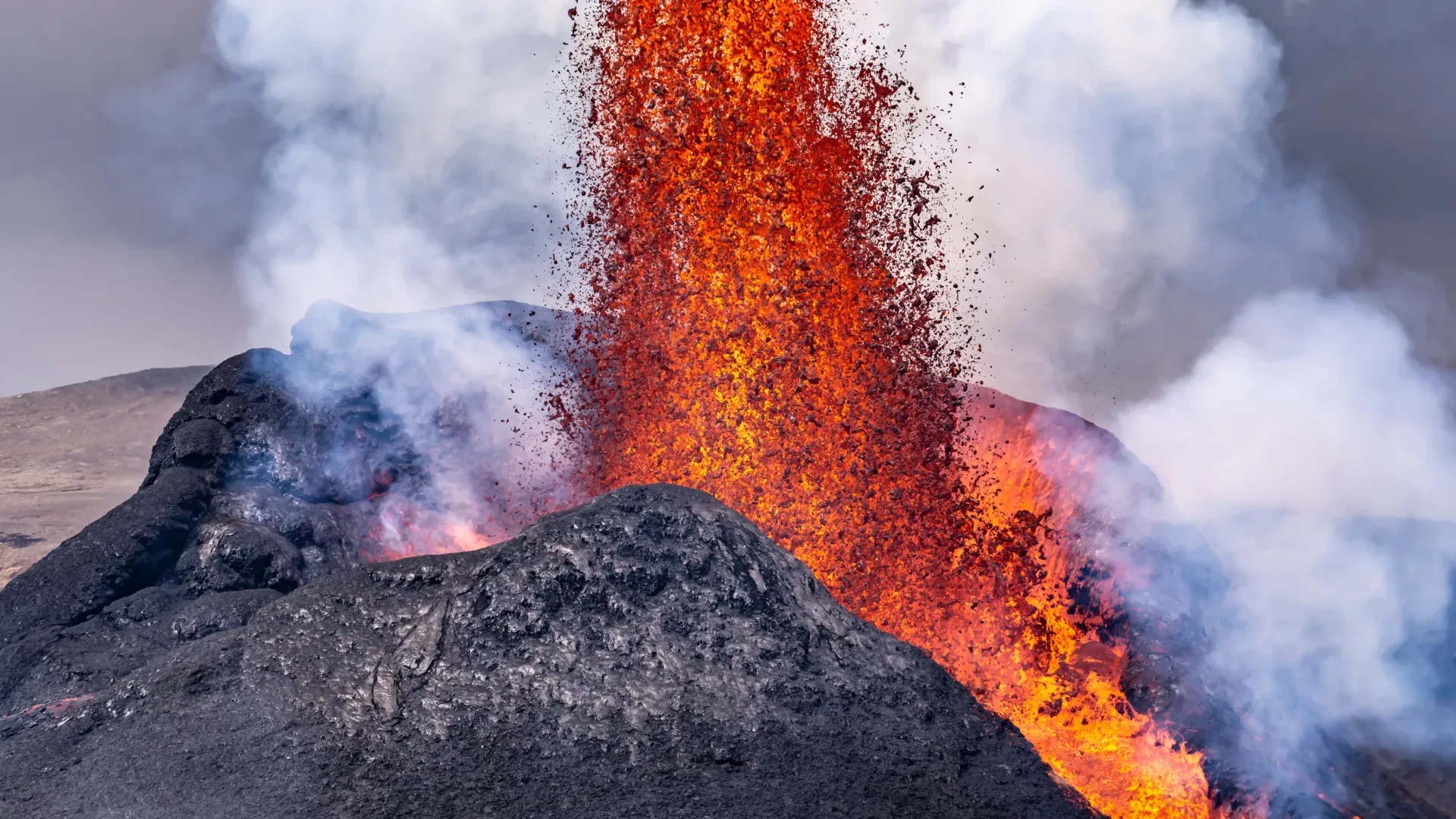
As these crustal "drips" descended, the immense heat and pressure forced them to dehydrate, releasing water directly into the mantle rock. This influx of water lowered the melting point of the surrounding mantle, generating silica-rich magma. This buoyant magma then forced its way back toward the surface, erupting in ancient volcanic arcs that eventually cooled to form the geological foundation of the Pilbara Craton.
The Modern Discovery Timeline
Fast forward over three billion years to the contemporary scientific era. Geologists recognized decades ago that the Pilbara Craton in Western Australia—alongside the Kaapvaal Craton in South Africa—represents one of the very few surviving windows into the Paleoarchean Earth. Most of Earth’s early crust has long since been destroyed, recycled, or melted by subsequent tectonic churning.
Over the past several years, Dr. Vandenburg and his multidisciplinary team gathered rock samples from across the Pilbara region. Utilizing state-of-the-art mass spectrometry and high-resolution geochemical tracking, the team isolated tiny mineral grains—such as zircons and trace elements within ancient volcanic rocks—that retained pristine chemical signatures from the moment of their crystallization 3.1 billion years ago.
By meticulously analyzing the isotope ratios and volatile contents locked inside these mineral time capsules, the researchers reconstructed the thermal and chemical conditions of the magma’s birthplace. The resulting data pointed unmistakably to one conclusion: water from the surface had been deeply ingested into the mantle to trigger the observed volcanic chemistry.
Supporting Data and Geochemical Evidence
The credibility of the study rests on the meticulous extraction of chemical clues from rocks that have survived billions of years of weathering, tectonic stress, and thermal alteration.
Today, plate tectonics is the undisputed engine driving the global water cycle through subduction zones. When an oceanic plate dives beneath a continental or another oceanic plate, it drags millions of gallons of seawater and hydrated sediments down into the mantle. This process is chemically fingerprint-distinct: it alters the trace element ratios (such as boron, beryllium, and specific rare earth elements) and volatile compositions of the resulting island-arc magmas.
When the research team analyzed the 3.1-billion-year-old Pilbara volcanic rocks, they found these exact same chemical fingerprints.
"What surprised us was finding evidence that large amounts of water had already made their way deep into the Earth’s interior and influenced the formation of volcanic rocks," Dr. Vandenburg noted.
Because standard plate tectonics—characterized by rigid plates sliding horizontally—requires a cooler, more rigid lithosphere than what existed on the hyper-thermal early Earth, the researchers had to reconcile how these chemical signatures got down there. The "dripduction" model solves this mechanical paradox. It accounts for vertical tectonic movements instead of horizontal ones, proving that mass transport between the surface and the deep interior was occurring efficiently long before modern plate boundaries locked into place.
Official Responses and Expert Perspectives
The publication in Nature Communications has generated considerable excitement and debate within the global geoscience community.
Dr. Vandenburg emphasized that the findings bridge a critical gap in our understanding of planetary mechanics. "The Earth wasn’t operating exactly as it does now, but it appears some of the key processes were already in place," he explained during a press statement discussing the School of Physics, Chemistry and Earth Sciences research project. "These rocks formed more than three billion years ago, when Earth was a very different place. The early Earth was too hot for plates to behave that way, so until now it has been unclear whether surface water could have made that journey more than three billion years ago, and if so, how."
Independent geologists not directly affiliated with the study have praised the research for offering a tangible mechanism to an abstract problem. For decades, theorists debated whether early Earth was an isolated system—where surface water remained largely confined to the crust and oceans—or a leaky, active system. By grounding their arguments in rigorous mineral chemistry from the Pilbara, Vandenburg and his colleagues have provided empirical weight to the latter hypothesis.
Furthermore, collaborators from international institutions highlighted the collaborative nature of the breakthrough. Researchers from the GEOMAR Helmholtz Center for Ocean Research noted that understanding ancient volatile cycles provides vital comparative data for planetary scientists studying how other rocky planets, such as Venus and Mars, manage (or fail to manage) internal water cycling.
Implications: Why Deep-Earth Water Recycling Matters
The discovery that Earth was recycling water 3.1 billion years ago carries profound implications across multiple scientific disciplines, stretching far beyond academic geology.
1. The Genesis and Growth of Continents
Volcanism is the primary mechanism by which continental crust is built and sustained. By demonstrating that water-driven magma production was active in the Paleoarchean, the study explains how early felsic (silica-rich) crust could form, paving the way for the emergence of stable continental landmasses. Without water acting as a flux to lower melting points in the mantle, the chemistry required to build continents would have looked entirely different.
2. The Evolution of Earth’s Habitability
Water is the ultimate prerequisite for life. However, planetary scientists increasingly realize that a planet’s surface habitability is inextricably linked to its deep interior. The cycling of water between the surface and the mantle acts as a planetary thermostat and a chemical regulator. It controls the outgassing of greenhouse gases, stabilizes sea levels over geological timescales, and supplies essential nutrients to the biosphere. Knowing that this recycling loop was functional during the infancy of life on Earth provides critical context for when and how the planet became a hospitable cradle for biological evolution.
3. Astrobiology and Exoplanet Research
As telescopes peer deeper into the cosmos, astronomers are discovering thousands of rocky exoplanets orbiting distant stars. A central question in modern astrobiology is whether an exoplanet needs plate tectonics to sustain life. This new research demonstrates that complex interior-surface cycling can occur without modern plate tectonics, via mechanisms like dripduction. This broadens the definition of what constitutes a potentially habitable world, suggesting that alien planets experiencing extreme heat might still successfully circulate water and nutrients through alternative tectonic regimes.
4. A New Chapter in Earth History
Ultimately, the Pilbara Craton rocks remind us that Earth has always been an intensely dynamic planet. Rather than transitioning abruptly from a dead, static rock to a living planet governed by modern plate tectonics, Earth underwent a prolonged, messy, and remarkably creative evolutionary adolescence.
As geologists continue to decode the microscopic chemical diaries locked inside ancient crystals, it is clear that the story of our world is written not just in the strata of its surface, but in the deep, cyclical plumbing that connects the oceans above to the fiery mantle below.
