

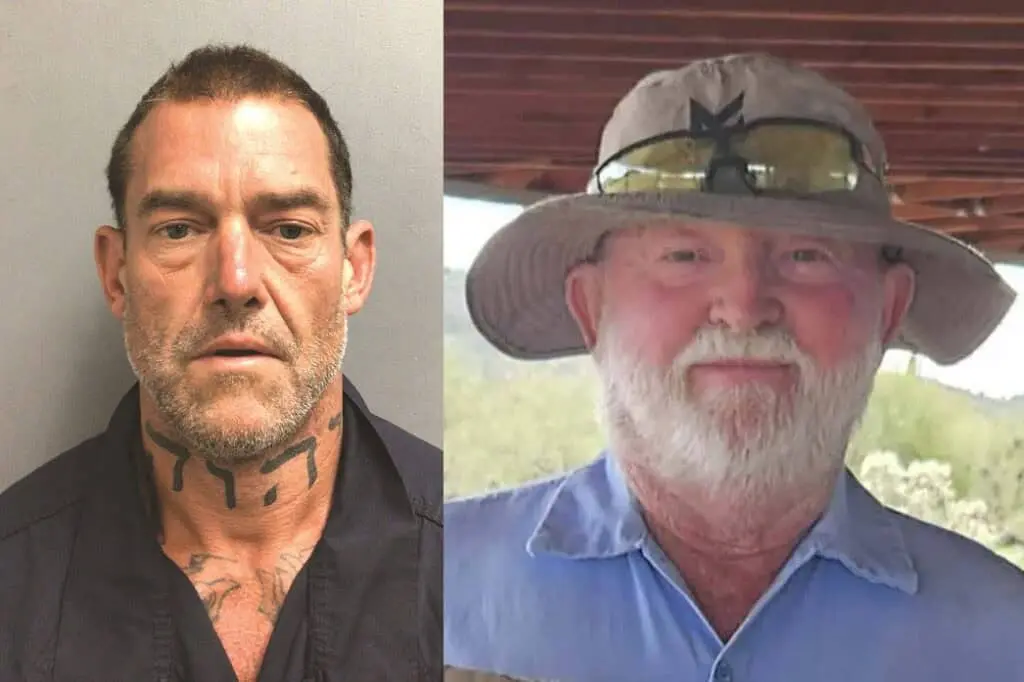
Main Facts of the Case
On Friday, August 14, 2026, the Maricopa County Superior Court brought a definitive end to one of the most chilling and bizarre criminal cases in recent Arizona history. Adam Christopher Sheafe, 50, was sentenced to spend the remainder of his natural life in prison, supplemented by an additional consecutive term of 102 years. The sentencing follows Sheafe’s conviction for the brutal April 2025 murder of 76-year-old Pastor William "Bill" Schonemann in New River, Arizona, alongside a series of related felony offenses.
The details of the crime scene shocked seasoned homicide investigators and the quiet community of New River alike. On the evening of Monday, April 28, 2025, authorities discovered Pastor Schonemann’s body inside his home, located in the 1900 block of Calvary Road. The beloved community leader and pastor of the New River Bible Chapel had been placed in a crucifixion position. Forensic investigators later determined that Schonemann had been killed the previous day, Sunday, April 27.
+-------------------------------------------------------------------------+
|                           CASE AT A GLANCE                              |
+-------------------------------------------------------------------------+
| Defendant:        Adam Christopher Sheafe (Age 50)                      |
| Victim:           Pastor William "Bill" Schonemann (Age 76)             |
| Crime Scene:      1900 block of Calvary Road, New River, AZ             |
| Date of Murder:   April 27, 2025                                        |
| Date of Arrest:   April 30, 2025 (Sedona, AZ)                           |
| Sentencing Date:  August 14, 2026                                       |
| Sentence:         Life Imprisonment + 102 consecutive years             |
+-------------------------------------------------------------------------+
Sheafe’s capture was the result of a coordinated, multi-agency manhunt in the rugged terrain of Sedona, Arizona. Following his arrest, Sheafe openly boasted to law enforcement and media outlets that the murder of Pastor Schonemann was intended to be the first step in a systematic, nationwide killing spree targeting more than a dozen prominent Christian leaders.
For over a year, Sheafe acted as his own legal counsel, exhibiting defiant behavior and actively lobbying the state of Arizona to sentence him to death. However, a sudden and tragic personal loss in the spring of 2026 shifted his legal strategy, leading him to abandon his self-representation, adopt a conciliatory posture, and ultimately accept a plea agreement that secured his permanent removal from society.
Chronology of Events
The timeline of the investigation, the manhunt, and the subsequent legal proceedings reveals a fast-moving crisis that began with a horrific discovery and concluded with a complex courtroom resolution.
2025
  │
  ├── April 27: Pastor Bill Schonemann is murdered at his New River home.
  ├── April 28: Schonemann's body is discovered; Maricopa County Sheriff's
  │             Office launches a homicide investigation.
  ├── April 29: Sheafe commits a residential burglary in Sedona's Chapel area,
  │             flees police, and abandons a stolen truck at an SR 179 trailhead.
  ├── April 30: Multi-agency manhunt in Sedona utilizing drone technology;
  │             Sheafe is captured near Gambel Lane.
  └── August:   Sheafe is formally indicted for first-degree murder in Maricopa
                County. Coconino County dismisses local burglary charges to
                prioritize the homicide prosecution.
2026
  │
  ├── April 8:  Sheafe's father and stepmother die in a plane crash at
  │             Marana Regional Airport.
  └── August 14: Sheafe accepts a plea deal and is sentenced to life plus
                102 years in prison.
The Murder and Discovery
- Sunday, April 27, 2025: Pastor Bill Schonemann is targeted and murdered inside his residence on Calvary Road in New River. Investigators believe Sheafe acted alone and caught the pastor off guard.
- Monday, April 28, 2025 (Approx. 7:30 p.m.): Concerned associates and family members discover Schonemann’s body. The Maricopa County Sheriff’s Office (MCSO) arrives at the scene, immediately securing the property and identifying the highly unusual and ritualistic staging of the victim’s body.
The Sedona Burglary and Manhunt
- Tuesday, April 29, 2025: Unaware of the suspect’s identity or his connection to the New River homicide, the Sedona Police Department responds to a reported residential burglary in the upscale Chapel neighborhood of Sedona. The suspect, later identified as Sheafe, flees the scene in a pickup truck, eventually abandoning the vehicle at a popular trailhead along State Route 179.
- Wednesday, April 30, 2025: Law enforcement links the abandoned truck to the New River homicide scene. Recognizing the extreme danger posed by the suspect, a massive, multi-jurisdictional manhunt is launched. Utilizing advanced drone technology, tactical teams locate Sheafe’s makeshift campsite in the dense brush near Rufous and Gambel lanes. Sheafe attempts to flee on foot but is quickly surrounded and taken into custody.
Legal Maneuvers and Family Tragedy
- August 2025: Maricopa County Attorney Rachel Mitchell formally indicts Sheafe for first-degree murder, armed burglary, and multiple counts of grand theft. Concurrently, Coconino County Attorney Ammon Barker moves to dismiss local burglary charges against Sheafe to streamline the capital murder trial in Phoenix.
- Late 2025 – Early 2026: Sheafe waives his right to counsel, choosing to represent himself. In multiple court appearances and media communications, he expresses a desire to receive the death penalty, detailing his broader plan to assassinate religious figures across the United States.
- April 8, 2026: A catastrophic aviation accident occurs at the Marana Regional Airport. A single-engine aircraft carrying Sheafe’s father, Chris Sheafe, and his stepmother, Jacque Sheafe, runs off the runway, catches fire, and burns. Both perish in the accident.
- May – July 2026: Following the sudden death of his parents, Sheafe undergoes a dramatic shift in behavior. He relinquishes his self-represented status, allows court-appointed defense attorneys to take over his case, and expresses a willingness to negotiate.
- August 14, 2026: The defense and prosecution present a negotiated plea agreement to Maricopa County Superior Court Judge. Sheafe is sentenced to natural life without the possibility of parole, plus 102 consecutive years for peripheral crimes.
Supporting Data and Investigation Details
The investigation into Adam Christopher Sheafe required the integration of traditional detective work, digital forensics, and tactical technology. The swift resolution of the case prevented what federal and state authorities believe could have been a catastrophic string of targeted religious assassinations.
The Role of Technology in the Manhunt
The search for Sheafe on April 30, 2025, serves as a prime example of modern law enforcement cooperation. The rugged, red-rock terrain surrounding Sedona’s Chapel area and the adjacent Coconino National Forest presents significant physical barriers to search teams.
To overcome these challenges, the Sedona Police Department requested aerial support. The Cottonwood Police Department deployed an unmanned aerial vehicle (UAV) equipped with high-resolution thermal imaging cameras.
               [ Cottonwood PD Tactical Drone ]
                             │
            ┌────────────────┴────────────────┐
            ▼                                 ▼
   [ Thermal Imaging ]               [ Real-Time GPS ]
            │                                 │
            └────────────────┬────────────────┘
                             ▼
               [ Ground Tactical Units ]
                (YCSO & Sedona Police)
                             │
                             ▼
                   [ Suspect Apprehended ]
                    (Gambel Lane Canopy)
The drone scanned the dense canopy near Gambel Lane, identifying a heat signature consistent with a human body hidden in a makeshift campsite. Real-time GPS coordinates were transmitted to ground teams, consisting of Sedona police officers and Yavapai County Sheriff’s Office (YCSO) deputies. As tactical units closed in, Sheafe attempted to break cover and run, but he was quickly intercepted and arrested without further violence.
The Stolen Vehicle Connection
The critical break that connected the Sedona burglary suspect to the New River homicide occurred through vehicle identification databases. The pickup truck abandoned by Sheafe at the State Route 179 trailhead was registered to a neighbor of Pastor Schonemann in New River.
Detectives discovered that Sheafe had stolen the truck immediately after murdering the pastor to facilitate his escape north toward the Verde Valley. Inside the vehicle, investigators recovered forensic evidence, including DNA and personal items belonging to both the victim and the suspect, firmly linking Sheafe to the Calvary Road crime scene.
The Thwarted Nationwide Campaign
During post-arrest interrogations and subsequent self-represented court filings, Sheafe revealed the existence of a detailed manifesto and hit list. The documents, later secured by the Federal Bureau of Investigation (FBI) and local detectives, outlined a planned cross-country journey.
Sheafe had mapped out routes, identified the residences and places of worship of more than a dozen Christian leaders, and detailed specific methods of execution. Law enforcement agencies nationwide were quietly notified of the list to ensure no co-conspirators were active, though investigators ultimately concluded that Sheafe acted entirely alone.
Official Responses and Legal Strategy
The prosecution of Sheafe involved a complex jurisdictional handoff between two separate county attorney offices to ensure maximum legal efficiency and to protect the public from further harm.
Jurisdictional Decisions
Because Sheafe committed serious crimes in both Coconino County (the Sedona burglary and flight) and Maricopa County (the homicide of Pastor Schonemann), both jurisdictions initially filed charges. However, prosecuting both cases simultaneously would have created administrative redundancies and potential constitutional issues regarding a speedy trial.
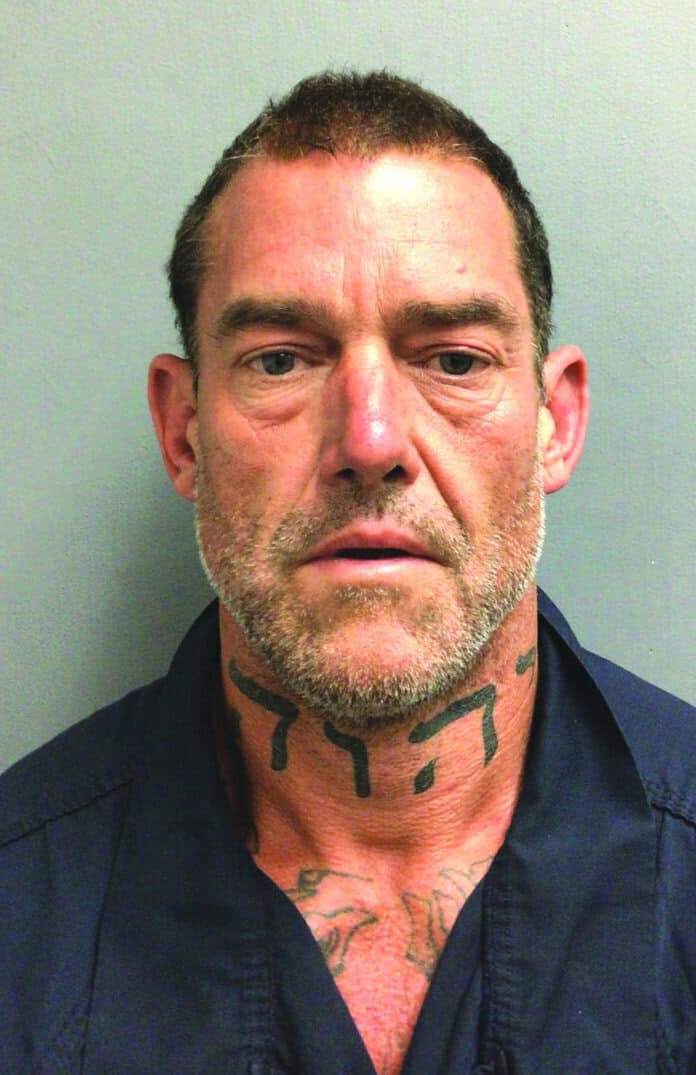
Coconino County Attorney Ammon Barker made the strategic decision to dismiss the local burglary charges without prejudice. Barker explained that because the Maricopa County homicide prosecution carried a guaranteed minimum of life imprisonment, pursuing the lesser burglary charges in Coconino County would not result in any meaningful additional penalties. By dismissing the charges without prejudice, Coconino County retained the right to refile them in the future if the Maricopa County conviction was ever overturned on appeal.
Statement from Maricopa County Attorney Rachel Mitchell
Following the sentencing on August 14, 2026, Maricopa County Attorney Rachel Mitchell issued a formal statement reflecting on the resolution of the case and praising the inter-agency collaboration:
"One family member said Bill was ‘truly a one-of-a-kind man. He served our country in the Navy during Vietnam. He was a devoted husband and a loving father, a business owner, and a mentor. He was a kind and gentle soul.’
I am thankful to the numerous law enforcement agencies who worked tirelessly and with an incredible sense of urgency to capture Sheafe before another attack could occur. We know he had planned a killing spree, and lives were saved because of the swift action of law enforcement and the community."
The Impact of the Marana Plane Crash
The sudden resolution of the case via a plea agreement surprised many court observers, given Sheafe’s previous insistence on representing himself and demanding execution. The turning point was the April 8, 2026, aviation tragedy at Marana Regional Airport.
+--------------------------------------------------------------------------+
|                     MARANA REGIONAL AIRPORT ACCIDENT                     |
+--------------------------------------------------------------------------+
| Date:             April 8, 2026                                          |
| Aircraft:         Single-engine private aircraft                         |
| Victims:          Chris Sheafe (Father) & Jacque Sheafe (Stepmother)     |
| Incident:         Vessel overran the runway during takeoff/landing,      |
|                   resulting in a catastrophic post-crash fire.           |
| Legal Impact:     Led directly to the defendant abandoning self-         |
|                   representation and accepting a life sentence plea.     |
+--------------------------------------------------------------------------+
The loss of his father and stepmother apparently broke Sheafe’s defiant resolve. Legal experts note that defendants who suffer severe personal trauma during active litigation often undergo psychological shifts.
Recognizing his vulnerability, court-appointed advisory counsel successfully convinced Sheafe to allow them to take over his defense. The attorneys quickly negotiated with Maricopa County prosecutors to take the death penalty off the table in exchange for a full confession, a waiver of all appeal rights, and a consecutive sentence structure that guarantees Sheafe will never be released.
Implications and Legacy
The conviction and sentencing of Adam Christopher Sheafe carry profound implications for the New River community, the protection of religious figures, and the operational tactics of Arizona law enforcement.
The Loss of a Spiritual Anchor
The murder of Pastor Bill Schonemann left a deep void in New River. As the longtime leader of the New River Bible Chapel, Schonemann was a foundational figure in the unincorporated community north of Phoenix.
A veteran of the United States Navy who served during the Vietnam War, Schonemann was highly regarded for his humility, his commitment to local charitable works, and his mentorship of young people. Members of his congregation have expressed relief at the finality of the sentence, noting that avoiding a lengthy, sensationalized death penalty trial allows the family and the church community to focus on honoring Schonemann’s legacy of peace and service.
Lessons in Inter-Agency Coordination
The successful apprehension of Sheafe is being studied as a model for rapid-response containment in rural and semi-rural environments. The seamless integration of:
- The Maricopa County Sheriff’s Office (homicide investigation),
- The Sedona Police Department (local patrol and search operations),
- The Cottonwood Police Department (UAV/drone support), and
- The Yavapai County Sheriff’s Office (tactical ground units)
demonstrates how shared technological resources can mitigate the geographic challenges of Arizona’s rugged landscapes. The use of tactical drones in search-and-rescue and suspect-apprehension missions has since seen increased funding and interest across Yavapai and Coconino counties.
Security Concerns for Faith Leaders
The revelation that Sheafe had compiled a highly organized list of Christian leaders across the nation has reignited discussions regarding security protocols for houses of worship and their clergy. Because pastors, priests, and other religious figures often maintain high public visibility and open-door policies, they remain uniquely vulnerable to targeted violence.
Security consultants emphasize that while faith communities should remain welcoming, modern ministries must implement proactive security measures—including threat assessments, surveillance systems, and close communication with local law enforcement—to protect both their leadership and their congregations from ideologically motivated violence.
