

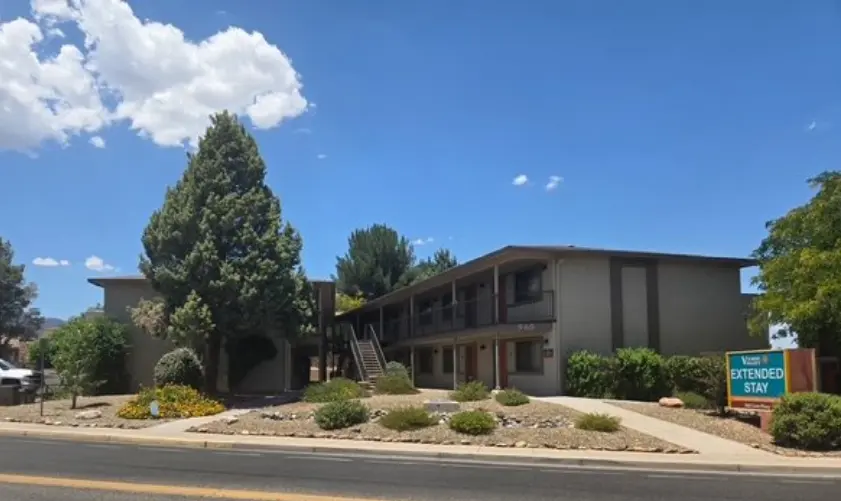
In an effort to address a worsening housing crisis that threatens local economic stability and municipal recruitment, the Cottonwood City Council has greenlit a partnership to convert a local extended-stay hotel into workforce housing. The initiative comes on the heels of a comprehensive housing study revealing a stark divergence between local wage growth and skyrocketing housing costs in the Verde Valley.
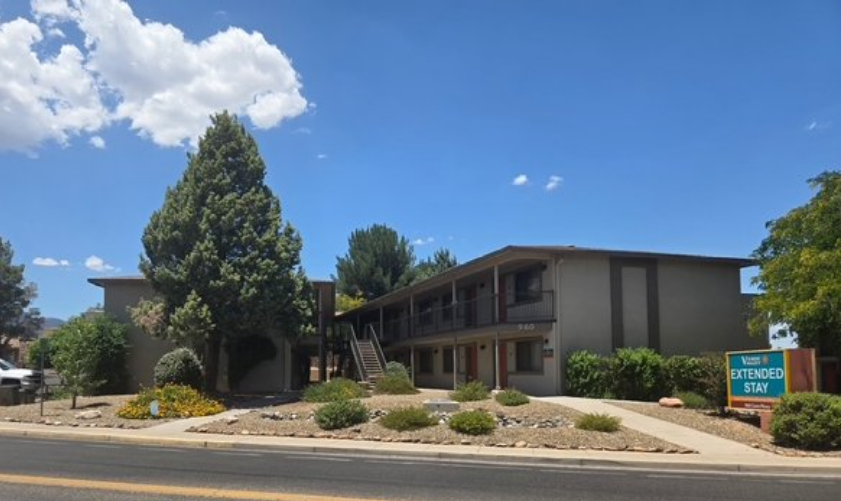
On August 4, the Cottonwood City Council voted unanimously to advance an agreement with the nonprofit developer Housing Solutions of Northern Arizona (HSNA). The project will transform the Verde Valley Extended Stay hotel, located at 960 Cove Parkway, into a 34-unit workforce housing complex known as the Cottonwood Cove Apartments.
The decision highlights a growing trend among municipalities in the American West: utilizing adaptive reuse—specifically converting older lodging facilities—to rapidly generate housing for the "missing middle" workforce. This segment of the population earns too much to qualify for traditional low-income federal subsidies but is priced out of an increasingly aggressive market-rate real estate environment.
Main Facts: The Anatomy of the Cove Parkway Conversion
The approved agreement establishes a binding framework between the City of Cottonwood and HSNA to repurpose three distinct properties along Cove Parkway. The project, designated as Cottonwood Cove Apartments, will introduce 34 single-occupancy units designed specifically for the local workforce.
Key Project Specifications and Covenants:
- Property Footprint: The development spans three parcels on Cove Parkway. Two properties sit adjacent to one another on one side of the road, while the third is situated directly across the street.
- Unit Design: Each of the 34 units will feature a one-bedroom, one-bathroom layout, complete with an individual private patio, utilizing the existing footprint of the extended-stay hotel rooms.
- Affordability and Income Restrictions: The units will be deed-restricted for a minimum of 30 years to ensure they remain workforce housing. Income limits are tied to Yavapai County’s Area Median Income (AMI):
- 17 units are restricted to households earning up to 80% AMI.
- 10 units are restricted to households earning up to 90% AMI.
- 7 units are restricted to households earning up to 100% AMI.
- Rental Pricing: For residents qualifying at the 80% AMI threshold, rent is set at $1,200 per month. Crucially, this rate includes all utilities. Factoring in an estimated utility cost of $150 per month, the base rent equates to approximately $1,050.
- Strategic Protections: The contract strictly prohibits any transition of these units into short-term vacation rentals (such as Airbnb or VRBO). Additionally, the agreement codifies a housing preference for municipal employees of the City of Cottonwood, establishing a direct pipeline for local government staff.
Chronology: From Council Conception to Final Approval
The path toward transforming the Verde Valley Extended Stay into a municipal workforce hub involves a multi-step legislative and regulatory process designed to secure both zoning compliance and financial feasibility.
[August 4] City Council approves initial agreement (5-0 vote)
       │
       ▼
[August 17] Planning & Zoning Commission reviews conditional use
       │
       ▼
[September 1] City Council scheduled for final project approval
       │
       ▼
[September (TBD)] Council reviews and finalizes gap financing structures
August 4: The Initial Council Authorization
The Cottonwood City Council convened and voted 5-0 to approve the preliminary agreement with HSNA. Councilmen Chris Dowell and Bob Marks were absent from the vote. This initial agreement established the income-restriction guidelines, utility-inclusion parameters, and the 30-year workforce housing covenant. It also introduced the concept of a municipal gap financing arrangement.
August 17: Planning and Zoning Review
Following the council’s conceptual approval, the project was referred to the Cottonwood Planning & Zoning Commission. The commission evaluated the adaptive reuse plans, parking requirements, and conditional use permits necessary to transition the property from commercial lodging to multi-family residential zoning.
September 1: Final Council Vote
The project is scheduled to return to the City Council for its final regulatory reading and formal authorization. This vote represents the final municipal hurdle before HSNA can close on the property and begin physical renovations.
Late September: Finalizing Gap Financing
While HSNA has secured the vast majority of the acquisition and rehabilitation capital through its own fundraising and capital campaigns, a funding gap remains. In September, the council and HSNA staff will finalize a custom gap financing package. The proposed framework includes a concessionary low-interest loan from the city, a minimal down payment, and a deferred repayment schedule designed to keep the project’s operational costs low enough to support the capped rental rates.
Supporting Data: The Stark Reality of Cottonwood’s Housing Market
To understand the urgency behind the Cove Parkway conversion, the City of Cottonwood commissioned a comprehensive housing study from Elliott D. Pollack & Company, a real estate and economic consulting firm. Presented by firm president Rick Merritt, the study compares data from 2019 through 2025, revealing a rapidly changing market.
The Divergence of Income: Cottonwood vs. Yavapai County
One of the most challenging economic indicators for Cottonwood is the vast disparity between local earning power and regional averages.
- Cottonwood Area Median Income (AMI): $48,448 annually.
- Yavapai County Overall AMI: $87,300 annually.
This disparity is compounded by a dramatic lag in wage growth. Over a five-year period, Yavapai County saw a 32.7% increase in median income overall. In contrast, Cottonwood’s median income grew by just 14.0%. Because workforce housing programs often calculate AMI on a county-wide basis, Cottonwood workers are at a severe disadvantage when competing for market-rate housing.
| Metric | Cottonwood | Yavapai County |
|---|---|---|
| Area Median Income (AMI) | $48,448 | $87,300 |
| 5-Year Income Growth Rate | 14.0% | 32.7% |
| Homeownership Rate (2024) | 53.6% | 75.1% |
Skyrocketing Housing Costs (2019–2025)
As local wages stagnated, the cost of shelter in Cottonwood surged. The study tracked steep price increases across all sectors of the local housing market over a six-year period:
- Apartment Rents: Increased by 24%, with the average rent in Cottonwood reaching $1,309 by 2025.
- Single-Family Home Prices: Increased by 50%.
- Condominiums and Townhomes: Increased by 66%.
These escalating costs have contributed to a historically low vacancy rate of 4.5% in 2025, indicating a severely constrained housing supply. Furthermore, Cottonwood’s homeownership rate sits at 53.6%, far below Yavapai County’s average of 75.1%.
The Demographic Shift: A Rapidly Aging Community
The study highlighted an unexpected demographic trend: Cottonwood’s population is aging rapidly. In just five years, the median age of a Cottonwood resident jumped from 46 to 55.
According to Merritt, this shift is driven by retirees discovering Cottonwood as a more affordable alternative to Prescott and Prescott Valley, which lie "on the other side of the mountain." While this influx of retirees brings capital, it also drives up housing prices, further displacing younger, service-wage workers who support the local economy.
The Housing Cost Burden
The standard metric for housing affordability is that a household should spend no more than 30% of its gross income on housing costs, including utilities. Households exceeding this threshold are considered "cost-burdened," while those spending over 50% are "severely cost-burdened."
- Cost-Burdened Households in Cottonwood: 30.1% (1,065 households) spend more than 30% of their income on housing.
- Severely Cost-Burdened Households: 17.3% (610 households) spend more than 50% of their income on housing.
Official Responses: Stakeholders Weigh In
The transition of the Cove Parkway property from a motel to permanent apartments has drawn praise and careful analysis from city leaders, nonprofit developers, and housing economists.
The Municipal Perspective: Recruitment and Retention
For Cottonwood’s administration, the project is more than just a real estate transaction; it is a critical tool for municipal survival. Ryan Bigelow, Cottonwood’s Director of Strategic Initiatives, emphasized that the city’s ability to recruit essential staff has been hampered by the local housing market.
"It’ll help us as a recruitment tool," Bigelow stated, referring to the clause giving municipal employees preference for the units. "If we have some folks who can’t get here because they can’t find a place to live, we get to hop in the front of the line."
Bigelow also addressed the upcoming financial discussions, emphasizing that the city’s gap financing would be structured as a cooperative, low-risk investment. "We are not agreeing to exactly how we’re going to do gap financing, but we will do a concessionary interest rate, low downpayment, [and] deferred repayment schedule to help with that part."
The Developer’s Perspective: Defining the "Missing Middle"
Devonna McLaughlin, CEO of Housing Solutions of Northern Arizona, clarified the distinction between this project and traditional low-income housing.
"The proposed rent for those folks [in Cottonwood Cove] up to 80% AMI would be $1,200 a month," McLaughlin explained. "That includes utilities. So, if you factor about $150 a month in utilities, that’s about $1,050 a month in rent."
McLaughlin contrasted Cottonwood Cove with HSNA’s previous local project, the Oak Wash Apartments, which won the Rural Housing Development of the Year Award from the Arizona Department of Housing.
"At Oak Wash, we’re charging $375 a month," McLaughlin said. "Different population [from Cottonwood Cove], very much lower income."
She emphasized that Cottonwood Cove is designed specifically for working professionals—teachers, police officers, municipal workers, and medical staff—who do not qualify for low-income housing but are priced out of luxury developments.
The Economist’s Perspective: The Squeeze on the Middle Class
Rick Merritt, President of Elliott D. Pollack & Company, noted that the lack of options for moderate-income earners creates a cascading crisis across the entire housing market.
"What you typically have is a shortage of units at the bottom end of the market [and] you have a shortage of high-end housing," Merritt explained. "But everybody’s trying to find housing in the middle, so the people with higher incomes, they’re able to pay less than 30% of their income on housing. The people on the left side that have the lower incomes, they’re paying more."
Merritt pointed out that because federal and state programs like Section 8 and Low-Income Housing Tax Credits (LIHTC) focus exclusively on those earning below 60% AMI, moderate-income earners are left with virtually no institutional support.
Implications: Adaptive Reuse as a Blueprint for the Southwest
The Cottonwood Cove project represents a critical case study in how small, rural-adjacent communities can address severe housing shortages without the massive capital expenditures and long timelines required for ground-up construction.
The Benefits of Adaptive Reuse
Converting an existing hotel or motel into apartments offers several advantages over traditional development:
- Speed to Market: Because the structural framing, roofing, plumbing, and electrical systems are already in place, conversions can be completed in a fraction of the time required for new construction.
- Cost-Efficiency: Reusing existing structures significantly lowers the cost per unit, allowing nonprofits like HSNA to pass those savings on to renters.
- Environmental Sustainability: Renovation generates far less waste and carbon emissions than demolition and new construction, preserving the local character of the Verde Valley.
Securing the Workforce Against Tourism Pressure
By explicitly banning short-term rentals and establishing a 30-year deed restriction, Cottonwood is protecting its housing stock from the speculative pressures of tourism. In many scenic Arizona communities, the rise of short-term vacation rentals has hollowed out the local rental market, forcing workers to commute long distances. The Cove Parkway project ensures that 34 units will remain dedicated strictly to the local workforce for three decades.
A Model for Municipal Cooperation
The partnership between Cottonwood and HSNA provides a potential blueprint for other rural towns in Arizona and the broader Mountain West. By offering creative gap financing—such as concessionary interest rates and deferred repayments—municipalities can leverage their financial capacity to secure dedicated housing for their own employees and critical workers.
As the Cottonwood City Council prepares for its final votes in September, the Verde Valley Extended Stay conversion stands as a practical, data-driven response to a housing crisis that continues to reshape the demographics and economics of Northern Arizona.
