

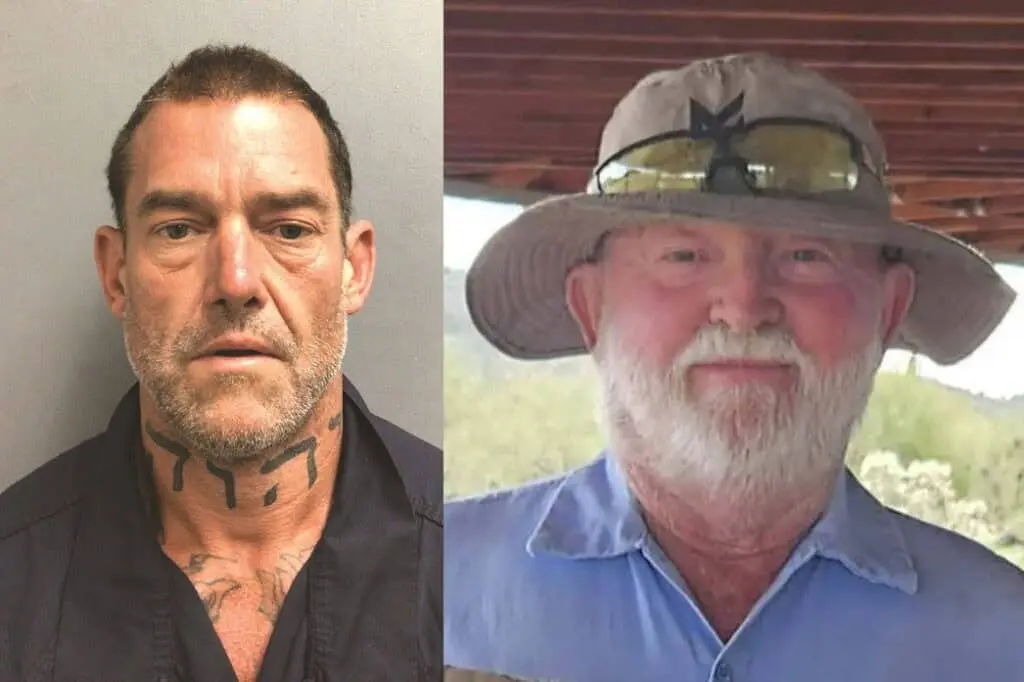
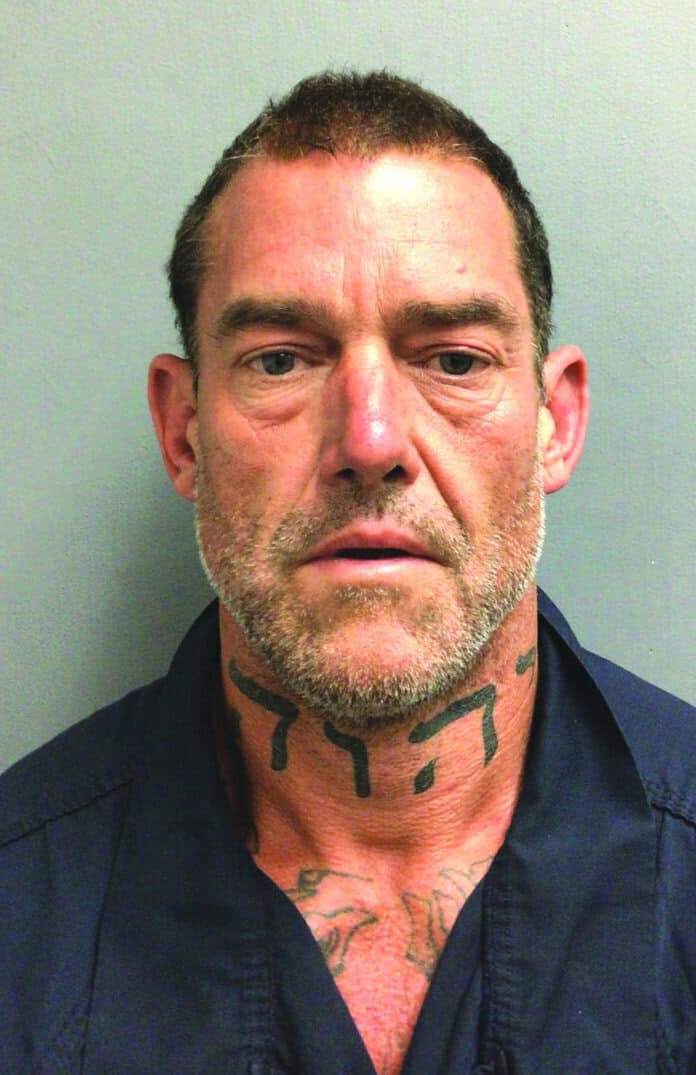
PHOENIX, Arizona — In a quiet courtroom in Maricopa County Superior Court on Friday, August 14, 2026, a chapter of profound terror and grief drew to a close. Adam Christopher Sheafe, 50, was sentenced to spend the remainder of his natural life behind bars, supplemented by an additional consecutive sentence of 102 years.
The sentencing follows Sheafe’s conviction for the brutal, ritualistic April 2025 murder of 76-year-old Pastor William "Bill" Schonemann in the small community of New River, Arizona. The sentencing marks the end of a highly complex legal saga that spanned multiple counties, featured a high-stakes manhunt through the rugged red rocks of Sedona, and was altered by a sudden family tragedy that shifted the defendant’s legal strategy from demanding execution to accepting a plea deal.
Main Facts: The Termination of a Deadly Crusade
The state’s case against Adam Christopher Sheafe revealed a chilling plot that extended far beyond the borders of Arizona. According to prosecutors and Sheafe’s own subsequent confessions to media outlets, the murder of Pastor Schonemann was intended to be merely the opening act of a coordinated, cross-country killing spree. Sheafe’s blueprint targeted more than a dozen Christian leaders and pastors across the United States.
The intervention of law enforcement in late April 2025 effectively dismantled what Maricopa County Attorney Rachel Mitchell described as a highly organized, lethal campaign.
The primary components of the sentencing handed down on August 14 include:
- Life Imprisonment without the Possibility of Parole: Applied to the first-degree murder charge of Pastor Schonemann.
- An Additional 102 Years in State Prison: Consecutive sentences applied to a series of associated felony charges, including armed burglary, vehicle theft, and weapons violations stemming from the crime spree.
- Dismissal of Coconino County Charges: Property crime and burglary charges in Coconino County were dismissed without prejudice, ensuring that the primary focus remained on the Maricopa County homicide conviction.
Chronology: From the Quiet of New River to the Cliffs of Sedona
The timeline of events surrounding the apprehension, prosecution, and sentencing of Adam Christopher Sheafe highlights a rapid escalation of violence met by a highly coordinated, multi-agency response.
[April 27, 2025] ----> [April 28, 2025] ----> [April 29, 2025] ----> [April 30, 2025] ----> [April 2025 - April 2026] ----> [April 8, 2026] ----> [August 14, 2026]
Pastor Schonemann      Body discovered       Burglary in Sedona;   Manhunt & arrest      Sheafe represents self;      Parents die in   Plea agreement &
murdered in New River  in crucifixion pose   stolen truck found    via police drone      demands death penalty        plane crash      sentencing
The Initial Crime: April 27–28, 2025
The tragedy began in the quiet, semi-rural enclave of New River, located in northern Maricopa County. On Sunday, April 27, 2025, authorities believe Sheafe gained access to the home of Pastor Bill Schonemann, situated in the 1900 block of Calvary Road.
On the evening of Monday, April 28, at approximately 7:30 p.m., deputies from the Maricopa County Sheriff’s Office (MCSO) conducted a welfare check at the residence. Inside, they made a gruesome discovery: Schonemann was dead, his body bound and displayed in a crucifixion position. A forensic examination later determined that the beloved pastor had been murdered the previous day.
The Escape and Sedona Burglary: April 29, 2025
Following the murder, Sheafe fled north toward Yavapai and Coconino counties, driving a stolen pickup truck belonging to the victim. By Tuesday, April 29, Sheafe had arrived in Sedona, where he attempted to fund his continued flight. He committed a residential burglary in the affluent "Chapel" neighborhood, located near the iconic Chapel of the Holy Cross.
When local police responded to the burglary call, Sheafe fled the scene. He abandoned the stolen pickup truck near a trailhead along State Route 179 and vanished into the rugged, brush-covered terrain of the Coconino National Forest. Upon running the plates of the abandoned truck, Sedona police dispatchers quickly realized the vehicle was registered to the homicide victim in New River, instantly elevating Sheafe to a high-risk, armed-and-dangerous fugitive.
The Manhunt and Arrest: April 30, 2025
On the morning of Wednesday, April 30, 2025, a massive multi-agency manhunt was launched in the red rocks of Sedona. The Sedona Police Department, Yavapai County Sheriff’s Office (YCSO), and Coconino County Sheriff’s Office established a perimeter around the Chapel area, focusing on Rufous and Gambel lanes.
The rugged topography made ground searches highly dangerous. To mitigate the risk to officers, the Cottonwood Police Department deployed an advanced tactical aerial drone. The drone successfully located Sheafe’s makeshift campsite hidden deep within the brush. As tactical teams closed in, the drone tracked Sheafe as he attempted to flee on foot, allowing officers to intercept and arrest him without further bloodshed.
The Legal Limbo and Personal Tragedy: April 2025 to April 2026
Following his arrest, Sheafe’s legal proceedings were marked by erratic behavior. He waived his right to counsel, opting to represent himself. During various court appearances and jailhouse communications, Sheafe expressed a desire to bypass trial proceedings, lobbying the State of Arizona to fast-track his execution.
However, a sudden and catastrophic personal tragedy altered the trajectory of the defense. On April 8, 2026, Sheafe’s father, Chris Sheafe, and his stepmother, Jacque Sheafe, were killed when their single-engine aircraft ran off the runway and caught fire at the Marana Regional Airport near Tucson.
Following the sudden death of his parents, Sheafe’s combative demeanor softened. He abandoned his pursuit of the death penalty, agreed to professional legal representation, and ultimately entered into negotiations for a plea agreement that would guarantee he would die in prison without facing execution.
Supporting Data: Profiling the Victim and the Threat
To comprehend the scale of this case, it is necessary to examine the profound community impact of the victim’s life and the catastrophic threat posed by the perpetrator.
Pastor William "Bill" Schonemann: A Legacy of Service
Pastor Schonemann was a cornerstone of the New River community, serving as a spiritual leader at the New River Bible Chapel. Beyond his religious leadership, Schonemann’s life was defined by service to his country and community:
- Military Service: Schonemann served in the United States Navy during the Vietnam War.
- Professional Background: He was a long-time local business owner, utilizing his skills to mentor young entrepreneurs.
- Family: He was a devoted husband, father, and grandfather, known for his gentle demeanor and counseling of vulnerable community members.
The Scope of the Planned Rampage
During the investigation, detectives recovered notebooks and digital files belonging to Sheafe that outlined a systematic, cross-country target list. The documents contained the names, addresses, and schedules of more than a dozen prominent Christian ministers and pastors across several states.
Sheafe’s radicalized worldview apparently centered on a deep-seated grievance against established Christian organizations. Investigators noted that the crucifixion of Pastor Schonemann was not an isolated act of rage, but a symbolic, theatrical opening statement intended to terrorize the broader religious community.
Official Responses: Law Enforcement and Judiciary Reflect on the Case
The resolution of the case drew strong statements from top law enforcement and prosecuting officials across Arizona, emphasizing the coordination required to prevent further loss of life.
Maricopa County Attorney Rachel Mitchell praised the rapid, cross-jurisdictional collaboration that brought Sheafe to justice before he could leave the state:
"One family member said Bill was truly a one-of-a-kind man. He served our country in the Navy during Vietnam. He was a devoted husband and a loving father, a business owner, and a mentor. He was a kind and gentle soul.
I am thankful to the numerous law enforcement agencies who worked tirelessly and with an incredible sense of urgency to capture Sheafe before another attack could occur. We know he had planned a killing spree, and lives were saved because of the swift action of law enforcement and the community."
Coconino County Attorney Ammon Barker addressed the complex jurisdictional issues that arose from Sheafe committing crimes in multiple counties. Barker noted that the burglary charges in Sedona were dismissed without prejudice to streamline the capital murder trial in Phoenix:
"The burglary charges against Sheafe were dismissed without prejudice so that the Maricopa County prosecution could proceed. Given the gravity of the homicide charges and the certainty of a life sentence, this strategic decision allowed the state to focus its resources on securing maximum justice for the Schonemann family without unnecessary procedural delays."
Implications: Technology, Extremism, and the Path of Justice
The conviction and sentencing of Adam Christopher Sheafe carry several broader implications for law enforcement, public safety, and the judicial system.
The Role of Technology in Modern Fugitive Apprehension
The successful capture of Sheafe highlights the increasing reliance of municipal police departments on drone technology. The rugged canyons and dense chaparral of Sedona’s red rocks have historically provided fugitives with effective hiding spots, sometimes prolonging manhunts for weeks.
In this instance, the integration of Cottonwood PD’s drone unit allowed real-time tracking of the suspect, protecting ground officers from potential ambushes and preventing the suspect from slipping into the wilderness.
Addressing Targeted Violence Against Religious Figures
The revelation of Sheafe’s hit list underscores a growing concern among homeland security officials regarding targeted violence against religious leaders. Houses of worship and their clergy often operate with high levels of public accessibility, making them soft targets for individuals harboring ideological grievances. Security analysts suggest this case may prompt religious institutions to re-evaluate physical security protocols and communication networks to identify potential threats early.
The Interplay of Personal Tragedy and Legal Outcomes
Finally, the sudden shift in Sheafe’s legal strategy illustrates the unpredictable human element within the criminal justice system. For nearly a year, Sheafe’s insistence on representing himself and his demands for the death penalty threatened to turn the trial into a prolonged, highly publicized media circus.
The tragic plane crash that claimed his father and stepmother in April 2026 served as an unexpected turning point. The loss apparently broke the defendant’s resolve, leading him to accept a plea agreement. For the family of Pastor Schonemann, this shift spared them the trauma of a lengthy, graphic trial, ensuring that the perpetrator will remain behind bars for the rest of his life.
