

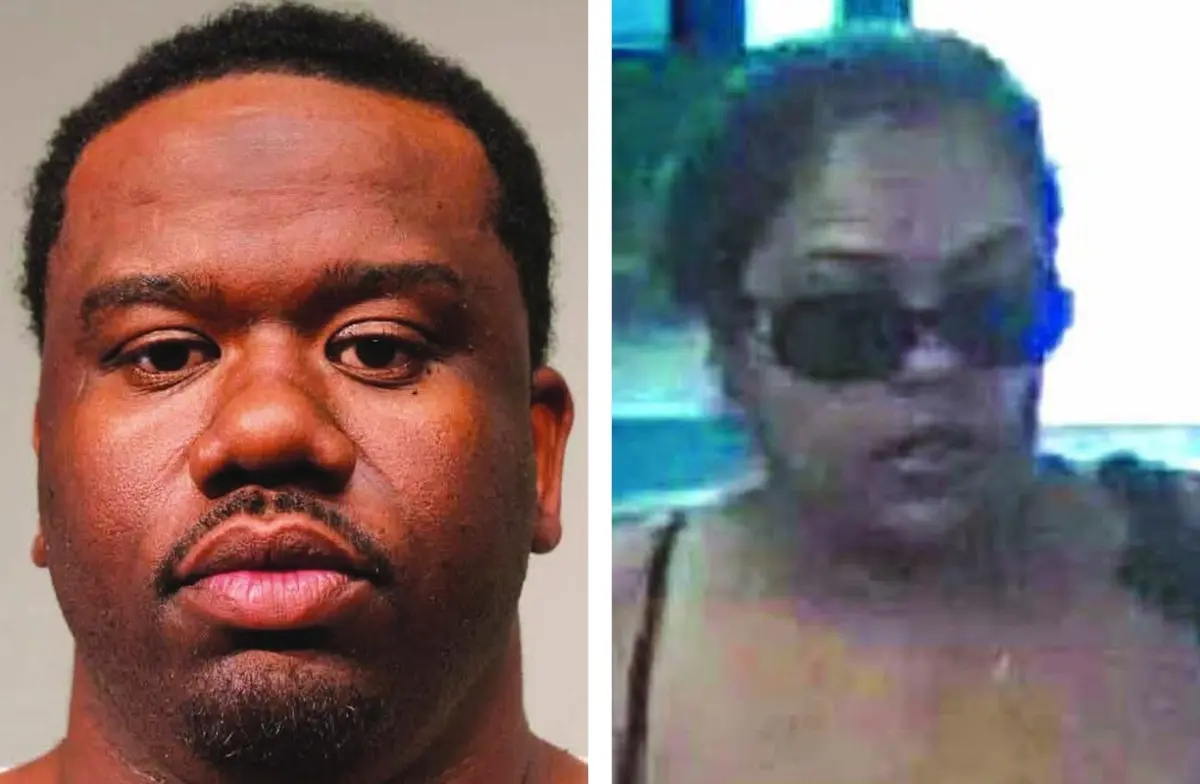
CAMP VERDE, Ariz. — A collaborative investigation combining traditional police work with modern surveillance technology has led to the arrest of a Phoenix couple accused of orchestrating a sophisticated identity theft and fraudulent purchase scheme.
The Camp Verde Marshal’s Office (CVMO) announced the arrest of Christerful Ray Bryant Jr., 36, and Fatuma Salim, 30, following an incident at a local Tractor Supply store. The suspects allegedly used stolen personal identifying information to secure credit, steal high-value machinery, and flee across county lines.
The case highlights the growing reliance of rural law enforcement agencies on automated surveillance networks to track suspect vehicles fleeing toward major metropolitan hubs.
Main Facts of the Case
The investigation began in the quiet town of Camp Verde, located in Yavapai County, Arizona. On August 10, a male and a female suspect entered the local Tractor Supply store. Armed with the stolen identifying information of an unsuspecting victim, the pair successfully applied for and opened a Tractor Supply credit account.
Once the fraudulent line of credit was established, the suspects purchased a Toro zero-turn riding lawnmower valued at approximately $4,200. To transport the large piece of machinery, the suspects rented a utility trailer from the store under the same fraudulent credentials.
After loading the mower onto the trailer, the suspects left the property in a dark-colored Jeep Wagoneer. Neither the high-value lawnmower nor the rented utility trailer was ever returned to the store.
Upon realizing the transaction was fraudulent and the rental agreement had expired without the equipment being returned, store management contacted local authorities. The Camp Verde Marshal’s Office immediately launched an investigation into the grand theft and identity fraud.
Detailed Chronology of Events
The successful apprehension of the primary suspect occurred over an 11-day period, utilizing a combination of local retail surveillance, highway license plate readers, and tactical street-level policing.
[August 10] Suspects buy $4,200 mower & rent trailer using stolen ID in Camp Verde
       │
       ▼
[August 10] ALPR cameras flag Jeep Wagoneer & trailer heading South on I-17
       │
       ▼
[August 11–20] CVMO coordinates with Phoenix PD; analyzes fraudulent documents
       │
       ▼
[August 21] Police conduct tactical traffic stop at 19th St & Broadway (Phoenix)
       │
       ▼
[August 21] Christerful Ray Bryant Jr. arrested; vehicle search reveals multi-state fraud evidence
The Initial Theft (August 10)
On the afternoon of August 10, the male and female suspects—later identified by police as Christerful Ray Bryant Jr. and Fatuma Salim—executed the fraudulent purchase at the Camp Verde Tractor Supply. After securing the $4,200 Toro zero-turn mower and the rental trailer, they hitched the trailer to their dark Jeep Wagoneer and drove away from the retail location.
The Digital Trail (August 10)
Following the store’s report of the crime, CVMO investigators reviewed the retail location’s exterior and interior surveillance footage. The footage provided a clear description of the suspects, their getaway vehicle, and the stolen trailer.
Investigators then cross-referenced this timeline with regional Automated License Plate Reader (ALPR) databases. An ALPR system captured images of the dark Jeep Wagoneer towing the stolen utility trailer as it traveled southbound on Interstate 17, the primary freeway connecting the Verde Valley to the Phoenix metropolitan area. This critical technological hit allowed investigators to confirm the vehicle’s direction of travel, identify the vehicle’s registration details, and narrow down the geographic profile of the suspects.
The Arrest in Phoenix (August 21)
With the vehicle identified and tracked to the Phoenix area, CVMO investigators coordinated with local Phoenix law enforcement agencies. On August 21, investigators located the Jeep Wagoneer in south Phoenix.
Officers executed a tactical traffic stop near the intersection of 19th Street and Broadway Road. Bryant, who was operating the vehicle, was taken into custody without incident. Salim was not present in the vehicle at the time of the stop, and law enforcement officers continue to seek her whereabouts.
The Search and Discovery of Multi-State Fraud
Following Bryant’s arrest, officers conducted a search of the Jeep Wagoneer. Inside, investigators discovered a trove of incriminating evidence. Among the recovered items were the original Camp Verde Tractor Supply rental agreements and purchase receipts.
Furthermore, search teams located numerous additional forged documents, stolen identification cards, and financial records. According to the CVMO, these documents allegedly connect Bryant to a network of similar high-value fraudulent transactions spanning multiple jurisdictions across both Arizona and California.
Supporting Data and Evidence
The case against Bryant and Salim is supported by physical, digital, and documentary evidence collected across multiple jurisdictions.
The Stolen Property
- The Mower: A Toro zero-turn riding lawnmower. Zero-turn mowers are highly prized by equipment thieves due to their high retail value ($4,200 in this case), ease of transport, and high demand on the secondary black market.
- The Trailer: A utility trailer rented from Tractor Supply. Utility trailers are frequently targeted by identity thieves because they can be easily modified, repainted, or sold without titles in states with lax registration laws.
- Current Status: As of early September, both the Toro lawnmower and the utility trailer remain unrecovered. CVMO investigators are actively tracking local classified advertisements and online marketplaces (such as Facebook Marketplace and OfferUp) where such items are frequently fenced.
Recovered Documentary Evidence
The search of the suspects’ vehicle yielded:

- The original fraudulent Tractor Supply rental agreement signed in Camp Verde.
- Receipts matching the transaction timestamp from August 10.
- Dozens of counterfeit driver’s licenses and social security cards.
- Ledgers and digital devices indicating fraudulent financial activities stretching from the Phoenix metro area into Southern California.
Regional ALPR Surveillance Infrastructure
The resolution of this case relied heavily on the integration of local and regional automated surveillance networks.
                                 ┌────────────────────────┐
                                 │ Camp Verde Marshal     │
                                 │ Stationary & Mobile    │
                                 │ ALPR Cameras           │
                                 └───────────┬────────────┘
                                             │
                                             ▼
┌────────────────────────┐       ┌────────────────────────┐       ┌────────────────────────┐
│ Prescott Police Dept.  │◄─────►│ Flock Safety &         │◄─────►│ Phoenix Police Dept.   │
│ Flock Network Database │       │ Leonardo Databases     │       │ Local Tracking Unit    │
└────────────────────────┘       └────────────────────────┘       └────────────────────────┘
The Camp Verde Marshal’s Office has steadily expanded its technological capabilities over the past two years:
- Stationary Cameras: Since early 2024, CVMO has operated two stationary Leonardo ALPR cameras at the busy intersection of Finnie Flat Road and Cliffs Parkway.
- Mobile Readers: The agency has integrated Motorola mobile license plate readers into its active patrol vehicle fleet.
- Data Sharing Agreements: CVMO participates in regional data sharing. Investigative reports reveal that CVMO has run searches through the Prescott Police Department’s Flock network. A review of database audits showed 26 searches linked to CVMO inquiries—20 run by Cottonwood police on behalf of the regional task force and six by Prescott police. Of those queries, 14 were linked to active case numbers, while 12 were run for intelligence-gathering or general vehicle sweeps without a formalized case number at the time of the search.
Official Responses and Legal Proceedings
Following the arrest, local officials emphasized the importance of inter-agency cooperation and technology in modern rural policing.
Camp Verde Marshal’s Office Statement
In a public briefing, a spokesperson for the Camp Verde Marshal’s Office stated:
"The use of Automated License Plate Reader technology was instrumental in this investigation. Without the ability to quickly identify the suspects’ getaway vehicle and track its trajectory down the Interstate 17 corridor, these individuals would have easily melted back into the Phoenix metropolitan area. Our investigators worked tirelessly to bridge the geographic gap, and this arrest sends a clear message that committing crimes in our rural communities carries real, high-tech consequences."
Charges Filed Against Christerful Ray Bryant Jr.
Bryant was transported back to Yavapai County and booked into the Yavapai County Detention Center. He faces a litany of felony charges under Arizona Revised Statutes (ARS), including:
- Identity Theft (ARS 13-2008): A class 4 felony involving the unauthorized taking of another person’s identifying information with the intent to facilitate fraud.
- Fraudulent Schemes and Artifices (ARS 13-2310): A class 2 felony carrying significant prison terms for executing a scheme to defraud a business or individual.
- Forgery (ARS 13-2002): For creating or presenting false documents to secure credit.
- Criminal Impersonation (ARS 13-2006): For posing as another real individual during a retail transaction.
- Grand Theft (ARS 13-1802): For the theft of the $4,200 mower.
- Unlawful Failure to Return Rented Property (ARS 13-1806): A class 5 or 6 felony for failing to return the utility trailer within the legally prescribed timeframe.
The investigation remains highly active. CVMO, in conjunction with Phoenix police and California authorities, is working to locate Fatuma Salim, recover the stolen lawnmower and trailer, and determine if other co-conspirators are involved in this multi-state fraud ring.
Broader Implications: Tech, Privacy, and Organized Retail Fraud
This case highlights several evolving trends in law enforcement, criminal behavior, and civil liberties.
The Rise of Organized Retail Crime (ORC)
Identity theft has evolved far beyond simple online credit card fraud. Organized retail theft rings increasingly target high-value, high-liquidity physical assets—such as commercial-grade landscaping equipment, construction tools, and recreational vehicles. These items can be quickly liquidated for cash, making them highly attractive to professional theft rings operating across state lines.
By utilizing stolen identities, perpetrators distance themselves from the crime, making traditional retail loss prevention methods ineffective. This shift has forced law enforcement to rely heavily on post-incident technological tracking.
The Role of ALPR Networks in Modern Law Enforcement
Automated License Plate Readers have rapidly become one of the most powerful tools in the law enforcement arsenal. By scanning thousands of license plates per minute and cross-referencing them with national crime databases (such as the National Crime Information Center, or NCIC), ALPR systems allow rural agencies with limited manpower to monitor major transit corridors effectively.
In Arizona, Interstate 17 serves as a vital corridor for commerce, but it also acts as a primary escape route for criminals operating in Yavapai, Coconino, and Navajo counties who seek refuge in the sprawling Maricopa County metroplex. The seamless sharing of ALPR data between northern Arizona towns and the Phoenix police network was the linchpin in bringing Bryant to justice.
The Ongoing Privacy Debate
While the arrest of Bryant showcases the utility of ALPR systems, the technology remains a subject of intense public debate regarding privacy and government surveillance.
Organizations like the American Civil Liberties Union (ACLU) have raised concerns over the unregulated growth of networks like Flock Safety and Leonardo. Critics argue that the continuous tracking of vehicles creates a digital dragnet, monitoring law-abiding citizens without reasonable suspicion of a crime.
The disclosure that nearly half of the CVMO-associated searches in the Prescott Police Department’s Flock network did not carry an active case number highlights these concerns. Civil liberties advocates argue that strict auditing protocols must be enforced to ensure that license plate databases are only queried during active, authorized criminal investigations, preventing potential abuse or unauthorized surveillance of the general public.
As the legal proceedings against Bryant move forward in Yavapai County Superior Court, this case will likely be cited as a prime example of how modern technology can successfully deter and solve cross-jurisdictional property crimes—even as communities continue to grapple with the delicate balance between public safety and personal privacy.
