

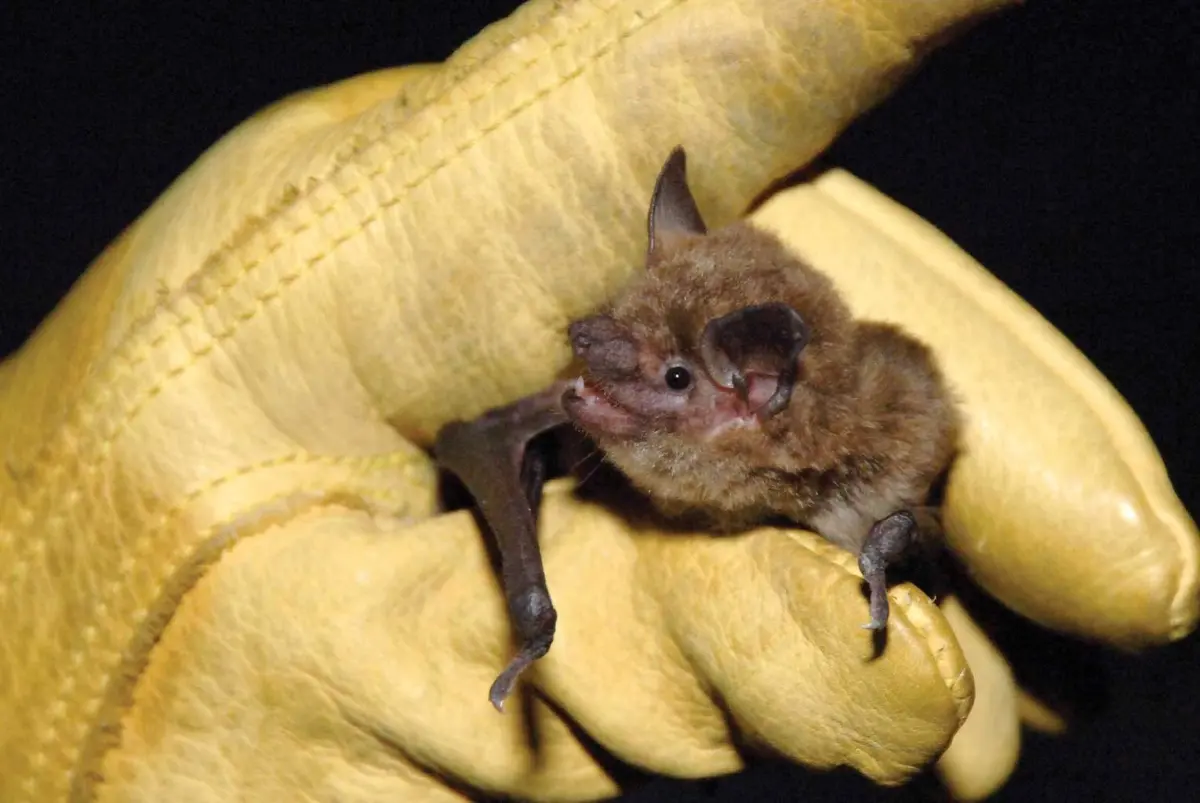
JEROME, Ariz. — As dusk settles over the historic mining town of Jerome, the sky above the Black Hills comes alive with the rapid, silent sweeps of one of nature’s most misunderstood creatures. To celebrate these nocturnal mammals and educate the public on their vital ecological roles, Jerome State Historic Park has announced its annual Bat Walk, scheduled for Saturday, September 26.
The event arrives at a critical juncture for wildlife biologists and conservationists in the Southwest. With Arizona ranking as the second most biodiverse state for bats in the nation, state agencies are ramping up efforts to monitor local populations, track elusive species, and combat emerging environmental threats.
Main Facts: The Annual Jerome Bat Walk
The Jerome State Historic Park, located at 100 Douglas Road, will open its gates at 6:15 p.m. on September 26, with the official presentation and guided walk commencing at 6:30 p.m.
Event Logistics and Guidelines
- Admission and Registration: Admission is priced at $8 per person. Due to high demand and limited capacity, advance registration is mandatory and can be completed via the official state parks portal at azstateparks.com/jerome.
- Physical Requirements: The guided portion of the evening spans just over one mile of smooth, easily navigable terrain, making the event fully compliant with the Americans with Disabilities Act (ADA) and accessible to visitors of all ages and mobility levels.
- Required Gear: Participants are strictly requested to bring a red-light flashlight or headlamp. Red light is highly recommended by biologists as it does not disrupt the night-vision adaptation of human eyes, nor does it interfere with the hunting and flight patterns of the bats.
- Further Inquiries: For additional details or weather-related updates, the park can be reached directly at 928-634-5381.
Expert-Led Presentation
The educational seminar and subsequent walk will be conducted by Brenda Vento, a highly regarded bat rehabilitation specialist. Vento brings a wealth of hands-on experience to the event, serving as a licensed wildlife rehabilitator with the Arizona Game and Fish Department (AZGFD) and a dedicated volunteer for Arizona State Parks. Her presentation will focus on the biology, rehabilitation, and local habitats of the four distinct bat species that regularly forage across the park’s grounds.
These species utilize the abandoned mine shafts, natural caves, and deep rock crevices of the Black Hills as roosting sites, emerging at twilight to provide natural pest control for the Verde Valley region.
Chronology: The Evolution of Arizona’s Bat Conservation Efforts
To understand the significance of the Jerome Bat Walk, one must look at the decades-long timeline of mining, habitat adaptation, and scientific conservation in the Grand Canyon State.
[Late 19th - Mid 20th Century]
Industrial mining leaves thousands of open shafts across Arizona, creating accidental roosting habitats.
       │
[Late 20th Century]
The closure of historic mines prompts the "Bat Gates" initiative, securing shafts for safety while preserving ecological access.
       │
[2002]
The rare Underwood's mastiff bat is captured and documented in Arizona, marking a baseline for the elusive species.
       │
[August 29, 2020 - Present]
AZGFD establishes "International Bat Night" public outreach campaigns to counter rabies myths and promote acoustic tracking.
       │
[2022]
The Underwood's mastiff bat is captured in the state for only the second time in twenty years, sparking intense localized research.
       │
[2025]
The federally protected Mexican long-nosed bat is officially confirmed in southeastern Arizona, shifting conservation priorities.
       │
[September 26, Present Year]
Jerome State Historic Park hosts its annual Bat Walk, bridging public education with statewide scientific initiatives.
The Mining Era and Habitat Shift (1880s–1950s)
During the height of the copper mining boom, human activity carved hundreds of miles of tunnels into the Black Hills of Jerome. When industrial mining ceased, these dark, thermally stable subterranean chambers became perfect artificial caves. Over decades, local bat populations adapted, utilizing these abandoned shafts for maternal colonies and winter hibernation.
The Rise of Modern Wildlife Management (Late 20th Century)
As public safety initiatives in the latter half of the 20th century sought to seal old mines, conservationists realized that traditional closures could trap or displace entire colonies. This led to the development of "bat-compatible gates"—heavy steel grates that prevent human entry while allowing bats to fly freely. This marked the beginning of active state-level bat management.
Milestone Discoveries and the 2025 Breakthrough
Over the last two decades, biologists have focused on identifying and protecting rare species:
- 2002: Biologists record a baseline capture of the Underwood’s mastiff bat (Eumops underwoodi), a massive, high-flying species.
- 2022: After twenty years of silence, researchers successfully capture another Underwood’s mastiff bat, providing vital genetic and health data.
- 2025: In a major ecological victory, researchers officially confirm the presence of the federally protected Mexican long-nosed bat (Leptonycteris nivalis) in southeastern Arizona, expanding the known range of this critical desert pollinator.
Supporting Data: Diversity, Economics, and Echolocation
The state of Arizona boasts an incredibly rich ecological tapestry, particularly regarding its flying mammals.
National Diversity Standings
Arizona is home to 29 distinct species of bats, placing it second only to Texas in terms of bat diversity in the United States. These species range from the tiny western pipistrelle to the massive mastiff bats.
| Metric | Arizona Bat Statistics |
|---|---|
| Total Resident Species | 29 species |
| National Diversity Rank | 2nd (behind Texas) |
| Max Flight Speed (Some Species) | Up to 100 mph |
| Maximum Wingspan (Underwood’s Mastiff) | Approx. 22 inches |
| Economic Value to US Agriculture | $3.7B to $53B annually (estimated) |
The Science of Echolocation and Acoustic Monitoring
Bats navigate the pitch-black Arizona skies using echolocation—emitting high-frequency ultrasonic pulses that bounce off obstacles and prey.
In Northern Arizona, AZGFD utilizes highly sensitive acoustic recording devices to monitor these calls. Because different species emit pulses at unique frequencies and patterns (typically ranging from 20 kHz to well over 100 kHz), scientists can analyze these audio recordings to determine species presence, migration timing, and habitat preferences without ever having to capture a single animal.
The Threat of White-Nose Syndrome (WNS)
While local populations are currently active, biologists remain on high alert for White-Nose Syndrome, a devastating disease caused by the cold-loving fungus Pseudogymnoascus destructans.
WNS infects the skin of hibernating bats, causing them to wake up more frequently during the winter. This premature arousal burns through their critical fat reserves, leading to starvation and dehydration. Millions of bats across North America have perished from WNS since its discovery in New York in 2006, making the monitoring of western roosts in Arizona a top priority.
Official Responses: Insights from Wildlife Specialists
State officials emphasize that conservation cannot succeed without shifting public perception. Historically vilified in folklore and media, bats are increasingly recognized as essential ecological partners.
Angie McIntire, the Statewide Bat Specialist for the Arizona Game and Fish Department, highlighted the incredible evolutionary design of these creatures:
"Bats are some of the most fascinating creatures—imagine being able to fly at speeds of up to 100 mph while avoiding obstacles and simultaneously hunting tiny insects by shouting into space. The mental acuity required to process so much information is astounding."
McIntire also addressed the persistent public anxieties surrounding zoonotic diseases, particularly rabies:
"Although public perceptions are changing, many people still believe that most—or all—bats have rabies, which couldn’t be farther from the truth. A bat on the ground should never be handled, but bats that are flying and doing normal ‘bat things’ don’t pose a danger to people."
According to AZGFD guidelines, less than 1% of wild bats carry rabies. However, because a grounded or lethargic bat is more likely to be sick, the public is urged to contact licensed professionals like Brenda Vento or local animal control rather than attempting to handle the animal themselves.
Implications: The Broad Impact of Bat Preservation
The preservation of Arizona’s bat populations has profound implications that reach far beyond wildlife biology, directly affecting agriculture, public health, and environmental policy.
                           ┌────────────────────────┐
                           │  Healthy Bat Colony    │
                           └───────────┬────────────┘
                                       │
                    ┌──────────────────┴──────────────────┐
                    ▼                                     ▼
        ┌───────────────────────┐             ┌───────────────────────┐
        │  Massive Consumption  │             │ Nectar Feeding &      │
        │  of Insect Pests      │             │ Desert Pollination    │
        └───────────┬───────────┘             └───────────┬───────────┘
                    │                                     │
         ┌──────────┴──────────┐               ┌──────────┴──────────┐
         ▼                     ▼               ▼                     ▼
┌─────────────────┐   ┌─────────────────┐   ┌─────────────────┐   ┌─────────────────┐
│ Agriculture:    │   │ Public Health:  │   │ Ecosystem:      │   │ Flora:          │
│ Reduced Crop    │   │ Fewer Mosquito- │   │ Preservation of │   │ Regeneration of │
│ Damage & Less   │   │ borne Diseases  │   │ Wild Agave &    │   │ Saguaro and     │
│ Pesticide Use   │   │ (West Nile)     │   │ Desert Scrub    │   │ Night Cacti     │
└─────────────────┘   └─────────────────┘   └─────────────────┘   └─────────────────┘
Economic and Agricultural Benefits
Bats act as highly efficient, organic pest control agents. A single insectivorous bat can consume up to its body weight in insects—including moths, beetles, and mosquitoes—in a single night.
- Pesticide Reduction: By suppressing agricultural pests, bats save American farmers billions of dollars annually in crop damage and chemical pesticide costs.
- Public Health: By keeping mosquito populations in check, bats play an indirect role in limiting the spread of vector-borne illnesses like West Nile virus.
Desert Pollination and Flora Survival
In the arid Southwest, nectar-feeding bats are the primary pollinators of giant cacti, including the iconic saguaro, cardon, and organ pipe cactus, as well as various species of wild agave. Without these night-flying pollinators, the reproductive cycles of these keystone desert plants would be severely compromised, threatening the entire food web of the Sonoran and Mojave Deserts.
Eco-Tourism and Public Stewardship
Events like the Jerome Bat Walk represent a growing trend in eco-tourism, where education meets local economic support. By fostering a sense of wonder and stewardship in the community, wildlife agencies hope to build a defensive network of citizens who support habitat preservation, participate in community science programs, and advocate for bat-friendly architectural and agricultural practices.
For those looking to deepen their involvement, the AZGFD’s Wildlife Viewing program offers public bat-netting sessions, educational webinars, and volunteer monitoring programs. Interested individuals can find resources and event calendars by visiting the department’s official website at azgfd.com.
