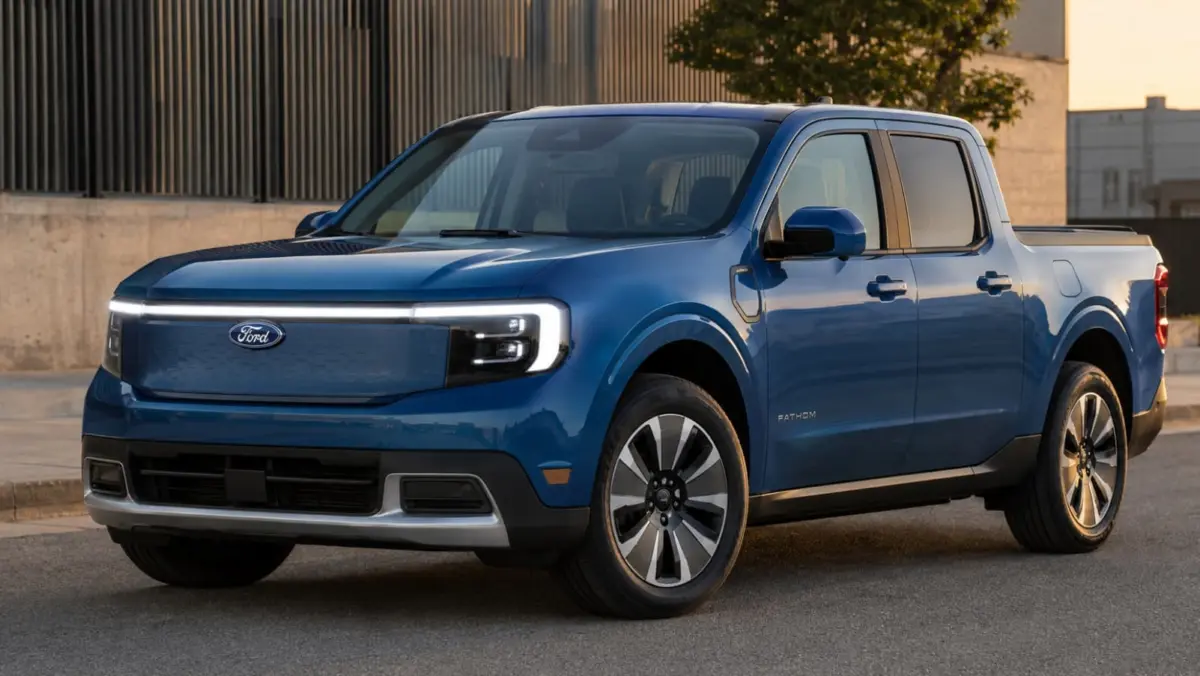
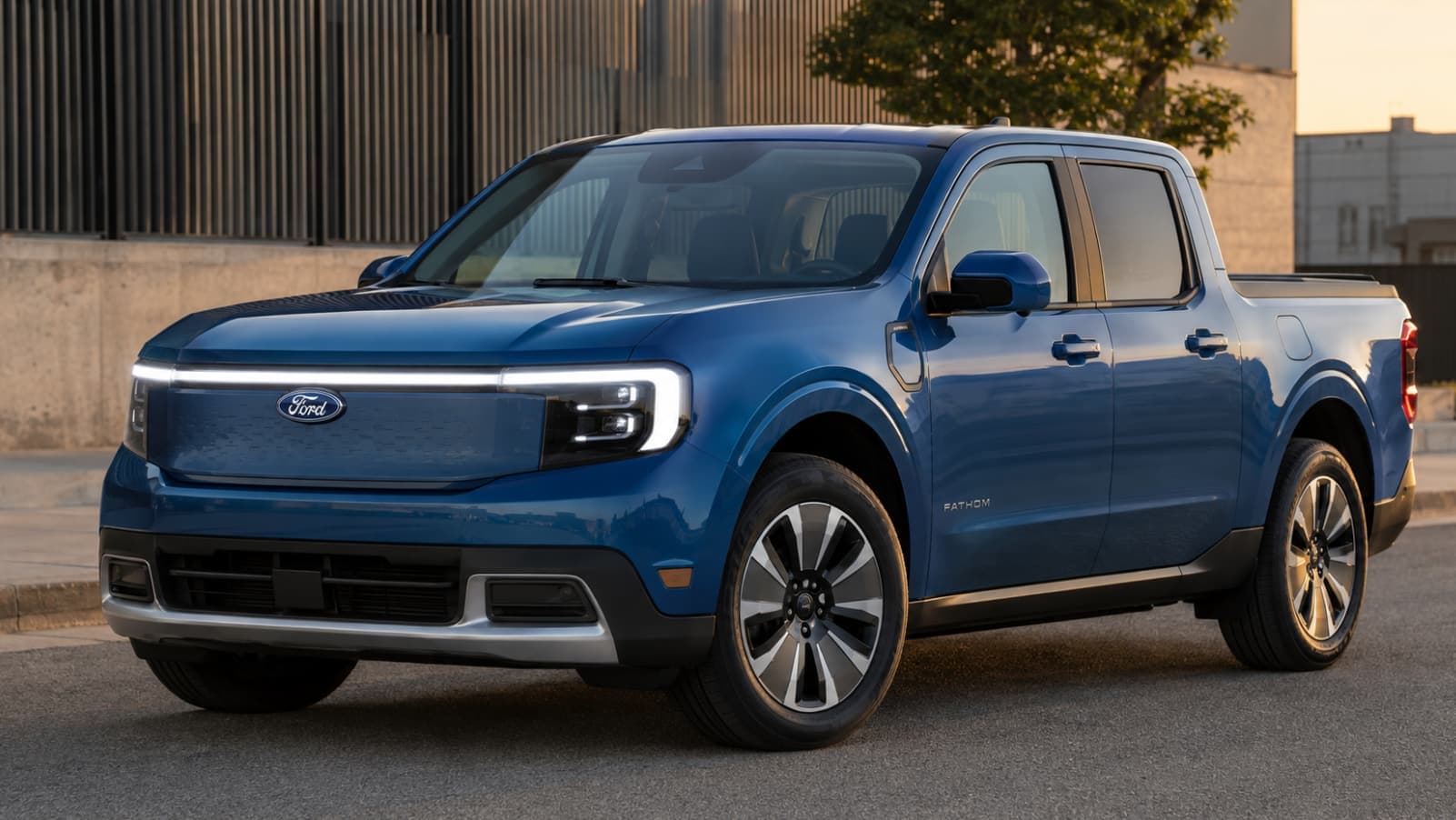
The automotive landscape is shifting rapidly, and the gloves are off. Ford Motor Company has stepped up its campaign to capture everyday electric vehicle (EV) buyers, positioning its forthcoming all-electric pickup truck—the Ford Fathom—directly in the crosshairs of industry leader Tesla.
Timing is everything in modern corporate strategy, and Ford’s recent media offensive hit a crescendo right in the middle of the lead-up to Tesla’s high-profile promotional event for its steering-wheel-free Cybercab robotaxi in Texas. While pickup trucks and autonomous robotaxis serve entirely different consumer bases, Ford has seized a golden opportunity to battle for the hearts, minds, and wallets of the American driving public.
Main Facts
The rivalry centers around two fundamentally different philosophies of electric mobility: practical, consumer-accessible utility versus exclusive, autonomous fleet luxury.
The Ford Fathom: Aimed at a starting price just under $30,000 (specifically reported by the Detroit Free Press at $29,945 including delivery fees), the Fathom is a midsize all-electric pickup truck designed for both individual buyers and commercial fleets.
Ambitious Sales Targets: Leaked reports from the Wall Street Journal reveal that Ford is targeting a massive 100,000 sales in the Fathom’s very first year of production. If achieved, this would instantly position the truck among the top-selling EVs in the United States.
The "Universal" Platform: The Fathom is the pioneer vehicle for Ford’s new purpose-built "Universal" EV platform. This chassis relies on a labor-saving, cost-cutting, tree-like manufacturing architecture rather than traditional automotive assembly lines.
The Tesla Cybercab: Concurrently, Tesla CEO Elon Musk has been generating intense media buzz around the autonomous, steering-wheel-free Cybercab robotaxi, slated for deployment in Austin, Texas. However, details regarding the launch have faced delays and remain tightly controlled.
The EREV Strategy: Beyond pure battery electrics, Ford is also hedging its bets by reviving the F-150 Lightning as an Extended Range Electric Vehicle (EREV), integrating an onboard gas engine/generator to push total travel range past 700 miles for long-distance towers.
Chronology of the Clash: How the PR War Unfolded
The collision between Ford’s marketing machine and Tesla’s event horizon played out across late August and early September, highlighting a stark contrast in corporate messaging.
Mid-August 2025/2026: Although Ford has kept prototype models hidden beneath heavy camouflage, an enterprising Ford dealership in Palestine, Texas, accidentally or intentionally displayed a Fathom-adjacent midsize pickup concept on its website, sparking intense online speculation.
August 17: News organization The Information reported that Tesla was ramping up preparations to launch its autonomous Cybercab into its Model Y-based robotaxi fleet in Austin, laying the groundwork for a major Texas-centric media event.
September 1: Recognizing an opportunity to siphon headlines away from Musk’s camp, Ford CEO Jim Farley took to X (formerly Twitter)—Musk’s own platform—to publish a fresh series of photos showcasing a camouflaged Fathom during a photoshoot in Las Vegas.
September 2 (7:00 PM): The Wall Street Journal dropped an exclusive scoop sourced from an anonymous insider: Ford’s internal goal is to move 100,000 Fathom units in year one. Major automotive outlets, including the Detroit Free Press, quickly amplified the narrative, praising Farley’s aggressive marketing maneuvers.
September 2 (Cybercab Updates): Meanwhile, Reuters reported that while Tesla was offering current robotaxi users invitations to an "Exclusive Access: Cybercab" event via X, the company failed to provide concrete scheduling details or open-market specifications, pushing the public rollout further into September.
Supporting Data and Market Economics
To understand why this PR war matters, one must examine the macroeconomic climate. Following the election of US President Donald Trump to a second term and the ongoing economic fallout from conflicts in regions like Iran and Ukraine, vehicle affordability has surged to the forefront of voter concerns.
Against a backdrop of rising housing costs and general inflation—particularly acute for families across Texas—luxury-tier exclusivity is taking a back seat to practical economics.
Metric / Feature
Ford Fathom
Tesla Cybercab
Vehicle Type
Midsize Electric Pickup Truck
Autonomous Robotaxi (No Steering Wheel)
Starting Price
~$29,945 (incl. delivery)
~$30,000 (Projected/Targeted)
Primary Target Market
Individual consumers & commercial fleets
Dedicated autonomous fleets / Niche buyers
Year 1 Sales Target
100,000 units (Internal Goal)
Unspecified / Fleet-dependent
Manufacturing Innovation
"Universal" EV platform (Tree-like assembly)
Autonomous ride-hailing infrastructure
While the Cybercab targets a similar nominal price tag around $30,000, industry analysts note that its utility remains restricted primarily to automated ride-hailing networks. By contrast, the Fathom offers traditional truck utility—hauling, towing, and daily commuting—at a price point accessible to blue-collar workers and budget-conscious families.
Furthermore, Ford’s broader electric vehicle strategy demonstrates a pragmatic pivot. In addition to the Fathom, Ford is diving back into the Extended Range Electric Vehicle (EREV) market. By integrating a quiet onboard gas generator into a next-generation F-150 Lightning variant, Ford aims to alleviate range anxiety entirely, offering fleets and travelers over 700 miles of total range while retaining exportable AC power outlets for emergency grid outages or job-site tools.
Official Responses and Industry Commentary
The contrasting approaches of Ford CEO Jim Farley and Tesla CEO Elon Musk have drawn significant commentary from automotive journalists and market analysts alike.
Jamie L. LaReau of the Detroit Free Press underscored Farley’s background as a seasoned marketing executive:
"Ford Motor Co. plans to officially reveal its new all-electric midsize pickup Fathom by year-end, but until then, CEO Jim Farley is teasing car buyers with peeks at it… Farley, who has a background in marketing and was previously Ford’s head of marketing before becoming CEO in Oct. 2020, shared the photos to keep the buzz buzzing on this very important vehicle for the Dearborn-based automaker."
In the Wall Street Journal, reporter Ryan Felton emphasized the sheer ambition of Ford’s new manufacturing strategy:
"If it meets Ford’s targets, Fathom would instantly become one of the top-selling EVs in the U.S. in the first year of its production."
Conversely, media coverage surrounding Tesla’s Cybercab rollout has highlighted a distinct lack of transparency. Reuters reporters Abhirup Roy and colleagues noted:
"Tesla offered riders of its current robotaxi fleet based on its Model Y a chance to join a ‘Cybercab Launch Event,’ but it has given no details about what kind of launch is planned… Tesla has been marketing the event as ‘Exclusive Access: Cybercab’ in posts on X and has sent out invites to select guests, according to some user posts."
Broader Implications for the EV Market
The clash between the Fathom and the Cybercab represents more than a mere corporate rivalry; it signals a maturing electric vehicle market where legacy automakers and pure-play EV pioneers are fighting for distinct ideological and economic territory.
The Death of Elitist EV Branding: For years, early-stage EVs were marketed as luxury status symbols or expensive technological experiments (such as Tesla’s troubled Cybertruck, which has faced severe public scrutiny regarding safety and fire fatalities). Ford’s sub-$30,000 pricing strategy signals a pivot toward democratization, recognizing that mass adoption requires affordability.
The Rise of the Universal Platform: If Ford’s tree-like, labor-saving manufacturing process succeeds with the Fathom, it could permanently alter how legacy automakers compete against direct-to-consumer EV startups, drastically reducing production costs and labor overhead.
Hedging with EREVs: By keeping a foot in both camps—pure battery electrics like the Fathom and extended-range hybrids like the new EREV Lightning—Ford is effectively insulating itself against fluctuating charging infrastructure rollouts and volatile political landscapes.
As Ford prepares for the official, full-scale reveal of the Fathom by the end of the year, the battle lines are drawn. Tesla’s futuristic, autonomous vision will continue to command headlines, but Ford’s grounded, wallet-friendly approach may ultimately dictate how the average American driveway goes electric.