

LOS ANGELES — The legal and political battle over the future of Los Angeles energy policy has intensified significantly. A coalition of prominent environmental and public health advocacy organizations has officially joined an ongoing lawsuit against the City of Los Angeles and the Los Angeles Department of Water and Power (LADWP).
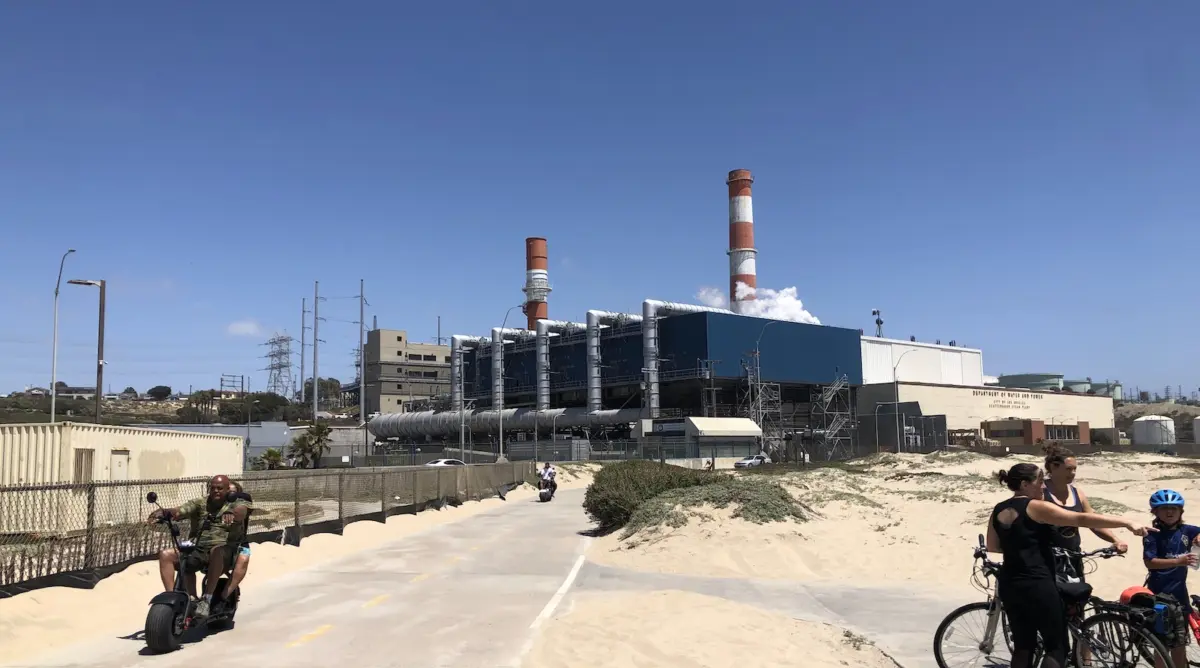
The expanded legal action targets the city’s controversial decision to approve a retrofit of the Scattergood Generating Station. The project, designed to keep the aging coastal power plant operational past its intended retirement date by burning a blended mix of methane gas and hydrogen, has become a central flashpoint in the city’s broader struggle to reconcile aggressive climate mandates with legacy fossil fuel infrastructure.
With the expiration of a temporary judicial stay, the lawsuit is moving forward with a formidable coalition of plaintiffs demanding accountability under the California Environmental Quality Act (CEQA).
Main Facts of the Case
At the heart of the litigation is the LADWP’s plan for the Scattergood Generating Station, located along the coast in El Segundo and heavily impacting adjacent frontline communities such as Inglewood, Hawthorne, and Lennox. These neighborhoods have historically borne a disproportionate burden of toxic air pollution due to dense concentrations of regional fossil fuel infrastructure.
Originally scheduled for retirement, the facility received a new lease on life when LADWP advanced a proposal to transition the plant into a "hydrogen-ready" facility. Under the utility’s plan, the plant would burn a mixture of fossil methane and hydrogen gas.
However, environmental watchdogs argue that the project undermines the city’s legal commitments to decarbonization. The central arguments driving the lawsuit include:
- CEQA Violations: Plaintiffs assert that the Environmental Impact Report (EIR) certified by the LADWP Board of Commissioners is profoundly flawed, failing to accurately disclose or mitigate the project’s true environmental and public health impacts.
- The "False Promise" of Hydrogen: Critics point out that blending hydrogen into gas turbines does not eliminate greenhouse gas emissions, creates severe nitrogen oxide ($NO_x$) pollution risks, and relies on an immature green hydrogen market that currently depends heavily on fossil-derived grey hydrogen.
- Water Resource Strain: Large-scale hydrogen production and power plant cooling require massive amounts of water, a critical vulnerability in drought-prone Southern California.
- Lock-in Effect: Environmentalists argue that sinking capital expenditures into a retrofitted fossil gas plant effectively locks Los Angeles into decades of continued methane combustion, directly contradicting the city’s mandate to achieve a 100% carbon-free grid by 2035.
Chronology of the Controversy
The path to the current courtroom showdown spans several years of mounting tensions between municipal utility planners and grassroots environmental justice organizations:
- 2022: The LADWP officially unveils its blueprint to retrofit the Scattergood Generating Station, promoting the project as an innovative step toward clean energy through hydrogen blending. Communities immediately raise alarms regarding local air quality and climate hypocrisy.
- Late 2024: Public backlash peaks during the drafting and review of the Environmental Impact Report (EIR), with multiple environmental organizations submitting extensive technical critiques warning that the project violates state climate goals.
- 2025: Despite intense community opposition and warnings from independent energy analysts, the LADWP Board of Commissioners formally certifies the inadequate EIR, paving the way for project implementation.
- December 2025: Communities for a Better Environment and Los Angeles Waterkeeper file the initial lawsuit against the city, alleging clear violations of the California Environmental Quality Act (CEQA). The litigation is subsequently paused while the Los Angeles City Council reviews an administrative appeal filed by the groups.
- August 4, 2026: The Los Angeles City Council formally votes to deny the environmental groups’ administrative appeal, exhausting municipal remedies and clearing the way for the resumption of the lawsuit.
- September 2026: The litigation stay officially expires. Food & Water Watch, Physicians for Social Responsibility–Los Angeles, and the Sierra Club officially join the active lawsuit as co-petitioners alongside Communities for a Better Environment and Los Angeles Waterkeeper. The Center for Biological Diversity has also pursued separate legal action against LADWP over the project.
Supporting Data and Environmental Concerns
The resistance to the Scattergood retrofit is grounded in rigorous critiques of hydrogen combustion technology and municipal climate planning.

The Hydrogen Fallacy
While proponents of hydrogen often frame it as a clean energy carrier, environmental engineers and policy analysts emphasize that burning hydrogen in traditional gas turbines creates complex environmental challenges. Chief among these is the formation of nitrogen oxides ($NO_x$), pollutants that contribute heavily to smog and exacerbate respiratory illnesses such as asthma—a condition already prevalent in the children of nearby communities like Hawthorne and Inglewood.
Furthermore, unless hydrogen is produced exclusively via water electrolysis powered by 100% renewable energy ("green hydrogen"), the vast majority of commercial hydrogen is currently derived from fossil methane ("grey hydrogen"), resulting in significant upstream carbon footprints and fugitive methane leaks that have a warming potential far worse than carbon dioxide over the short term.
The 2035 Carbon-Free Mandate
Los Angeles has positioned itself on the global stage as a vanguard of urban sustainability, setting a legally binding goal to transition to a 100% carbon-free power grid by 2035. Environmental advocates point out a glaring mathematical and chronological contradiction: retrofitting a fossil gas plant to burn hydrogen just five years before the entire municipal system is mandated to be carbon-free represents a fiscally irresponsible bridge to nowhere. Capital spent on retrofitting Scattergood, critics argue, diverts desperately needed financial resources away from true zero-emission solutions, such as local solar generation, utility-scale battery storage, and modernized transmission lines.
Official Responses and Stakeholder Perspectives
The decision by multiple statewide and national environmental organizations to unify their legal efforts underscores the high stakes of the dispute. Leaders from the coalition issued sharp rebukes of both LADWP and the Los Angeles City Council following the expiration of the litigation stay:
"LADWP’s Scattergood boondoggle is a dark chapter for the City’s environmental leadership and fiscal management," said Theo Caretto, Staff Attorney at Communities for a Better Environment. "Once the champion of sustainability among the cities of the world innovating with real clean, green, and affordable energy solutions, now, the City’s Environmental Impact Report turns a blind eye to public safety, air pollution, and water impacts, let alone its own climate targets. LADWP has chosen to pursue this so-called ‘hydrogen-ready’ project that will be nothing more than a brand-new fossil fuel plant constructed five years before LA is supposed to be carbon-free."
The frustration is shared widely among public health advocates who focus on the immediate, localized impacts of keeping the coastal plant running.
"LADWP’s failure to adequately assess the health and environmental impacts of this project is deeply troubling," noted Alex Jasset, Director of Energy Justice at Physicians for Social Responsibility–Los Angeles. "It’s important for us to continue to challenge LADWP to live up to their climate and environmental commitments in order to protect the public health of Angelenos. Without an honest assessment of the project and the limitations of the hydrogen market, LADWP is locking the city into a future that continues to rely on methane combustion."
Legal strategists emphasize that the environmental review process was tilted from the outset to favor a pre-determined outcome favoring continued fossil fuel generation.

"Los Angeles’s decision to double down on retrofitting Scattergood based on the false promise of hydrogen flies in the face of its commitment to make the city 100% carbon-free by 2035," said Tyler Lobdell, Senior Staff Attorney at Food & Water Watch. "Retrofitting Scattergood will not get Los Angeles closer to reaching its climate goals and instead will keep the city dependent on dirty fossil fuel infrastructure."
Zack Waterman, Western Beyond Coal Campaign Manager for the Sierra Club, echoed these sentiments regarding institutional analytic failures:
"LADWP’s environmental analysis of the Scattergood project is riddled with flaws that tilt the analysis in favor of a massive investment in new fossil fuel infrastructure. This is the wrong direction for the city, and we want to see those errors in the analysis corrected before Angelenos otherwise pay for a false climate solution."
Broader Implications for Municipal Climate Action
As this high-profile lawsuit proceeds through California courts, its outcome will carry ramifications that extend far beyond the borders of Los Angeles.
Municipal utilities across the United States are grappling with the complex engineering challenges of grid reliability as they phase out coal and gas. Many utilities have looked toward hydrogen blending as an easy technical fix to extend the lifespan of existing gas turbines without committing to immediate, total phase-outs.
If environmental coalitions successfully compel LADWP to rescind or fundamentally overhaul its Environmental Impact Report for Scattergood, it could establish a powerful legal precedent. Cities nationwide attempting to utilize unproven or emission-heavy hydrogen technologies as a loophole to meet decarbonization deadlines may find themselves vulnerable to similar CEQA-style challenges.
For the residents of Inglewood, Hawthorne, Lennox, and coastal Los Angeles, the litigation represents a critical defense of their immediate right to clean air and a genuine, uncompromised transition into a post-fossil-fuel future. As the legal teams prepare for their day in court, the spotlight remains fixed on municipal leaders to determine whether Los Angeles will honor its bold climate promises or retreat behind the smoke screen of greenwashed fossil infrastructure.
