

Published August 31, 2026
In an era dominated by high-intensity interval training, fast-paced vinyasa flows, and the relentless pull of digital screens, physical tension has become a default human state. For many, modern life is characterized by hours spent sitting at desks, standing in commutes, and scrolling through devices—habits that over time stiffen joints and dehydrate connective tissue. Enter yin yoga: a contemplative, slow-paced practice designed to counter the frenetic energy of contemporary existence.
If you are new to yin yoga, the first fundamental principle to understand is that there is nothing to prove. You cannot be "bad" at it. Unlike dynamic athletic traditions, yin yoga requires no balance to hold, no rapid-fire transitions to keep pace with, and no idealized geometric shape your body is "supposed" to manifest. You settle into a posture, you stay there for a sustained period, and you allow gravity to do the work. That is the entirety of the practice.
Main Facts: Shifting Focus from Muscles to Fascia
To truly appreciate yin yoga, one must first understand its anatomical target. Most popular styles of yoga—such as Ashtanga, Vinyasa, or Power Yoga—are "yang" practices. They actively engage, heat, and work the muscles. Yin yoga barely touches them.
Instead, yin targets the deeper connective tissues: the fascia, ligaments, tendons, and joint capsules. Because these structures lack the rich blood supply of muscle tissue, they respond poorly to fast, bouncing movements. They require time, warmth (generated internally through gentle friction and sustained pressure), and passivity to release.
By slowing down and lingering in each shape for several minutes with as little muscular effort as possible, practitioners can safely reach and rehydrate this dense network of tissue. There is no pushing, no striving, and no forced exertion.
The Golden Rules of Yin Practice
- Find Your Edge: Move slowly into a posture, stopping at the first point of resistance. Aim for roughly 60 to 80 percent of your maximum range of motion. You want to feel a clear sensation in the target area, but you must stay comfortably short of your maximum limit. If you push too deep, your body’s natural defense mechanisms will trigger muscle contraction to protect the joint. In yin, less is always more.
- Embrace Stillness: Once settled, strive for physical stillness. Mindful adjustments are permitted, and sharp pain is a definitive signal to back off or shift positions. Otherwise, embrace whatever sensations arise without fidgeting.
- Honor the Timeline: Longer holds reach deeper tissues. Beginners are generally advised to hold poses for about two minutes. If a shape feels nourishing, you are welcome to linger longer. There are no prizes for rushing through a sequence.
Chronology and Sequence: A Journey from Seated to Supine
A well-rounded yin yoga practice relies on balanced sequencing—interspersing forward folds, side bends, and spinal extensions—while gradually shifting the body’s relationship to the floor.
The five primary beginner poses outlined below are structured to take practitioners on a deliberate journey from seated postures down to the mat, ensuring that once you are lying down, you remain there. As you transition between shapes, it is vital to move slowly, taking several deep, intentional breaths before initiating the next movement.
Supporting Data: Props and Anatomy for Beginners
Beginners frequently ask what they should mentally or physically be doing during these long, quiet holds. The honest, liberating answer is: far less than you think.
To facilitate this release, practitioners should readily embrace supportive props—cushions, yoga blocks, bolsters, and folded blankets. Far from being signs of struggle or inflexibility, props are essential engineering tools that allow the nervous system to relax and the musculature to let go.
Official Guidelines and Expert Insights: The Five Essential Beginner Poses
Grab your props, set aside distractions, and prepare to explore five foundational yin yoga poses designed to open the body safely and systematically.
1. Butterfly Pose
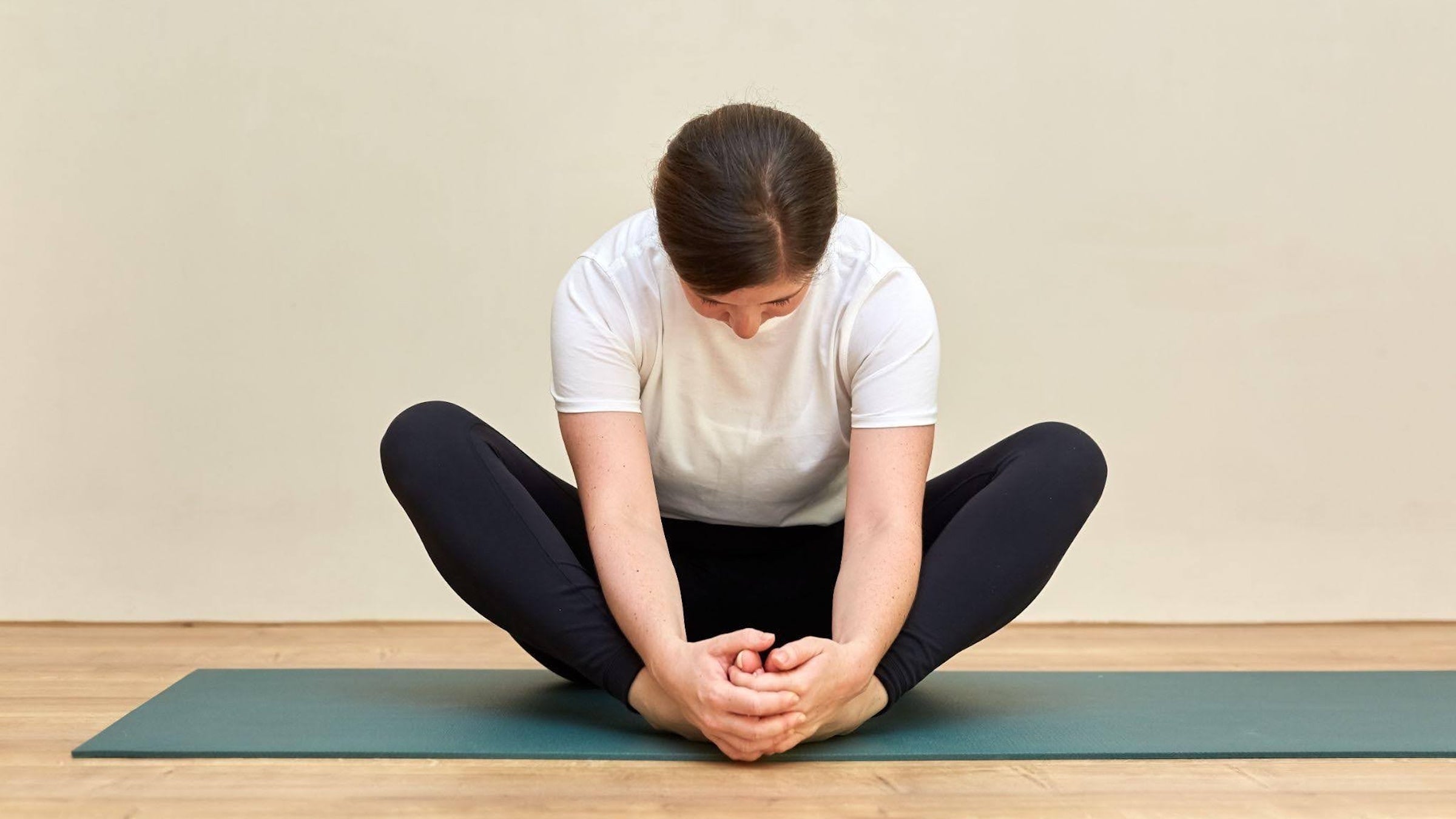
This seated posture is a staple of beginner yin classes for good reason: it targets the inner thighs, hips, and lower back while asking for minimal physical input.
- How to Practice: Sit with the soles of your feet together, allowing your knees to fall open. Slide your feet forward slightly so that your legs form a soft diamond shape. Hinge forward from your hips, letting your spine round naturally and your head hang heavy. Rest your arms wherever they naturally land.
- Using Props: If your knees hover high off the floor, do not force them down. Instead, slide a block or cushion under each knee for support. If you experience intense discomfort in your lower back, elevate your hips by sitting on the edge of a folded blanket or bolster.
2. Caterpillar Pose
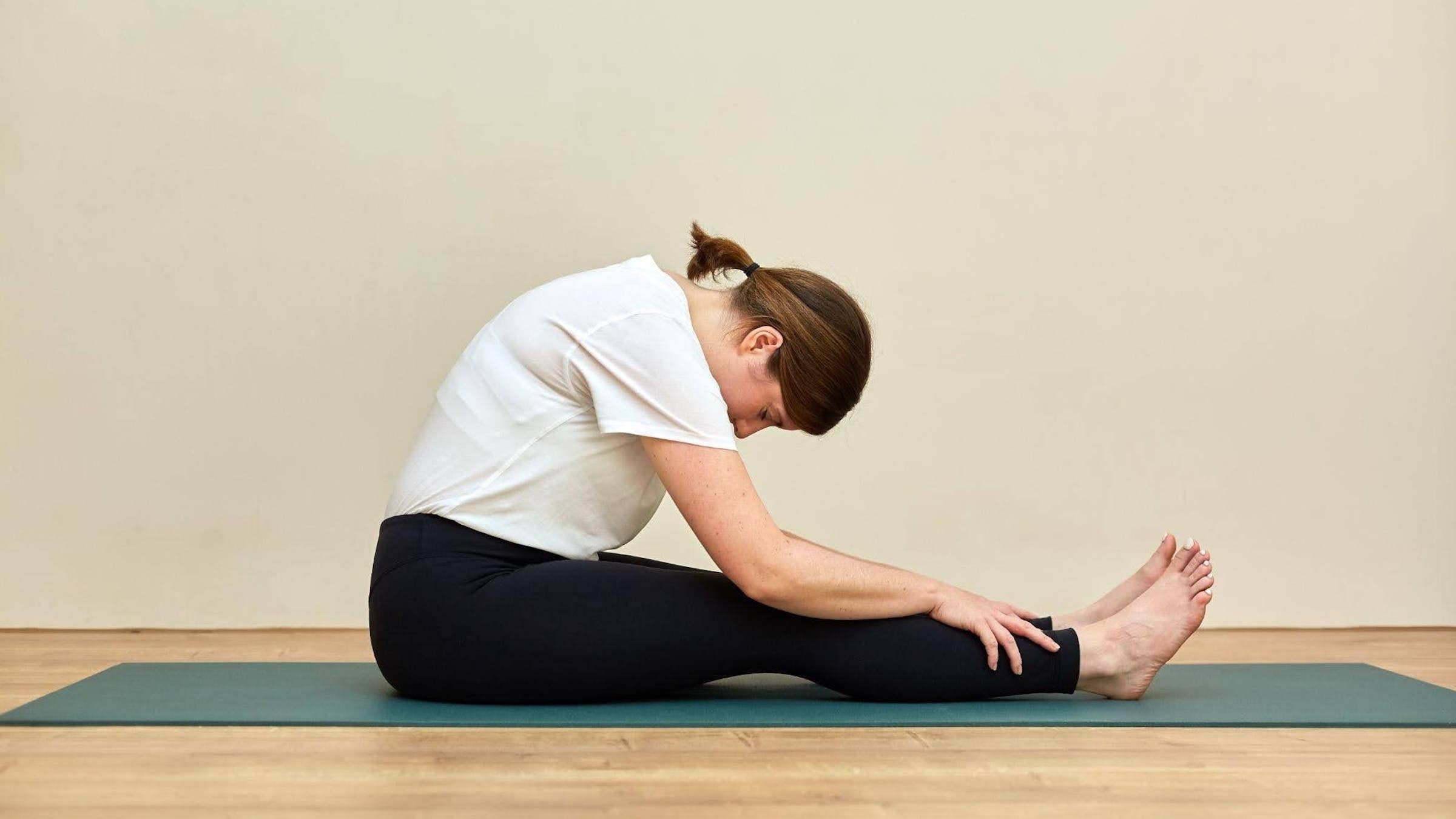
For those seeking to release the hamstrings and the entire posterior chain of the body, Caterpillar Pose offers a gentle, passive alternative to traditional active forward bends.
- How to Practice: Extend your legs straight out in front of you. Slowly fold forward over your thighs, stopping at the very first whisper of resistance. Allow your spine to curve and your head to drop. There is no active spinal extension here; you are not reaching for your toes.
- Using Props: If your hamstrings feel tight or reactive, generously bend your knees or elevate your seat on a cushion. Let go of aesthetic perfection and focus entirely on internal sensation.
3. Dragonfly Pose
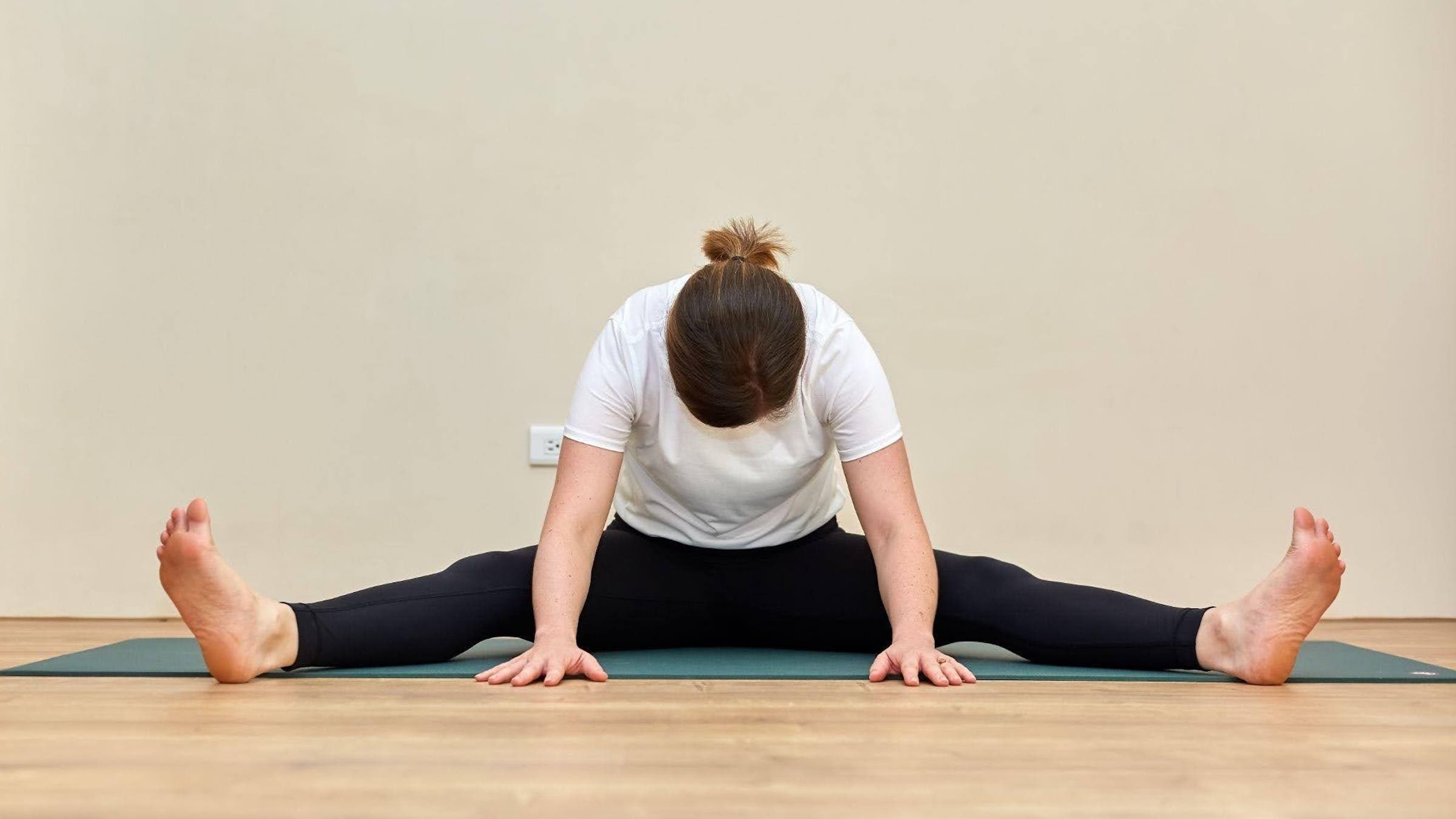
A wide-legged forward bend that opens the inner thighs, hamstrings, and hip joints without demanding extreme flexibility.
- How to Practice: Sit with your legs apart. The secret to Dragonfly Pose is realizing that your legs do not need to be in a dramatic split. Open them only until you feel a mild stretch, then fold forward from the hips, allowing the spine to round. Rest your hands on the floor, stack your fists beneath your forehead, or rest your chest against a bolster.
- Using Props: Sit on the edge of a blanket or block if sitting upright feels fatiguing for your core or lower back. Soften the knees and let the feet flop outward naturally.
4. Banana Pose
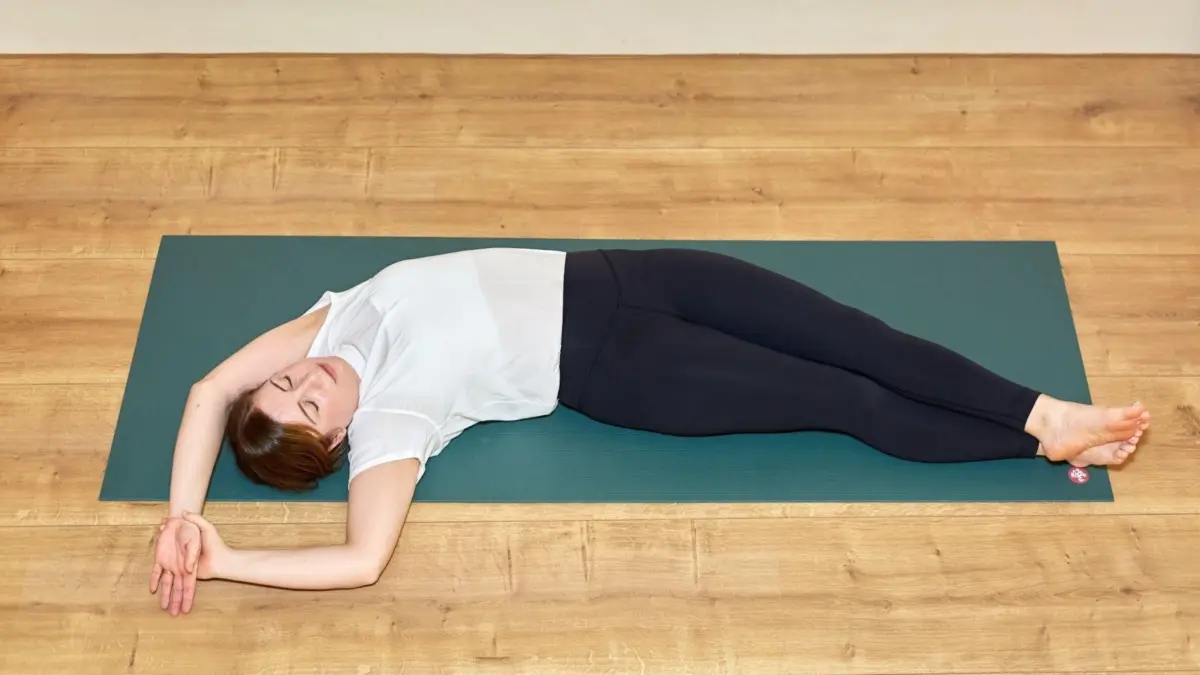
Named for its distinct curvature, this reclined posture targets the lateral side body, stretching the entire pathway from the outer ankle up to the armpit.
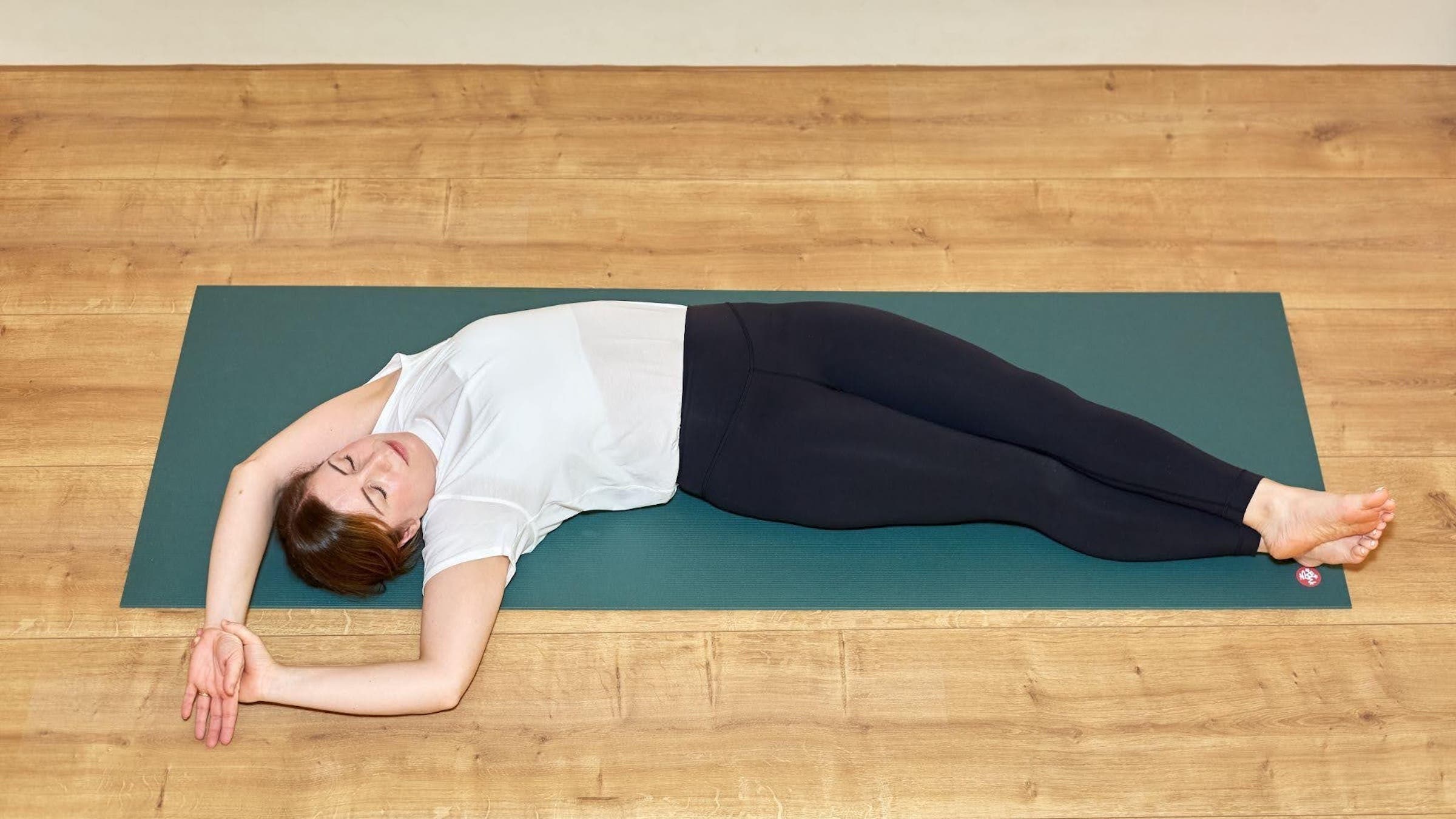
- How to Practice: Lie flat on your back, then walk your feet and shoulders over to the right side of your mat so that your torso curves into a crescent shape. For a deeper sensation, cross your left ankle over your right. Extend your arms overhead, gently holding your left wrist with your right hand if comfortable. Keep both hips and shoulders heavy on the floor. Hold, then repeat on the opposite side.
5. Supported Fish Pose
After periods of rounding forward, Supported Fish Pose acts as a vital counterbalance, opening the chest, deepening the breath, and reversing the postural habits of daily life.
- How to Practice: Place a yoga block on its lowest setting horizontally across your mat. Lie back so that the block rests directly underneath your spine, aligned roughly with the bottom of your shoulder blades. Place a second block or cushion under your head to support your neck. Extend your arms out to the sides with palms facing upward. Legs can remain long or assume a Butterfly shape.
- Customization: If the lowest height of the block provides ample sensation, stay there. The block can always be adjusted on another day.
Bonus: Corpse Pose (Savasana)
When your practice concludes, clear away any props and settle completely flat on your back. Allow yourself to lie in total stillness in Savasana, practicing the art of doing nothing for as long as your schedule allows.
Implications: The Mental and Physical Aftermath of Slow Practice
The implications of incorporating yin yoga into a weekly routine extend far beyond physical flexibility. While the primary structural benefit is the hydration and remodeling of fascia, the psychological benefits are equally profound.
By training the mind to remain calm and non-reactive in the presence of physical discomfort during long holds, practitioners build emotional resilience. The practice serves as a moving meditation, teaching the nervous system how to transition out of chronic "fight or flight" activation and into a state of deep physiological rest. In a fast-moving world, yin yoga offers a radical prescription: slow down, stay a while, and let gravity do the work.
