

Main Facts: A Landmark Celebration of Western Art in Tucson
TUCSON, Ariz. — For nearly eight decades, the historic Pond Mansion in Tucson, Arizona, has served as a silent guardian of the American frontier’s enduring legacy. Since 1948, the Mountain Oyster Club has cultivated a reputation as one of the most prestigious private institutions in the American West. Self-described as “a society of Westerners dedicated to western traditions, art and the western way of life,” the club bridges the gap between historical preservation and contemporary artistic expression.
On Sunday, November 22, from 3:00 PM to 5:30 PM, this legacy will reach a new milestone as the club hosts its 57th Annual Mountain Oyster Club Contemporary Western Art Show and Sale. This premier exhibition brings together more than 200 of the nation’s most celebrated established artists and exceptional emerging talents. Attendees will experience an exclusive gathering where traditional mediums and contemporary visions converge, all while enjoying curated cocktails and hors d’oeuvres within the walls of a nationally registered historic landmark.
The scale of the exhibition is matched only by its exclusivity. Offering a curated cross-section of the best in contemporary Western art, the event serves as both a high-stakes marketplace for serious collectors and an intimate cultural salon.
Chronology: The Evolution of a Tucson Institution
To understand the weight and prestige of the upcoming November 22 exhibition, one must look back at the rich chronology that has defined the Mountain Oyster Club and its signature art event.
- 1948: The Mountain Oyster Club is founded in Tucson, Arizona, establishing a private sanctuary for individuals passionate about the heritage, art, and culture of the American West. From its inception, the club functions as more than a social dining space; it becomes a cultural repository.
- The Mid-20th Century: The club begins acquiring and displaying Western art, steadily growing a reputation for discerning taste. Members and leadership recognize the need for a dedicated platform to support artists who capture the spirit of the changing frontier.
- The Launch of the Annual Show: Recognizing the vibrant community of regional creators, the club inaugurates its annual art show and sale. Over the decades, the event evolves from a modest local gathering into a nationally recognized powerhouse on the Western art calendar.
- The Modern Era (Present Day): Now in its 57th iteration, the exhibition has expanded to include over 200 artists annually. It carefully balances the prestige of blue-chip Western art names with fresh perspectives from innovative newcomers, cementing the Pond Mansion as a vital nexus for the genre.
- November 22, Upcoming: The doors of the Pond Mansion open once more for the 57th annual installment, carrying forward a nearly 80-year tradition of elegance, patronage, and artistic excellence.
Supporting Data: Highlights from the 57th Annual Exhibition
The 2026 exhibition features a breathtaking array of works that push the boundaries of what Western art can be. Moving far beyond traditional tropes of dusty trails and classic cattle drives, this year’s featured pieces engage viewers through psychological depth, innovative material handling, and structural cleverness. Art critic James D. Balestrieri highlights several standout works slated for the exhibition:
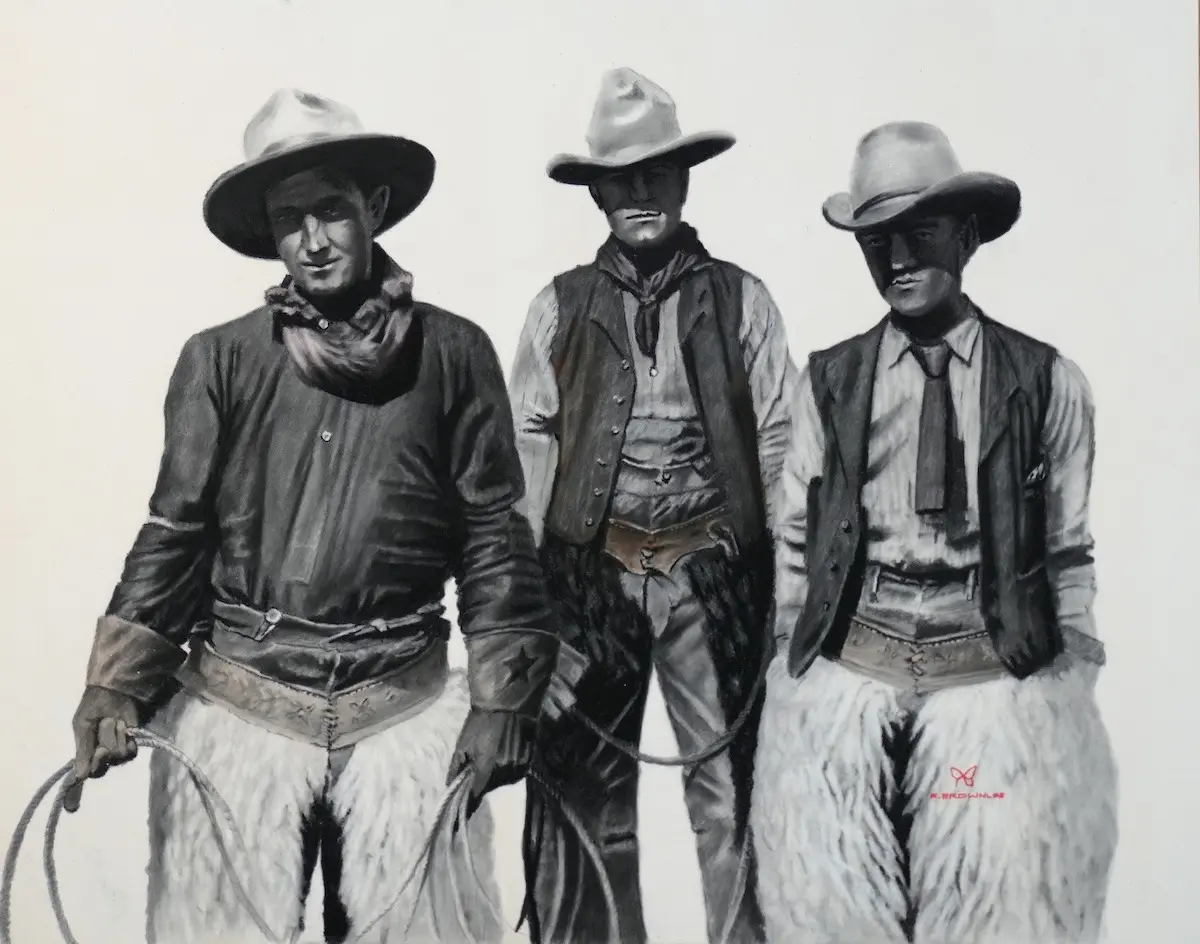
Wild and Woolly by Rachel Brownlee
- Medium: Charcoal and gouache
- Dimensions: 11 x 14 inches
- Analysis: Historically, charcoal and gouache have been treated as preparatory mediums—the quick sketches and structural studies that precede the "real" work of painting or sculpting. Rachel Brownlee upends this convention, elevating these materials into a deeply finished, highly refined piece of art. Wild and Woolly is a triple portrait capturing three distinct archetypes of cowboy style. Each visage is fiercely individual, brash, and unapologetically bold, tracking the sartorial evolution from wide-brimmed hats down to rugged chaps and back again. The meticulous attention to texture makes the fabric and leather feel tactile to the viewer.
Under a Red Sun by Maia Chávez Larkin
- Medium: Oil on canvas
- Dimensions: 24 x 18 inches
- Analysis: Maia Chávez Larkin’s piece challenges the viewer with its striking juxtaposition of color and emotion. Utilizing a palette and mark-making technique more commonly associated with soft pastels than oil paints, the work exudes a calm, almost divine neutrality. The central figure gazes outward, locking eyes with the spectator in a manner that feels both welcoming and quietly judgmental. Overhead, a stark red sun casts concentric, ruddy reverberations across a vast blue sky. The overall effect is reminiscent of a major tarot card—an allegorical puzzle whose ultimate meaning must be unraveled by the individual viewer.
Born of Clay by Kim Seyesnem Obrzut
- Medium: Bronze sculpture
- Dimensions: 21.5 x 8.5 x 10 inches
- Analysis: Kim Seyesnem Obrzut’s bronze sculpture of a woman holding a traditional clay pot operates on multiple narrative levels. The piece invites at least three compelling interpretations:
- The woman represents the artist herself, proudly cradling her own creative output.
- She is a collector or buyer, tucking her newly acquired treasure safely beneath her arm.
- She is the daily custodian of the vessel, carrying it home to put it to practical, domestic use.
The ambiguity is the masterstroke of the piece. Only when stepping back to view the sculpture from a distance does the deeper sculptural trick reveal itself: the entire composition resolves into the silhouette of a handled vase or storage jar.
Official Responses and Curatorial Insights
The success of the Mountain Oyster Club Contemporary Western Art Show and Sale relies heavily on the meticulous curation of its leadership. Laura Davis, chair of the club’s art committee, emphasizes that the event’s enduring appeal lies in its uncompromising standards and extraordinary ambiance.

“The show also distinguishes itself through the exceptional quality and diversity of its artists,” Davis explains. “The exhibition features both nationally recognized, established artists and outstanding emerging talent, giving collectors the opportunity to discover tomorrow’s favorites alongside celebrated names.”
Beyond the canvas and the bronze, Davis notes that the physical environment plays a monumental role in shaping the attendee experience. In a fine art market saturated with sterile, white-box gallery spaces and sprawling convention halls, the Mountain Oyster Club offers something entirely different.
“One thing that sets the Mountain Oyster art show apart from others is the venue,” says Davis. “Rather than a typical art gallery, the show is held in a private dining club, a beautiful historic mansion listed on the National Register of Historic Places. This unique setting offers visitors an experience that is as memorable as the artwork itself.”
This fusion of historic architecture—specifically the grand Pond Mansion—with cutting-edge and traditional Western art creates an immersive atmosphere where patrons can visualize how these pieces might live within a refined, domestic, or ranch-style environment.
Implications: The Cultural and Economic Impact on Western Art
As the art world continues to evolve in the 21st century, niche markets face the dual challenge of honoring historical roots while remaining relevant to contemporary audiences. The Mountain Oyster Club’s annual exhibition serves as a masterclass in how regional institutions can navigate this tension.
1. Elevating the Definition of "Western Art"
For decades, mainstream art criticism occasionally marginalized Western art as insular, overly romanticized, or commercialized. By showcasing technically brilliant works like Brownlee’s charcoal studies, Larkin’s symbolic oils, and Obrzut’s conceptual bronzes, the exhibition demonstrates that the American West is not merely a static historical setting, but a dynamic lens through which universal human themes—identity, isolation, craftsmanship, and spirituality—can be explored.

2. Cultivating New Collectors
By intentionally curating a mix of blue-chip masters and fresh, emerging talent, the Mountain Oyster Club performs a vital economic and cultural service. It creates an accessible yet high-tier entry point for new collectors while providing seasoned connoisseurs with rare acquisition opportunities. This delicate ecosystem ensures the financial viability and generational continuity of Western art patronage.
3. Preserving Architectural and Cultural Heritage
Hosting the event inside the Pond Mansion underscores the symbiotic relationship between historic preservation and living art. The mansion is not just a passive backdrop; it is an active participant in the narrative. Visitors walking its historic halls are reminded that the American West is an ongoing story built on foundations of architecture, community, and shared cultural rituals.
Practical Information for Attendees
Because of the exclusivity of the venue and the immense popularity of the event among serious collectors and art enthusiasts, attendance is strictly regulated.
- Date: Sunday, November 22
- Time: 3:00 PM – 5:30 PM
- Location: Pond Mansion (Mountain Oyster Club), Tucson, AZ
- Admission: Space is strictly limited. Tickets are by invitation only and must be requested and purchased in advance through the club.
- Contact Information:
- Phone: (520) 792-0319
- Website: mountainoysterclub.com
This feature story originally appeared in the October/November issue of Southwest Art magazine. Art lovers and collectors interested in comprehensive coverage of the contemporary Western art scene are encouraged to explore subscription options to read future editions in their entirety.
