

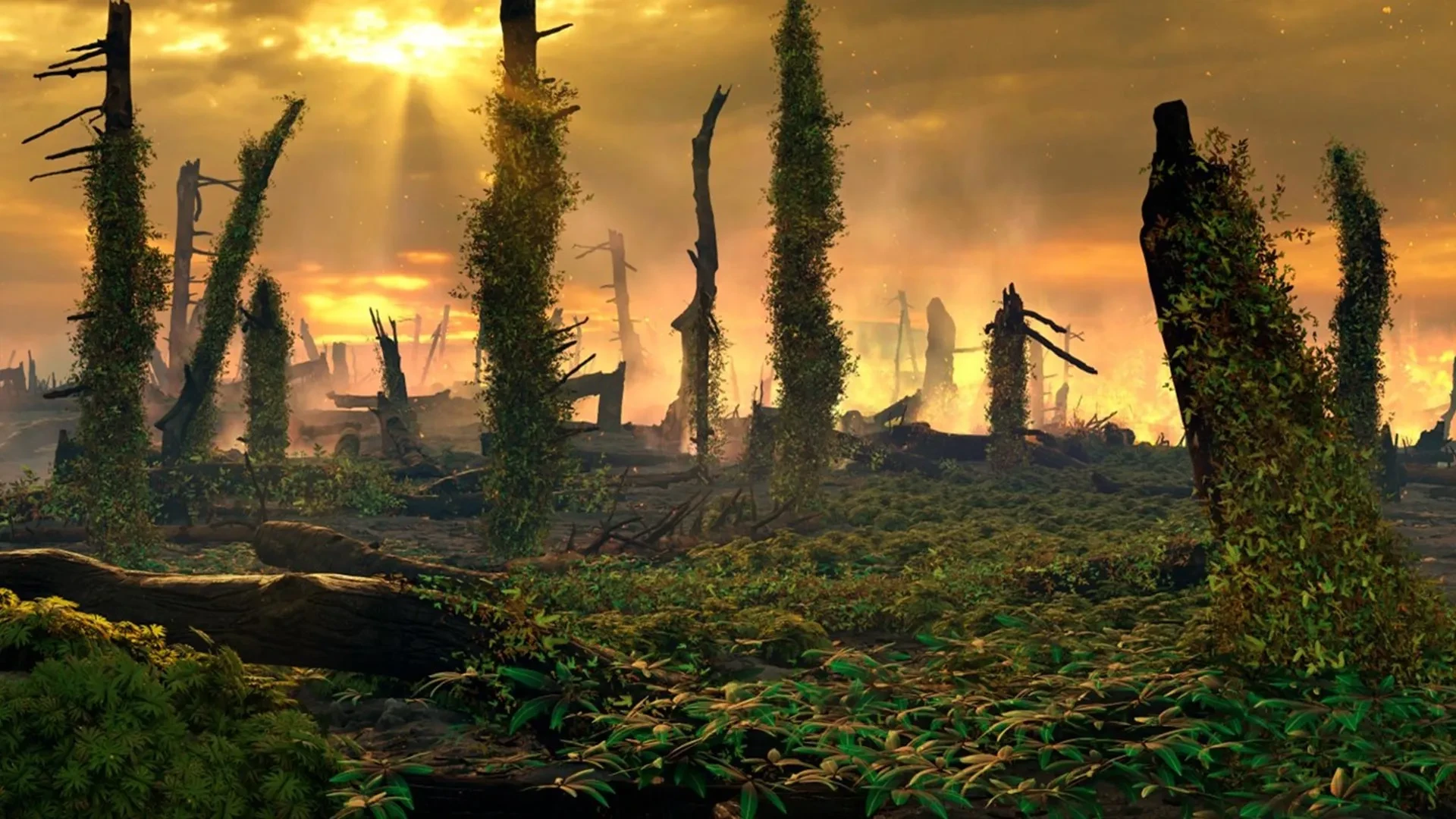
LONDON / UTRECHT — Roughly 201 million years ago, Earth underwent one of its most catastrophic evolutionary bottlenecks: the end-Triassic mass extinction. Long overshadowed by the later Cretaceous-Paleogene extinction that wiped out the non-avian dinosaurs, this earlier crisis reset marine and terrestrial ecosystems alike. For decades, scientists have known that massive volcanic upheavals tied to the rifting and break-up of the supercontinent Pangea served as the primary catalyst. These eruptions bled colossal volumes of carbon dioxide ($CO_2$) into the prehistoric atmosphere, triggering an unyielding greenhouse phase that shot global temperatures up by an estimated 5 to 10 degrees Celsius.
Yet, while the atmospheric physics of the end-Triassic are well-documented, the terrestrial consequences—specifically how ancient landscapes disintegrated and burned—have remained murky. Now, a groundbreaking international study led by geologists at Utrecht University and published in Nature Geoscience on July 21, 2026, reveals a horrifying ecological feedback loop. As soaring temperatures demolished primeval forests, opportunistic ferns surged across Northwest Europe to establish vast savannah-like environments. Rather than healing the scarred earth, these resilient plants transformed into fuel, driving a devastating, multi-millennial cycle of mega-wildfires that locked the planet in a fiery, hellish state.
Main Facts: Unraveling the End-Triassic Inferno
The new study paints a vivid picture of a planet caught in a destructive feedback loop of climate change, deforestation, and ignition.
- The Trigger: Massive volcanic activity associated with the Central Atlantic Magmatic Province (CAMP) fractured Pangea, releasing cataclysmic amounts of $CO_2$.
- The Botanical Shift: As global temperatures spiked by 5–10°C, dense, towering forests collapsed. They were rapidly replaced by a monoculture of ferns—a group of hardy "disaster species" capable of colonizing ruined landscapes.
- The Consequence: These sprawling fern-dominated ecosystems proved exceptionally vulnerable to combustion. The plants both responded to the fires and supplied the tinder, creating a continuous feedback loop of blazes that lasted anywhere from 40,000 to 300,000 years.
- The Innovation: To confirm this fire-prone era, researchers bypassed the limitations of traditional fossil markers by developing a novel metric: the Palynomorph Darkness Index (PDI), which tracks the thermal alteration of fossil pollen and spores via RGB color analysis.
Chronology: The Escalation of a Prehistoric Crisis
Understanding how this ecological collapse unfolded requires looking deep into the geological record, tracking a timeline that spans hundreds of thousands of years during the transition from the Triassic to the Jurassic period.
Phase 1: The Volcanic Awakening (Pre-Extinction)
Before the main extinction pulse, the Earth system was relatively stable, though underlying tectonic stresses were building. Forests of conifers and seed ferns dominated the landscape, supported by seasonal rainfall and moderate temperature baselines.
Phase 2: The Greenhouse Shock and Forest Collapse
As Pangea began to tear apart, the CAMP eruptions commenced. The sudden atmospheric injection of volcanic gases choked the global carbon cycle, sending temperatures soaring. The physiological stress of extreme heat and drought proved too much for ancient forest ecosystems. Tall trees died off en masse, triggering widespread deforestation, severe soil erosion, and the collapse of terrestrial food webs.
Phase 3: The Rise of the Disaster Flora
With the canopy gone and sunlight flooding the denuded terrain, spores lying dormant in the soil activated. Ferns, possessing an ancient resilience that has allowed them to survive multiple mass extinction events, surged into the vacuum. Spreading rapidly across what is now Northwest Europe, these pioneer species formed vast, open, savannah-like expanses.
Phase 4: The Fire Age and the "Dark Zone"
During the peak of the extinction interval, the landscape entered a protracted fiery epoch. The dense carpets of dry fern litter acted as kindling. Every spark—whether from lightning strikes or lingering volcanic activity—ignited massive, recurring wildfires. This fiery epoch endured for an estimated 40,000 to 300,000 years, suppressing the return of larger woody vegetation and keeping the planet locked in an ecological stasis.
Supporting Data: Innovations in Reconstructing Ancient Fire
To reconstruct this ancient inferno, the research team employed a multi-proxy approach, analyzing exceptional sediment samples extracted from four distinct drill cores, including a newly acquired 640-meter-long core from the United Kingdom.
Traditionally, scientists reconstruct prehistoric fire activity by measuring two primary proxies: fossil charcoal fragments and polycyclic aromatic hydrocarbons (PAHs)—chemical compounds produced during the combustion of organic matter that settle into sedimentary layers. However, both methods carry inherent flaws. Large charcoal pieces can fragment easily during deposition or sampling, skewing counts upward and exaggerating the perceived severity of a fire. Conversely, PAHs can drift on atmospheric currents far from their point of origin, and their chemical signatures do not always survive the ravages of deep-time fossilization.
To overcome these hurdles, the Utrecht-led team pioneered a fresh, low-cost analytical technique.
The Palynomorph Darkness Index (PDI)
Organic microfossils—such as pollen grains and spores—naturally darken over millions of years as they are buried deeper underground. The weight of overlying sediment increases local pressure and temperature, effectively "cooking" the organic material. Under normal geological conditions, deeper strata always yield darker fossils.
However, the team noticed an anomaly.
"Here we found a very different pattern," notes Dr. Bas van de Schootbrugge of Utrecht University, a senior author of the study.
The oldest and deepest pollen and spores recovered from the cores remained surprisingly light in color. In stark contrast, fossils originating specifically from the extinction interval grew progressively darker, reaching a deep, saturated brown before abruptly returning to a pale yellow once the extinction epoch concluded.
By utilizing a light microscope connected to a digital camera, the researchers analyzed 15,000 individual pollen and spores across the four cores using the RGB (Red, Green, Blue) color spectrum. They converted this optical data into an average grayscale value. Because this strange "Dark Zone" appeared simultaneously across all four sedimentary basins—despite each basin possessing a vastly different burial and tectonic history—burial heat could be definitively ruled out as the cause.
When mapped against the fossil charcoal and PAH data, the color anomaly aligned with pinpoint precision. The mysterious darkening was the direct signature of intense, widespread heat from recurrent wildfires, recorded within the microscopic chemistry of the wind-blown spores themselves.
Official Responses and Expert Insights
The study’s revelations have sent ripples through the paleontology and climate science communities, offering a stark reminder of how complexly interconnected Earth systems can be.
"All plant groups show the same effect, which is a strong indication that it was the result of an outside force," Dr. Van de Schootbrugge explained, discussing the uniform darkening observed across diverse botanical lineages.
Reflecting on the resilience and danger posed by the flora of the time, Van de Schootbrugge highlighted the dual nature of pioneer plants: "Ferns are truly remarkable plants that have withstood many crises throughout Earth history, and some species can adapt to some of the most extreme environments. They can be considered to be true disaster species."
When these resilient plants die back or dry out during seasonal droughts, their physical structure presents a distinct hazard. "When the ferns dry out, the thick mats act as the ideal fuel to trigger massive wildfires," Van de Schootbrugge noted.
By choking out other plant life and acting as vertical "fire ladders," the ferns sustained an environment of perpetual combustion. "Ferns responded to and delivered the fuel that fanned the flames, triggering repeated massive wildfires. A truly hellish world."
Implications: Echoes from a Deep-Time Mirror
Beyond rewriting our understanding of the end-Triassic extinction, the findings published in Nature Geoscience carry profound implications for the modern world.
The mechanics of the end-Triassic event mirror several troubling vectors of contemporary global change. Anthropogenic climate warming, widespread deforestation, and the aggressive spread of invasive or opportunistic species are currently stressing ecosystems across the globe. When forests are degraded by human activity or warming temperatures, the landscape often opens up to monocultures or fast-growing pioneer plants that dry out easily during droughts.
The ancient crisis demonstrates that when climate destabilization removes structural vegetation, the ecological replacements can inadvertently conspire with the climate to lock the planet into a destructive feedback loop.
"The lesson we can learn from this," Van de Schootbrugge concluded, "is that the combination of climate change, deforestation, and the spread of opportunistic species can provide all the ingredients for a perfect storm."
As modern society grapples with accelerating climate shifts and an escalating frequency of extreme wildfire seasons across the globe, the 201-million-year-old fossil record serves as an ancient warning. It reveals how rapidly a lush, complex biosphere can unravel into a self-sustaining wasteland when pushed beyond its critical thresholds—and how the very life that recovers in the ashes can sometimes fuel the fire next time.
