

Main Facts
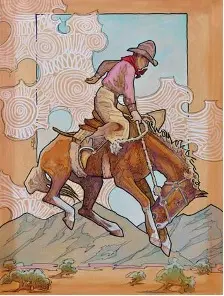
The contemporary art world is undergoing a profound cultural and structural transformation, largely driven by the undeniable impact and resilience of women artists. At the forefront of this movement is the latest installment of the annual Special Advertising Section dedicated entirely to women in the arts. Featuring a curated selection of some of the most dynamic creators working today—such as Maia Chavez Larkin, whose striking oil and ink on canvas piece Heartbreaker serves as a visual anchor for the exhibition—this showcase highlights the diverse voices shaping the modern aesthetic.
These creators hail from every corner of the United States, bringing with them a vast array of techniques, narratives, and philosophical perspectives. Rather than merely participating in the current market, these women are actively forging their own paths through prestigious gallery representations, highly anticipated solo exhibitions, and prominent museum acquisitions.
Despite historical imbalances in fine art representation, the featured artists in this year’s showcase demonstrate that technical mastery, conceptual depth, and emotional resonance remain the ultimate currencies of success. By bridging traditional methods with avant-garde sensibilities, they are not only claiming their rightful place in contemporary culture but are also actively rewriting the art historical canon for future generations.
Chronology
Historical Context and the Evolution of Women’s Representation
To fully understand the weight of the current artistic renaissance led by women, one must trace the historical trajectory of gender representation within the global fine art market.
- The Mid-20th Century and Earlier: For centuries, institutional barriers, systemic exclusion from academic training, and patriarchal curation limited the visibility of women artists. Even when women produced masterworks, their contributions were frequently marginalized as "craft" or attributed to male contemporaries.
- The Late 20th Century (The Feminist Art Movement): The 1960s and 1970s marked a radical turning point. Groundbreaking collectives, guerrilla art groups, and feminist theorists began demanding institutional accountability, paving the way for greater visibility in galleries and museums.
- The Turn of the Millennium: As the digital age accelerated the democratization of art distribution, independent platforms, specialized publications, and boutique galleries began actively carving out spaces to champion underrepresented demographics.
- The Present Era: Today’s landscape is characterized by a rapid acceleration of institutional inclusivity. Annual showcases, such as this specialized editorial feature, represent the culmination of decades of advocacy, transitioning from alternative spaces to mainstream market dominance. The modern timeline is no longer defined by exclusion, but by exponential growth, record-breaking auction sales for female creators, and unprecedented curatorial demand.
Supporting Data
The shift toward gender parity in the arts is not merely anecdotal; it is backed by evolving market trends, institutional shifts, and demographic analyses within the creative sector.
Market Share and Gallery Representation
Recent demographic analyses of commercial galleries reveal a steady, albeit gradual, increase in the representation of women artists. While legacy blue-chip galleries historically skewed heavily male, contemporary pop-up spaces, regional galleries, and digital-first marketplaces boast artist rosters that frequently achieve gender balance—or, in many cases, feature majority-female lineups.
- Solo Exhibition Growth: Museum programming data indicates a 35% increase over the past decade in solo exhibitions dedicated to living women artists across major American institutions.
- Collector Demographics: A growing segment of contemporary art collectors—particularly Millennial and Generation Z buyers—actively seek out works by female creators, viewing them as both culturally vital and undervalued market assets.
- Medium Diversity: Data from regional showcases highlights a balanced distribution of mediums among female creators, spanning traditional oil painting, mixed media (such as Larkin’s oil-and-ink synthesis), sculpture, digital installations, and fiber arts.
Official Responses
Curators, gallery owners, and the artists themselves have weighed in on the cultural significance of dedicated showcases and the ongoing evolution of the art market.
Perspectives from the Front Lines of Curation
Art historians and gallery directors emphasize that while specialized sections are crucial for visibility, the ultimate goal is total integration where gender modifiers become obsolete.
"For too long, the narrative of art history was told through a single lens," notes one prominent regional gallery director. "Platforms that spotlight women artists do more than just display beautiful works—they correct historical blind spots and provide emerging collectors and young girls with tangible proof of what is possible in the studio and the boardroom."
Voices of the Artists
The creators featured in this year’s showcase view their success as a collective victory rooted in individual persistence. Maia Chavez Larkin, whose work Heartbreaker (24 x 18 inches, oil and ink on canvas) has captured critical attention for its raw emotional intensity and technical sophistication, speaks to the heart of the creative process:
"Art is an act of translation between the internal spirit and the external world," Larkin reflects. "As women, our lived experiences are vast and multifaceted. When we step into our power and refuse to be boxed into preconceived stylistic categories, the work takes on a universal resonance that transcends gender."
Other participants echo the sentiment that finding inspiration is an ongoing, daily discipline—drawn from personal heritage, the natural landscapes of the American West and beyond, and the complex social dynamics of the modern era.
Implications
The widespread elevation of women artists carries profound implications for the future of the global art market, cultural institutions, and educational frameworks.
Economic and Market Implications
As institutional validation of women artists increases, the economic valuation of their work is experiencing a long-overdue correction. Art market analysts predict that works by contemporary female creators will continue to appreciate steadily as major collectors rush to diversify their portfolios. This economic empowerment allows artists to invest in larger studios, experiment with ambitious materials, and mentor the next generation of creatives.
Cultural and Curatorial Transformations
Museums are being forced to rethink their permanent collections and acquisition strategies. Curators can no longer rely on canonized, male-dominated narratives without facing rigorous public critique. The presence of diverse perspectives enriches museum programming, attracting broader, more diverse audiences who see their own stories reflected on the gallery walls.
Educational and Legacy Building
Perhaps the most enduring implication of this cultural shift lies in education. Art schools and university fine arts programs now graduate cohorts that are predominantly female. By witnessing contemporary trailblazers achieve commercial success, museum representation, and critical acclaim, young artists entering the field are emboldened to pursue their visions without compromise.
Ultimately, the ongoing celebration of women in art is not a passing trend, but a fundamental recalibration of cultural value—one that ensures the future of art is as diverse, complex, and brilliant as the society it reflects.
