

Main Facts: The Epicenter of Marine Biodiversity
Tucked away off the northwestern tip of Bird’s Head Peninsula in Indonesia’s West Papua province lies Raja Ampat—a sprawling archipelago widely heralded by marine biologists, conservationists, and professional underwater photographers as the ultimate frontier for aquatic imaging. Known globally as "The Last Paradise," this remote ecosystem comprises over 1,500 jungle-covered limestone islands, cays, and shoals encircling its four primary landmasses: Waigeo, Batanta, Salawati, and Misool.
Situated directly in the heart of the Coral Triangle, the global epicenter of marine biodiversity, Raja Ampat boasts an astonishing concentration of life. Scientific surveys suggest the region harbors roughly 75% of all known coral species on Earth, alongside an impressive inventory of more than 1,000 species of reef fish, 700 types of mollusks, 540 distinct strains of hard and soft coral, dugongs, saltwater crocodiles, and schooling manta rays. For underwater photographers, this ecological abundance provides a near-limitless canvas, balancing grand, sweeping reefscapes with an extraordinary wealth of bizarre macro critters.

Chronology: Navigating the Logistics of an Expedition
Planning an expedition to one of the planet’s most pristine marine environments requires meticulous logistical coordination. Because Raja Ampat is intentionally isolated from mass tourism, reaching the primary transit hub of Waisai is an endurance test for even the most seasoned travelers.

The Journey to Waisai
From international gateways, travelers typically face a complex itinerary:

- Flights: Multiple domestic flight legs, often featuring lengthy layovers through major Indonesian hubs like Jakarta, Makassar, or Sorong.
- Maritime Transit: A mandatory, slow, and humid two-hour ferry ride from Sorong to Waisai.
- Terrestrial Transport: A final, rugged car journey across pothole-peppered coastal roads to reach local launching points.
On-Site Itinerary Strategies
Once arrived, photographers generally choose between two primary modes of operation:

- Liveaboard Vessels (Recommended): Booking a dedicated liveaboard dive yacht is the gold standard for serious image-makers. It maximizes geographical reach across the expansive archipelago. Securing an itinerary that incorporates the southern reaches of Misool is particularly prized, as Misool boasts rare marine reserves where biodiversity metrics are actively improving rather than declining.
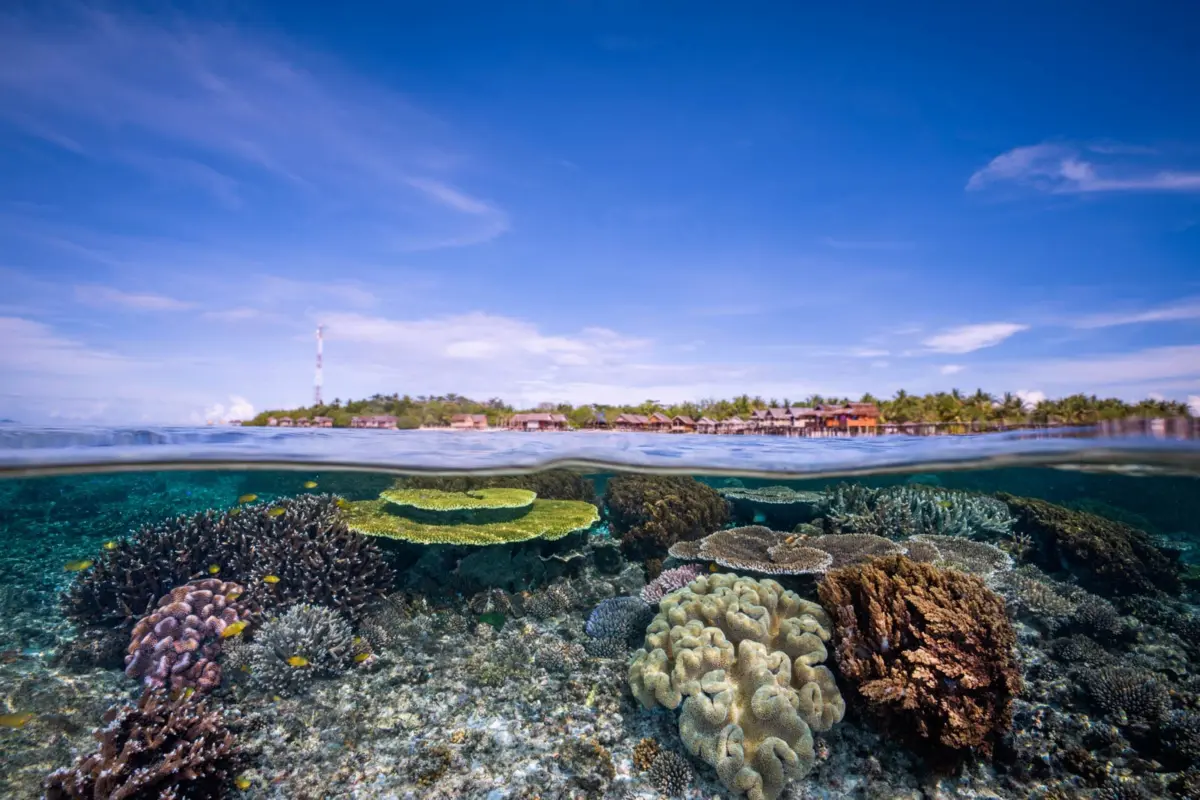
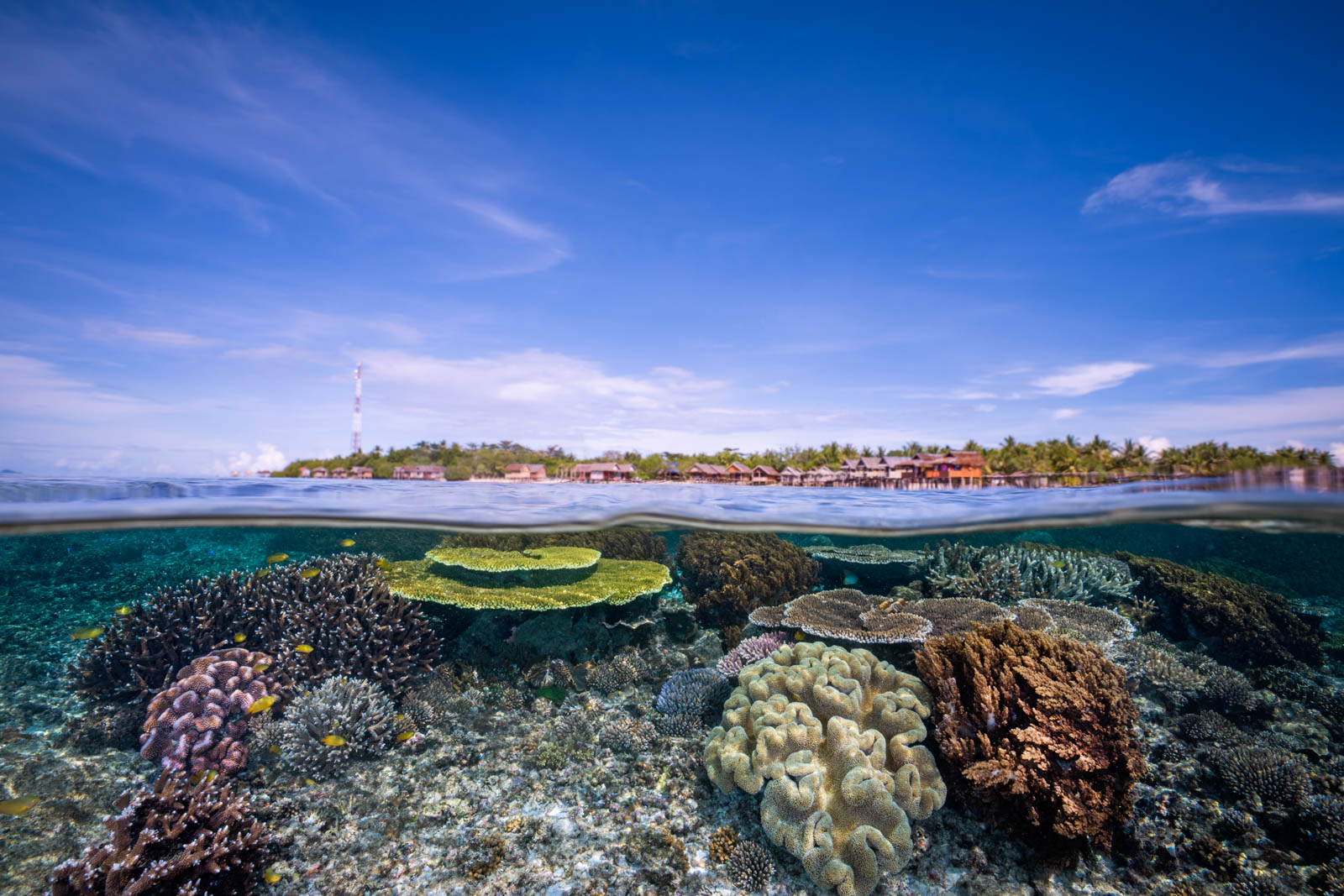
- Island Homestays: For those looking to decompress after intensive weeks at sea, checking into a local eco-homestay provides 24-hour access to pristine house reefs—ideal environments for capturing serene split-shots (over-under images) and practicing macro photography at leisure.
Supporting Data & Environmental Conditions: The Power of Currents
Raja Ampat’s unmatched biological richness is directly driven by an intricate hydrodynamic system. Nutrient-rich oceanic currents funnel directly through narrow passages such as the Dampier Strait, acting as a massive biological conveyor belt that feeds the reef systems.

However, these exact conditions introduce unique operational challenges for photographers managing heavy, expensive camera rigs:

- Visibility Fluctuations: While rich nutrients fuel coral growth and massive fish aggregations, they can occasionally reduce water clarity. Photographers must master precise strobe positioning and use backscatter-reduction techniques to maintain image contrast in turbid water.
- Severe Currents: Strong, intersecting currents require divers to anchor themselves behind boulders or coral outcrops just to maintain a stable shooting position. Photographers often find themselves holding on with one hand while framing a shot with the other—or making the tough call to leave heavy camera housings behind during extreme tidal exchanges.
- Equipment Safety: Given the volatility of the water movement, tethering systems, robust insurance policies, and proper buoyancy control are non-negotiable prerequisites for anyone stepping into the water with professional gear.
Official Recommendations: Top Dive Sites for Photographers
To maximize the success of an underwater photography expedition, targeting specific, high-yield dive sites is essential. Below are five world-class locations that offer distinct creative opportunities.

1. Melissa’s Garden (Wide-Angle Mastery)
A quintessential wide-angle site, Melissa’s Garden plunges divers into an endless expanse of manicured coral plateaus and sprawling cabbage coral fields. The intricate topography provides a majestic backdrop for wide-angle compositions featuring schooling batfish, barracuda, snappers, and reef sharks.

- Recommended Gear: Ultra-wide-angle zoom lenses (e.g., 16–35mm) paired with large dome ports.
2. Batu Rufus (Split-Shots and Lagoons)
Located near the Fam Islands, Batu Rufus features a crystal-clear emerald lagoon enclosed by sheer limestone cliffs. Photographers can capture stunning swim-throughs lined with giant gorgonian sea fans. The shallow, protected interior of the lagoon (around 5 meters deep) offers exceptional natural-light opportunities and serves as an ideal location for over-under split shots or freediving photography.

3. Cape Kri (The Biodiversity Record-Holder)
Cape Kri once held the world record for the highest number of fish species recorded on a single dive. Sloping down to 40 meters, this site satisfies both wide-angle and macro shooters.

- Wide-Angle: Schooling pelagics, hunting trevallies, and reef sharks patrolling the drop-offs.
- Macro: The dense Muricella gorgonian sea fans shelter populations of pygmy seahorses, alongside nudibranchs, flatworms, and octopuses.
4. Manta Ridge (Pelagic Encounters)
Positioned between Mansuar and Arborek Islands, Manta Ridge is a cleaning station where reef mantas congregate. While conditions are heavily dictated by the lunar cycle and tidal flow—often resulting in intense currents—successful dives reward photographers with close-up, dynamic passes from giant oceanic mantas.

5. Citrus Ridge (Macro Madness)
Situated near the Gam Islands, Citrus Ridge is celebrated for its hyper-saturated soft corals. While its vibrant colors invite abstract wide-angle experimentation, it is equally renowned as a macro detective zone. Scouring the nooks and crannies of the reef reveals an astonishing array of cryptic bottom-dwellers, ghost pipefish, and juvenile reef species set against a riotous floral background.

Implications: Conservation and the Future of Eco-Tourism
The rise of Raja Ampat as an elite destination for underwater photography carries profound implications for global marine conservation. The region’s success story is largely rooted in community-based marine protected areas (MPAs) established in partnership with indigenous Papuan communities and international conservation NGOs.

Balancing Access and Preservation
As global demand for adventure tourism grows, local authorities face the ongoing challenge of balancing economic influxes from dive tourism with the ecological carrying capacity of fragile reef systems. Unregulated anchoring, fin strikes from careless divers, and over-visitation at sensitive sites like manta cleaning stations pose genuine threats to the long-term health of the habitat.

The Ethical Responsibility of Image-Makers
For professional and aspiring underwater photographers alike, visiting Raja Ampat demands a strict adherence to environmental ethics:

- Buoyancy Control: Photographers must maintain flawless buoyancy to avoid crushing delicate staghorn and plate corals while framing macro subjects.
- Marine Life Interaction: Harassing marine creatures for a better composition—such as chasing mantas or touching vulnerable organisms—is strictly discouraged by local guides.
- Economic Support: Choosing eco-certified liveaboards and locally-run homestays ensures that tourism revenue directly benefits the indigenous communities who act as the primary stewards of these waters.
Ultimately, Raja Ampat remains a fragile sanctuary. Those privileged enough to capture its wonders through a camera lens carry the responsibility of documenting its fragile beauty with reverence, ensuring that "The Last Paradise" survives for generations to come.
