

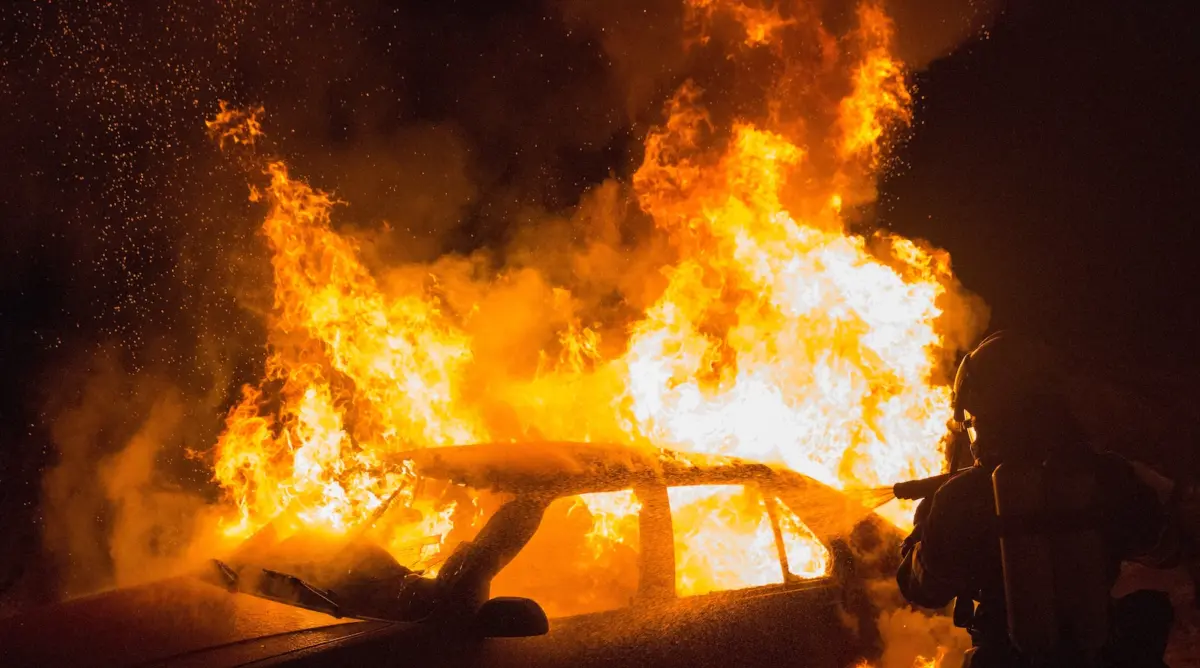
For over a decade, viral videos of burning electric vehicles—most notably Teslas engulfed in smoke and fierce flames—have played a monumental role in shaping public perception. For millions of motorists, these terrifying spectacles planted deep-seated anxieties regarding the safety of electrified transport. Even staunch advocates of the electric vehicle (EV) revolution were initially shocked by the violent nature of high-voltage battery fires.
Blaring headlines routinely dominated the news cycle, detailing how first responders required specialized, crash-course training to extinguish thermal runaway events in lithium-ion packs. Residential communities, apartment complexes, and Homeowners Associations (HOAs) across the United States rushed to vote on outright bans, prohibiting electric cars from parking in underground garages or plugging into residential infrastructure.
Yet, a stark disparity exists between public perception and statistical reality. A recent analysis of federal vehicle data reveals a surprising truth: millions of motorists are driving vehicles tagged with urgent "park outside" safety warnings due to spontaneous fire risks—and the vast majority of these vehicles are powered by conventional internal combustion engines (ICE), not lithium-ion batteries.
Main Facts: The "Park Outside" Reality
According to a comprehensive analysis of safety data conducted by The Washington Post using CarFax figures, an estimated 3.2 million vehicles currently on U.S. roads have been tagged with official "park outside" safety warnings. These advisories urge owners to park their vehicles away from homes, garages, and other structures due to the risk of spontaneous combustion, even when the engine is turned off and the keys are removed.
Contrary to popular belief, the vast majority of these vulnerable vehicles are traditional gas-powered cars, trucks, and SUVs. The primary culprit behind these modern recalls is not high-voltage propulsion technology, but rather an accumulation of complex, "always-on" electronic systems. These auxiliary circuits remain constantly energized to support convenience features, power-seat adjusters, infotainment modules, and advanced safety sensors long after the driver has walked away.
While early-generation battery fires—such as those that plagued the Chevrolet Bolt and resulted in a billion-dollar recall fallout for General Motors and LG Chem—left lasting scars on the public consciousness, the sheer scale of conventional vehicle fire risks has largely flown under the radar. Millions of vehicle owners are driving around with ticking time bombs under their hoods, completely unaware that their conventional fuel systems or dormant electronic architectures pose a legitimate threat of spontaneous ignition.
Chronology: The Evolution of the "Park Outside" Warning
To understand how vehicle fire warnings have evolved, it is necessary to examine the regulatory timeline established by the National Highway Traffic Safety Administration (NHTSA).
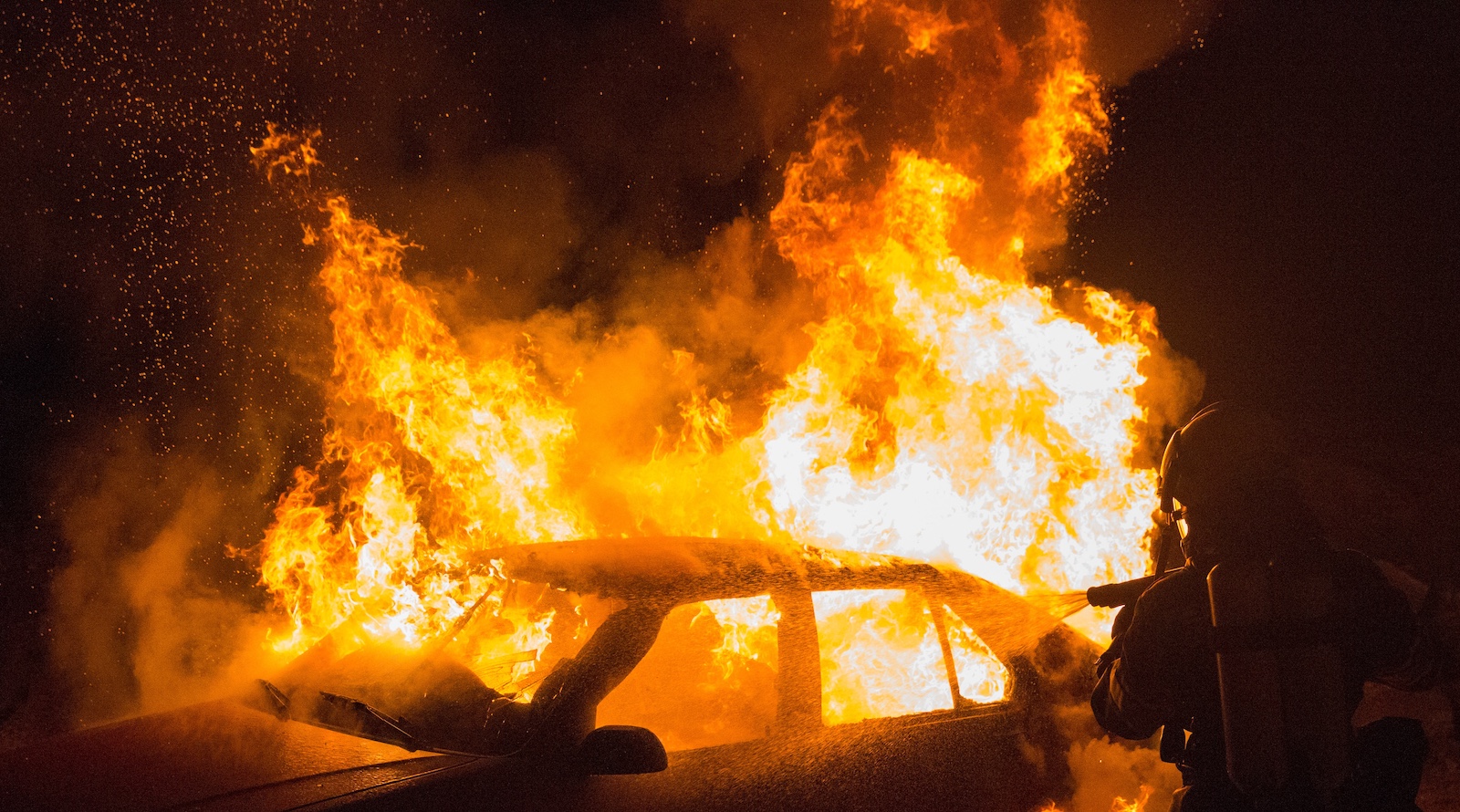
- 2015: NHTSA formally introduces the "park outside" designation as a specialized safety classification. This category is reserved for severe vehicle defects that carry a risk of ignition even when the ignition is completely shut off and the vehicle is parked. For the first several years, the designation was rarely used, with manufacturers averaging roughly one such recall per year between 2015 and 2019.
- 2017–2020: High-profile parking garage fires—such as a massive New Year’s Eve blaze that destroyed 1,400 cars in Liverpool, England, in 2017, and a 2020 fire at an airport garage in Stavanger, Norway—spark intense public scrutiny. Public speculation immediately points the finger at electric vehicles. However, subsequent forensic investigations reveal that the Liverpool fire started in an aging Land Rover, while the Norwegian blaze originated in a diesel-powered Opel.
- 2021–2024: "Park outside" recalls begin to surge exponentially. NHTSA logs 10 such recalls in 2024 alone, driven by a growing web of automotive microchips, complex wiring harnesses, and auxiliary electronics.
- September 2023: A massive recall campaign accounts for roughly two-thirds of a broader pool of 5.1 million mixed-powertrain vehicles. Hyundai recalls nearly 1.65 million vehicles and Kia recalls more than 1.73 million vehicles due to fire risks originating from leaking anti-lock brake system (ABS) modules that cause electrical shorts.
- First Seven Months of 2026: Federal authorities announce 17 new "park outside" recalls, covering a staggering 1.7 million vehicles. This puts 2026 on track to log the second-highest volume of vehicles subjected to this severe warning since the designation’s inception over a decade ago.
Supporting Data: Conventional Cars vs. Electric Vehicles
To properly contextualize the threat of vehicle fires, safety experts look to empirical data regarding frequency, causation, and market penetration.
The Scale of Traditional Car Fires
According to statistics compiled by the National Fire Protection Association (NFPA), there are more than 170,000 vehicle fires every year in the United States—averaging out to roughly one vehicle fire every three minutes. The NFPA notes that vehicle fires account for more deaths than non-residential structure fires and residential apartment fires, trailing only single- and two-family home fires in terms of fatality rates per incident. Because internal combustion engine (ICE) fires occur with such grim regularity, they rarely capture mainstream media attention.
Statistically, traditional ICE vehicles experience approximately 1,500 fires per 100,000 vehicles sold. In stark contrast, fully electric vehicles average roughly 25 fires per 100,000 vehicles sold. This means conventional gas and diesel cars are statistically far more likely to catch fire than electric vehicles—a reality that runs counter to widespread public assumptions.
The Breakdown of Modern Recalls
NHTSA data analyzed by The Washington Post highlights the distribution of "park outside" campaigns issued since 2021:
- NHTSA has issued 93 "park outside" recalls since 2021.
- Nearly half of these campaigns (44 recalls) applied exclusively to conventional internal combustion engine (ICE) vehicles.
- 38 recalls targeted strictly EVs or hybrids.
- The remaining recalls fell into "mixed powertrain" categories, though gas and diesel models dominated the volume.
- In terms of raw vehicle units over the past five years, gas-only campaigns covered a combined 4.6 million vehicles, compared to just 662,000 vehicles for EVs and hybrids.
Official Responses and Engineering Realities
Automotive safety regulators and engineering experts emphasize that the modern surge in fire-related recalls is fundamentally tied to the proliferation of automotive electronics.
Sean Kane, president of Safety Research and Strategies, describes the phenomenon as a complex byproduct of expanding electronic architecture. "It’s a mix of things causing this," Kane noted in an interview with The Washington Post. "It’s messy. It doesn’t lend itself to a simple description of what’s happening. But it boils down to growing electronic systems and the number of components."
Frank Borris, a former NHTSA investigator turned safety consultant, points specifically to "key-off" fires. "The engine is off," Borris explained, "but the circuits are still hot and they stay hot all the time." In this context, "hot" refers to electrical circuits remaining continuously energized, eventually leading to component degradation, thermal overheating, and ignition.

Recent high-profile manufacturer actions underscore this electrical vulnerability:
- Kia Telluride (2026): Kia was forced to recall 463,000 Tellurides because front power seat switches could overheat and ignite the seat material—marking the second time the automaker recalled the exact same defect after an initial fix proved insufficient.
- Ford Expedition & Lincoln Navigator: Over 66,000 model-year 2021 vehicles were recalled due to circuit boards in the battery junction box prone to short-circuiting, triggering at least 16 documented fires while the vehicles were parked and turned off.
- Stellantis Jeep Wrangler & Gladiator (2025–2026): Stellantis issued recalls for popular off-road models following investigations into fire risks traced directly to power steering pump wiring connections.
Implications for Consumers, Regulators, and the Market
The persistence of anti-EV bias driven by fire safety fears carries profound implications for the transition toward sustainable transportation.
Granular Data Collection
Historically, North American regulators have faced criticism for failing to collect standardized, granular data categorizing vehicle fires by specific powertrain types. However, this information gap is finally closing. Fire departments and emergency agencies nationwide recently transitioned to a new federal reporting system designed to capture precise data regarding vehicle powertrains.
International data provides a valuable preview of what comprehensive tracking may reveal in North America. Data from Norway—where plug-in electric vehicles account for more than 97 percent of new car sales—demonstrated that conventional gas and diesel vehicles experienced a fire incidence rate four times higher than electric vehicles between 2016 and 2021.
Overcoming the Fear Factor
The psychological barrier of fire safety remains one of the toughest hurdles for clean energy adoption. While spectacular EV battery fires make for dramatic viral content, they represent statistical outliers rather than systemic norms.
As automotive electronics continue to multiply across all vehicle types—gas, hybrid, and electric alike—automakers face mounting pressure to fortify circuit protection, redesign auxiliary power modules, and refine quality control. For consumers, the takeaway is clear: the fear of vehicular fire is entirely valid, but targeting electric vehicles while ignoring the statistical reality of conventional, electronics-heavy internal combustion cars is a misplaced anxiety. Armed with empirical data from NHTSA, the NFPA, and independent safety analysts, the public can begin to separate sensationalized myth from engineering reality.
