

Main Facts
The global transition to electrified transport reached another milestone in July 2026, with plugin vehicle registrations rising 7% year-over-year (YoY) to approximately 1.8 million units. The month exposed a stark bifurcation in the market: battery electric vehicles (BEVs) continued their robust upward trajectory with a 16% YoY increase, while plugin hybrid electric vehicles (PHEVs) suffered an 11% YoY decline.
Excluding the unique domestic disruptions in China (where PHEVs have hit a temporary wall) and the United States (where markets continue to adjust to the expiration of federal tax credits), global EV sales surged by a staggering 50% YoY in July, with pure electrics jumping 61%.
Overall, plugin vehicles captured a 27% market share globally for the month (19% for BEVs alone), bringing the year-to-date (YTD) plugin market share to a formidable 24%. This stands in stark contrast to historical benchmarks: five years ago, global EV market share stood at just 6%, and a decade ago, it hovered around 1%.
The structural shift toward pure electrics is unmistakable. In July, BEVs accounted for 71% of all plugin sales (about 1.3 million units), pulling the YTD ratio to 71% BEVs versus 29% PHEVs—the highest pure-electric dominance recorded since 2022.
Chronology of Market Dynamics: A Slow Summer for Tesla, a Surge for Small EVs
July 2026 will be remembered in automotive circles as a month of unexpected shake-ups among top-selling models and manufacturing giants.
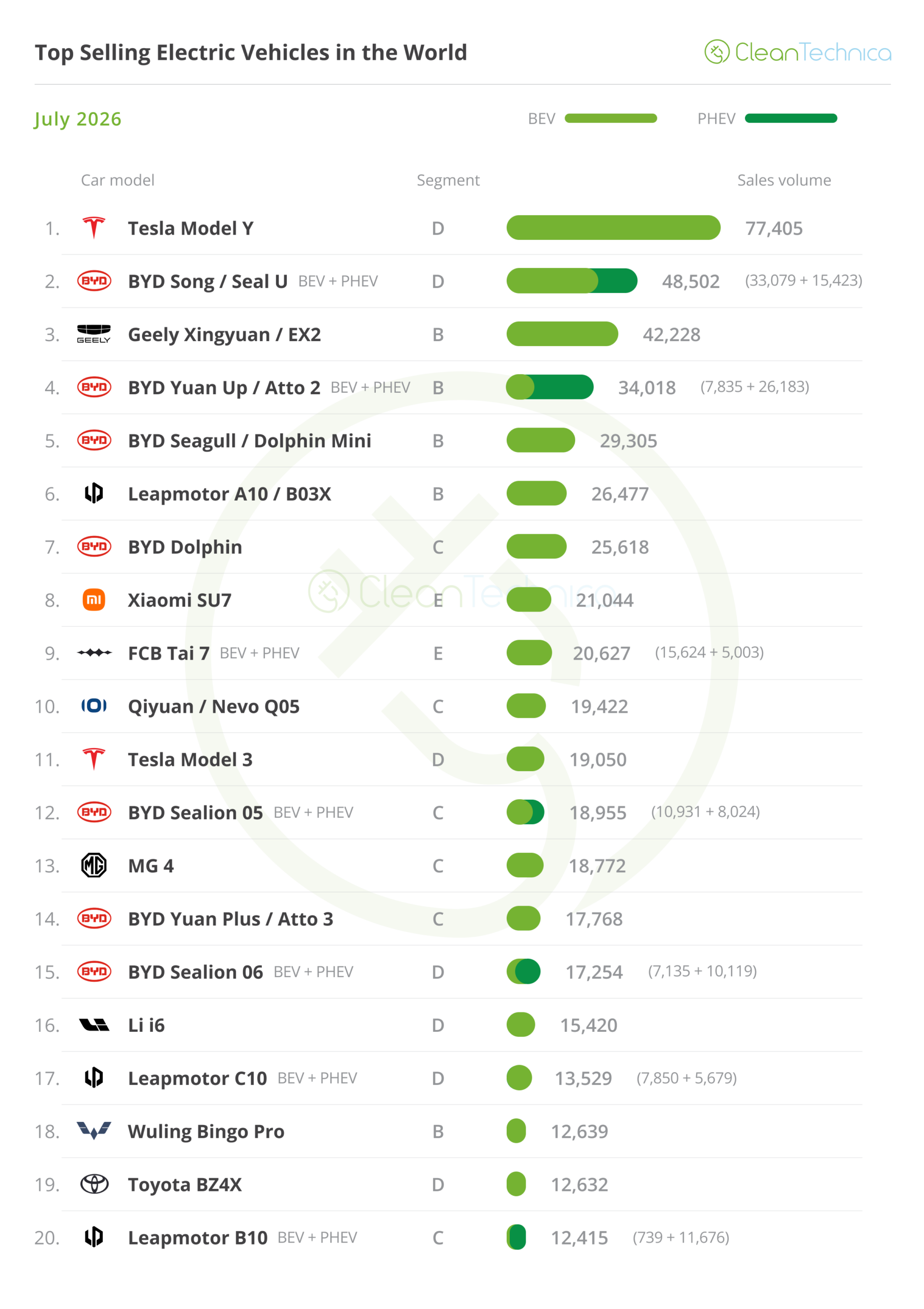
While the Tesla Model Y retained its traditional crown as the world’s best-selling plugin vehicle—despite a 9% YoY drop in deliveries—the rest of the podium and top 20 tables experienced dramatic shifts. Most notably, the Tesla Model 3 suffered a severe 44% YoY delivery crash down to 19,000 units, landing in 11th place globally. This marks the sedan’s lowest monthly standing since January 2018, pushed downward even by the Xiaomi SU7, which secured 8th place with 21,000 units. Industry analysts attribute the drop primarily to factory staging and a temporary lack of available inventory rather than a structural collapse in consumer demand, signaling an expected rebound for the sedan in August and September.
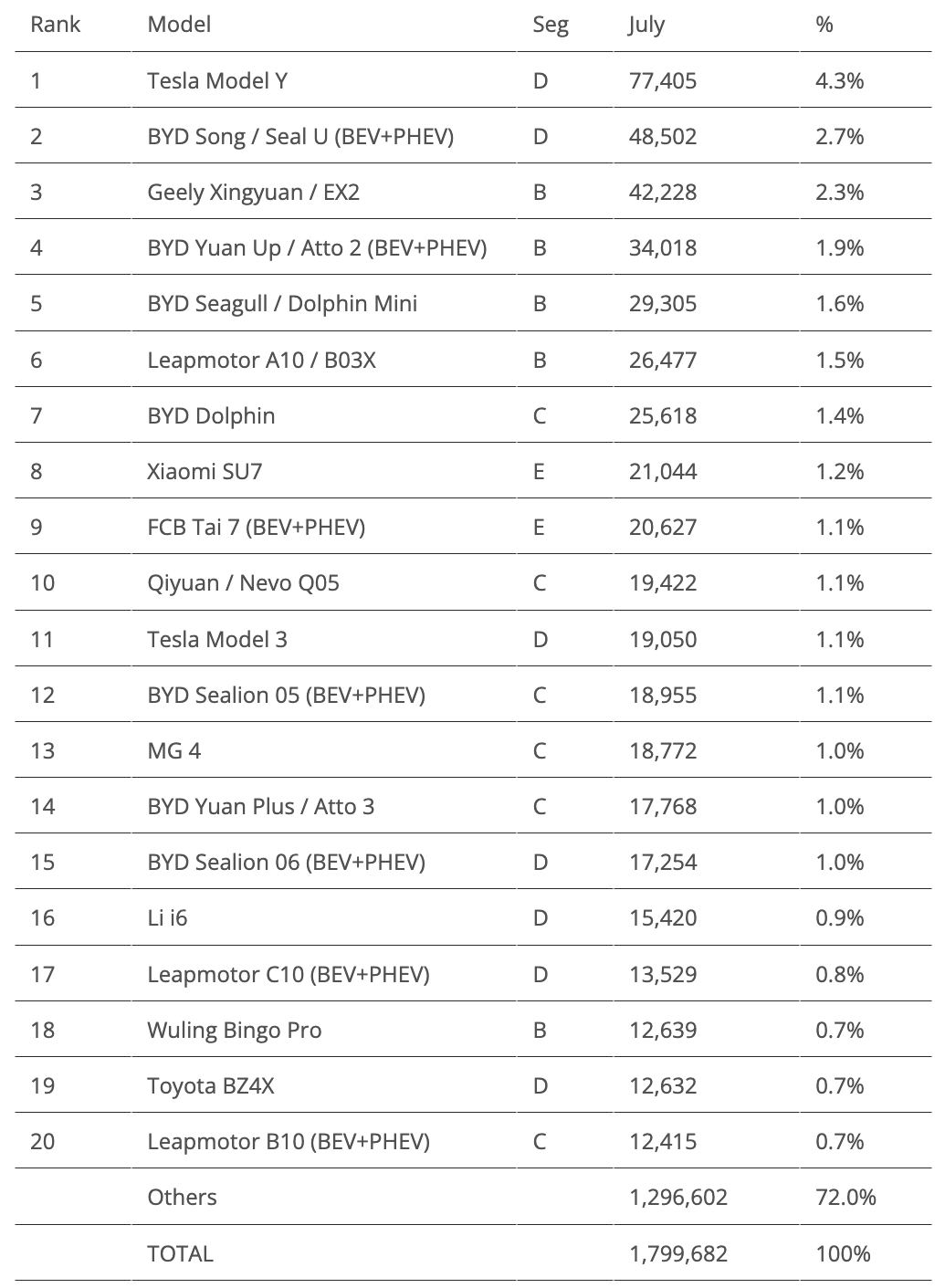
Capitalizing on Tesla’s slower month, the BYD Song surged into second place globally, buoyed by an aggressive export push and the rollout of its next-generation Ultra body architecture featuring advanced flash-charging capabilities.
However, the real headline of July was the dominance of small, efficient city EVs. Positions 3 through 7 on the global model charts were swept entirely by compact offerings:
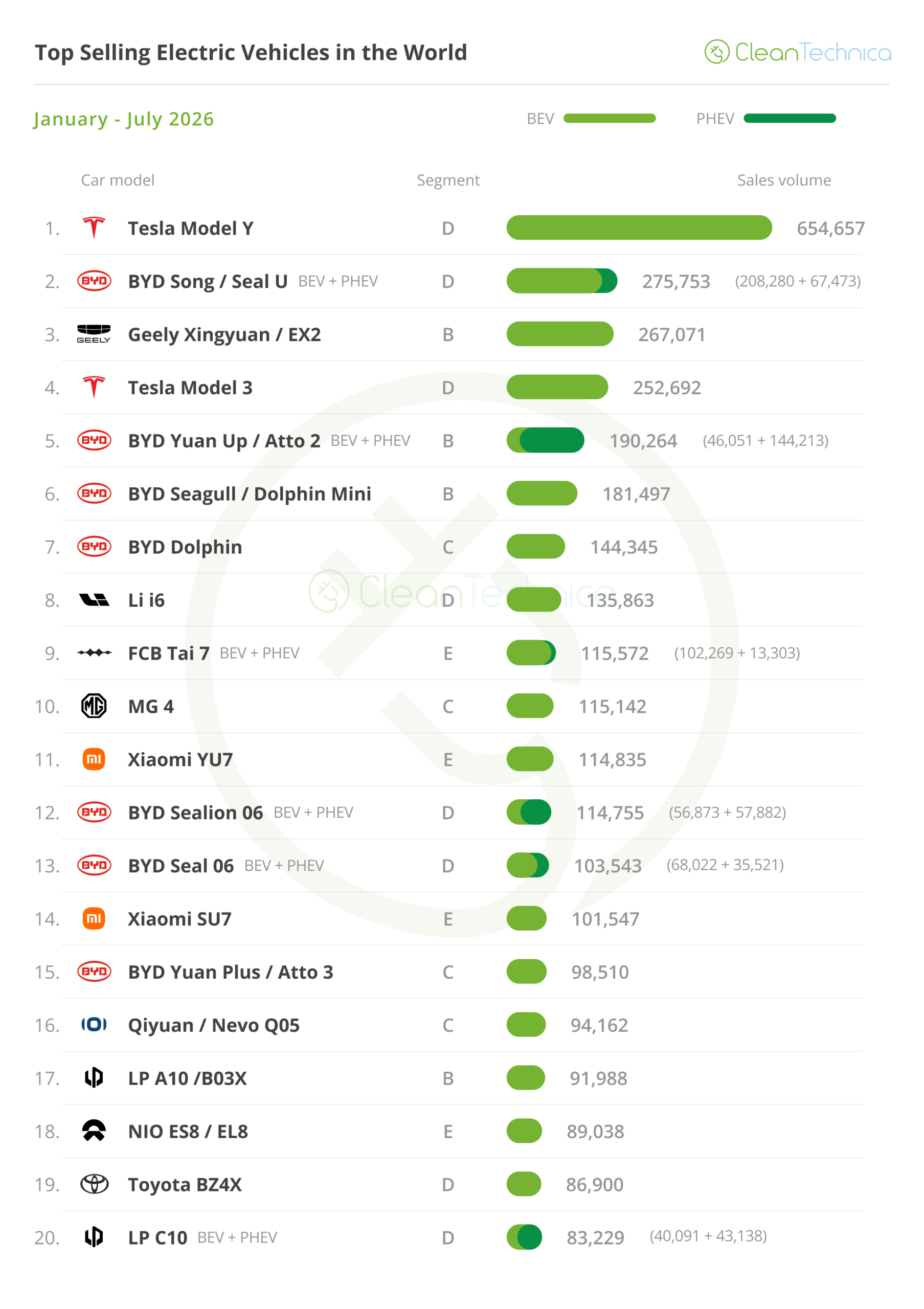
- #3: Geely Xingyuan
- #4: BYD Yuan Up
- #5: BYD Seagull (marketed locally as the Dolphin Mini)
- #6: Leapmotor A10 (known internationally as the B03X)
- #7: BYD Dolphin
This "small is hot" phenomenon underscores a vital turning point: the global EV revolution is finally penetrating the mass market, moving past early-adopter elites into high-volume, high-efficiency segments. The Leapmotor A10, in particular, has emerged as a global sales phenomenon, capturing the #3 spot in China and positioning itself for rapid international expansion. Meanwhile, the BYD Dolphin achieved 26,000 registrations—its best performance since last September—heavily propelled by booming demand in export markets like South Korea and Brazil, where Latin America is fast becoming BYD’s primary international stronghold.
Supporting Data: Brands, OEMs, and Regional Breakdowns
Manufacturer Standings
The brand-level race witnessed monumental upheavals, headlined by Leapmotor’s historic ascent. Crossing the six-digit monthly delivery threshold for the first time, Leapmotor doubled its output YoY (+102%) and came within striking distance of the runner-up spot, forcing Geely (108,000 registrations) into defensive overdrive to protect its position.
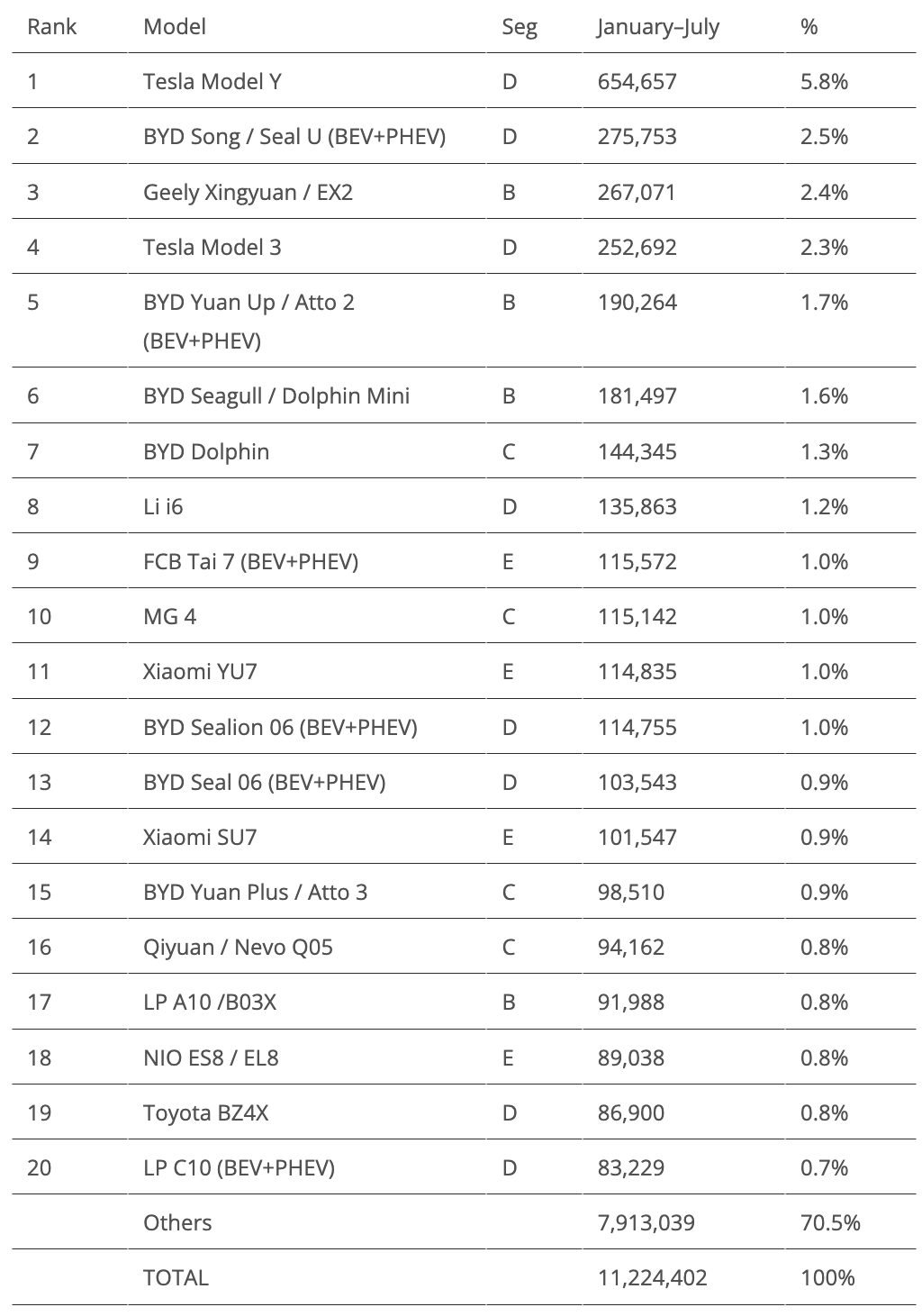
Most remarkably, Tesla slipped to 4th place among brands for the month—its lowest monthly brand ranking since January 2018.
In the legacy automaker space, Toyota delivered a record-shattering 50,415 registrations in July, coming within a hair’s breadth of overtaking Volkswagen for leadership among traditional auto giants. Kia also excelled, finishing 8th with 44,867 units sold thanks to its dedicated, pure-BEV lineup (EV2 through EV9), sharply contrasting with its partner Hyundai, which lagged in 20th place due to a more fragmented powertrain strategy involving fuel cells and ICE-derived platforms.
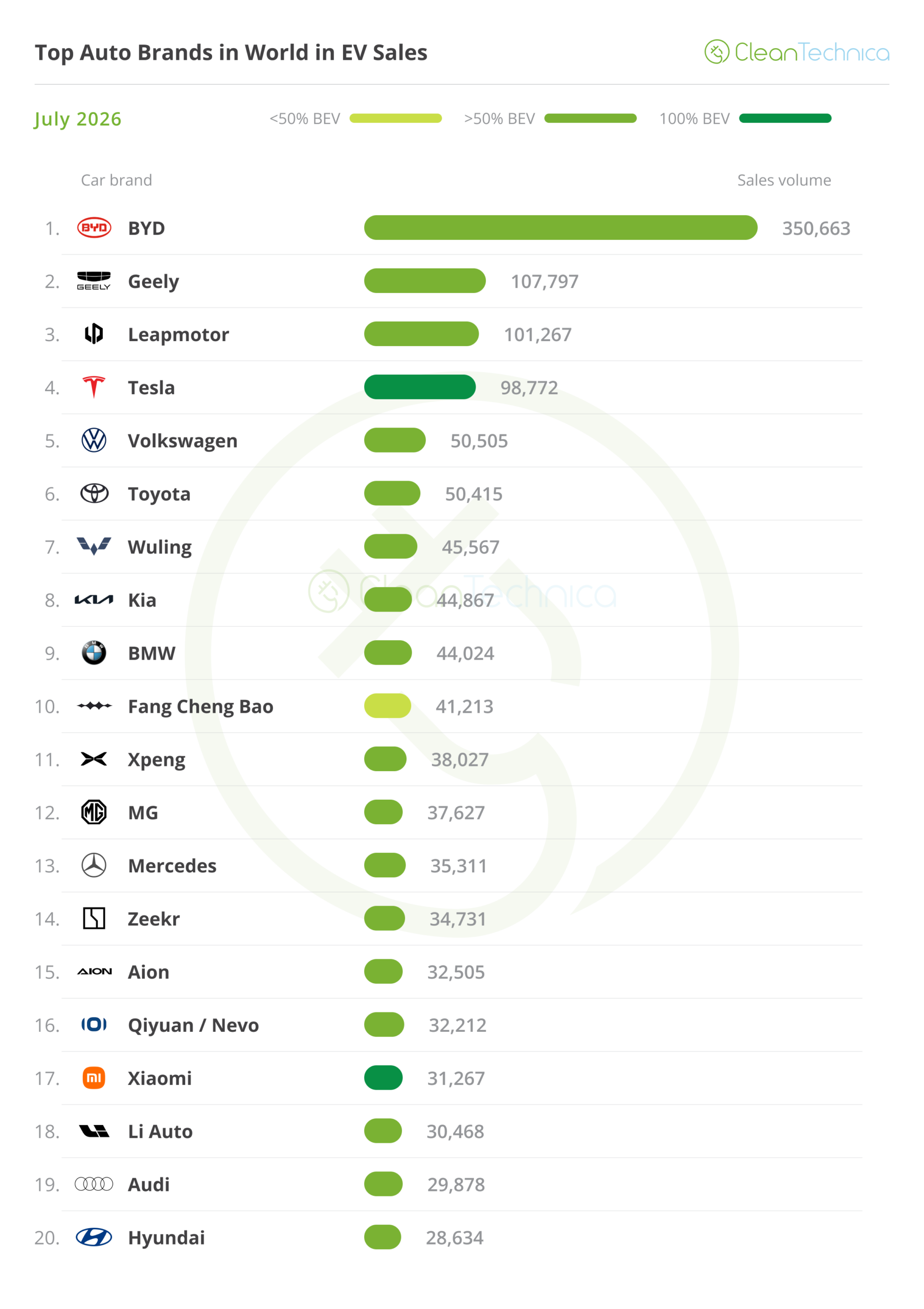
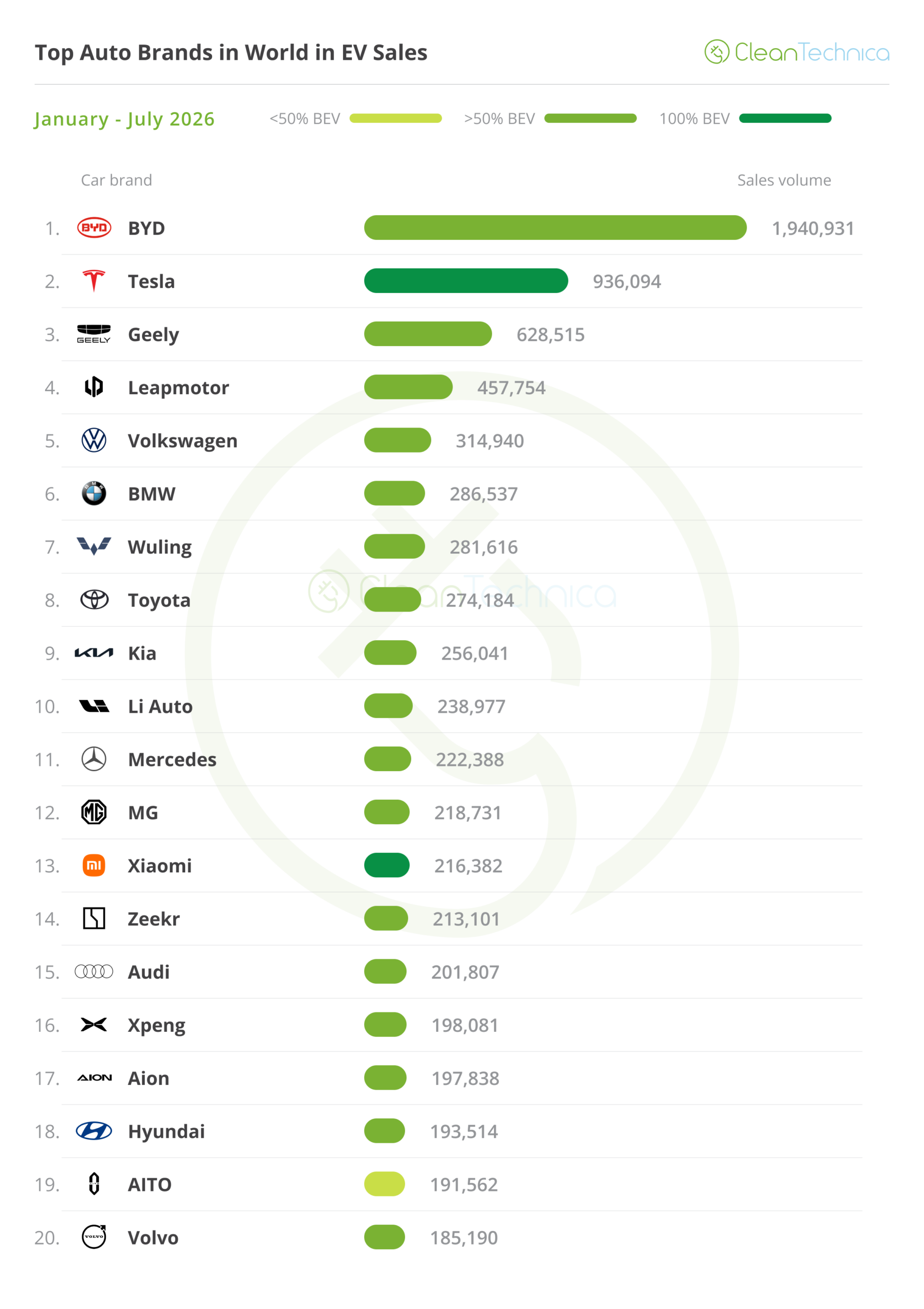
OEM Market Share (YTD)
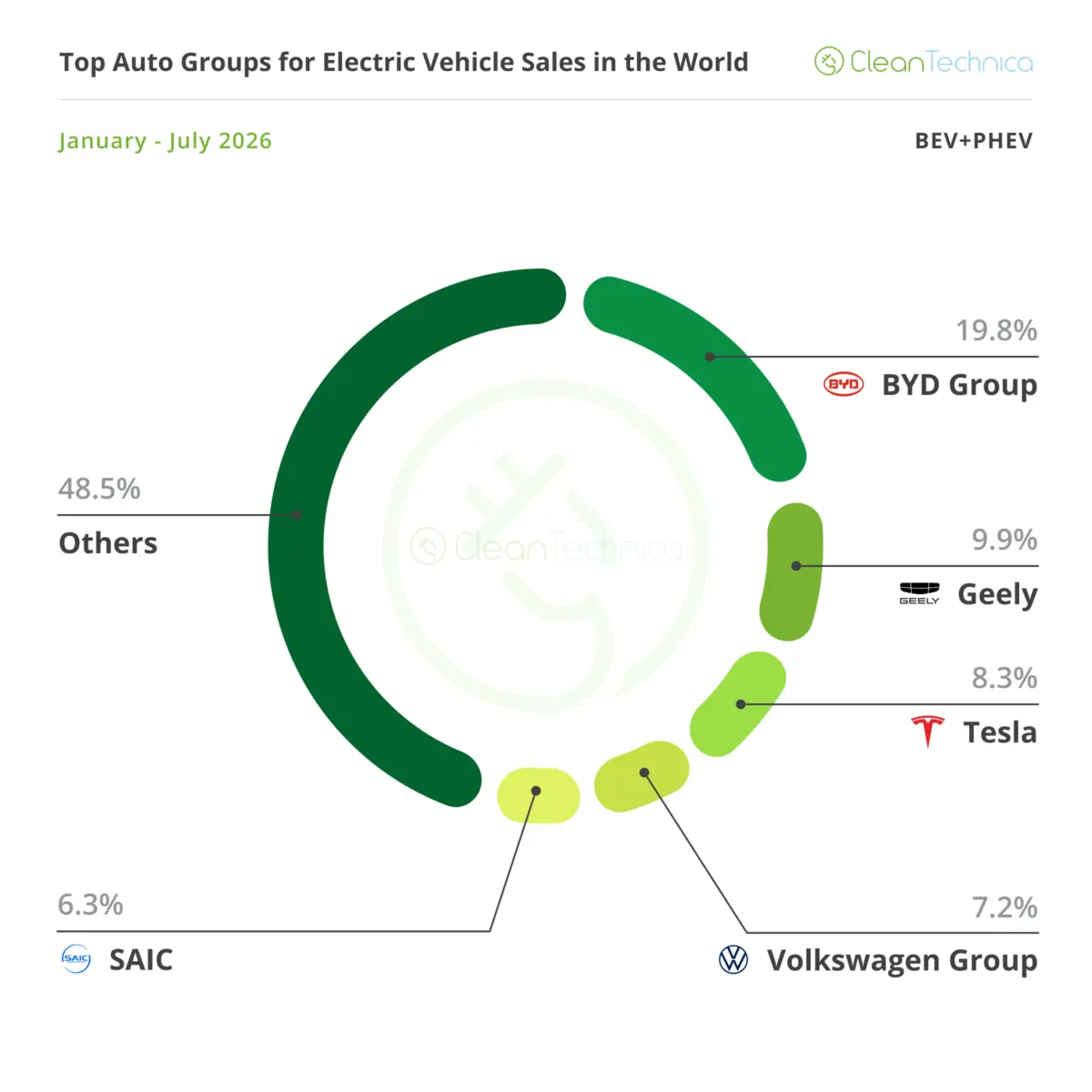
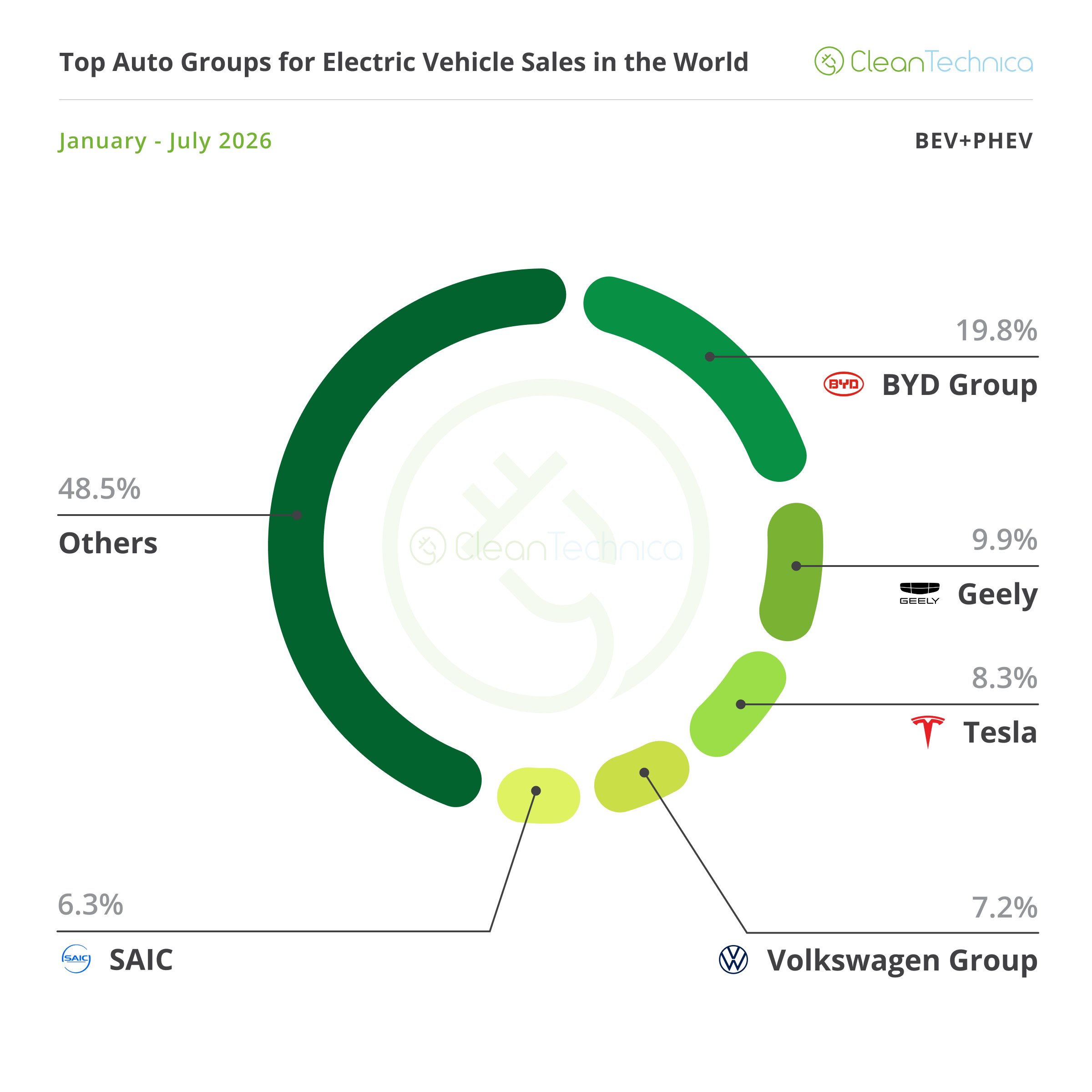
Looking at parent automotive groups for the year to date:
- BYD commands a stable lead with 19.8% of the global plugin market.
- Geely occupies second place with 9.9%, steadily closing the gap.
- Tesla holds 8.3%, having surrendered ground in July due to temporary delivery bottlenecks and an aging lineup.
- Volkswagen Group sits at 7.2%.
- SAIC maintains 6.3%.
- Leapmotor has broken into the elite tier at 4.1%, having officially surpassed Hyundai-Kia.
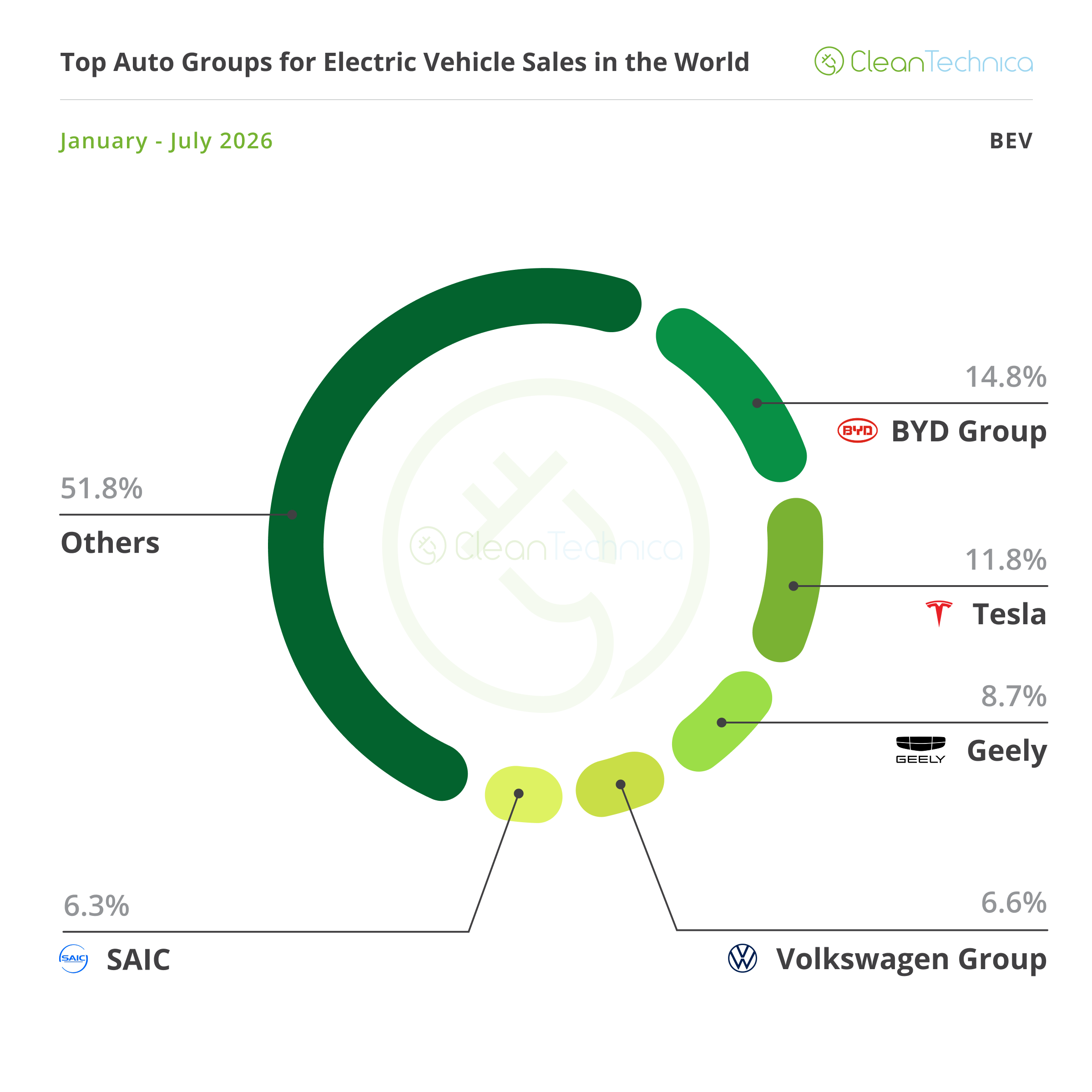
When isolating pure BEVs YTD (totaling roughly 7.9 million units), BYD leads at 14.8%, followed by Tesla at 11.8% and Geely at 8.7%.
Official Responses and Industry Insights
Automotive executives and market analysts have pointed to aggressive platform evolution and localized manufacturing as the defining trends of mid-2026.
BYD’s leadership has emphasized that export-driven localization—particularly in emerging EV hubs across Latin America, Southeast Asia, and Europe—is insulating legacy-challengers from regional regulatory headwinds. Brazilian operations, for instance, have turned South America into a secondary domestic market for BYD models like the Dolphin and Seagull.
Meanwhile, startup executives at Leapmotor have credited their hyper-efficient, value-focused vehicle architectures for their meteoric rise. Observers frequently compare Leapmotor’s disciplined, high-volume execution to historical sports dynasties: they may not always build the most exotic vehicles on the market, but their product-market fit and manufacturing efficiency deliver unmatched commercial results.
Industry analysts tracking Tesla have downplayed the July sales dip, attributing it to scheduled retooling phases for upcoming vehicle refreshes, though they warn that Tesla’s comparatively lean model lineup leaves it increasingly vulnerable to the rapid cadence of new releases from Chinese competitors.
Implications for the Future of Mobility
The July 2026 data paints a clear picture of an automotive industry undergoing permanent structural transformation.
- The Death of the Generalist Strategy: The diverging fortunes of Kia and Hyundai demonstrate that consumers favor dedicated, ground-up EV platforms over transitional, multi-powertrain compromises. Automakers that hedge their bets too heavily across hydrogen, hybrid, and fossil-fuel architectures risk losing market share to pure-play or dedicated EV innovators.
- Mass Market Democratization: The triumph of small, affordable BEVs (such as the Geely Xingyuan, BYD Seagull, and Leapmotor A10) proves that electric mobility is no longer constrained by luxury price tags. As these models prepare for aggressive global export deployment in late 2026 and 2027, Western automakers face mounting pressure to introduce sub-$25,000 EVs.
- Geopolitical and Corporate Realignment: Traditional European and American legacy brands are no longer just competing against each other; they are watching agile Chinese startups rewrite the rules of global manufacturing. Speculation regarding future joint ventures or asset acquisitions—such as potential partnerships between rising tech-forward brands like Leapmotor and legacy European groups like Stellantis—hints at a radically consolidated landscape by the end of the decade.
As the industry enters the final quarters of 2026, the race for podium finishes between Tesla, BYD, Geely, and Leapmotor promises a fiercely competitive finish to the year, permanently redefining what it means to be a global automotive powerhouse.
