

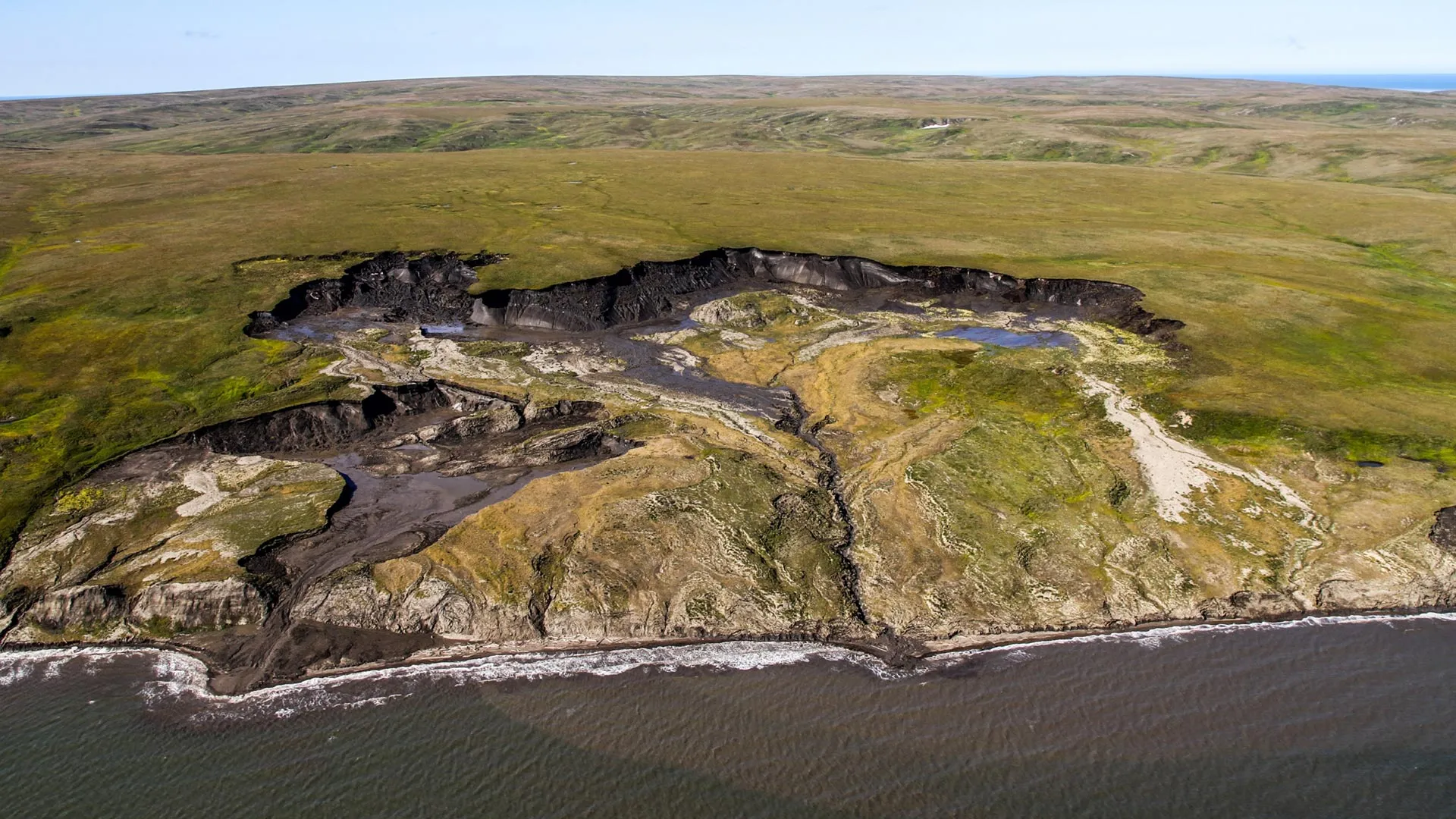
BERLIN/BREMEN — Deep beneath the rapidly warming expanses of the Arctic tundra lies a sleeping titan: vast, frozen reservoirs of organic carbon accumulated over millennia. As global temperatures climb at an unprecedented pace—heating the high latitudes faster than any other region on Earth—this ancient permafrost is beginning to thaw and fracture.
For years, climate scientists have tracked the physical disintegration of northern coastlines and the muddy plumes of earth sweeping into the Arctic Ocean. Yet, a critical knowledge gap has persisted regarding the ultimate fate of this mobilized carbon. Does it cycle back into the atmosphere as potent greenhouse gases, accelerating global warming, or is it permanently sequestered away in the marine sediment?
A groundbreaking study published recently in the prestigious journal Nature Geoscience sheds vital new light on this planetary-scale mystery. Conducted by a team of researchers from the Alfred Wegener Institute (AWI) and MARUM—Centre for Marine Environmental Sciences at the University of Bremen, the investigation reveals that a surprisingly large fraction of land-based carbon is safely locked away in the seafloor. Furthermore, the study uncovers an unexpected biological preference among marine microorganisms that may temper the immediate climate threat once posed by thawing permafrost.
Main Facts: The Carbon Sink and the Microbial "Gourmet"
The core findings of the multi-institutional research team center around the dynamic interface where the land meets the sea along the permafrost-laden coast of Qikiqtaruk (Herschel Island) in northwestern Canada.
When coastal permafrost erodes, massive quantities of organic matter—largely preserved plant remains—are washed into the Arctic Ocean. Current estimates indicate that approximately 0.02 gigatonnes of organic carbon enter the marine environment annually. Driven by climate projections, scientists forecast that this terrestrial outflow could surge by 70 to 150 percent by the year 2100.
Until now, the transition of this carbon from land to sea, and its subsequent processing by marine microbes, was poorly quantified. By meticulously analyzing sediment cores drilled off the coast of Herschel Island, the research team established that:
- Limited Atmospheric Release: Only about 10 percent of the organic carbon delivered to the seafloor is converted into greenhouse gases by microorganisms and eventually released back into the water column and atmosphere.
- Seabed Burial: The vast majority of the remaining terrestrial carbon remains securely buried within deep ocean sediment layers.
- Microbial Selectivity: Microorganisms living in the sediment exhibit a distinct preference—or "gourmet" appetite—for fresh, contemporary marine carbon (such as algae remains) rather than the ancient, millennia-old carbon originating from thawed permafrost.
Chronology: Unraveling Decades of Sediment History
To arrive at these conclusions, the research journey required a rigorous, methodical approach that combined field expeditions in harsh Arctic environments with advanced laboratory geochemistry.
Phase 1: Field Sampling in the Canadian Arctic
The investigative process began off the rugged shores of Qikiqtaruk (Herschel Island). Researchers targeted specific depositional zones where sediment settles rapidly and undisturbed. By deploying specialized coring equipment from research vessels, the team extracted deep sediment cores capable of preserving a chronological archive of environmental conditions spanning roughly the past 50 years.
Phase 2: Laboratory Geochemistry and Isotope Analysis
Back in the laboratories at the Alfred Wegener Institute and MARUM, the sediment cores were systematically sectioned and analyzed. The scientists measured accumulation rates, tracking how swiftly material from the degrading land settled onto the ocean floor.
To determine microbial activity, the team examined pore water—the interstitial fluid trapped in the tiny spaces between sediment particles. By measuring dissolved inorganic carbon and tracking specific carbon isotopes ($^13textC$ and $^14textC$), the researchers unlocked a chemical diary of microbial consumption.
While the stable $^13textC$ isotope revealed whether the microorganisms were feeding on land-derived or marine-derived carbon, the radioactive $^14textC$ isotope allowed scientists to gauge the age of the consumed material, distinguishing between fresh algal detritus and ancient permafrost deposits.
Supporting Data: The Scale of the Arctic Carbon Reservoir
To contextualize the findings from Herschel Island, researchers point to the sheer magnitude of global carbon stores currently locked in high-latitude environments.
| Reservoir Location | Estimated Organic Carbon Content | Primary Composition |
|---|---|---|
| Arctic Terrestrial Permafrost | ~1,300 gigatonnes | Plant remains, ancient soils, peat |
| Ocean Sediments & River Deltas | ~400 gigatonnes | Deposited organic and inorganic matter |
| Annual Terrestrial Outflow | ~0.02 gigatonnes (current) | Eroded soil, particulate organic carbon |
| Projected Outflow (by 2100) | 0.034 – 0.05 gigatonnes | Driven by accelerated warming and coastal erosion |
These numbers underscore the vulnerability of the Arctic. With terrestrial ecosystems holding approximately 1,300 gigatonnes of organic carbon, even a fractional release into the active carbon cycle represents a staggering volume of greenhouse gases. However, the new data from the AWI and MARUM team indicates that the physical transport of carbon into the ocean does not automatically equate to a 1:1 conversion into atmospheric carbon dioxide and methane.
Official Responses and Expert Insights
The implications of the study have drawn significant attention within the international polar research community, highlighting both the resilience of marine sinks and the complexities of microbial ecology.
Dr. Manuel Ruben, lead author of the study from the Alfred Wegener Institute, Helmholtz Centre for Polar and Marine Research (AWI), emphasized the importance of resolving past uncertainties.
"Although the sea here carries away huge quantities of organic carbon from the coast, surprisingly little of it ends up in the ocean’s active carbon cycle," Dr. Ruben explained. "Microorganisms convert around ten percent of the organic carbon from the sediments into gases, which rise into the water and can then enter our atmosphere."
Addressing the models used to project global warming scenarios, Dr. Ruben added:
"Our study shows, more precisely than ever before, how much carbon is safely stored in the seabed—and just how much of the decomposed material actually originates from the old permafrost. This provides an important foundation for climate models that can predict the consequences of permafrost thawing for the global climate."
Prof. Gesine Mollenhauer, a geochemist at the AWI and co-spokesperson for the ‘The Ocean Floor – Earth’s Unexplored Interface’ Cluster of Excellence, elaborated on the metabolic habits of the seafloor communities:
"Carbon isotopes represent our atomic indicators that can identify the food source of the microorganisms," Prof. Mollenhauer noted. "The sediment is home to ‘gourmet’ bacteria that apparently prefer fresh carbon stemming from, for example, more recent algal remains over the ‘old’ carbon from permafrost deposits."
Despite these reassuring discoveries regarding microbial selectivity, the researchers maintain a cautious stance. Mollenhauer pointed out that further investigation is vital because some portion of the permafrost carbon may undergo degradation before it ever successfully reaches the seabed.
Implications: Broader Ecological Disruptions and Future Horizons
While the finding that microbes prefer fresh carbon offers a slight reprieve regarding atmospheric greenhouse gas projections, the relentless erosion of Arctic coastlines triggers a cascading chain of ecological consequences that extend far beyond carbon accounting.
Light Limitation and Primary Production
The massive influx of sediment and dissolved organic carbon from eroding coastlines fundamentally alters the optical properties of coastal Arctic waters. Suspended mineral particles make nearshore environments turbid, while dissolved organic carbon stains the water a tea-like brown.
This dramatic reduction in underwater light penetration starves single-celled marine algae (phytoplankton) of the sunlight they require for photosynthesis. Because these microscopic primary producers form the foundation of the entire Arctic marine food web—supporting everything from zooplankton and fish to marine mammals and local indigenous communities—light deprivation poses a direct threat to regional biodiversity and ecosystem stability.
The Road Ahead: The 2027 ‘Arctic Pulse’ Campaign
To answer remaining questions about how land-sea carbon dynamics interact with broader climatic and biological shifts, researchers are already looking toward future large-scale coordinated efforts.
The international ‘Arctic Pulse’ campaign, scheduled for 2027, will bring together multidisciplinary teams for synchronized observations. Utilizing the advanced research icebreaker Polarstern, dedicated AWI research aircraft, and land-based observatories, scientists aim to construct a holistic, three-dimensional view of how rapid environmental transformation is reshaping the Arctic system.
As the planet continues to warm, understanding the complex feedback loops between thawing permafrost, microbial appetites, and marine food webs remains one of Earth science’s most pressing imperatives. The work by the Alfred Wegener Institute and MARUM marks a crucial step forward, transforming vague estimates into empirical foundations that will guide the next generation of global climate models.
