

Introduction: The Convergence of Childhood Wonder and Aquatic Mastery
In the realm of contemporary nature photography, few artistic transitions are as dramatic as the one from landlocked amateur to internationally acclaimed professional. As part of Nature TTL’s ongoing interview series, "From Amateur to Professional," celebrated underwater photographer Rowan Dear opens up about his remarkable trajectory.
Growing up on a traditional farm in Wales, Dear’s early world was shaped by terrestrial wildlife—badgers, foxes, hedgehogs, and vibrant British birdlife. Yet, like countless children of his generation, his ultimate aspirations stretched far beyond the fields of his youth, fueled by the cinematic magic of BBC nature documentaries and the legendary narration of David Attenborough. Today, Dear is an award-winning underwater photographer whose captivating frames transport viewers into the dynamic, liquid ecosystems of Australia and beyond. His journey offers a masterclass in overcoming personal fears, developing technical rigor, and maintaining artistic integrity in an increasingly digital world.

The Chronology of an Ocean Career
1. Formative Years: The Welsh Countryside and Early Limitations
Dear’s fascination with the natural world began in early childhood. Armed with little more than curiosity and a disposable camera, he spent his youth documenting domestic pets and attempting—usually in vain—to get close to the elusive wildlife populating the Welsh countryside.
At the time, professional wildlife photography felt entirely out of reach. To a young boy from a rural background, capturing high-end nature imagery seemed an exclusive pursuit reserved for the wealthy and privileged. Consequently, photography remained a casual hobby well into his adult years.

2. Facing the Deep: The Sydney Transition (2017)
The pivotal turning point in Dear’s life occurred in 2017, when he made a conscious decision to confront a lifelong fear of water. Relocating to Sydney, Australia, he enrolled in scuba diving courses. What began as therapeutic exposure therapy quickly blossomed into a profound obsession with the marine environment.
Submerging himself beneath the surface unlocked the very ecosystem he had dreamed of witnessing while watching Attenborough documentaries as a child.

3. Stepping into Underwater Photography (2020)
By 2020, Dear had fully embraced underwater photography. Moving beyond basic action cameras like GoPros, he invested in professional-grade dive camera systems. His early shots—such as an initial attempt to capture a giant cuttlefish near Sydney—yielded flat, desaturated results that starkly contrasted with his grand mental visions. However, relentless practice, fueled by social media sharing and a growing community of peers, rapidly accelerated his technical growth. Within a remarkably short timeframe, Dear’s images began capturing top honors in major photography competitions, cementing his transition from an enthusiastic hobbyist to a sought-after professional.
Main Facts and Artistic Philosophy
Dear’s photographic style is characterized by vibrant natural light, deep behavioral storytelling, and meticulous composition. Rather than relying heavily on post-processing wizardry, Dear advocates for capturing the image correctly inside the camera.

Core Principles of Dear’s Work:
- Behavior Over Aesthetics: Dear prioritizes capturing genuine marine animal behaviors—such as mating rituals, territorial dominance displays, and hunting techniques—over simple portraits.
- Minimalist Editing: Having once spent hours correcting exposure flaws and removing backscatter (suspended particles illuminated by a flash), Dear now limits his post-processing to mere minutes per image. He operates on a strict personal rule: if an image requires excessive editing, the photographer simply needs to return to the field and shoot a better frame.
- Environmental Immersion: To photograph species effectively, Dear emphasizes the necessity of studying their habitat, biology, and behavioral cycles, allowing him to anticipate moments before they unfold.
Supporting Data: Key Locations and Field Techniques
Dear’s portfolio is built upon repeated, deliberate returns to specific marine ecosystems across Australasia. By revisiting these sites year after year, he develops an intimate familiarity with the resident wildlife.
1. Whyalla, South Australia: The Giant Cuttlefish Aggregation
- The Environment: A shallow coastal site approximately five meters deep, accessible directly from the shore.
- The Phenomenon: Annually, more than 10,000 giant cuttlefish gather here to mate.
- Technique: Because divers can spend hours in the water across multiple daily sessions, Dear utilizes a diverse range of lenses—from ultra-wide and fisheye perspectives to dedicated macro lenses—to capture everything from broad environmental seascapes to intimate behavioral interactions, such as rival males battling for dominance.
2. Byron Bay, New South Wales: Leopard Shark Aggregations
- The Environment: Summer aggregation sites frequented by large numbers of leopard sharks.
- Technique: Conditions dictate the artistic approach. Dear transitions between shallow, close-up frames featuring dramatic sunrays piercing the water column and top-down compositions that illustrate the density and depth distribution of the sharks.
3. Heron Island, The Great Barrier Reef: Turtle Hatching Season
- The Environment: A premier freediving destination active between February and April.
- Technique: Timing dives precisely around peak high tide allows Dear to spend hours documenting newly hatched turtles entering the ocean, alongside resident lemon sharks, rays, and adult sea turtles.
Official Insights: Overcoming Industry Challenges
Reflecting on his journey, Dear speaks candidly about the hurdles that define modern wildlife photography—both historical and ongoing.

The Illusion of Social Media
In an era dominated by algorithmic metrics, Dear warns aspiring photographers against letting likes and follows dictate their self-worth. "It’s easy to get carried away when people are telling you that you should sell images or take photography up full time," he notes. He credits winning prestigious, judged competitions as the true validator of his skill, proving that his work met the rigorous standards of his peers rather than merely appealing to casual internet scrollers.
Battling Nature’s Unpredictability
Perhaps the most persistent challenge in marine photography is the absolute lack of control over natural elements. Dear recounts expeditions—such as trips to photograph minke whales in adverse weather—where meticulous planning yielded zero sightings. Similarly, wide-angle underwater photography relies heavily on pristine visibility and ideal lighting conditions, luxuries that are rarely guaranteed.

When documenting southern right whales under government permits in windy, low-visibility conditions in Argentina, Dear had to accept subpar water clarity. Yet, by managing expectations and focusing on the magic of the encounter, he successfully extracted the highest-quality imagery possible under the circumstances.
Implications for Aspiring Nature Photographers
Rowan Dear’s evolution from a farm boy in Wales to a premier professional underwater photographer offers profound implications for the next generation of visual storytellers.

- Embrace Self-Critique Without Self-Doubt: Dear admits that perfectionism and a historical lack of confidence occasionally made him hesitant to take on ambitious commercial work. He advises newcomers to strike a balance: remain fiercely self-critical to drive constant improvement, but trust one’s artistic process and technical competence.
- Develop a Signature Style: By following inspirational mentors, trusting one’s creative instincts, and refusing to settle for mediocrity, photographers can carve out a distinct visual voice.
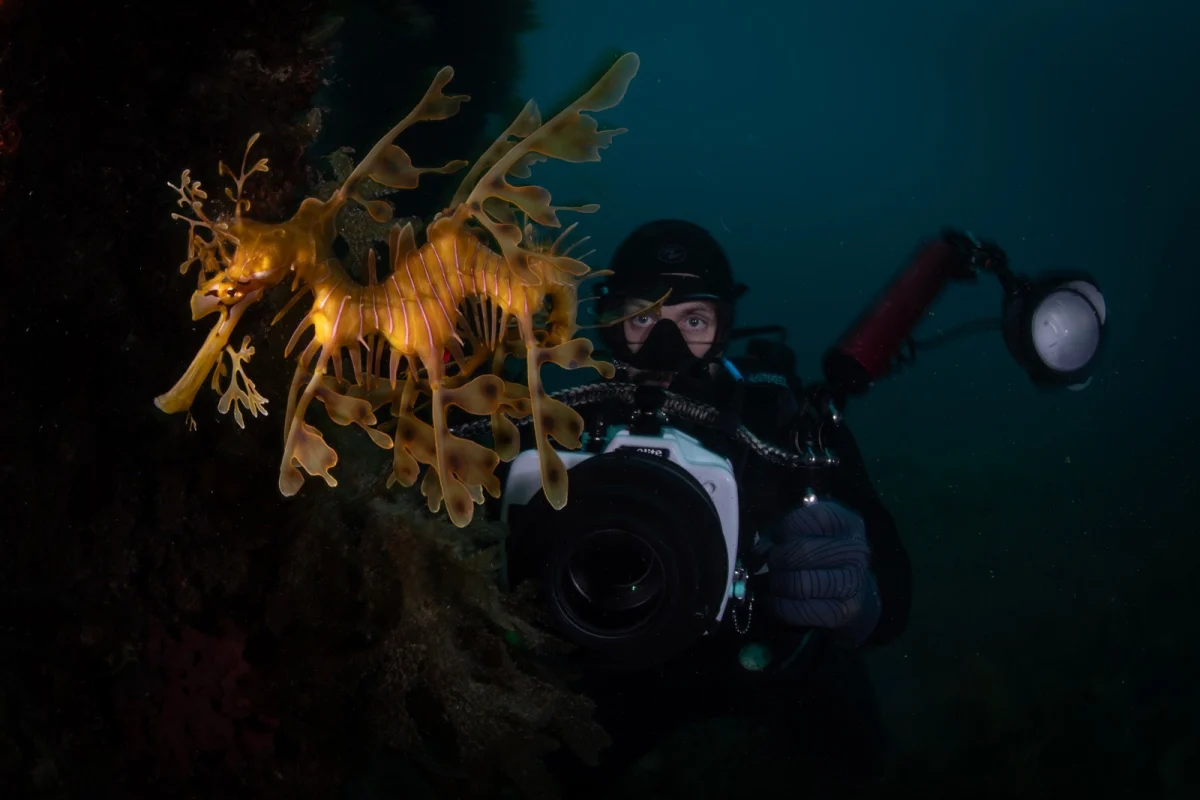
- Patience Above All: Whether waiting under the cover of a red focus light for a nocturnal leafy seadragon to turn its head or enduring stormy seas for a fleeting glimpse of cetaceans, success in wildlife photography belongs to those who respect nature’s timeline.
As Rowan Dear continues to explore the planet’s most captivating marine sanctuaries, his work serves as an enduring reminder that the bridge between amateur passion and professional excellence is built on persistence, preparation, and an unwavering love for the natural world.
