

September 30, 2026
By Wellness & Health Desk
Main Facts
In an era defined by hyper-connectivity, relentless screen time, and rising levels of chronic stress, millions of adults find themselves struggling with a fundamental human necessity: falling asleep. The abrupt transition from high-alertness daytime productivity to restorative nighttime rest has become a modern psychological hurdle.
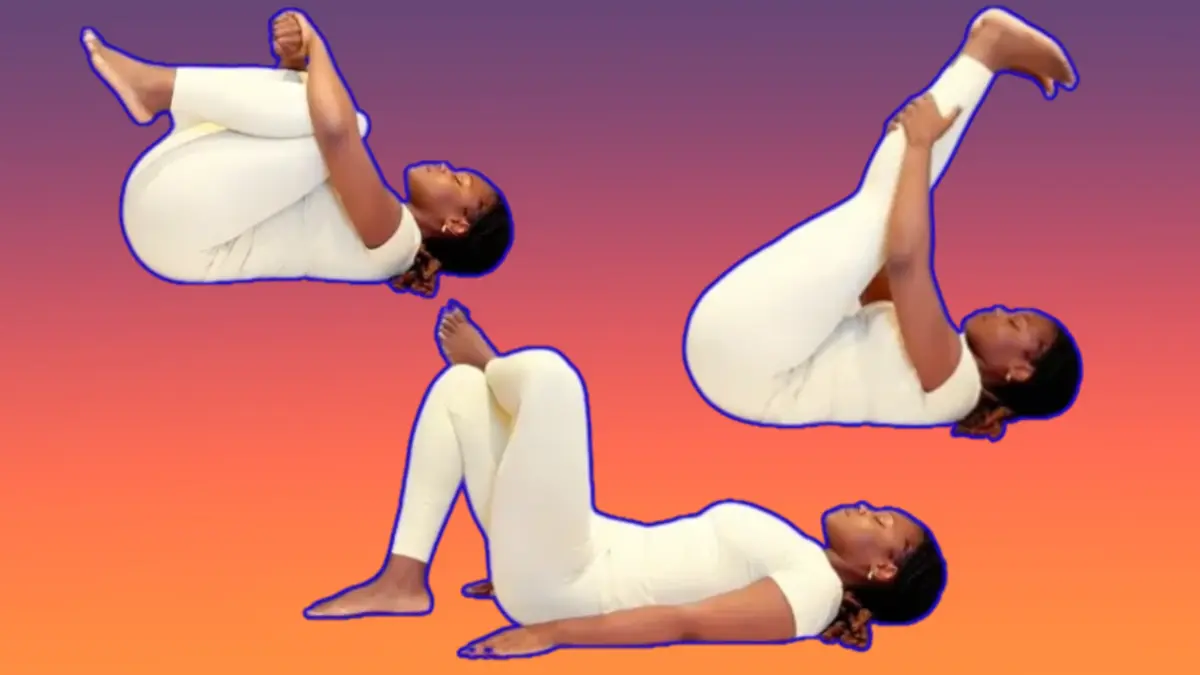
Enter Ramoni Overton, a Los Angeles-based yoga instructor, meditation guide, and creator of the popular YouTube channel Yoga With Ramoni. Overton has designed a specialized, low-effort, five-minute bedtime yoga sequence specifically engineered to bridge this gap. Utilizing only supine (lying down) postures that require zero standing, kneeling, or intense exertion, the routine is structured to down-regulate the nervous system, signal safety to the brain, and invite a state of deep relaxation.
The core premise of Overton’s sequence is physiological transition. Rather than forcing the mind to switch "off" from a state of "go mode," these intentional movements act as a physical and mental bridge, melting away accumulated physical tension and quieting a racing mind before sleep.
Chronology and Evolution of Bedtime Movement Practices
The integration of mindful movement into evening routines is not a novel concept, but its scientific backing and mainstream accessibility have evolved significantly over the past decade.
- Pre-2010s: Evening physical activity was largely discouraged by sleep physiologists, who warned that late-night exercise could elevate core body temperature and spike cortisol levels, thereby delaying sleep onset. Vigorous Vinyasa or Power Yoga classes late in the evening were known to energize rather than calm practitioners.
- The 2010s Rise of Restorative Practices: As wellness culture shifted toward stress mitigation, sleep hygiene emerged as a pillar of preventative health. Instructors began separating vigorous styles of yoga from low-impact, floor-based modalities. Yin yoga and Restorative yoga gained traction as viable evening practices.
- The Post-Pandemic Sleep Crisis (2020–2024): Lockdowns, remote work, and blurred boundaries between home and office led to unprecedented spikes in insomnia and screen-dependency. Consumers actively sought micro-routines—practices under 10 minutes—that could be executed in small spaces, such as apartment bedrooms or directly on a mattress.
- September 2026: Ramoni Overton formalizes and publishes her streamlined 5-minute pre-sleep sequence. Capitalizing on digital platforms like YouTube and digital wellness publications, Overton’s routine codifies a sequence that requires no specialized equipment, targeting modern audiences overwhelmed by complex fitness regimens.
Supporting Data: The Science of Sleep and Nervous System Regulation
The necessity for pre-sleep physical rituals is underscored by mounting sleep medicine data. According to clinical studies on sleep latency—the amount of time it takes to transition from full wakefulness to sleep—cognitive hyperarousal is the primary driver of chronic insomnia.
- The Sympathetic vs. Parasympathetic Shift: Throughout the day, work deadlines, environmental stimuli, and digital notifications keep the sympathetic nervous system (fight-or-flight) activated. To fall asleep, the body must transition into the parasympathetic nervous system (rest-and-digest). Gentle stretching stimulates the vagus nerve, which helps lower heart rate variability and blood pressure.
- The "Zero-Effort" Principle: Overton’s sequence is intentionally performed on the floor or in bed, eliminating balance challenges and muscular strain. Clinical observations show that when physical effort is minimized, the brain stops monitoring spatial awareness and motor control, allowing cognitive activity to slow down.
- Consistency over Duration: Sleep specialists emphasize that behavioral conditioning relies on cues. Engaging in the exact same 5-minute sequence every night trains the circadian rhythm and classical conditioning pathways, signaling to the brain that the sleep cycle has begun.
Official Responses and Expert Perspectives
While bedtime stretches have won praise from lifestyle and wellness leaders, the medical and therapeutic communities have increasingly weighed in on the efficacy of somatic routines for sleep hygiene.
Dr. Elena Vance, a behavioral sleep specialist based in San Francisco, notes that somatic interventions often bypass cognitive blocks that traditional meditation cannot crack.
"When a patient is anxious, telling them to ‘just clear their mind’ is counterproductive. The brain gets frustrated, and cortisol levels rise," Dr. Vance explains. "By giving the body a series of gentle physical cues—like hugging the knees or releasing the lower back—you give the nervous system a tangible anchor. Movement processes stress physically, releasing stored tension in the psoas and spine."
Ramoni Overton herself emphasizes the accessibility of her practice for individuals who feel intimidated by traditional wellness culture.
"People often think yoga requires an hour-long commitment, specialized gear, or extreme flexibility," Overton shares. "Before bed, nobody has the bandwidth for that. This sequence strips away all the friction. You are simply lying down, breathing, and allowing gravity to do the heavy lifting so your nervous system can finally exhale."
Step-by-Step Guide: Ramoni Overton’s 5-Minute Bedtime Sequence
To fully understand the mechanics of the routine, Overton breaks down the practice into seven targeted, progressive steps, all performed while lying flat on the back:
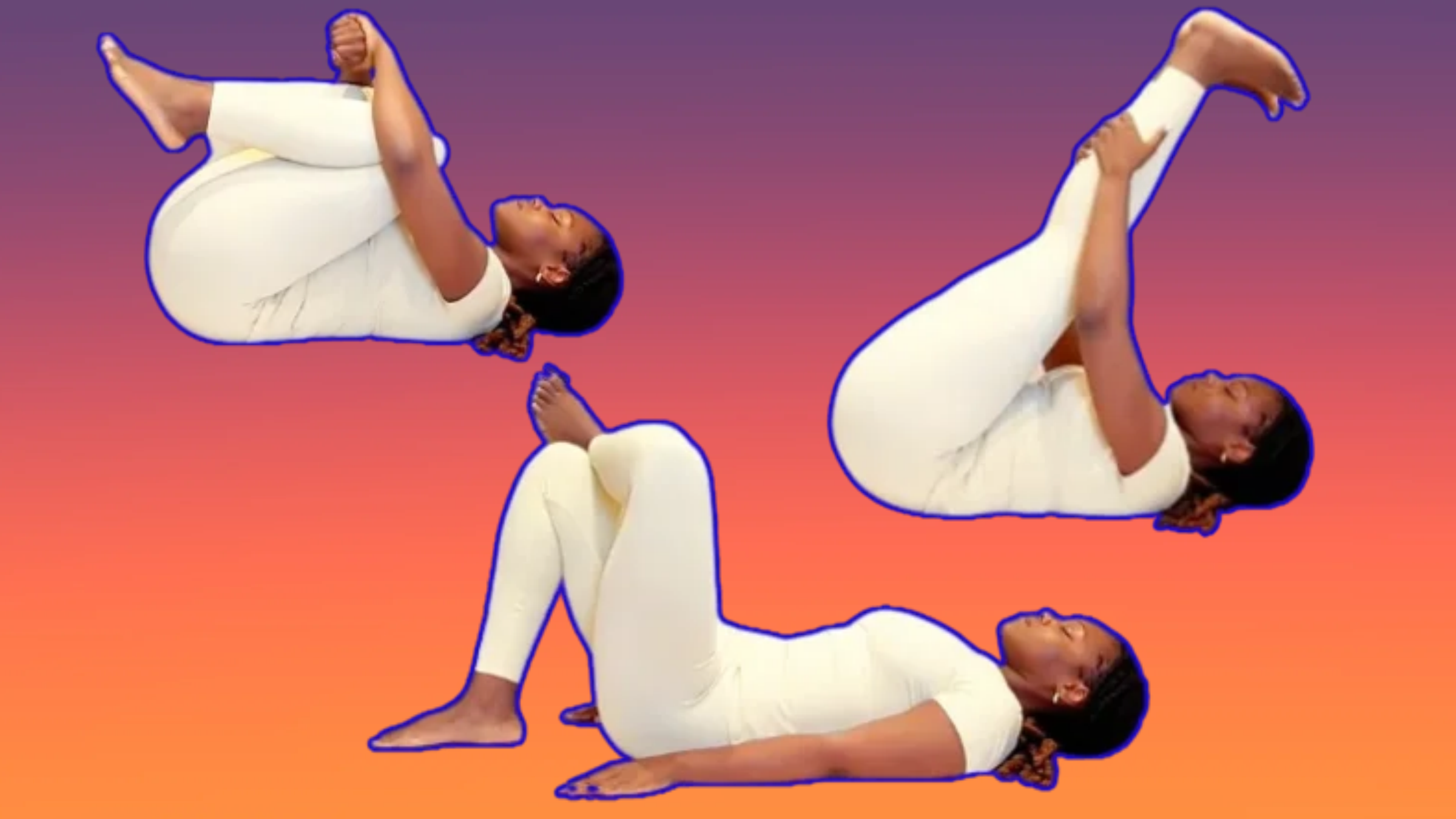
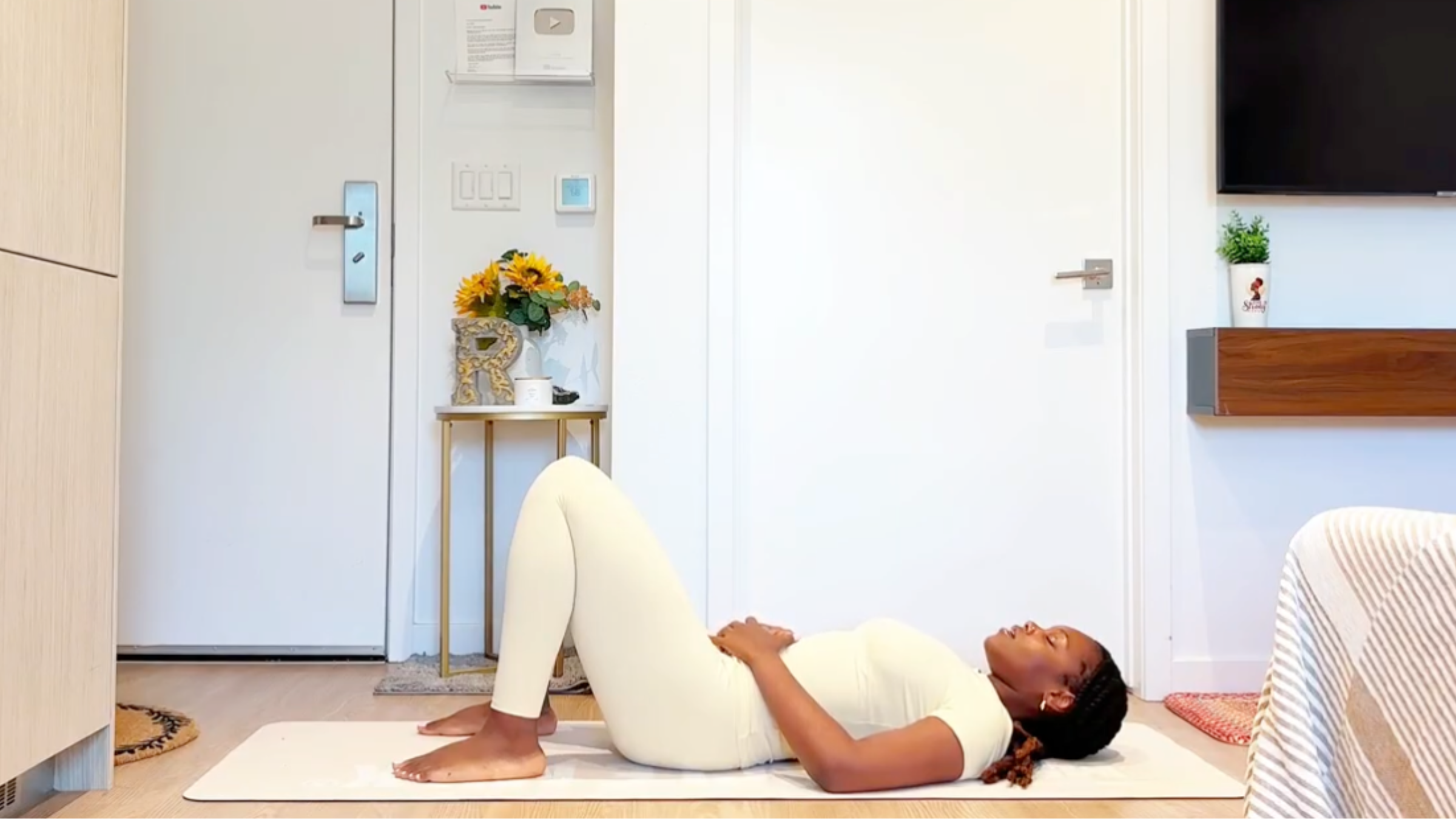
1. Constructive Rest
- The Movement: Lie flat on your back with your knees bent and the soles of your feet resting flat on the mat or mattress.
- The Purpose: Neutralizes the spine, releases the lower back from the arches of daytime posture, and establishes an initial rhythm of deep, diaphragmatic breathing.
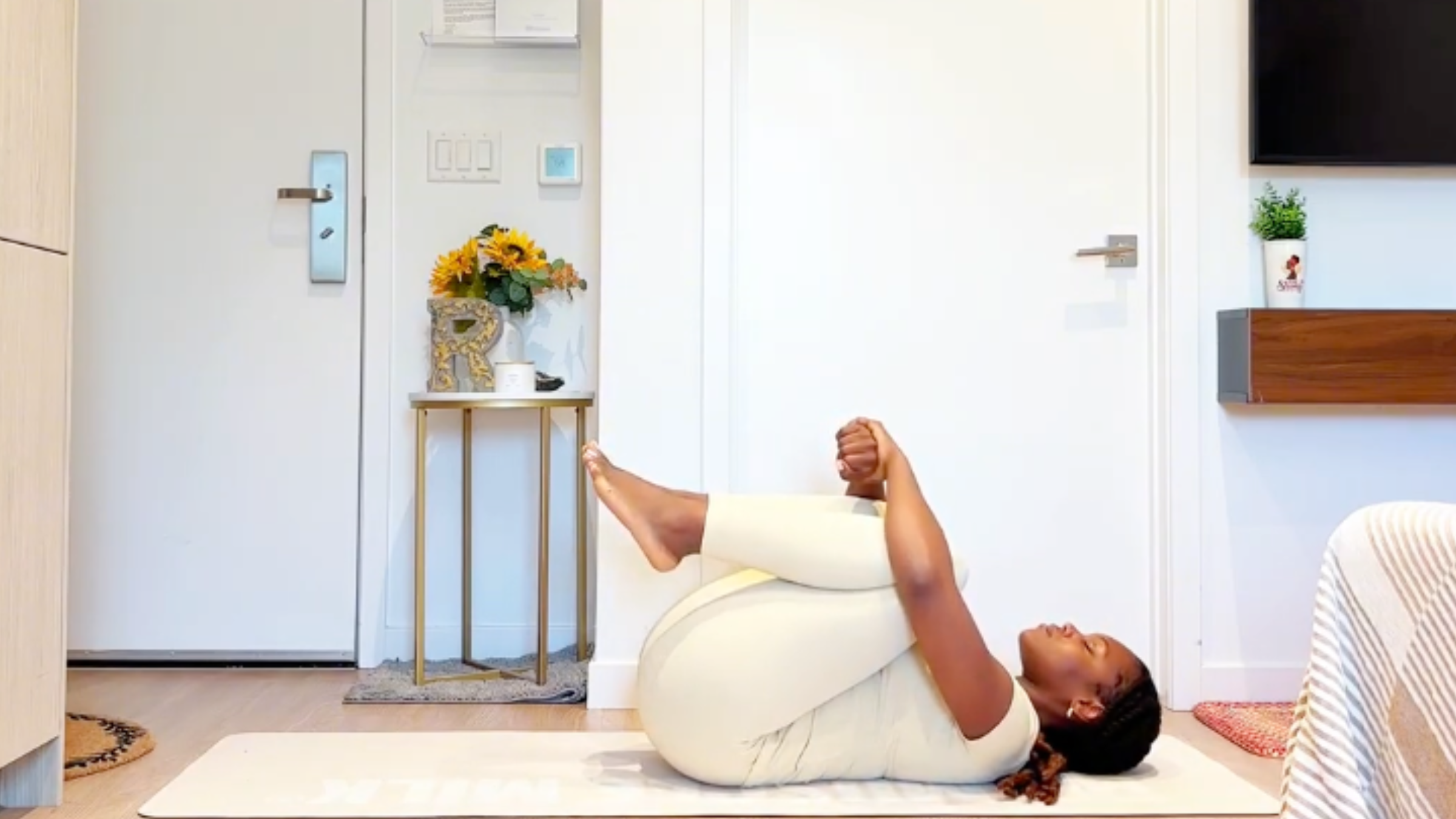
2. Knees to Chest (Apanasana)
- The Movement: Draw both knees gently toward your chest, hugging your shins or grasping behind your thighs. Take several slow breaths before lowering your feet back to the mat.
- The Purpose: Massages the lower back, gently stimulates digestion, and encourages an inward focus away from external distractions.
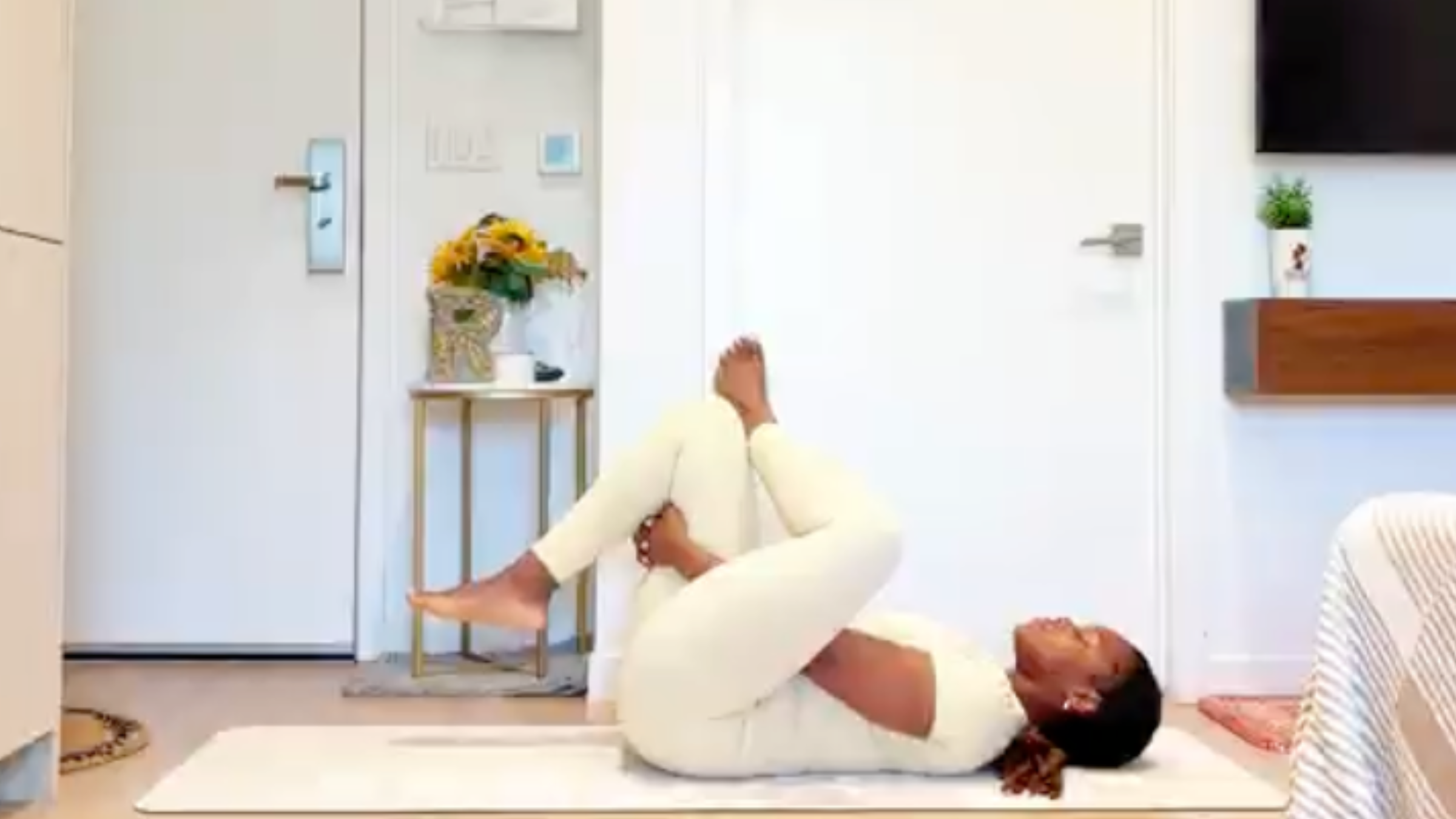
3. Figure 4 Pose
- The Movement: With knees bent and feet flat, cross your left ankle over your right knee. Maintain this shape or deepen it by drawing your legs toward your chest, interlacing your hands behind your right thigh or shin. Hold for several breaths, uncross, and repeat on the right side.
- The Purpose: Targets the glutes and piriformis muscle. Since modern humans spend hours sitting, these muscles trap physical stress that mimics sciatica or lower back discomfort at night.
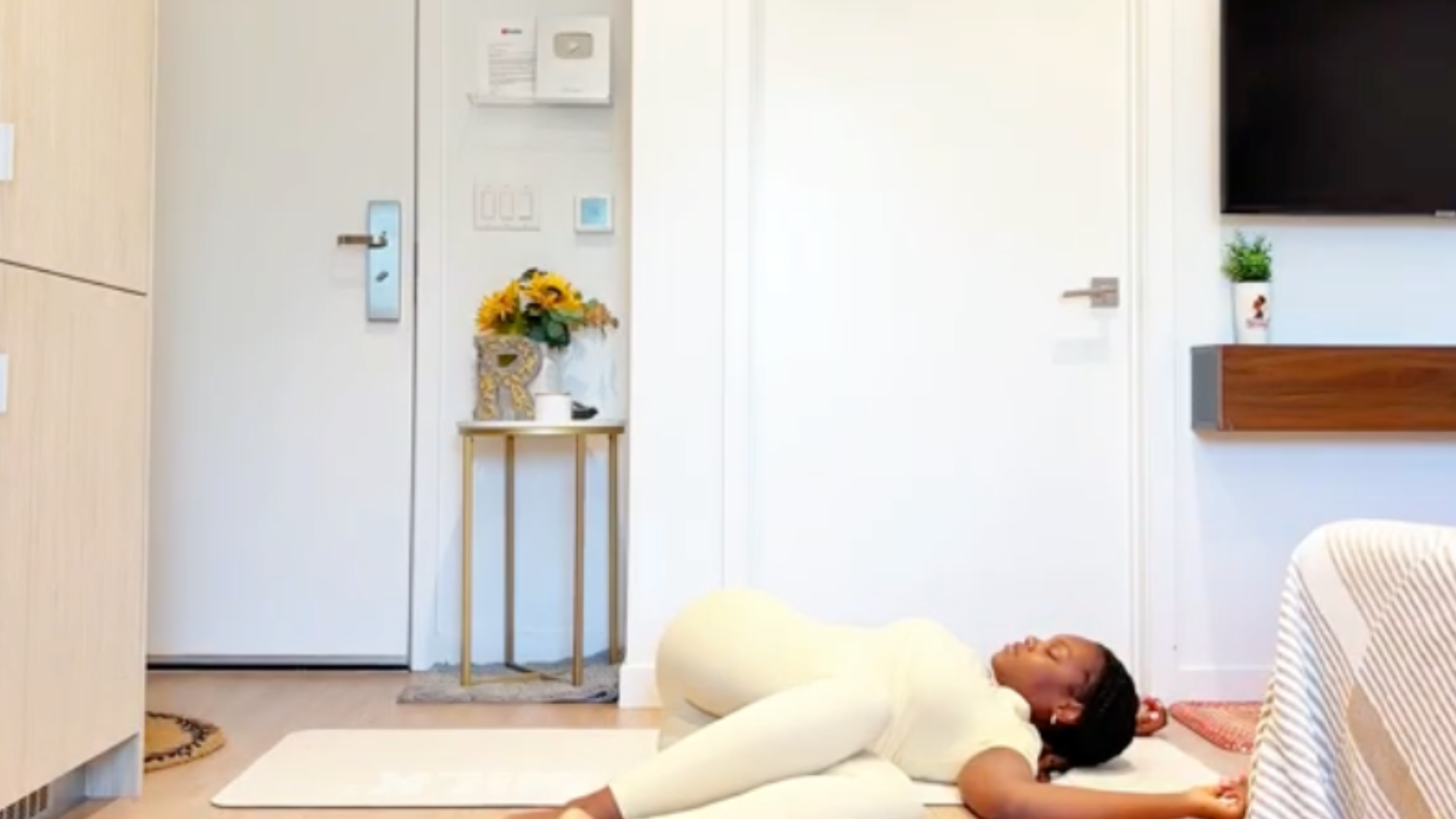
4. Supine Spinal Twist
- The Movement: Draw your knees toward your chest and allow them to drop gently to the left side of the mat. (Pro tip: If your knees do not comfortably touch the floor, slide a yoga block or folded blanket underneath them for support). Relax all leg muscles. Hold, return to center, and repeat on the right side.
- The Purpose: Rotates the thoracic spine, relieves tension along the side body, and acts as a neurological "wringing out" of the day’s stress.
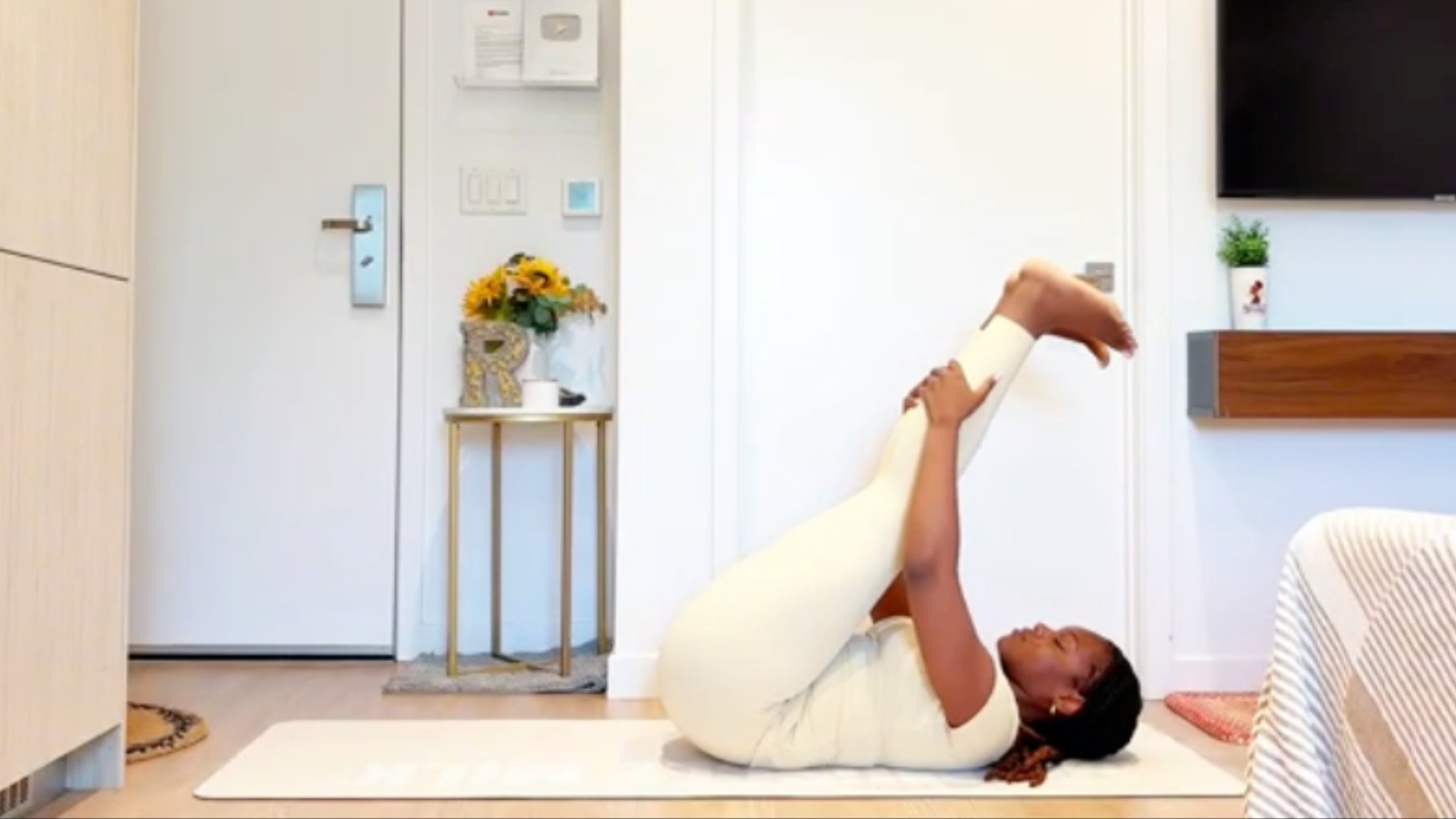
5. Supine Hamstring Stretch
- The Movement: Extend both legs straight up toward the ceiling, reaching through your heels. Keep your lower back anchored to the mat, gently drawing the legs closer to your torso. Maintain a micro-bend in the knees if hamstrings are tight.
- The Purpose: Elongates the back of the legs, improving circulation and counteracting the stagnation caused by long periods of standing or sitting.
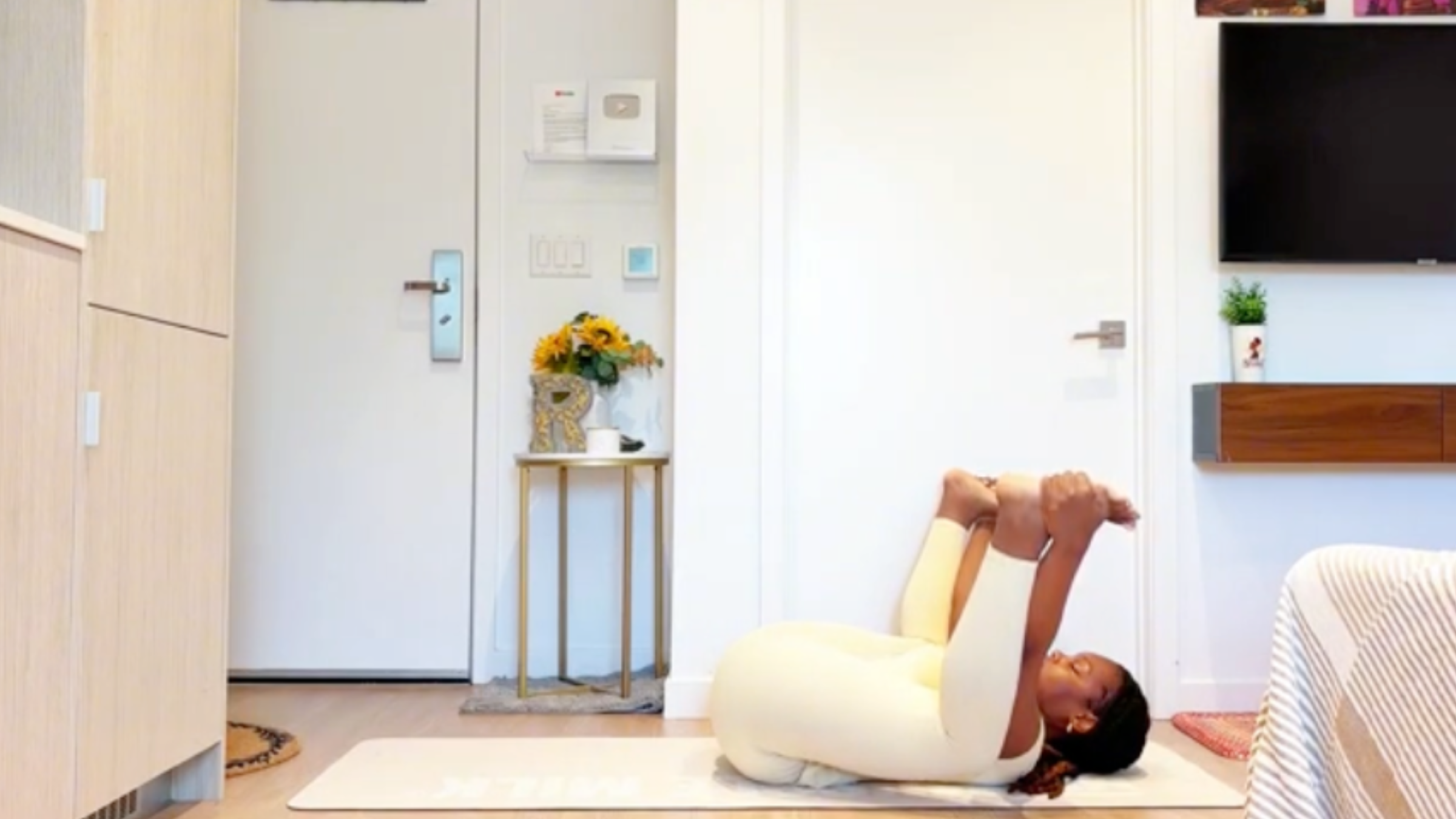
6. Happy Baby Pose (Ananda Balasana)
- The Movement: Bend your knees and draw them wide toward your armpits. Reach up to grasp the outer edges of your feet, ankles, or shins, keeping your lower back firmly pressed into the mat. Breathe deeply.
- The Purpose: Deeply opens the hips—a primary storage site for emotional and physical tension—while grounding the spine. Finish this phase with one final deep hug of the knees to the chest, inhaling through the nose and exhaling with an audible sigh through the mouth.
7. Savasana (Corpse Pose)
- The Movement: Unfurl your legs and arms out straight onto the mat or bed. Let your feet splay open naturally, turn your palms upward to signal receptivity, close your eyes, and surrender your body weight to gravity.
- The Purpose: Complete integration. Savasana robs the body of unnecessary muscular engagement, allowing the heart rate to settle into its resting baseline as you naturally transition into deep sleep.
Implications for Modern Health and Daily Routines
The growing popularity of micro-routines like Overton’s points toward a broader paradigm shift in how society approaches self-care. As burnout rates remain high, wellness is moving away from intensive, time-consuming regimens and toward accessible, sustainable micro-habits that fit seamlessly into congested modern schedules.
1. Democratization of Wellness
By eliminating props, complex alignments, and physical strain, routines like this lower the barrier to entry for holistic health practices. Anyone with a floor and five minutes can participate, regardless of age, physical fitness, or socioeconomic status.
2. Redefining Productivity Culture
The cultural obsession with optimization has historically bled into sleep—treating rest as a logistical problem to be "hacked." Practices rooted in somatic release challenge this mindset by prioritizing surrender over control. Instead of forcing the body to sleep, the individual creates the environmental and physiological conditions that allow sleep to happen naturally.
3. Sustainable Sleep Hygiene
As public health organizations increasingly link chronic sleep deprivation to cardiovascular disease, metabolic dysfunction, and cognitive decline, practical tools like Overton’s sequence offer an accessible, non-pharmacological first line of defense against insomnia. Integrating somatic movement into bedtime habits provides an empowering, self-directed pathway toward long-term physical and mental resilience.
