

LONDON — In the ever-evolving world of esoteric arts and modern mindfulness, a novel tarot spread is capturing the imagination of practitioners, historians of the occult, and self-discovery enthusiasts alike. Known as "Ancient Echoes," this innovative methodology bridges the gap between contemporary psychological introspection and traditional cartomancy. Developed under the banner of Tarosophy—a dynamic approach to tarot that emphasizes wisdom, play, and personal empowerment over rigid fortune-telling—the technique offers a structured pathway to explore past lives and understand their tangible, lingering bearings on our current existence.
Far from traditional fortune-telling, Ancient Echoes operates as a reflective, narrative-driven framework. By utilizing a "split-deck" technique, practitioners divide a standard tarot deck into distinct categories—Court Cards, Major Arcana, and Minor Arcana—to map out a multi-layered tapestry of the soul’s journey across time. As interest in holistic wellness, reincarnation philosophies, and deep psychological archetypes surges globally, this structured spread provides a grounded, creative method for individuals seeking profound personal insight.
Main Facts: What Is the "Ancient Echoes" Spread?
At its core, Ancient Echoes is a specialized Tarosophy layout designed to investigate the concept of past lives not as abstract historical fantasies, but as active psychological influences shaping our present-day realities.
The mechanism relies on a deliberate division of the 78-card tarot deck into three foundational stacks:
- The Court Cards: Representing personalities, soul archetypes, and aspects of the self.
- The Major Arcana: Representing overarching life themes, spiritual turning points, and major karmic lessons.
- The Minor Arcana: Representing daily experiences, emotional currents, environments, and the concrete details of lived human experience.
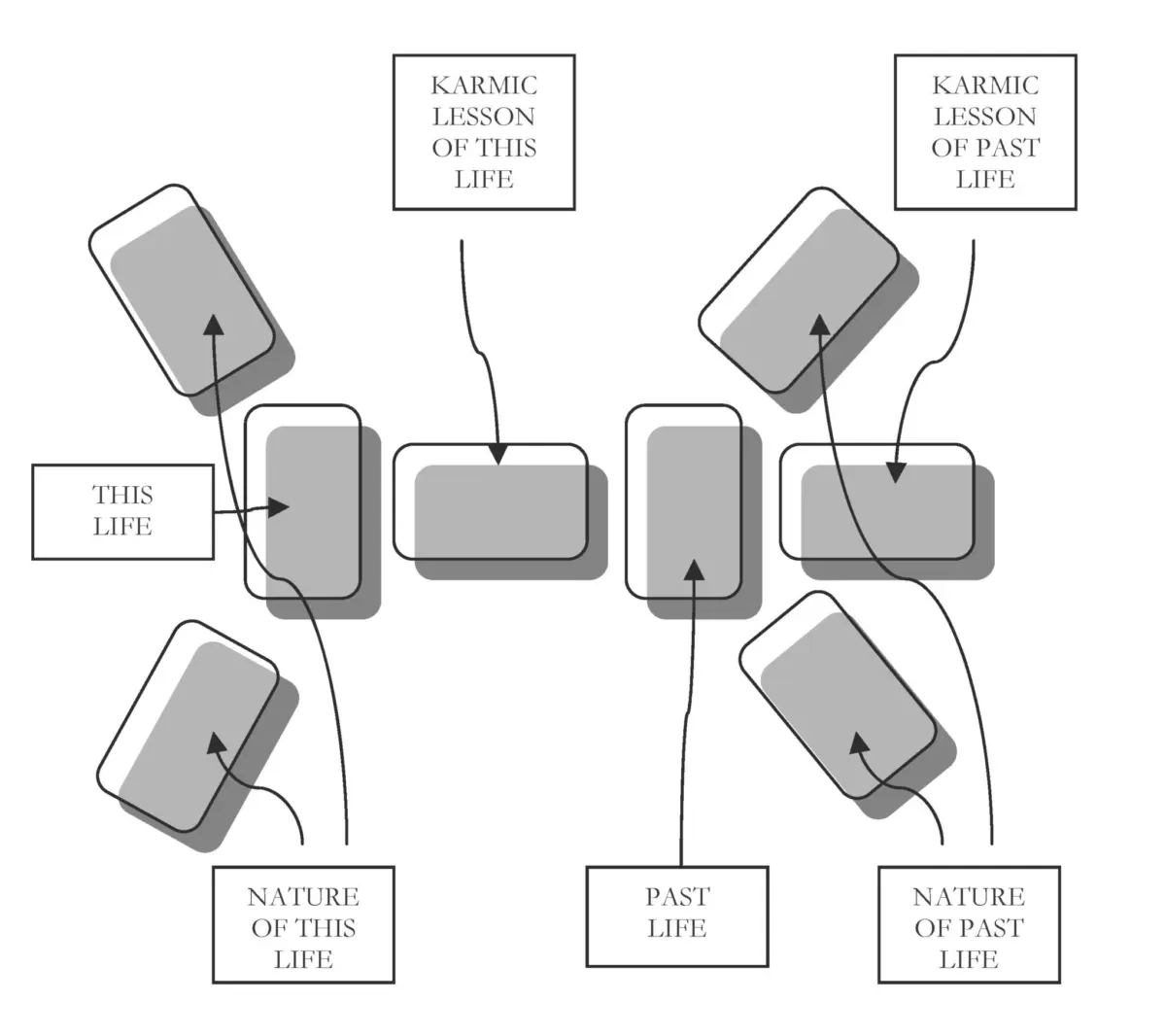
Unlike linear spreads that read strictly from left to right or past to future, Ancient Echoes creates a constellation of cards on the table. This layout establishes a dialogue between the modern-day self and the echoes of ancestral or past-life incarnations. By pairing specific card categories with targeted reflective prompts—such as "This is the nature of my Soul in present-time" or "This is an echo of my previous lifetime self"—the practitioner moves away from passive card interpretation and steps directly into active myth-making and narrative therapy.
Chronology: Step-by-Step Guide to the Layout
For practitioners and curious readers looking to understand the mechanics of this groundbreaking method, the Ancient Echoes process follows a precise, meditative chronology.
Step 1: Sorting and Establishing the Present Soul
The process begins by taking a standard tarot deck and physically separating it into three distinct stacks: the Court Cards, the Major Arcana, and the Minor Arcana.
- Take the stack of Court Cards and shuffle them thoroughly.
- Draw one card at random and place it in the center of the table.
- As you lay it down, state the focal intention: "This is the nature of my Soul in present-time." This card acts as the anchor, representing who you are fundamentally in this current incarnation before past-life conditioning is layered on top.
Step 2: Defining the Current Lifetime
- Next, take the Minor Arcana stack and shuffle it.
- Draw two cards and place them around the central Soul card.
- Accompany this placement with the prompt: "This is the nature of my lifetime in this life." These two cards illuminate the immediate environment, challenges, and emotional textures defining your current human experience.
Step 3: Invoking the First Echo (Previous Lifetime Self)
- Return to the Court Cards stack. Shuffle them once more while keeping the current life cards in view.
- Draw a single Court Card and place it to one side—whether top, bottom, left, or right—of the Minor Arcana cards representing your current life.
- State clearly: "This is an echo of my previous lifetime self." This represents the personality, archetype, or social standing of the soul in an immediate past incarnation.
Step 4: Identifying the Karmic Lesson
- Pick up the Major Arcana stack and shuffle it well.
- Select a card from this stack and place it directly between the central Soul card and the previous-life Court Card.
- Affirm: "This is the Karmic lesson I must learn in this lifetime." The Major Arcana card serves as the bridge of spiritual evolution, explaining why this specific past-life energy is echoing into your current reality and what evolution is required of you now.
Step 5: Illustrating the Past Life
- Return to the Minor Arcana stack for a final shuffle in this cycle, keeping the newly placed Karmic Lesson card in mind.
- Draw two Minor Arcana cards and place them directly against the previous life Court Card.
- Declare: "This was the nature of that previous life."
- Weaving the Narrative: With these two cards in position alongside the past-life Court Card, the practitioner engages in the art of synthesis—weaving a coherent, intuitive story about what that historical or past existence looked like, how that person lived, and what they experienced.
Supporting Data: Expanding and Analyzing the Spread
The beauty of the Ancient Echoes method lies in its scalability and depth of analytical potential. It is not limited to a single past life; rather, it can be expanded infinitely to trace a lineage of incarnations.
Infinite Regression: Expanding Across Ages
Practitioners are not required to stop at one previous lifetime. The spread allows for continuous expansion:
- You can keep repeating the method by taking the previous-life Court Card as a new anchor point.
- Lay out another Karmic Lesson Major Card branching outward.
- Continue working outwards in successive echoes through all previous lifetimes, creating a sprawling genealogical map of the soul’s historical trajectory.
Deeper Pattern Recognition: Suits and Demographics
To extract maximum value from the reading, Tarosophy encourages detailed data collection from the cards themselves:
- Gender and Demographics: Practitioners are encouraged to observe whether the previous-life Court Cards lean predominantly male or female, offering insights into how the soul has balanced anima and animus energies over millennia.
- Occupational and Environmental Indicators: Particular Minor Arcana suits can be analyzed for specialized meanings—such as Pentacles denoting labor, trade, or poverty/wealth; Swords indicating intellectual pursuits, military service, or conflict; Cups reflecting emotional, artistic, or spiritual vocations; and Wands highlighting travel, entrepreneurship, or agrarian lifestyles.
- The Karmic Row: By taking all the Karmic Lesson Major Arcana cards drawn during an extended reading and aligning them in a sequential row, the practitioner can analyze the linear progression. This visual line reveals overarching spiritual arcs, recurring soul lessons, and evolutionary milestones across centuries of supposed existence.
Official Responses and Expert Perspectives from the Tarosophy Community
Since its introduction to the wider esoteric community via the Tarot Association, Ancient Echoes has sparked considerable discussion among professional readers, transpersonal psychologists, and holistic practitioners.
Marcus Katz, co-founder of Tarosophy and a leading voice in modern tarot innovation, noted that the method was designed to move tarot reading away from passive prediction and toward active psychological synthesis. "People have an innate fascination with where they come from and why they feel the way they do," Katz explained in a recent community seminar. "Ancient Echoes does not require dogmatic beliefs in past lives to be effective. Whether viewed through the lens of literal reincarnation, ancestral memory, or deep Jungian archetypes, the method provides a brilliant, structured mirror for understanding how historical patterns echo through our daily choices."
Holistic therapists and intuitive counselors have similarly praised the split-deck methodology. Dr. Elena Vance, a transpersonal psychotherapist specializing in narrative and expressive arts therapies, remarked on the psychological utility of the spread: "When you ask a client to weave a story about a ‘previous lifetime’ using specific symbolic anchors like Court and Minor cards, you bypass the critical mind. Clients project deep-seated subconscious blocks, behavioral loops, and unresolved grief onto the past-life narrative. Once it’s externalized on the table, it becomes much easier to heal in the present."
Implications: The Future of Modern Cartomancy and Self-Discovery
As the wellness industry continues to embrace tools that merge intuition with structured introspection, the implications of methods like Ancient Echoes are profound.
- A Shift Toward Narrative Therapy: Traditional tarot readings often suffer from a predictive bottleneck—clients asking "What will happen to me?" Ancient Echoes shifts the paradigm entirely to "Who have I been, and how does it inform who I am becoming?" This empowers individuals to take active authorship of their personal narratives.
- De-dogmatizing Esoteric Practices: By framing past-life exploration as an imaginative and archetypal exercise rather than an unquestionable dogmatic truth, Tarosophy makes esoteric concepts accessible to skeptics and mainstream seekers alike. Anyone, regardless of their metaphysical beliefs, can utilize the cards to examine behavioral inheritances and ancestral patterns.
- The Renaissance of Split-Deck Spreads: The success of Ancient Echoes highlights a growing appetite for complex, modular tarot techniques. By breaking the deck down into its constituent elemental and archetypal components, readers are discovering new dimensions of depth that standard, monolithic spreads simply cannot achieve.
Ultimately, Ancient Echoes serves as a testament to the enduring adaptability of the tarot. More than two centuries after its modern iteration as a divinatory tool, the cards continue to find new voices, new structures, and new ways to help humanity answer the timeless, haunting question: Who am I? Whether gazing into the single central soul card or tracing an endless chain of historical echoes across the felt, practitioners of this innovative method are finding that the past is never truly gone—it is simply waiting to be read.
