

Main Facts: A Cinematic Escape in the Heart of County Clare
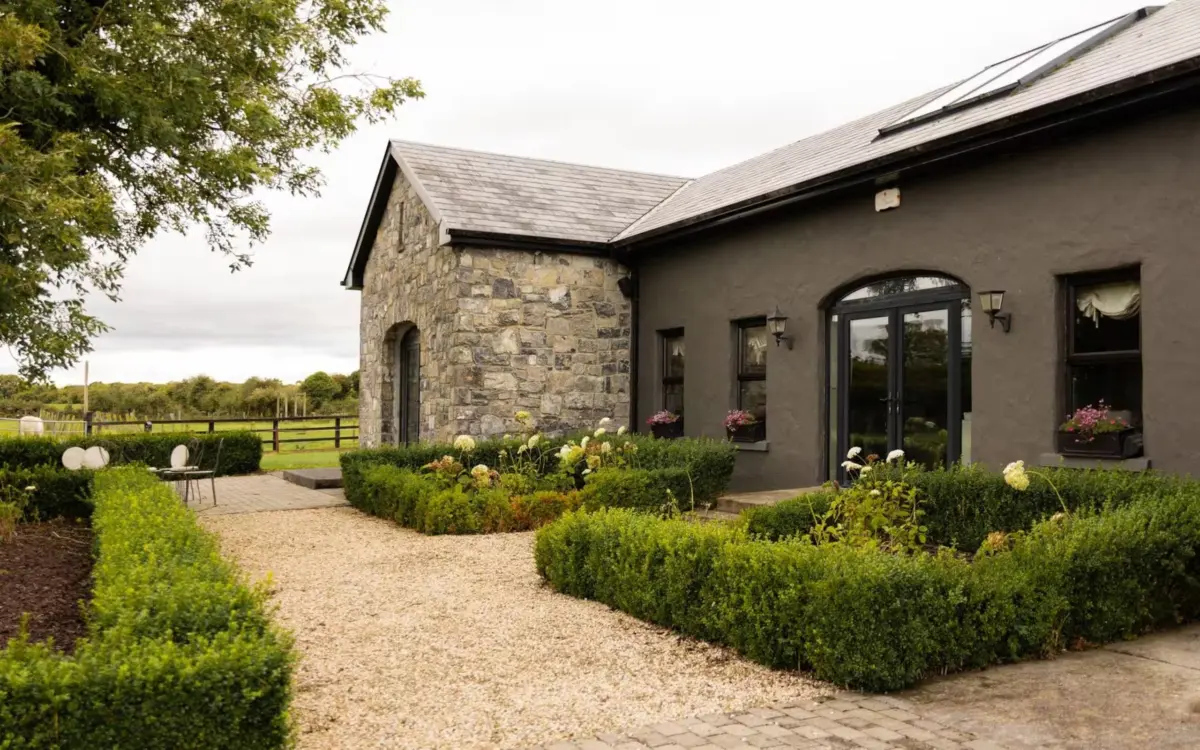
For travelers seeking a quintessential Irish countryside retreat that balances rustic charm with contemporary luxury, a 70-acre organic farm just outside the historic village of Corofin, County Clare, offers an idyllic sanctuary. Featuring a newly constructed, two-bedroom modern farmhouse, the property merges traditional rural aesthetics—such as textured plaster walls, rugged stone accents, and classic tiled roofs—with vaulted cathedral ceilings and expansive, light-filled windows.
The interior design evokes the effortless, lived-in warmth of a Nancy Meyers film set, complete with slipcovered seating, painted wood paneling, woven decorative elements, and a crackling wood-burning fireplace. Positioned within striking distance of Ireland’s premier natural attractions, including the otherworldly landscape of Burren National Park and the dramatic, windswept Cliffs of Moher, the farmstay acts as both a high-end luxury basecamp and a secluded rural escape.
Complemented by a kitchenette stocked with farm-fresh organic produce, private bedroom terraces overlooking grazing pastures, and an adjoining collection of boutique guest cabins, the property represents a growing movement in experiential hospitality: high-design agricultural tourism that prioritizes slower, more intentional travel.
Chronology: The Journey West and the Rhythm of Rural Life
The Three-Hour Road Trip from Dublin
The experience of visiting the Corofin farmstay begins long before guests ever cross the threshold, unfolding across the winding, picturesque byways of Ireland’s midlands and western coast. A typical journey from Dublin takes approximately three hours by car, a transit that quickly transforms from a straightforward commute into a leisurely road-trip adventure.
During a recent expedition, travelers reported stopping four distinct times along the route: an initial pause to take in a sweeping valley vista, a necessary tourist stop at the sprawling Barack Obama Plaza and modern service station, and two spontaneous diversions to gawk at wandering livestock grazing against emerald-green pastures. This slow-paced approach sets the tone for the remainder of the stay, shifting urban mindsets away from tight itineraries and toward the unpredictable charm of the Irish countryside.
Settling into the Farm
Upon arrival at the 70-acre organic estate, the urgency of sightseeing immediately dissipates. The physical transition from the car to the open-concept living space is marked by immediate comforts. Awaiting guests on the kitchen counter is a welcoming spread of artisanal provisions: a warm loaf of organic sourdough bread and freshly gathered eggs courtesy of the property’s resident chickens.

Evenings at the farm follow a predictable, deeply relaxing rhythm. Visitors spend twilight hours tending to the wood-burning fireplace, playing cards around the wooden dining table, and watching horses graze just beyond the glass.
Mornings and Exploration
Mornings begin slowly, often initiated by fresh coffee brewed in the kitchenette and enjoyed through open French doors that lead directly from the bedrooms onto a cobbled terrace. Here, guests sip their morning beverages surrounded by the estate’s resident animals—horses, sheep, and a famously vocal local donkey.
Days are split between exploring nearby landmarks—such as a 10-minute drive to the limestone pavements of Burren National Park or a 30-minute excursion to the Atlantic-facing Cliffs of Moher—and returning by late afternoon to the quiet solitude of the farm.
Departure and Reluctance to Leave
Checkout day is routinely met with resistance. True to the inbound journey, departures from the property are delayed by parting glances at the landscape. Visitors frequently find themselves stopping twice before even clearing the stone wall–lined driveway: once to say a final goodbye to the friendly equine neighbors, and once more to capture a final photograph of the rolling County Clare fields.
Supporting Data: Architecture, Amenities, and Local Logistics
Architectural and Interior Specifications
The two-bedroom farmstay is an architectural masterclass in blending modern construction standards with vernacular Irish design. Key structural and aesthetic features include:
- Ceilings & Light: Cathedral-height ceilings paired with generous window placements that maximize natural daylight throughout the open-concept living, dining, and kitchen areas.
- Textiles & Finishes: Slipcovered, deeply comfortable seating; painted wood paneling; natural woven accents; and durable stone decorative elements.
- The Kitchenette: Designed for effortless meal preparation, featuring a two-burner induction stove, a compact mini-fridge, a high-end coffee maker, and bespoke welcome baskets containing local organic sourdough and farm-fresh eggs.
- Sleeping Quarters: A primary bedroom outfitted with a wildly comfortable four-poster king-sized bed, piled high with a plush duvet and overstuffed pillows. A secondary bedroom features two twin beds, making the layout exceptionally versatile for families or small groups of friends.
- Bathrooms: A central, full-service bathroom featuring modern fixtures and classic tiling.
Property Layout and Capacity
The main two-bedroom farmhouse is complemented by three separate guest cabins situated further along the property’s walking paths. This modular layout allows larger multi-family groups or traveling parties to book multiple units, staying in close proximity while maintaining absolute privacy. A communal parking lot serves the various dwellings, though dense landscaping and strategic architectural placement ensure that guests rarely cross paths, maintaining an air of total seclusion even during peak booking capacity.

Climate and Comfort
Like many traditional and contemporary rural homes in Ireland, the property does not feature central air-conditioning. However, the geographic advantage of County Clare—tempered by Atlantic breezes—renders mechanical cooling unnecessary. Cool, crisp night air provides a refreshing contrast to urban summer heatwaves, though light sleepers should note the occasional early-morning vocalizations of the farm’s resident livestock.
Local Infrastructure and Convenience
While the farmstay feels wonderfully remote, it remains exceptionally well-connected to modern conveniences:
- Corofin High Street: Located just minutes away, offering local pubs, traditional music sessions, and historical sites.
- Provisioning: A Centra service station and grocery store is located a mere five-minute drive down the road, ensuring easy access to additional food, beverage, and travel supplies.
- Natural Attractions: Burren National Park (10 minutes away) and the Cliffs of Moher (30 minutes away) offer world-class hiking, geology, and coastal sightseeing.
Official Responses: Perspectives on Experiential Agritourism
The rise of high-design farmstays in regions like County Clare reflects a broader evolution within the global hospitality sector. Tourism boards, property owners, and sustainable agriculture advocates are increasingly aligned in promoting rural stays as a solution to over-tourism in traditional urban hubs.
The Host and Property Perspective
According to management and property stakeholders, the goal of developing the Corofin estate was never simply to provide a bed for the night, but to curate an immersive sensory experience. "Modern travelers are fatigued by sterile hotel environments and hyper-accelerated itineraries," notes a spokesperson for the estate. "By offering a space that marries the high-end aesthetic expectations of contemporary architecture magazines with the unvarnished reality of a working organic farm, we provide guests with a psychological reset. The animals, the open fields, and the wood-burning hearths are not just decorations; they are active participants in the guest’s well-being."
Regional Tourism and Economic Impact
Local tourism authorities in County Clare have lauded small-scale agricultural developments for distributing tourist revenue beyond major coastal hotspots like Doolin and Lahinch. By encouraging visitors to base themselves in agricultural interiors—such as Corofin—travelers are more likely to patronize inland village pubs, craft makers, and farm-to-table producers.
Furthermore, agricultural extension offices emphasize that diversification through boutique tourism provides vital economic resilience for working farms, enabling families to maintain organic farming practices and land stewardship without relying solely on traditional agricultural yields.

Implications: The Shift Toward Slow Travel and Farmstay Culture
The popularity of properties like the County Clare organic farmstay signals a fundamental shift in consumer preferences, moving away from high-density sightseeing toward "slow travel"—a movement that values depth, connection, and rest over check-box tourism.
The Psychological Benefit of Agricultural Immersive Travel
Urban burnout has created an insatiable demand for environments that force a deceleration of pace. The architectural design of the Corofin farmhouse—featuring inward-facing reading nooks, large dining tables meant for long card games, and direct physical proximity to animals and green space—acts as a built-in antidote to modern digital saturation. The absence of television screens in favor of wood fires and window views encourages a reconnection with immediate physical surroundings.
Sustainability and Environmental Consciousness
As travelers become increasingly conscious of their carbon footprints, agritourism offers a lower-impact model of exploration. Organic farms that incorporate renewable building materials, local food sourcing (such as farm eggs and sourdough provided upon arrival), and land preservation contribute positively to rural ecosystems. Guests are not merely consumers of a landscape; they become temporary participants in a sustainable ecosystem, observing animal husbandry, land conservation, and rural community life firsthand.
The Future of Rural Hospitality
The success of this 70-acre County Clare retreat points to a lucrative and culturally significant future for rural real estate development across Ireland and greater Europe. As remote work flexibility persists and travelers demand deeper authenticity, properties that successfully bridge the gap between luxury hospitality and working agricultural landscapes will continue to define the gold standard of modern leisure. For those making the winding drive from Dublin, the ultimate takeaway is clear: the journey through Ireland is best measured not in the speed of arrival, but in the depth of the stillness found along the way.
