

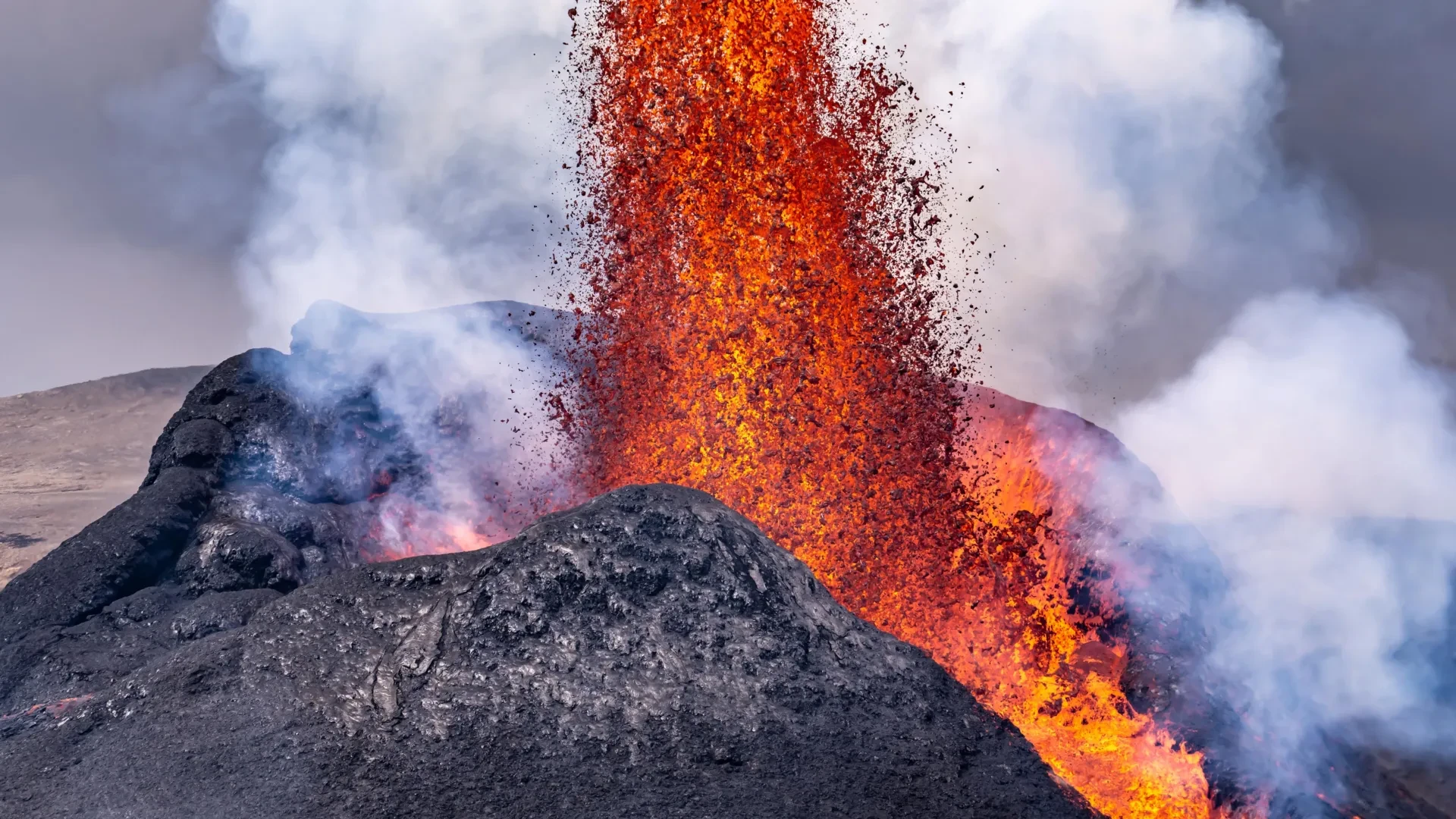
PERTH, AUSTRALIA — In a discovery that reshapes our understanding of the planet’s infancy, an international team of geoscientists has uncovered definitive proof that water was actively shaping Earth’s interior and fueling volcanic activity more than three billion years ago.
The research, published in the prestigious journal Nature Communications, focuses on pristine, ancient rock formations found in the remote Pilbara Craton of Western Australia. By analyzing chemical signatures locked deep within these geological time capsules, researchers have demonstrated that surface water traveled immense distances deep beneath the crust long before modern plate tectonics ever emerged. This fluid transport played a critical role in generating magmas strikingly similar to those fueling the modern Pacific "Ring of Fire."
The findings fundamentally challenge long-held assumptions about planetary evolution, suggesting that Earth was recycling water between its surface and its mantle much earlier—and through dramatically different mechanisms—than scientists previously dared to imagine.
Main Facts: Rewriting the Timeline of Planetary Hydrology
At the heart of the discovery is a radical revision of how early Earth operated. Today, the planet’s hydrologic and geological cycles are intrinsically linked through plate tectonics. At subduction zones, massive slabs of oceanic crust collide, and one dives beneath the other, dragging surface oceans down into the mantle. This deeply buried water lowers the melting point of mantle rocks, generating magma that rises to feed explosive arc volcanoes and build continental crust.
However, geologists have long maintained that the Hadean and Archean Earths—the fiery, primordial chapters of our planet’s history—were simply too hot for rigid, modern tectonic plates to subduct in this manner. Consequently, the prevailing scientific consensus assumed that surface water remained largely confined to early oceans and shallow crustal layers, playing little to no role in deep mantle dynamics.
The new study shatters that paradigm. The international research collective, spearheaded by Dr. Eric Vandenburg, a geochemist from Adelaide University’s School of Physics, Chemistry and Earth Sciences, discovered that significant volumes of water had infiltrated the deep interior of a 3.1-billion-year-old Earth. This water actively participated in petrogenesis—the creation of igneous rocks—proving that deep-Earth volatile recycling is an ancient, fundamental planetary process rather than a modern feature of plate tectonics.
Chronology: Unlocking the Secrets of the Pilbara Craton
To reconstruct events that transpired over three millennia of millennia, the research team targeted one of the rarest and most treasured geological archives on Earth: the Pilbara Craton in Western Australia.
The Preservation of a Primordial World
Rocks dating back more than three billion years are exceptionally scarce. Weathering, erosion, tectonic churning, and subduction have recycled nearly all of Earth’s earliest crust back into the mantle. The Pilbara Craton, alongside South Africa’s Kaapvaal Craton, represents a rare exception—a stable fragment of ancient continental crust that has survived largely undisturbed since the Archean eon.
Step-by-Step Reconstruction
- Initial Magma Generation (approx. 3.1 Billion Years Ago): Molten rock formed deep within the upper mantle beneath what is now Western Australia. Chemical anomalies within these magmas caught the attention of researchers, bearing unmistakable fingerprints of interaction with water that had originated on the surface.
- Crustal Cooling and Subsidence: The young, cooling crust—heavier and denser than today’s continental plates—began to experience structural instability.
- The Emplacement of Rocks: The magma erupted and cooled into durable volcanic rocks, locking away microscopic mineral grains and chemical isotopes that faithfully recorded the environmental conditions of their birth.
- Modern Discovery and Analysis: Millennia later, geologists collected these ancient samples, subjecting them to state-of-the-art geochemical and isotopic scrutiny to decode the hidden history of Earth’s early water cycle.
Supporting Data: The Mechanism of "Dripduction"
If modern plate tectonics was not yet active on a global scale three billion years ago, how did surface water travel deep underground? The research team proposes an ingenious alternative geological mechanism dubbed "dripduction."
The Mechanics of Dripduction
Rather than sliding horizontally along a subduction zone, portions of the early Earth’s crust operated vertically. According to the researchers’ models:
- Dense, water-soaked segments of the cooler outer crust periodically became gravitationally unstable.
- These heavy regions began to sag downward, slowly dripping or foundering directly into the hotter, more buoyant underlying mantle.
- As these dense crustal "drips" descended into the searing depths, they dewatered, releasing vast quantities of surface-derived moisture into the mantle.
- This liberated water fluxed the mantle, triggering the melting processes that generated arc-like magmas. These magmas subsequently ascended, breached the surface via ancient volcanoes, and eventually crystallized into the rocks preserved in the Pilbara today.
Multidisciplinary Collaboration
The robustness of this conclusion stems from a massive, multi-institutional effort. The study brought together leading minds from across the globe, including researchers from:
- Adelaide University
- Monash University
- The Geological Survey of Western Australia
- Curtin University
- The Australian National University
- Cardiff University
- The GEOMAR Helmholtz Center for Ocean Research in Germany
By combining field geology, high-precision mass spectrometry, and advanced numerical geodynamic modeling, the team successfully ruled out alternative explanations for the water signatures, confirming that the fluid was undeniably sourced from the ancient surface.
Official Responses and Expert Perspectives
The academic community has received the findings with a mixture of excitement and profound realization regarding how little is truly known about Earth’s formative eras.
"These rocks formed more than three billion years ago, when Earth was a very different place," noted lead author Dr. Eric Vandenburg during a press briefing discussing the publication in Nature Communications.
"The early Earth was too hot for plates to behave that way [like modern tectonic plates], so until now it has been unclear whether surface water could have made that journey more than three billion years ago, and if so, how. What surprised us was finding evidence that large amounts of water had already made their way deep into the Earth’s interior and influenced the formation of volcanic rocks."
Dr. Vandenburg emphasized that while the planet’s outer shell was not operating precisely as it does today, the fundamental ingredients of planetary habitability—such as internal-external volatile exchange—were already well underway.
Other participating researchers underscored that finding these chemical fingerprints required pushing analytical instrumentation to its absolute limits. The subtle isotopic shifts preserved within 3.1-billion-year-old zircon and silicate minerals demanded ultra-precise laser ablation techniques, ensuring that secondary contamination from modern weathering could be categorically eliminated.
Implications: Volcanism, Continents, and the Origins of Life
The discovery that Earth was recycling its surface water via dripduction more than three billion years ago carries profound implications across multiple branches of Earth and planetary science.
1. The Evolution of Continents
The generation of arc-like magmas is intimately tied to the formation of continental crust. By demonstrating that water-driven magmatism was occurring in the Archean, the study provides a critical piece of the puzzle regarding how Earth transitioned from a water-covered globe with sparse basaltic crusts to a planet boasting rich, buoyant, felsic continents.
2. Deep-Earth Volcanism
Understanding how water lowers melting points in the mantle helps geologists model ancient volcanic systems. This research proves that explosive, volatile-driven volcanism is not an exclusive product of modern plate tectonics, but rather a robust planetary phenomenon that can operate under alternative tectonic regimes.
3. Astrobiology and the Ingredients for Life
Water is the universal solvent required for life as we know it. The continuous cycling of water between the deep mantle and the surface acts as a grand chemical engine. It drives the carbon cycle, moderates atmospheric chemistry, and supplies essential nutrients to the biosphere. Knowing that this deep-cycling engine was operational 3.1 billion years ago provides crucial context for the environmental conditions surrounding the emergence and early evolution of terrestrial life.
4. Looking Beyond Earth
Finally, these insights extend far beyond our own world. As astronomers and geophysicists model the potential habitability of rocky exoplanets orbiting distant stars, understanding the thermodynamic limits of early planetary water cycles is paramount. If Earth could successfully drive surface water into its interior through dripduction during its scorching youth, similar processes might be operating on rocky exoplanets that lack Earth-style plate tectonics—broadening the definition of what makes a world habitable.
As geologists continue to scour rare ancient outcrops like the Pilbara Craton, one thing is abundantly clear: Earth’s deep past is far more dynamic, interconnected, and surprisingly modern than science ever dared to suspect.
