

Introduction: A Modern Approach to Ancient Wisdom
In the ever-evolving landscape of modern esoteric practices, tarot readers continually seek innovative ways to connect with younger demographics. Traditional spreads, often complex and laden with arcane terminology, can sometimes alienate teenagers and young adults who are just beginning their journey into self-discovery. Enter "The Four Pages"—a streamlined, highly engaging, and thoroughly road-tested tarot reading technique specifically tailored for individuals aged 14 to 19.
Developed over a decade ago and refined through hundreds of face-to-face sessions conducted with strict parental permission, this method bridges the gap between ancient divination and youth-centric psychological guidance. By transforming a traditional reading into an interactive, empowering experience, practitioners are finding unprecedented success in introducing teenagers to the profound benefits of cartomancy.
Main Facts: Deconstructing "The Four Pages" Method
At its core, "The Four Pages" is designed for speed, clarity, and deep personal resonance. Unlike comprehensive Celtic Cross spreads that can overwhelm a novice, this technique focuses on a triad of insights: personal identity, future ambition, and foundational support.
The Core Mechanics of the Spread
The methodology relies on a minimalist setup that yields maximum psychological impact:
- The Selection: The reader isolates the four Page cards (Pages of Wands, Cups, Swords, and Pentacles) from a standard tarot deck.
- Identification: The young querent (aged 14–19) selects the Page that best represents their current personality or aspirations.
- Reintegration: The remaining three Pages are returned to the deck, leaving only the querent’s chosen card in play.
- The Incantation: The reader presents the card back to the youth, framing it with a powerful narrative: "This is you, walking into the future. Let the cards show us something that will always help you in your life, and something that you should set your sights on."
- The Draw: The Page is inserted back into the deck, which is then shuffled. The young person instructs the reader when to stop.
- The Revelation: The deck is turned face-up to locate the Page, which is handed directly to the querent. The card immediately above it represents their ultimate ambition, while the card immediately below it signifies their hidden pillar of support.
This elegant structure strips away unnecessary card clutter, focusing entirely on the youth’s trajectory and inner resilience.
Chronology: The Evolution of a Youth-Centric Practice
To understand the enduring relevance of "The Four Pages," it is essential to trace its development from a conceptual idea into a staple of modern adolescent tarot practice.
Phase 1: Inception and Initial Trials (Over a Decade Ago)
More than ten years ago, forward-thinking cartomancers recognized a gap in the market. While adults frequently sought tarot readings for career and relationship guidance, teenagers were navigating intense developmental milestones—such as high school transitions, peer pressure, and college planning—largely unaided by esoteric tools. Creators formulated "The Four Pages" as a low-barrier entry point, intentionally utilizing the Page court cards because they traditionally symbolize youth, learning, and fresh beginnings.
Phase 2: Refinement Through Real-World Application
Over the subsequent years, the technique underwent rigorous practical testing. Conducted across hundreds of live sessions, practitioners noted which phrasing resonated best and how young audiences reacted to the spatial arrangement of the cards. Crucially, ethical boundaries were established early: readings for minors were strictly conditioned upon parental consent, ensuring transparency and trust between the reader, the teenager, and their guardians.
Phase 3: The Group Dynamic Discovery
As the technique was utilized in community workshops and social gatherings, practitioners stumbled upon a secondary benefit: group engagement. Because the process is quick, visual, and faintly reminiscent of sleight-of-hand magic, it naturally drew crowds of teenagers. Peer observation transformed individual readings into shared social experiences, where adolescents eagerly awaited their turn to discover their personal "invisible friends" within the deck.
Supporting Data and Practical Application: Case Studies in the Field
To fully appreciate how "The Four Pages" operates in practice, one must examine the qualitative data gathered from live readings. The methodology relies heavily on metaphorical translation—converting traditional, sometimes ominous-looking tarot imagery into empowering life lessons.
Case Example: Translating the Archetypes
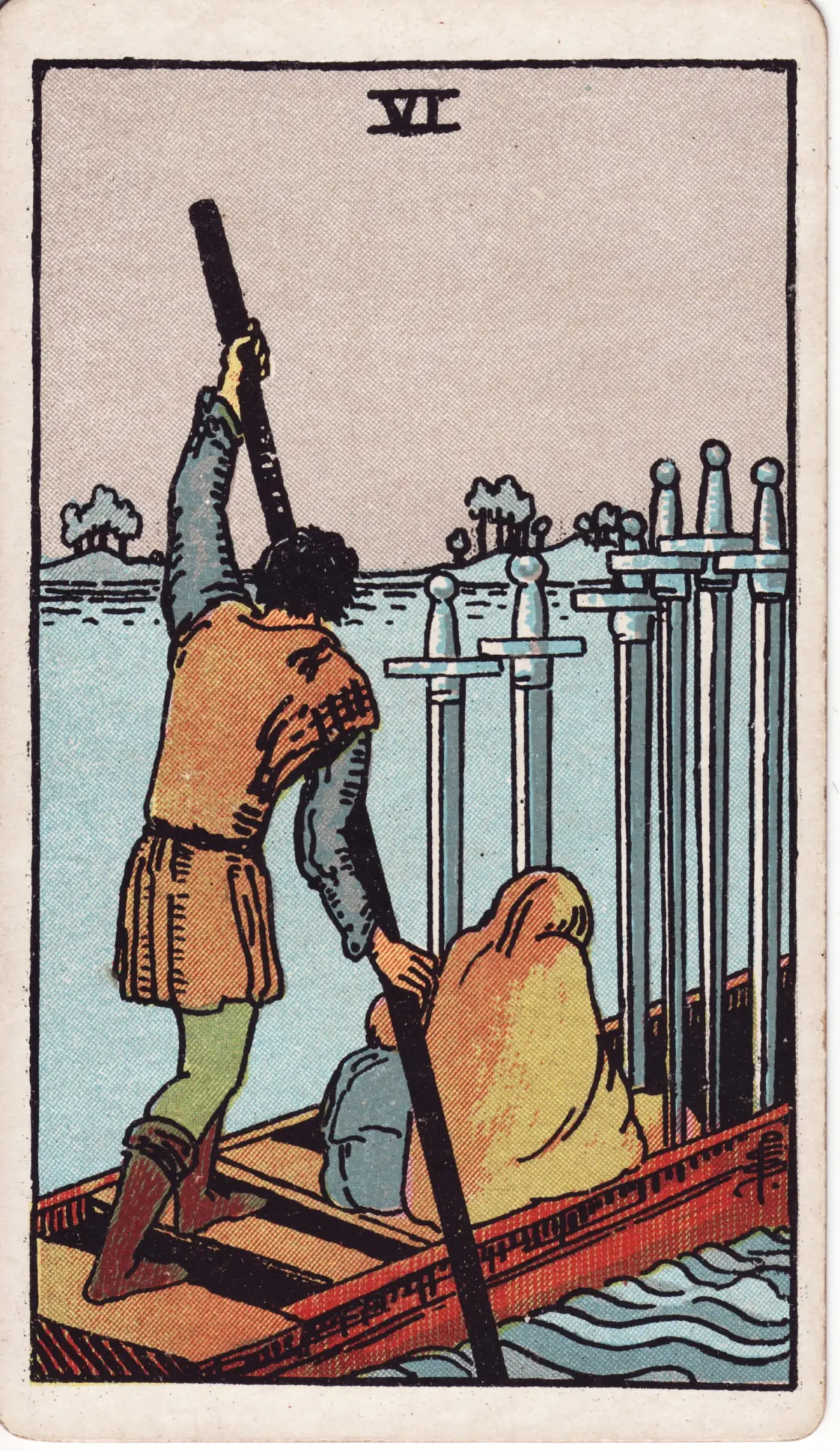
Consider a typical reading where a teenager draws the Page of Swords to represent themselves. After shuffling and cutting the deck, the reader discovers the Six of Swords positioned directly above the Page, and the 7 of Wands positioned directly below.

The reader translates these symbols into accessible, actionable wisdom:
- The Ambition (Six of Swords): Framed as a call to adventure. The reader explains, "This shows you should always go the distance, go out into the world and travel—or expand your horizons through learning and education. Get out there!"
- The Support System (7 of Wands): Framed as an inner anchor. The reader notes, "This shows you will always be able to keep your balance despite opposition. When the going gets tough, you will be able to stand your ground. Never forget this card."
Together, these surrounding cards are referred to by practitioners as the youth’s "invisible friends"—archetypal guides that can be mentally invoked whenever life presents challenges.
Official Responses and Ethical Considerations
Introducing tarot and metaphysical practices to minors naturally invites scrutiny from parents, educators, and psychological professionals. Consequently, proponents of "The Four Pages" emphasize strict ethical guidelines to ensure the practice remains safe, constructive, and well-received.
The Necessity of Parental Permission
Ethical practitioners maintain a strict policy: no reading is conducted for individuals under the age of majority without explicit, informed consent from a parent or legal guardian. This ensures that families remain aligned and that the minor’s exploration of divination is supported within their domestic environment.
Framing as Empowerment, Not Prediction
A cornerstone of professional responses to critics is the clear distinction between fatalistic fortune-telling and psychological empowerment. "The Four Pages" explicitly avoids deterministic language (e.g., "This is going to happen to you"). Instead, it utilizes projective psychology. The cards serve as a mirror for the teenager’s own ambitions and inner strengths, encouraging agency, critical thinking, and emotional resilience rather than passive reliance on fate.
Educational and holistic circles have largely praised this approach, noting that it mirrors narrative therapy techniques where clients re-author their life stories using symbolic frameworks.
Implications: The Future of Youth Cartomancy and Cultural Impact
The success of "The Four Pages" carries significant implications for the broader tarot community and the ways society approaches youth mental wellness and self-exploration.
1. Modernizing Esoteric Traditions
As younger generations embrace spirituality, astrology, and tarot via social media platforms, the demand for accessible, non-dogmatic practices is skyrocketing. "The Four Pages" demonstrates that traditional systems can be successfully adapted for contemporary audiences without diluting their symbolic depth. By focusing on archetypes that mirror the user’s developmental stage (the Page), the technique honors the historical roots of the cards while maximizing modern relevance.
2. Fostering Resilience in Adolescence
The teenage years are notoriously fraught with identity crises and anxiety about the future. By providing adolescents with tangible symbols of their potential ("something to set your sights on") and their inner strength ("something that will always help you"), readings using this method function as a unique form of mindfulness and self-reflection. It gives young people a vocabulary to articulate their ambitions and fears.
3. The Power of Performance and Engagement
Finally, the insight regarding the "magic trick" presentation style highlights an important truth about youth engagement: esoteric practices do not need to be somber or overly solemn to be meaningful. By infusing the reading with flair, mystery, and theatricality, practitioners lower the intimidation barrier. This playful approach invites curiosity, transforming what could be an intimidating consultation into a memorable, uplifting, and transformative experience.
Conclusion
"The Four Pages" transcends being merely a clever tarot spread; it represents a thoughtful evolution in how esoteric wisdom is transmitted across generations. By prioritizing brevity, active participation, and positive psychological framing, its creators have crafted a timeless tool that empowers teenagers to navigate the threshold of adulthood with confidence, clarity, and a deck of cards in hand.
