

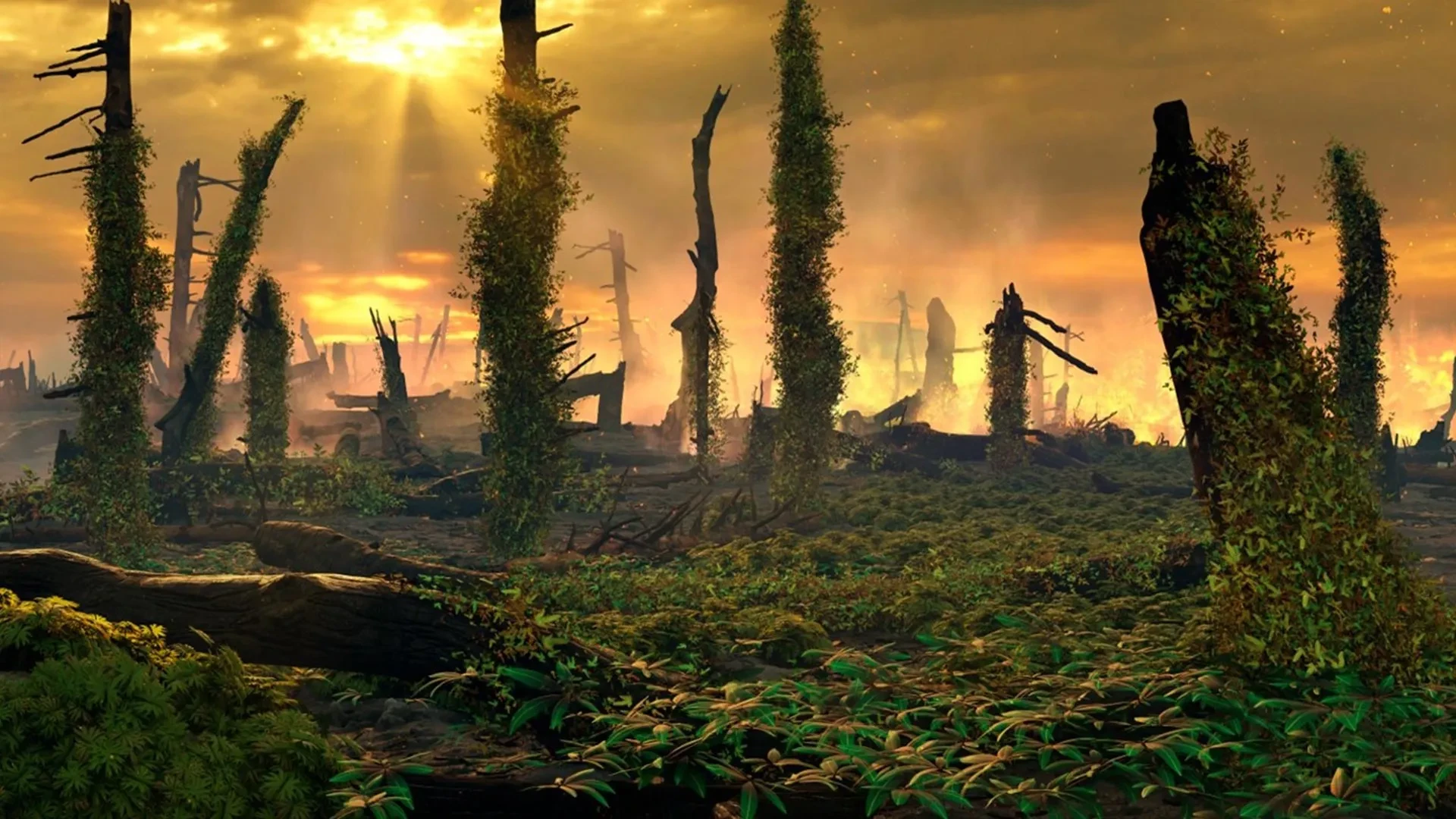
LONDON & UTRECHT — Approximately 201 million years ago, Earth suffered one of the most devastating biotic crises in its history: the end-Triassic mass extinction. While scientists have long known that this catastrophic event was triggered by massive, protracted volcanic eruptions associated with the fragmentation of the supercontinent Pangea, new research reveals a terrifying ecological feedback loop that turned a warming planet into a burning wasteland.
According to a landmark study published on July 21, 2026, in the journal Nature Geoscience, an international team of geologists led by researchers at Utrecht University has discovered that the global extinction interval was plagued by a prolonged, self-sustaining wildfire crisis. As ancient forests collapsed under the weight of extreme global warming, resilient "disaster species" of ferns invaded the landscape. These dense, sprawling fern fields did not merely survive the infernos—they actively fueled them, creating a fiery feedback loop that lasted for hundreds of thousands of years.
1. Main Facts: Unlocking the Triassic Inferno
The end-Triassic mass extinction wiped out a massive percentage of marine and terrestrial species, clearing the ecological stage for the rise of the dinosaurs. The root cause was the Central Atlantic Magmatic Province (CAMP), an immense system of volcanic activity that belched vast quantities of carbon dioxide ($CO_2$) into the atmosphere. This ancient greenhouse gas surge drove global temperatures upward by an estimated 5 to 10 degrees Celsius.
As the planet heated, complex forest ecosystems disintegrated. In their place, opportunistic ferns rapidly colonized damaged landscapes, blanketing large parts of what is now Northwest Europe in broad, savannah-like environments.
The new Utrecht-led study demonstrates that these fern-dominated regions were exceptionally vulnerable to fire. Rather than acting as a buffer against destruction, the ferns provided an uninterrupted carpet of dry, highly combustible biomass. This material fed repeated, massive wildfires that ravaged the prehistoric landscape, cementing a destructive cycle of climate warming, deforestation, and perpetual burning.
2. Chronology: Reconstructing Deep-Time Wildfires
To understand how wildfire activity fluctuated across millions of years, the research team undertook a meticulous reconstruction using exceptionally well-preserved sediment extracted from four distinct drill cores. Crucially, the dataset included a recently recovered, 640-meter-long sediment core from the United Kingdom.
By examining these geological archives, scientists mapped a timeline of ecological collapse and recovery:
- Pre-Extinction Baseline: Before the onset of major volcanic activity, the geological record shows stable, heavily forested ecosystems with low background levels of fire activity.
- The Volcanic Trigger (approx. 201 million years ago): The initial pulse of CAMP volcanism released massive amounts of $CO_2$, initiating rapid global warming and forest die-offs.
- The Fern Spike and "Dark Zone" (Extinction Interval): As trees vanished, ferns expanded aggressively. This phase coincided with a dramatic, unprecedented spike in wildfire indicators—such as fossil charcoal and polycyclic aromatic hydrocarbons (PAHs)—lasting anywhere from 40,000 to as long as 300,000 years.
- Post-Extinction Recovery: Once the primary extinction interval subsided and global systems began to stabilize, fossil characteristics returned to baseline levels, signaling the slow, halting return of more complex vegetation.
3. Supporting Data: The Innovation of the Palynomorph Darkness Index
Tracking ancient wildfires has historically relied on two primary proxies: fossil charcoal fragments and organic compounds produced by smoke (PAHs). However, both methods carry inherent flaws. Large charcoal pieces can fragment easily during deposition and fossilization, artificially inflating apparent fire volumes. Meanwhile, smoke-derived PAHs can travel immense distances via atmospheric currents, muddying the local versus regional fire signal. Furthermore, delicate PAH molecules do not always survive the rigors of deep-time fossilization.
To bypass these limitations, the research team pioneered an innovative, cost-effective technique: the Palynomorph Darkness Index (PDI).
Led by Dr. Bas van de Schootbrugge, senior author of the study from Utrecht University, the team analyzed the color changes of microscopic organic fossils, specifically fossil pollen and spores.
A Strange Geological Puzzle
Normally, organic microfossils darken over time due to progressive burial. As sediment layers sink deeper into the Earth’s crust, they are exposed to escalating pressure and geothermal heat. This geological "cooking" process darkens organic matter predictably: greater depth equates to darker fossils.
However, the team encountered a bizarre anomaly. The oldest and deepest pollen and spores recovered from the cores remained lightly colored. In stark contrast, fossils corresponding precisely to the extinction interval became progressively and intensely dark brown. Once the extinction interval ended, the fossil colors abruptly reverted to a pale yellow.
"We were quite puzzled by this phenomenon as it occurs in all 4 cores at exactly the same time," notes Dr. van de Schootbrugge. Because the four geological basins experienced vastly different burial and tectonic histories, the uniform color shift could not be explained by standard sediment burial.
Cracking the "Dark Zone"
To decipher this pattern, the researchers completed 15,000 individual measurements of pollen and spores spanning the pre-, syn-, and post-extinction eras. Utilizing the RGB spectrum via a camera connected to a light microscope, they converted fossil imagery into average grayscale values. They also compared tree pollen against fern spores to rule out biological quirks.
"All plant groups show the same effect, which is a strong indication that it was the result of an outside force," Van de Schootbrugge explains.
When mapped against charcoal and PAH records, the mystery dissolved. The unusual "Dark Zone"—characterized by heavily charred and thermally altered microfossils—overlapped perfectly with the fern spike, the peak of the extinction interval, and elevated concentrations of fire-related chemicals. It provided an unassailable record of an extended, severe wildfire epoch.
4. Official Responses and Expert Analysis
The findings have sent ripples through the paleontology and paleoclimate communities, offering a granular look at how ecosystems disintegrate under extreme stress.
Dr. van de Schootbrugge emphasizes the extraordinary evolutionary tenacity of ferns, which have weathered multiple planetary mass extinctions. "Ferns are truly remarkable plants that have withstood many crises throughout Earth history, and some species can adapt to some of the most extreme environments. They can be considered to be true disaster species."
When other vegetation is wiped out by environmental catastrophes, certain pioneer and weeding ferns can spread across damaged ground with astonishing speed. Fire paradoxically accelerates this dominance. Although surface fronds are incinerated, underground root systems and rhizomes survive beneath the soil. The ferns regenerate rapidly from these subterranean networks, outcompeting recovering tree saplings and taking over vast swaths of territory.
However, this adaptation carried a catastrophic ecological cost.
"When the ferns dry out, the thick mats act as the ideal fuel to trigger massive wildfires," Van de Schootbrugge notes. Fast-spreading pioneer ferns formed extensive fern savannahs that acted as natural "fire ladders," helping flames race unimpeded across the landscape while actively suppressing the re-establishment of forests.
"Ferns responded to and delivered the fuel that fanned the flames, triggering repeated massive wildfires," Van de Schootbrugge warns, summarizing the era as "a truly hellish world."
5. Implications: Lessons from a Prehistoric "Perfect Storm"
The revelation that the end-Triassic extinction was driven by a self-perpetuating fire feedback loop carries profound implications for modern Earth science.
The mechanism identified by the Utrecht team outlines a terrifyingly efficient vicious cycle:
- Climate Forcing: Volcanic or anthropogenic greenhouse gas emissions drive rapid global warming.
- Ecosystem Collapse: Severe heat, drought, and stress cause widespread deforestation and soil erosion.
- Invasion: Opportunistic, resilient disaster taxa (such as ferns) quickly colonize the cleared terrain.
- The Fuel Trap: The new vegetation produces vast quantities of dry, continuous fuel, setting off recurring, high-intensity wildfires.
- Stasis: Fires eliminate slow-growing competitors, entrenching the disaster species and locking the ecosystem into a degraded, hyper-flammable state for tens or hundreds of thousands of years.
As modern Earth experiences a rapid anthropogenic warming phase accompanied by rising rates of deforestation, severe droughts, and escalating wildfire crises across the globe, the end-Triassic record serves as a stark historical warning.
"The lesson we can learn from this," Dr. van de Schootbrugge concludes, "is that the combination of climate change, deforestation, and the spread of opportunistic species can provide all the ingredients for a perfect storm."
Two hundred million years ago, that storm transformed a lush, green planet into a blazing crucible. Understanding how ancient ecosystems collapsed into perpetual fire provides critical context for the stability—and fragility—of modern global environments facing parallel pressures today.
