

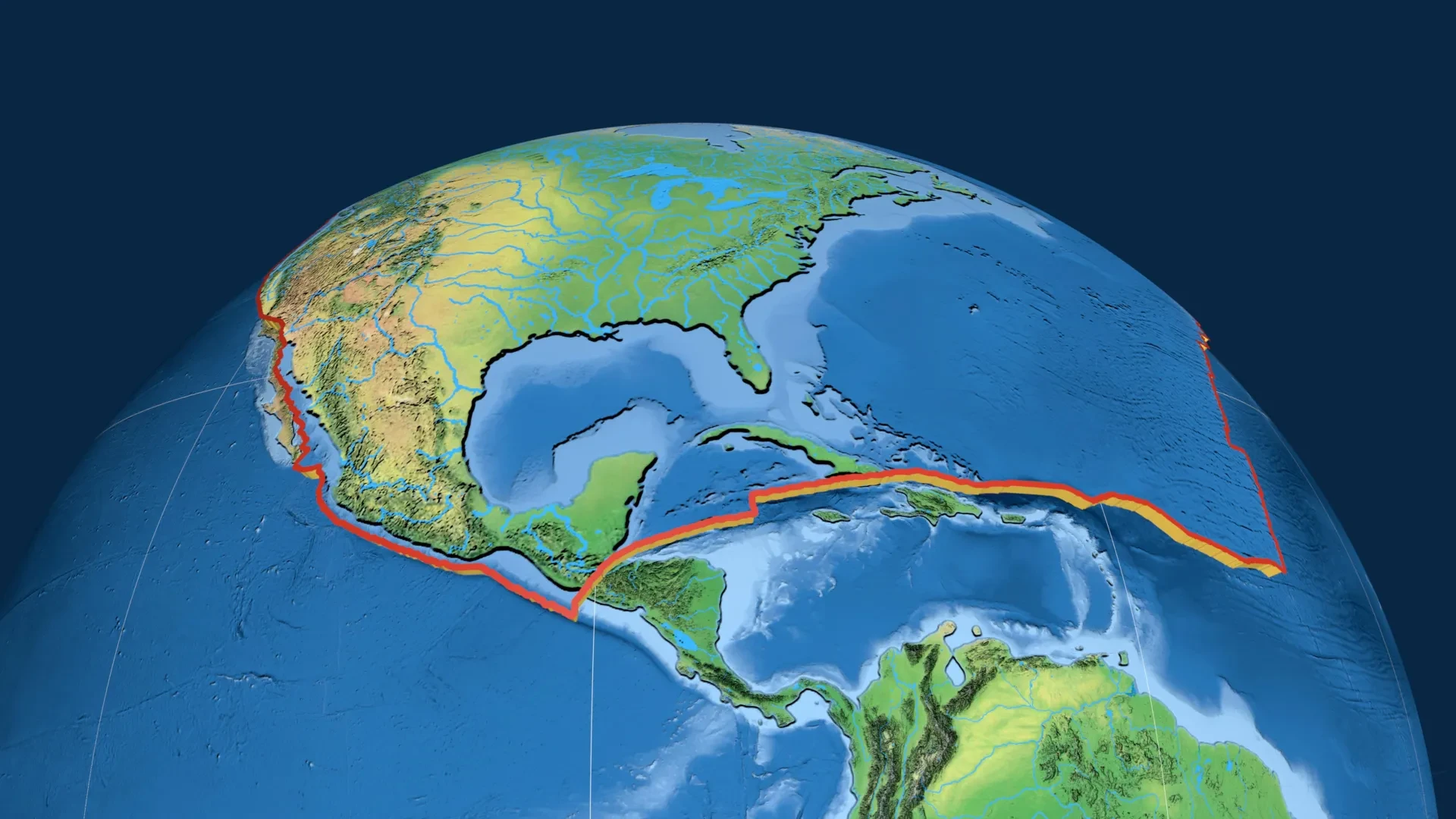
BOGOTÁ, COLOMBIA — In a discovery that is reshaping our understanding of continental evolution, a groundbreaking study published in the journal Earth and Planetary Physics has pushed back the timeline for one of the most significant geological events in the Western Hemisphere. By peering deep into the magnetic signatures of volcanic rocks embedded in the Northern Andes of Colombia, an international team of geoscientists has revealed that the primary tectonic collision between Central and South America occurred much earlier than previously assumed.
For decades, standard geological models placed the crescendo of this massive tectonic convergence squarely in the late Miocene epoch. However, the new research demonstrates that the most intense phases of crustal shortening and mountain-building wrapped up well before 10 million years ago, occurring primarily during the Oligocene and middle Miocene epochs.
This revision not only alters textbook chronologies of Andean mountain-building but also provides researchers with a refined methodology for tracking ancient tectonic stress using the microscopic magnetic properties of volcanic strata. The study was spearheaded by lead author Dr. Victor A. Piedrahita and corresponding author Dr. J. Li, alongside a dedicated collective of international earth scientists supported by grants from the National Natural Science Foundation of China (NSFC).
Main Facts
At the core of the new scientific breakthrough is a paradigm shift regarding the collision dynamics between the Caribbean-derived Central American continental blocks and the northwestern margin of the South American Plate.
- The Research Focus: The team concentrated their investigative efforts on the Combia Volcanic Province in central Colombia, targeting a suite of late Miocene volcanic rocks aged approximately 12 to 6 million years old.
- The Methodology: Researchers utilized an advanced analytical approach known as magnetic fabric analysis. By examining the orientation of microscopic magnetic minerals preserved within the rock matrix, geologists can determine whether the internal fabric of the stone reflects its initial cooling and emplacement or later deformation driven by tectonic compression.
- The Primary Finding: Contrary to the hypothesis that these rocks were forged in the crucible of intense, ongoing late Miocene collisions, the magnetic fabric data showed that many of the volcanic formations retain their pristine, primary structures. They display little to no evidence of significant tectonic squeezing during or after their formation.
- The Revised Timeline: The data confirms that the most violent tectonic collisions and crustal shortening events concluded prior to the late Miocene. The peak convergence period is now understood to have largely unfolded during the Oligocene to middle Miocene eras (ranging from roughly 34 to 11 million years ago).
Chronology of the Discovery
To understand the magnitude of this revised timeline, it is necessary to trace both the geological history of the region and the step-by-step investigative process undertaken by Piedrahita, Li, and their colleagues.
The Deep-Time Context: The Convergence of Continents
For millions of years, the tectonic architecture of the Americas has been defined by the relentless migration and interaction of massive lithospheric plates. The assembly of Central and South America was not a single, instantaneous event, but rather a protracted, multi-stage dance involving oceanic plate subduction, island arc accretions, and continental collisions.
Historically, geologists studying the Northern Andes in Colombia observed widespread structural deformation, faulting, and folding. Because these deformational footprints cut across various strata, many researchers naturally grouped them into a sweeping, late Miocene tectonic paroxysm. This framework suggested that as Central America plowed into South America, it triggered massive crustal thickening that dramatically elevated the northern reaches of the Andes.
The Fieldwork and Sampling Phase
To test the validity of the late-collision hypothesis, Piedrahita and his team turned to the Combia Volcanic Province. This geological belt serves as a natural laboratory, formed by volcanic activity that coincided with the presumed window of active, high-intensity tectonic collision.
The researchers collected comprehensive rock samples from numerous outcrops across the province. These samples—representing ancient lavas, pyroclastic flows, and debris deposits—held within them a microscopic archive of the physical conditions present during and after their crystallization.
Laboratory Analysis and the Turning Point
Back in the laboratory, the team subjected the samples to detailed magnetic fabric analysis (specifically Anisotropy of Magnetic Susceptibility, or AMS). This technique measures the directional variation of magnetic susceptibility in rocks. Because magnetic minerals like magnetite or pyrrhotite are sensitive to stress and strain, their preferred orientations can reveal whether a rock has been pancaked, sheared, or rotated by tectonic forces long after it cooled.
To the researchers’ initial surprise, the magnetic fabrics within the Combia volcanic rocks were overwhelmingly primary. The minerals showed orientations consistent with magma flow and gravitational settling rather than tectonic compression. While isolated pockets of localized deformation were identified in specific structural zones, these anomalies were minor in both geographic distribution and mechanical intensity. The smoking gun for late-stage, widespread continental collision was missing.
Supporting Data and Scientific Methodology
The credibility of the new study rests heavily on the precision of magnetic fabric analysis and its application to volcanic terrains. In geological studies, standard structural mapping can sometimes conflate localized faulting with regional tectonic regimes. Magnetic fabric analysis bypasses this ambiguity by looking at the rock’s fabric at a microscopic level.
[Magma Emplacement] ---> [Mineral Crystallization] ---> [Magnetic Alignment Preserved]
                                                                  |
                                              (If major late tectonic stress occurred)
                                                                  v
                                                     [Secondary Fabric / Smearing]
                                                      *(Not found in Combia samples)*
Dr. Piedrahita elaborated on the power of this methodology in volcanic settings: "Volcanic rocks can preserve a remarkably detailed record of geological processes. Their magnetic fabrics help us determine whether deformation occurred before, during, or after the rocks were emplaced."
Because volcanic rocks transition rapidly from a fluid, molten state to a solid crystalline structure, they capture the ambient physical environment of that exact moment. If a region is undergoing severe crustal shortening and tectonic collision while volcanism is active, the cooling magma and settling debris will be subjected to directional stress, reorienting their magnetic minerals into secondary tectonic fabrics.
Because the Combia Volcanic Province largely retained its primary, non-deformed magnetic signatures, the logic follows inexorably: the region was already in a relatively quiescent post-collision or transitional state by the late Miocene (12–6 million years ago). The heavy lifting of the continental collision—the massive crustal shortening, mountain-building, and terrane welding—had already run its course during the earlier Oligocene-to-middle Miocene windows.
Official Responses and Expert Perspectives
The academic community has received the study with significant interest, as it addresses long-standing debates regarding the synchronicity of tectonic events along the Andean margin.
In a joint statement discussing the implications of their work, lead author Dr. Victor Piedrahita and corresponding author Dr. J. Li emphasized the necessity of revising regional geological models:
"Our data indicate that the most significant collisional events between Central and South America occurred earlier than we previously thought, mainly during the Oligocene-middle Miocene. By the time these volcanic rocks formed, tectonic deformation had become weaker and more localized."
Independent geoscientists note that resolving this timeline is crucial for paleogeographic reconstructions. Knowing when topography was built directly impacts our understanding of ancient climate patterns, ocean current diversions (such as the eventual closure of the Central American Seaway), and the migration corridors of flora and fauna between North and South America during the Great American Biotic Interchange.
Furthermore, sponsors of the research have praised the study’s innovative use of funding. The National Natural Science Foundation of China (NSFC), which provided the financial backing for the project through grants awarded to Dr. Li and Dr. Piedrahita, highlighted the project as a prime example of how methodological refinement in rock magnetism can yield high-impact revisions to foundational earth science theories.
Broader Implications for Earth Science
The publication of this study in Earth and Planetary Physics ripples far beyond the borders of Colombia, offering several vital takeaways for the global geological community:
- Refining Andean Geodynamics: Models simulating how the Andes Mountains rose must now account for an earlier cessation of primary collision-related shortening. This forces geodynamicists to recalibrate variables involving plate velocities, subduction angles, and crustal rheology.
- Advancing Magnetic Techniques: The research demonstrates the immense utility of magnetic fabric analysis as a diagnostic tool in complex volcanic terranes. As geologists tackle increasingly rugged and structurally complicated mountain belts worldwide, this technique will likely become a standard operational procedure for separating primary volcanic histories from secondary tectonic overprints.
- Paving the Way for Interdisciplinary Synergy: Understanding the tectonic timeline aids paleontologists, climatologists, and evolutionary biologists. With a more accurate date for when the physical framework of the Northern Andes stabilized, researchers across disciplines can better time environmental shifts, habitat fragmentation, and species migrations in the Neotropics.
As science continues to chip away at the mysteries locked inside the Earth’s crust, studies like this remind us that our planet’s history is written in stone—and sometimes, the most revolutionary discoveries are hidden not in the grand scale of mountain peaks, but in the microscopic alignment of magnetic crystals.
