

Main Facts
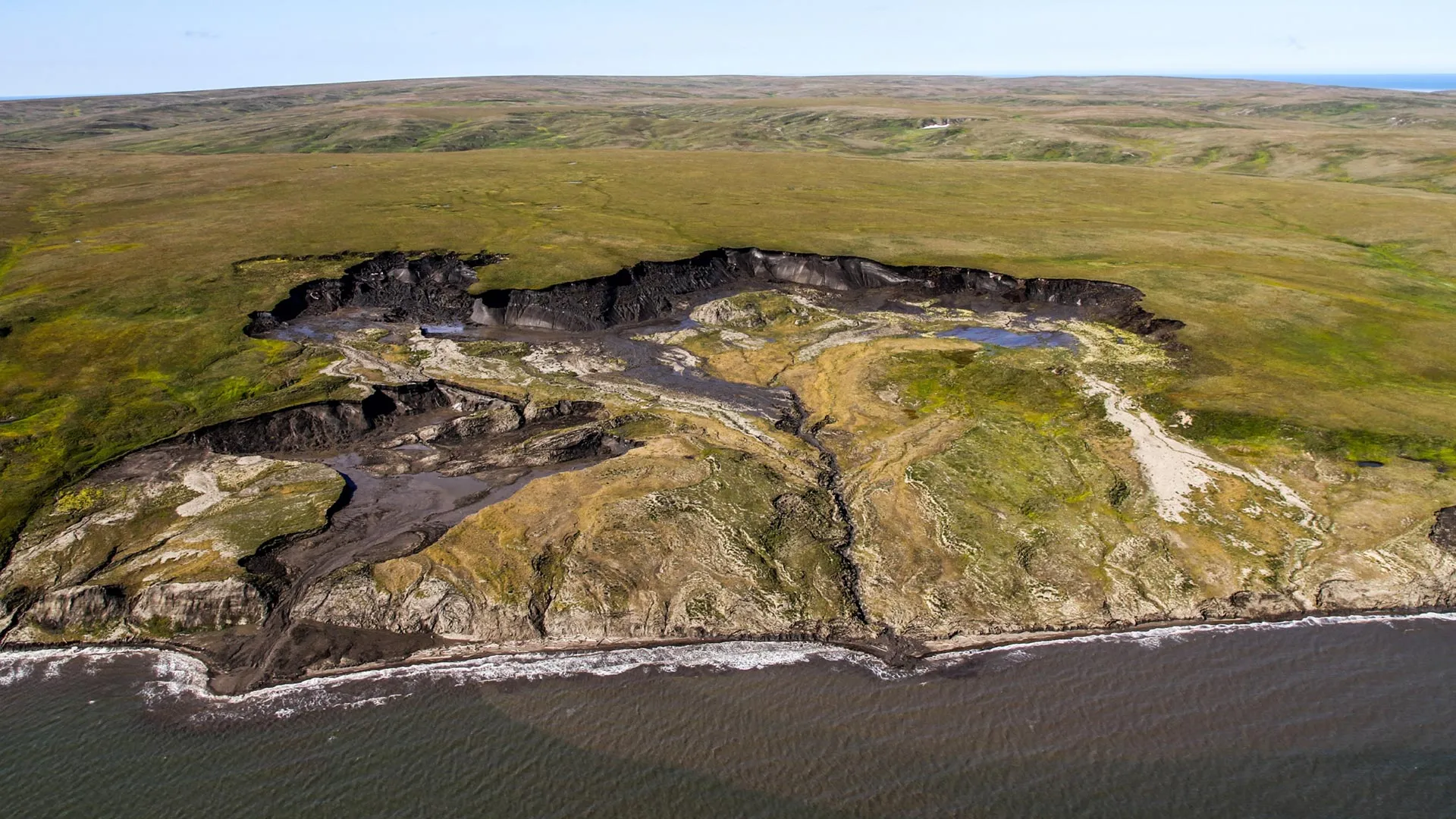
Deep within the high-latitude permafrost of the Arctic lies one of the planet’s most formidable, yet fragile, reservoirs of organic carbon. For millennia, frozen soils have locked away an estimated 1,300 gigatonnes of ancient carbon—primarily derived from accumulated plant remains and prehistoric ecosystems. However, as global temperatures climb, the Arctic is warming at a rate nearly four times faster than the rest of the planet. This rapid thermal shift is triggering widespread permafrost degradation, destabilizing coastlines, and eroding fragile shorelines into the Arctic Ocean.
A groundbreaking study published in the peer-reviewed journal Nature Geoscience has cast new light on what happens to this ancient carbon once it enters the marine environment. Conducted by an international team of researchers from the Alfred Wegener Institute (AWI), Helmholtz Centre for Polar and Marine Research, alongside MARUM – Centre for Marine Environmental Sciences at the University of Bremen, the investigation challenges long-held assumptions regarding the fate of land-based carbon in the sea.
The core findings reveal that despite massive volumes of organic matter being washed into the Arctic Ocean annually, only a fraction—roughly 10 percent—is actively metabolized by marine microorganisms and converted into greenhouse gases like carbon dioxide and methane. The vast majority of the terrigenous carbon remains safely buried and preserved within the ocean’s sediment layers. Furthermore, isotope-based analyses uncovered a surprising dietary preference among seafloor microbes: these single-celled organisms act as ecological "gourmets," preferentially consuming fresh, contemporary organic carbon (such as decaying algae) while largely bypassing the much older, recalcitrant carbon flowing out of thawing permafrost.
This revelation provides a vital missing piece for global climate models. By clarifying the partitioning between carbon sequestered in the seabed and carbon released into the atmosphere, scientists can now refine their projections of how permafrost thaw will influence future global warming trajectories.
Chronology of the Discovery
To understand how ancient terrestrial carbon behaves upon entering a marine ecosystem, the research team structured a multi-year investigative timeline that moved from field data collection to advanced laboratory geochemistry.
Phase 1: Field Expedition and Sediment Sampling
The foundation of the study was laid along the rapidly eroding permafrost coast of Qikiqtaruk (Herschel Island) in the Canadian Arctic. Recognizing the area as a hot spot for coastal erosion and permafrost transport, scientists deployed specialized coring equipment to extract sediment cores from several strategic locations off the island’s coast. These geological archives preserved layers of accumulated organic and inorganic material spanning approximately the last 50 years, creating a detailed historical record of sediment deposition and carbon delivery.
Phase 2: Laboratory Analysis and Isotopic Tracing
Back in the laboratories of the Alfred Wegener Institute and the University of Bremen, researchers subjected the sediment cores to rigorous geochemical profiling. They examined the composition of pore water—the water trapped in microscopic spaces between sediment particles—to measure dissolved inorganic carbon. This metric directly indicated how much carbon dioxide had been generated by microbial respiration.
To trace the precise origin of the organic material, the team utilized carbon isotope geochemistry. By analyzing carbon-13 ($^13textC$) isotopes, scientists could differentiate between carbon originating from terrestrial landmasses versus marine sources. Simultaneously, carbon-14 ($^14textC$) radiocarbon dating allowed the team to determine the exact age of the organic matter being metabolized by the microorganisms, distinguishing between ancient permafrost deposits and fresh marine detritus.
Phase 3: Synthesis and Publication
Following months of data processing and cross-validation, the team synthesized their findings, culminating in the publication of their study in Nature Geoscience. The research not only quantified the retention rates of permafrost carbon in marine sediment but also established a methodological blueprint for tracking microbial dietary preferences in high-latitude marine environments.
Supporting Data and Quantitative Metrics
The scale of the Arctic carbon cycle is immense, and the numbers underscore the urgency of tracking these shifting dynamics:
- 1,300 Gigatonnes: The approximate amount of organic carbon currently stored within Arctic terrestrial permafrost ecosystems.
- 400 Gigatonnes: The additional volume of organic carbon sequestered in Arctic ocean sediments and river deltas.
- Up to 0.02 Gigatonnes: The current annual volume of organic carbon entering the Arctic Ocean via coastal erosion and riverine discharge.
- 70 to 150 Percent Increase: Forecasted rise in the outflow of land-based carbon into the Arctic sea by the year 2100 under current warming scenarios.
- 10 Percent: The estimated proportion of organic carbon from coastal sediments that marine microorganisms successfully convert into greenhouse gases.
- 50 Years: The temporal depth captured by the sediment cores retrieved off the coast of Herschel Island, providing a multi-decadal baseline of carbon deposition.
These metrics illustrate a complex balancing act: while the sheer volume of carbon entering the ocean is slated to double or more over the coming decades, the physical mechanisms of the seafloor currently act as a more efficient long-term sink than previously calculated, provided microbial selectivity remains constant.
Official Responses and Expert Perspectives
The implications of the study have drawn significant commentary from leading polar researchers and geochemists, highlighting both the reassuring nature of the findings and the remaining areas of scientific uncertainty.
Dr. Manuel Ruben, lead author of the study from the Alfred Wegener Institute, emphasized the historical blind spot the research has resolved. "Consequently, up to 0.02 gigatonnes are entering the sea each year, and according to forecasts, this outflow could rise by 70 to 150 percent by the year 2100," Dr. Ruben noted regarding the accelerating pace of coastal erosion. "However, how much of this is released back into the atmosphere as a greenhouse gas and how much is stored in the seabed has, until now, been largely unknown."
Addressing the surprising efficiency of the seabed as a carbon vault, Dr. Ruben added, "Although the sea here carries away huge quantities of organic carbon from the coast, surprisingly little of it ends up in the ocean’s active carbon cycle. Microorganisms convert around ten percent of the organic carbon from the sediments into gases, which rise into the water and can then enter our atmosphere."
Prof. Gesine Mollenhauer, a geochemist at the AWI and co-spokesperson for the ‘The Ocean Floor – Earth’s Unexplored Interface’ cluster of excellence at the University of Bremen, detailed the methodological breakthrough that allowed the team to track microbial behavior. "Carbon isotopes represent our atomic indicators that can identify the food source of the microorganisms," Prof. Mollenhauer explained. "The $^13textC$ isotope, for example, tells us whether they have consumed carbon from land or from the sea. By way of the $^14textC$ isotope, we were able to determine whether the single-celled organisms preferred old organic carbon from permafrost or fresh organic carbon from algae remains."
Describing the surprising selectivity of the seabed microbiome, Mollenhauer coined a vivid biological metaphor: "The sediment is home to ‘gourmet’ bacteria that apparently prefer fresh carbon stemming from, for example, more recent algal remains over the ‘old’ carbon from permafrost deposits."
Despite these encouraging insights, the researchers maintain a cautious scientific outlook. Mollenhauer noted that further investigation is imperative, pointing out that "some of the organic carbon from the permafrost may already have been broken down before it reaches the seabed," meaning transit-phase emissions during riverine and coastal transport still require comprehensive quantification.
Broader Implications
Climate Modeling and Global Projections
The integration of these findings marks a major leap forward for global climate forecasting. Earth system models have historically struggled to accurately account for the processing efficiency of Arctic coastal zones. By demonstrating that approximately 90 percent of eroded permafrost carbon remains locked in seafloor sediments rather than venting directly into the atmosphere, the AWI and MARUM study provides a vital calibration metric.
"Our study shows, more precisely than ever before, how much carbon is safely stored in the seabed—and just how much of the decomposed material actually originates from the old permafrost," Dr. Ruben stated. "This provides an important foundation for climate models that can predict the consequences of permafrost thawing for the global climate."
Marine Ecosystem Disruptions and Coastal Waters
Beyond the carbon cycle, the relentless erosion of Arctic coastlines and the subsequent influx of sediment and organic matter carry profound ecological consequences for nearshore marine environments. The physical introduction of terrestrial debris dramatically alters water clarity. Suspended mineral particles make coastal waters turbid, while dissolved organic carbon darkens the water column, severely restricting the penetration of sunlight.
This reduction in ambient light poses a direct threat to primary producers like single-celled phytoplankton and ice algae. Dependent on sunlight to synthesize biomass and generate oxygen, these microscopic organisms form the foundational base of the entire Arctic food web. Any disruption to primary production cascades upward, impacting zooplankton, fish populations, marine crustaceans, and apex predators such as seals and polar bears, as well as indigenous communities whose livelihoods depend on marine subsistence harvesting.
Future Research Horizons: The 2027 ‘Arctic Pulse’ Campaign
Recognizing that the intersection of climate change, coastal erosion, and marine biology requires an interdisciplinary approach, the scientific community is already preparing for the next major observational push.
Plans are firmly underway for the international ‘Arctic Pulse’ scientific campaign, scheduled for 2027. This coordinated research initiative will deploy multiple assets simultaneously, including operations aboard the flagship polar research icebreaker Polarstern, specialized airborne surveys using AWI research aircraft, and synchronized terrestrial monitoring stations on land. The overarching mission of the campaign will be to capture a holistic, real-time portrait of how rapid environmental transformation is reshaping the interconnected systems of the Arctic—from thawing land to the deep seafloor.
